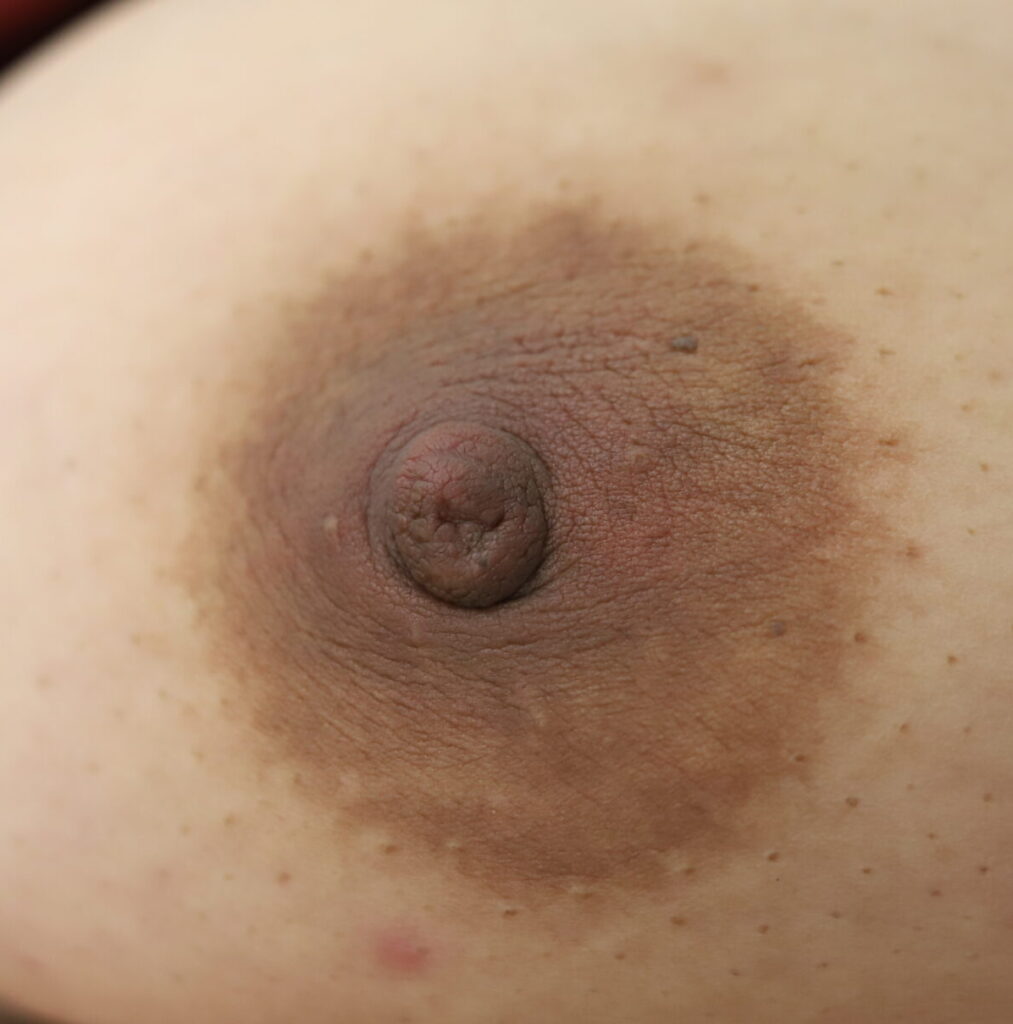
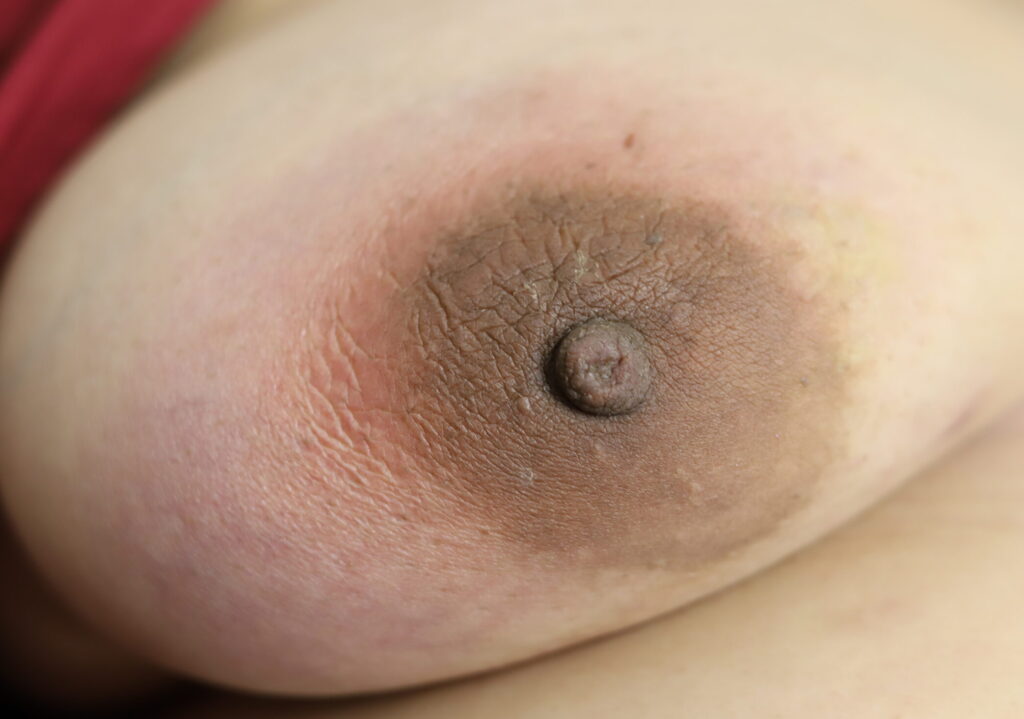
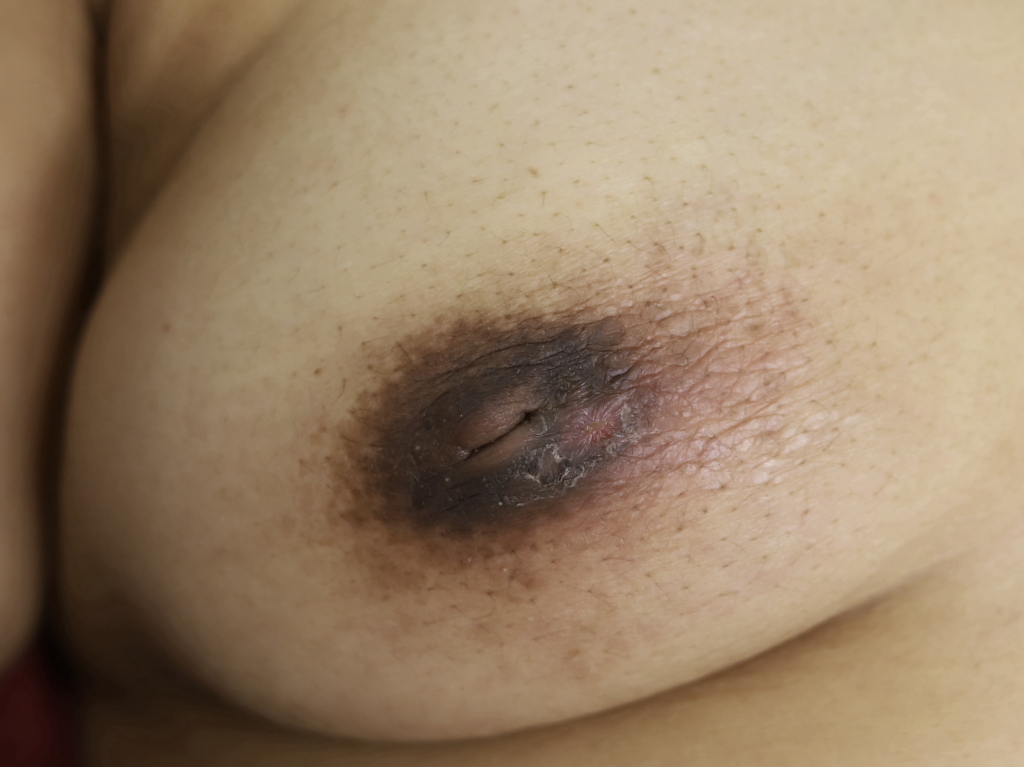
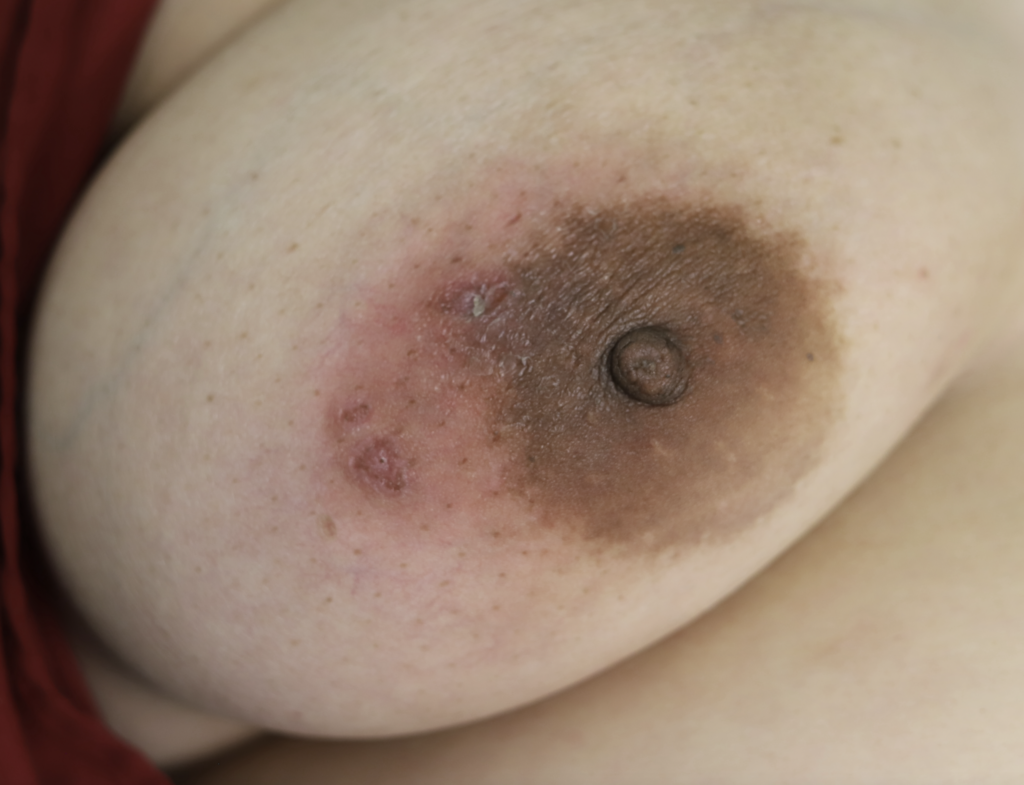
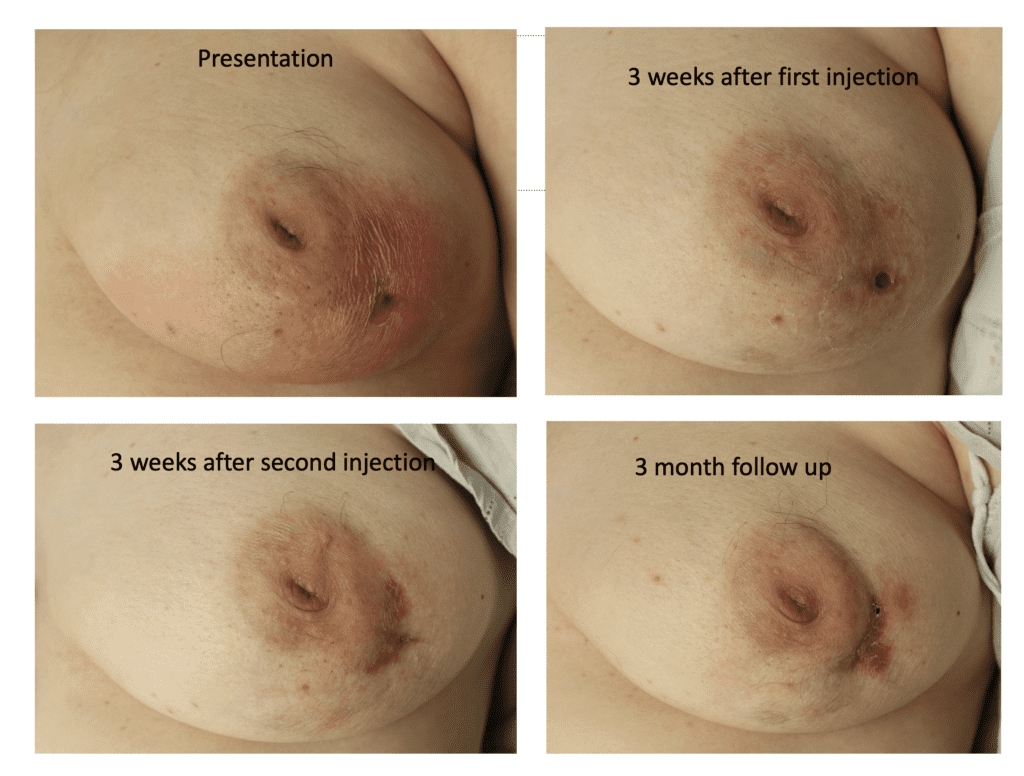
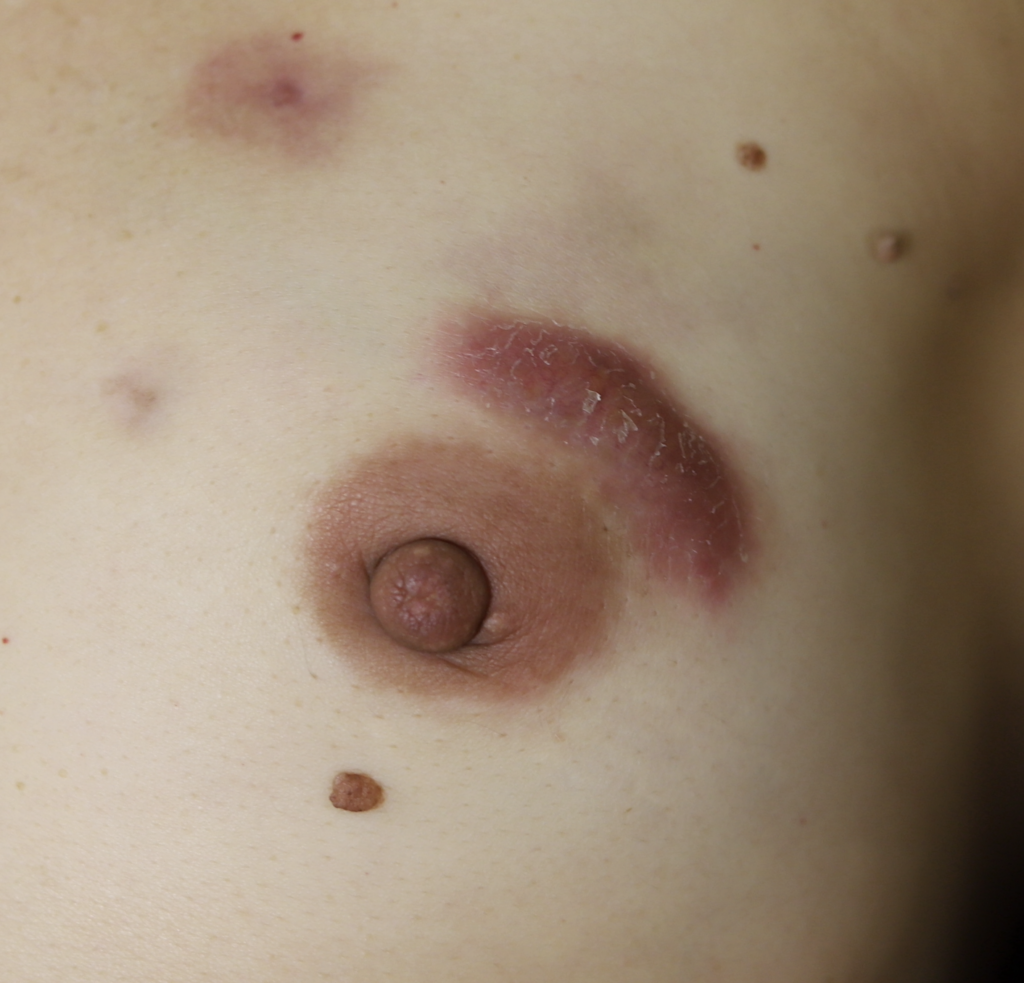
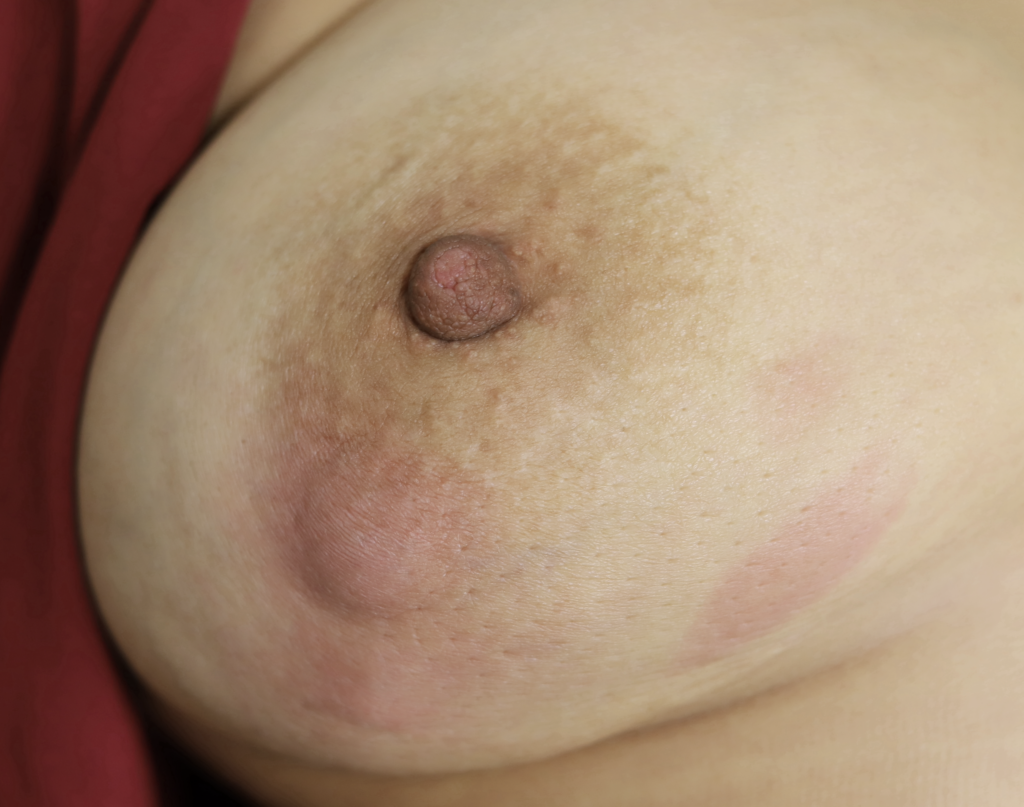
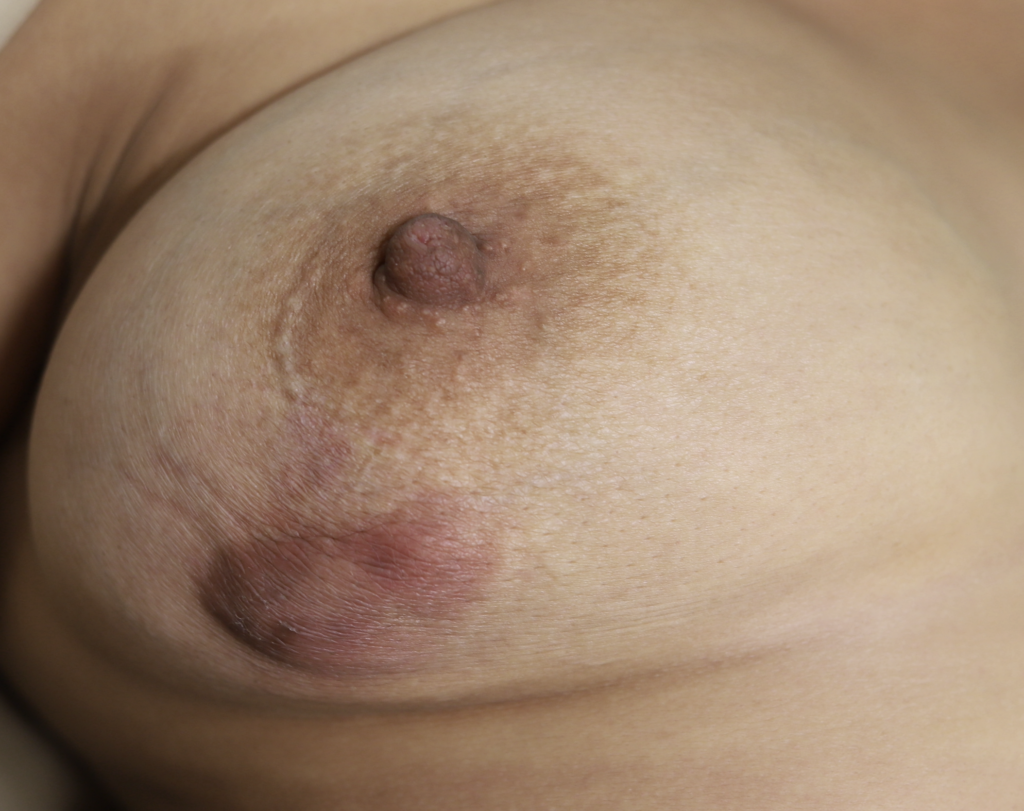
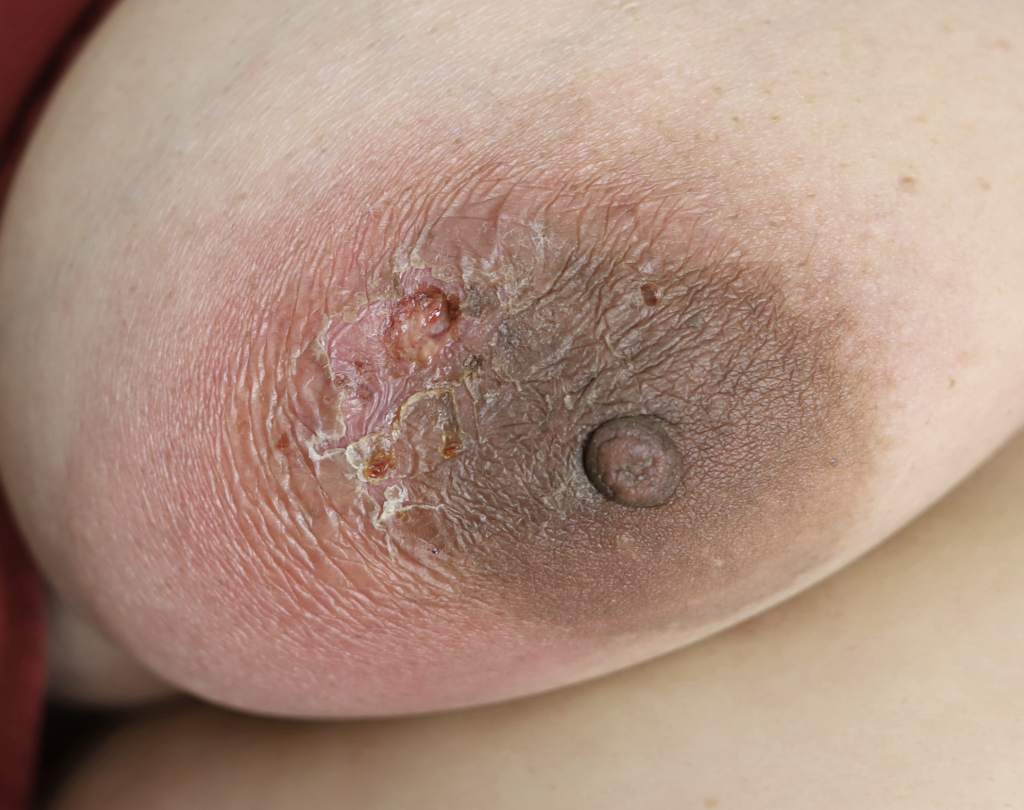
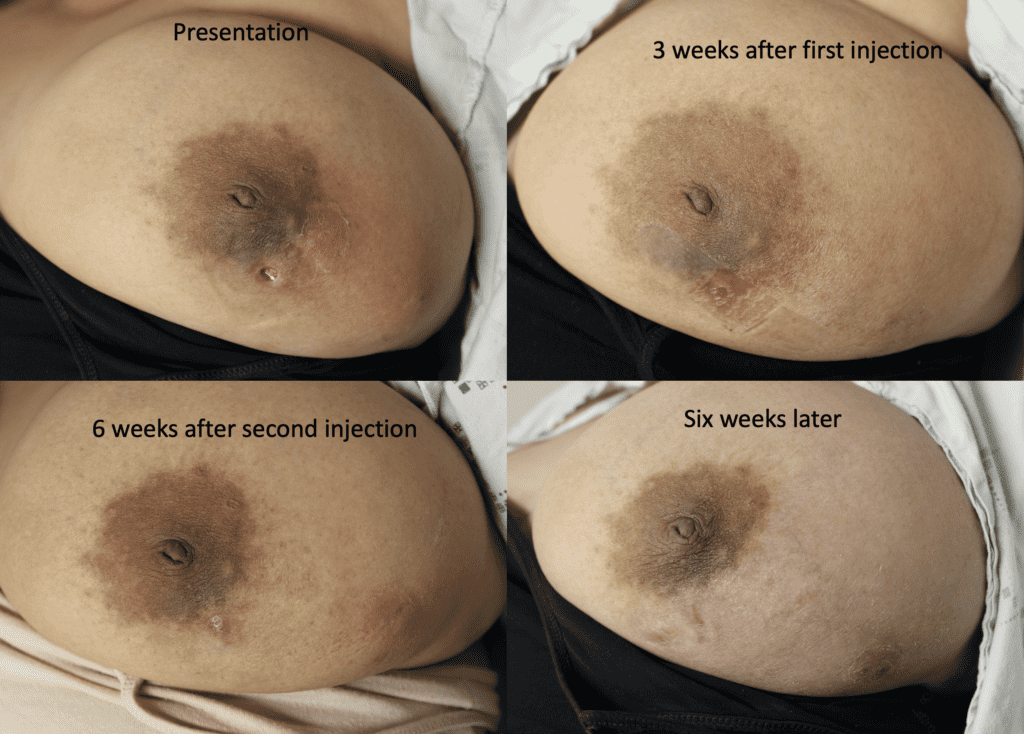
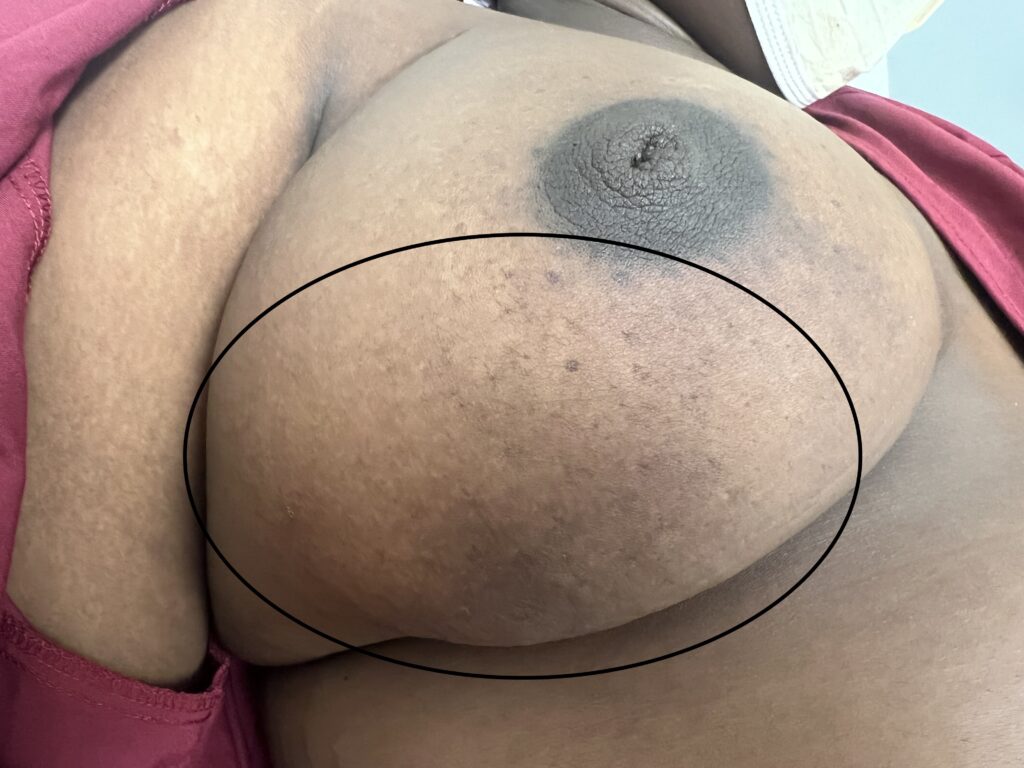
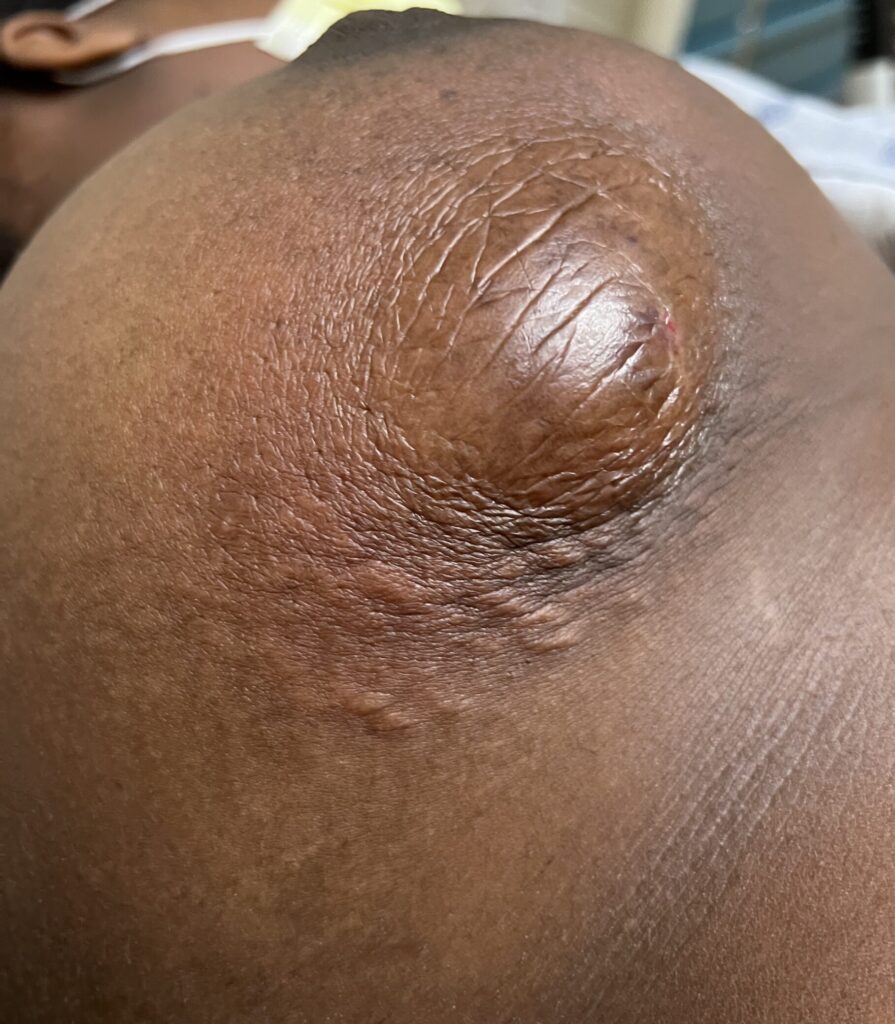
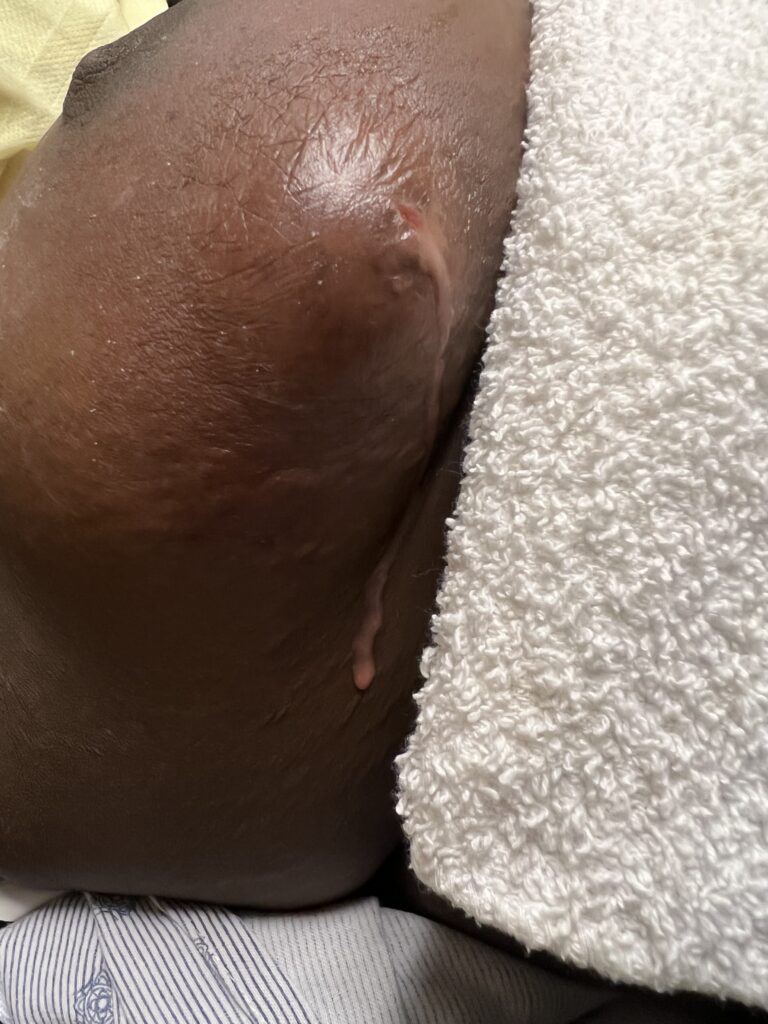
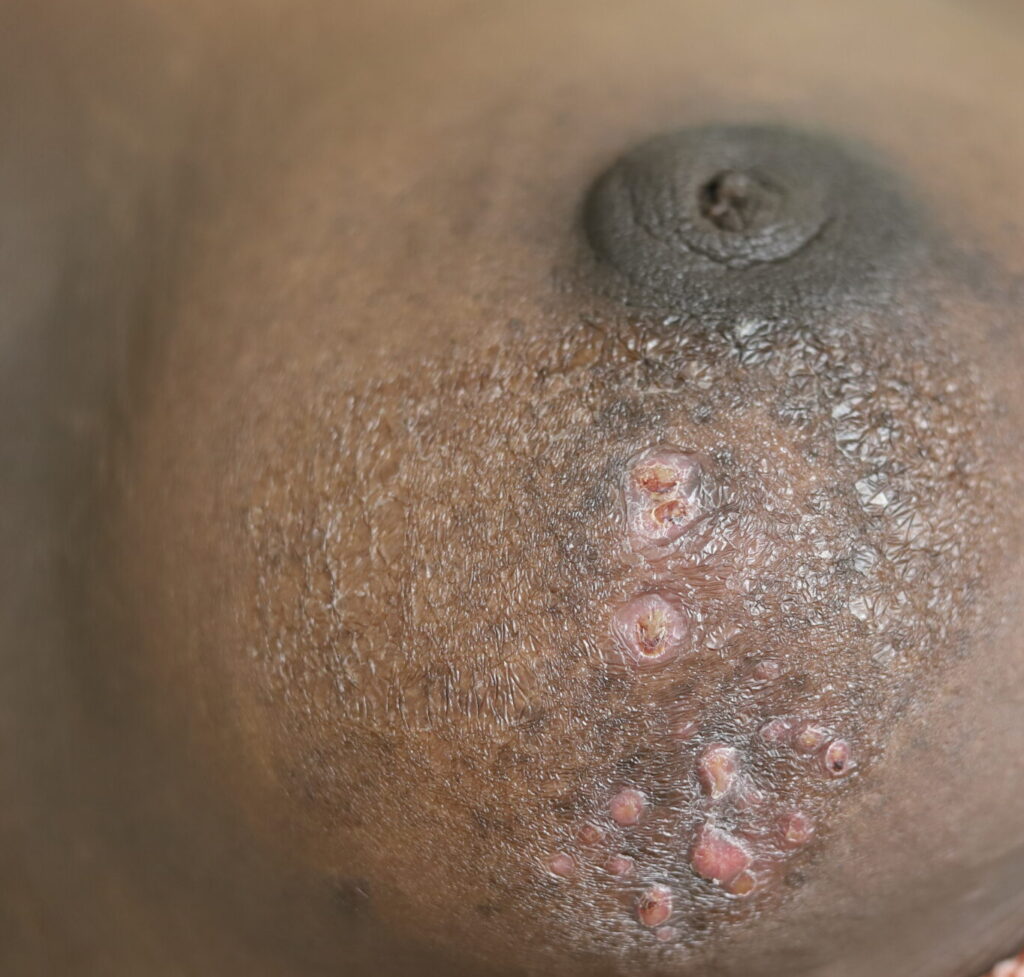
More mild cases can be treated with injection of steroid into the affected breast. This video that I presented at the American Society of Breast Surgeons in Boston spring 2023 illustrates this procedure:
PharmD Phil Anderson, who runs LactMed at the NIH, initially suggested that the infant would receive a large oral dose of steroid if they breastfed after injection. However, the dose of steroid is still lower than what would be used to treat infants for certain conditions. A more recent case report demonstrated no steroid in breastmilk, but it could potentially be impacted by time of collection and severity of disease.
So, this requires careful discussion with your healthcare provider. Without question, patients can feed from the unaffected breast during this time.
High-dose oral steroids may reduce milk supply, similar to the reported effect of high-dose triamcinolone injections at body sites other than the breast. However, if a mother has very high milk production in general, she may not notice a difference. Steroids also can cause significant insomnia and anxiety in patients taking them. Below is an image and video of a mom taking oral steroids and breastfeeding from her breast with IGM.
Mothers also may elect no treatment during lactation; fluid collections, fistula formation, and other symptomatology can be managed on an as-needed basis.
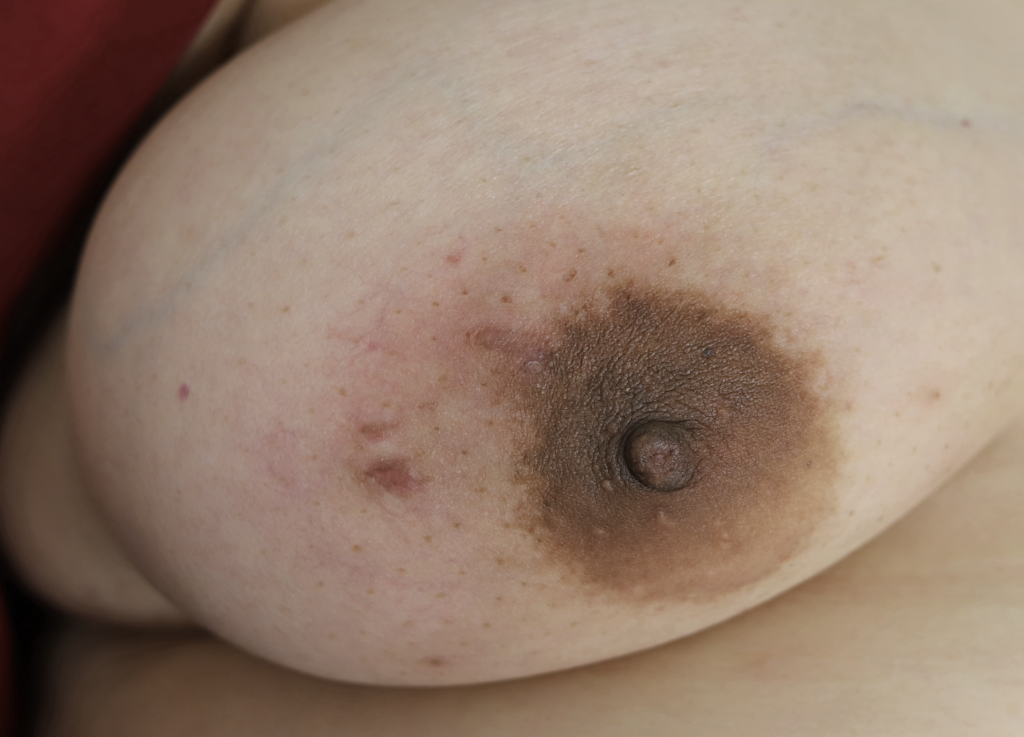
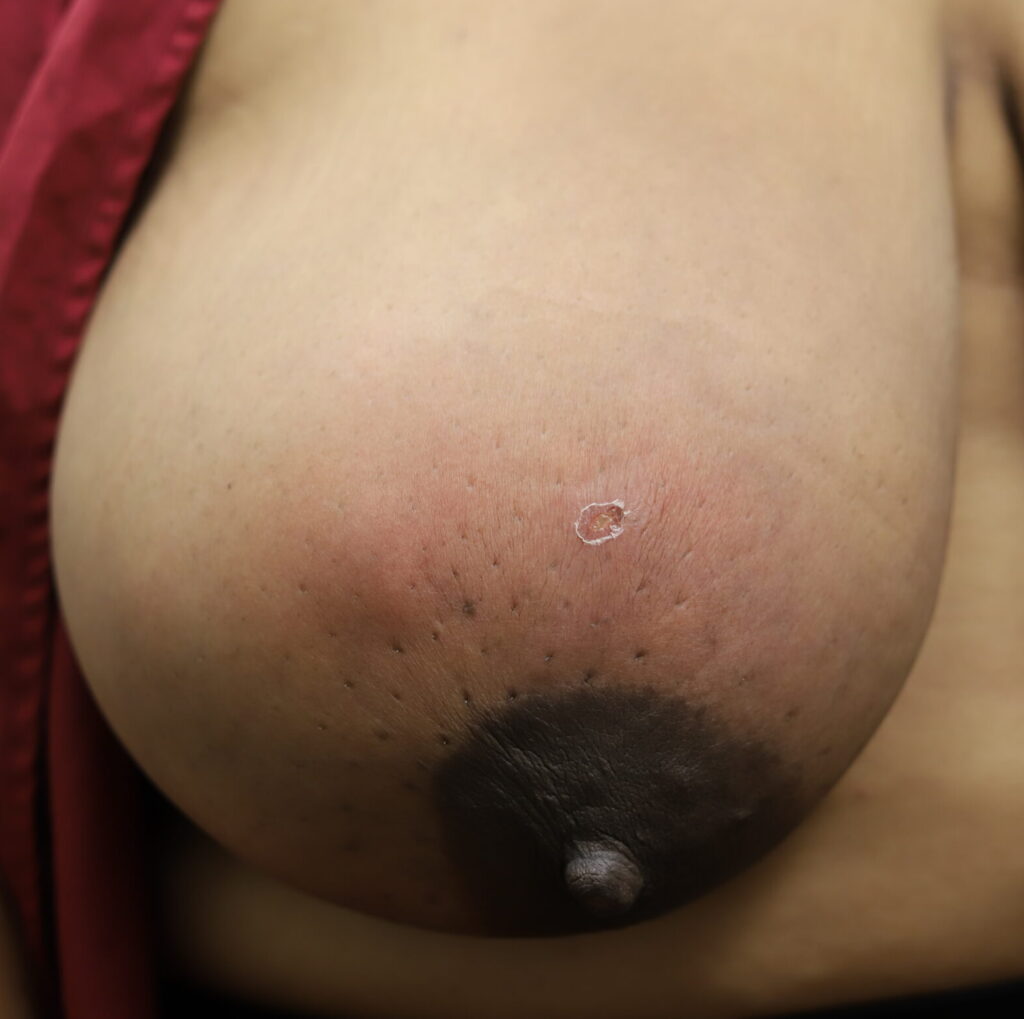
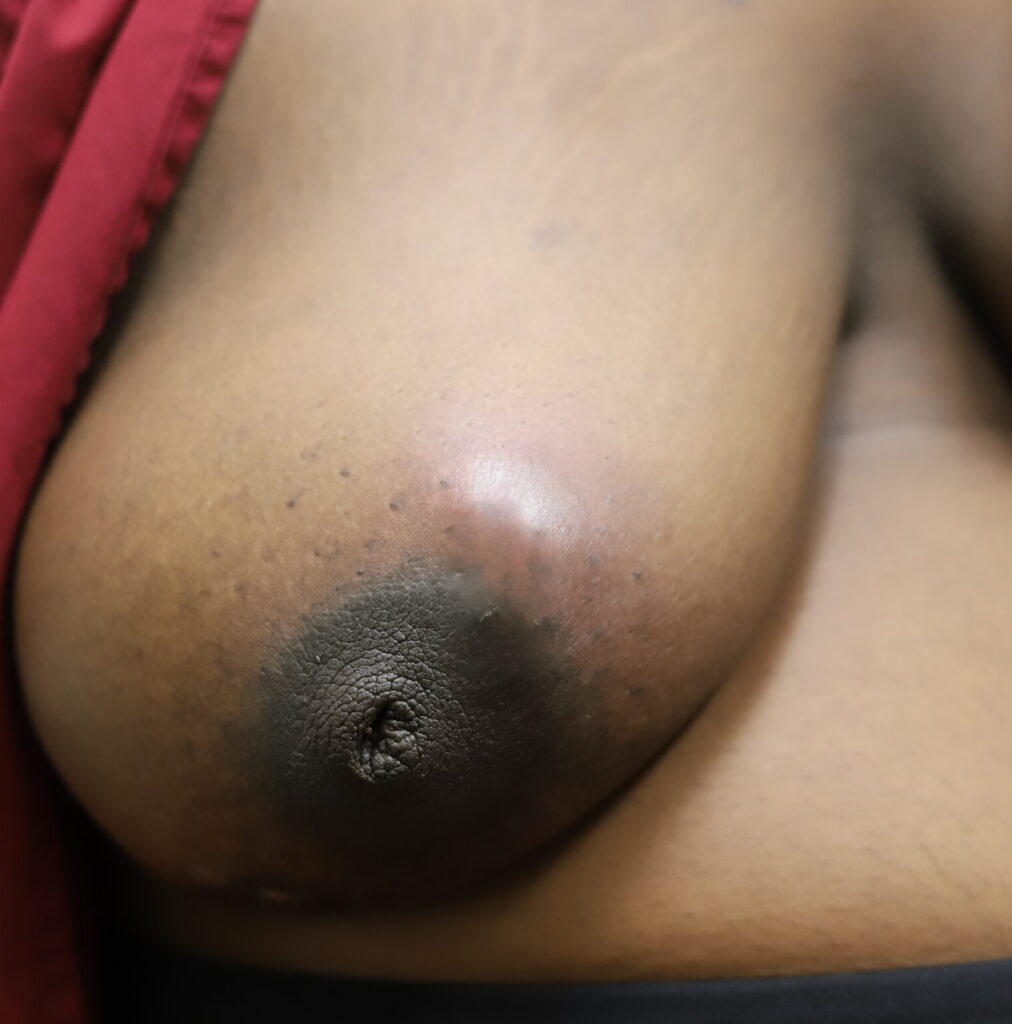
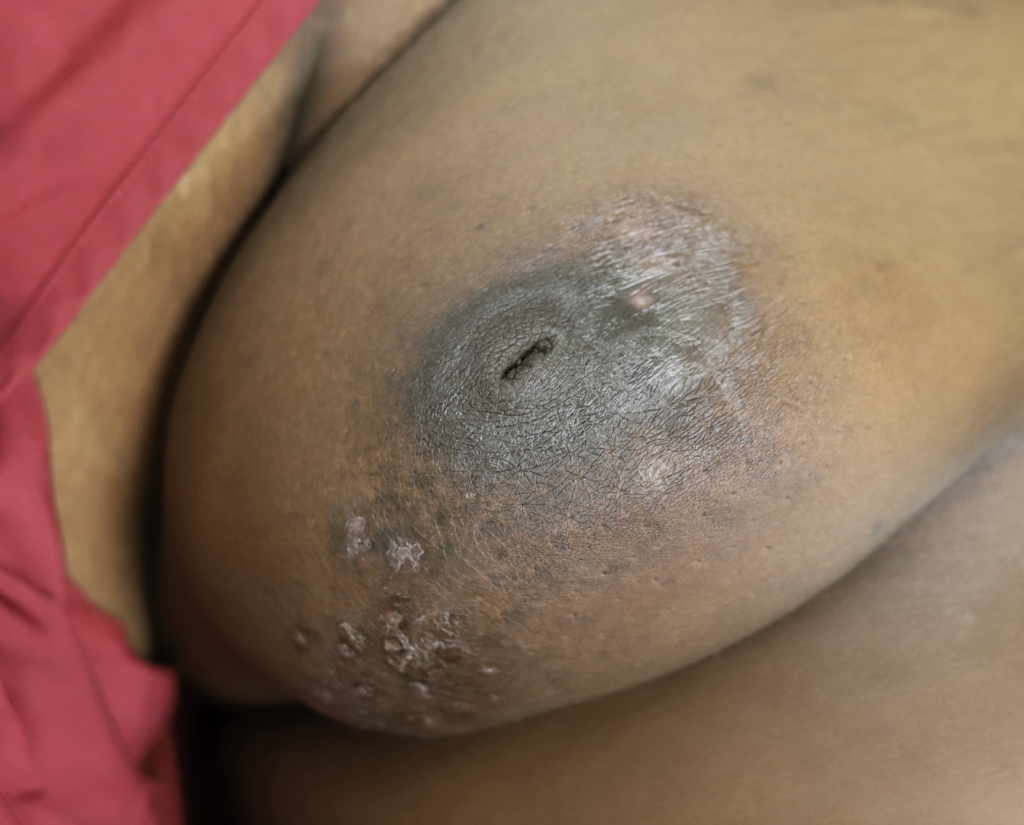
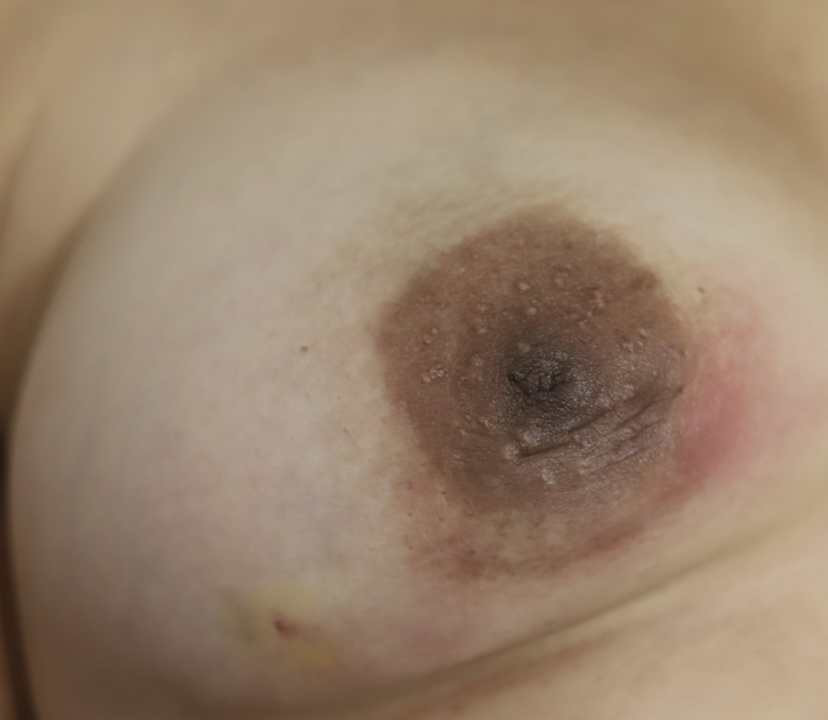
IGM can flare extremely quickly. This patient presented with nipple pain and swelling and very faint redness on a Friday (left), and by Monday (above), the patient had developed marked swelling and worsening redness and pain.
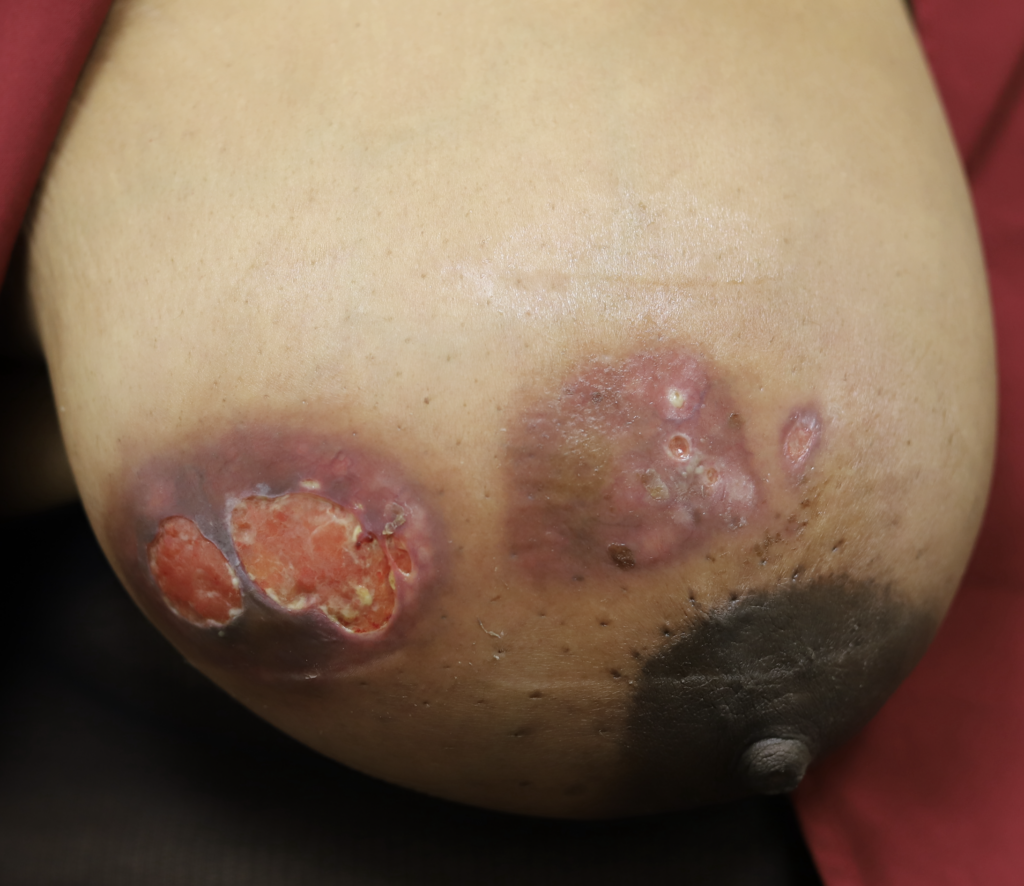
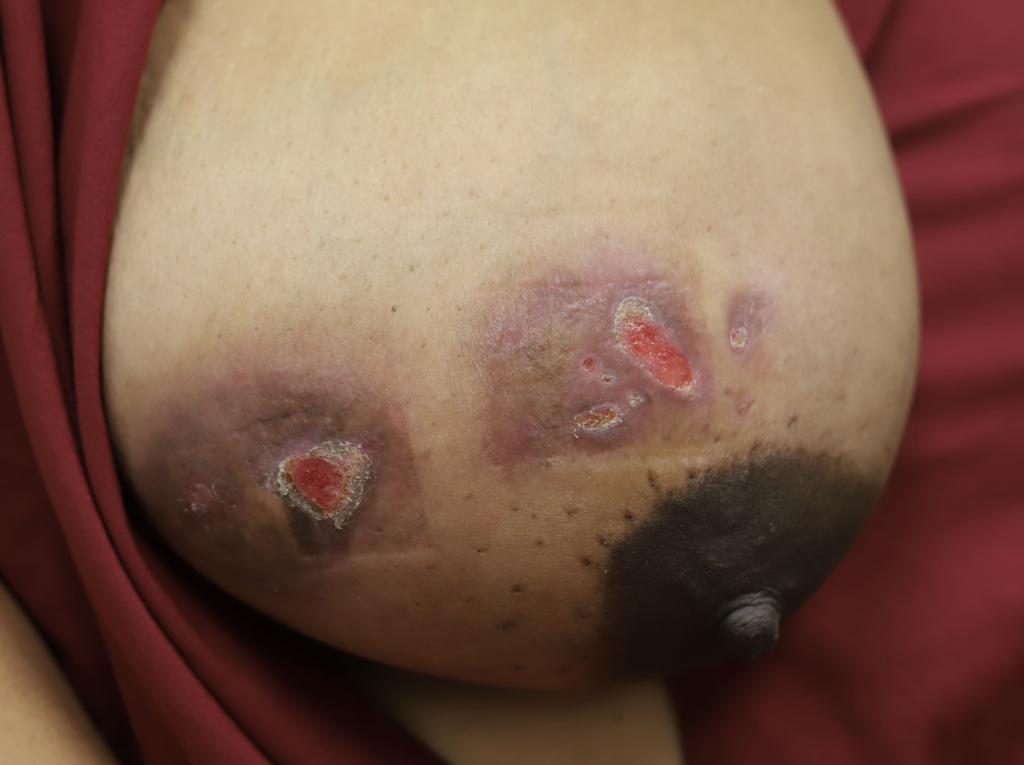
After starting azathioprine, the patient's symptoms started to drastically improve (above). She stopped the azathioprine because she thought it had done its job. However, she then experienced a new flare with nipple inversion.
After three consistent months of azathioprine, the patients asymptomatic and her nipple remained everted.
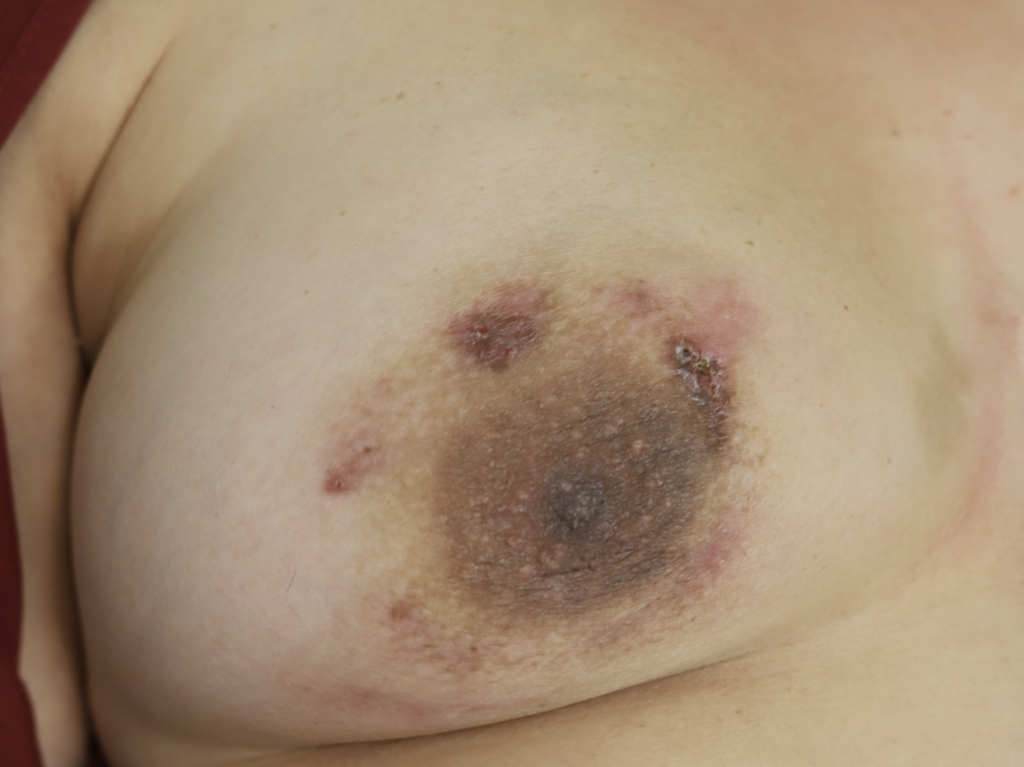
This patient had more slow onset of a mass, redness, and skin changes. Biopsy confirmed granulomatous mastitis.
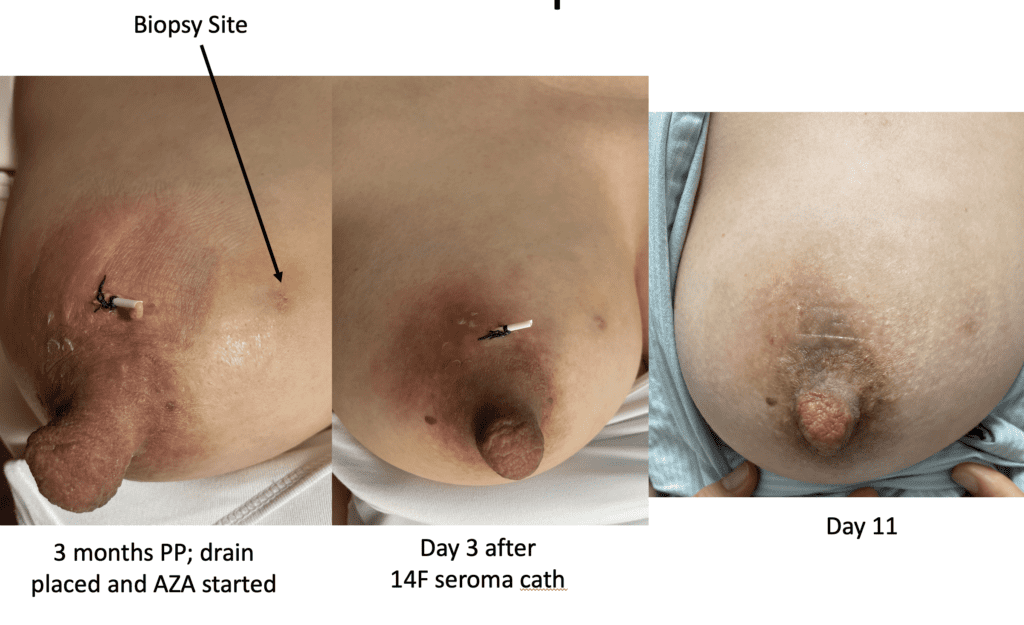
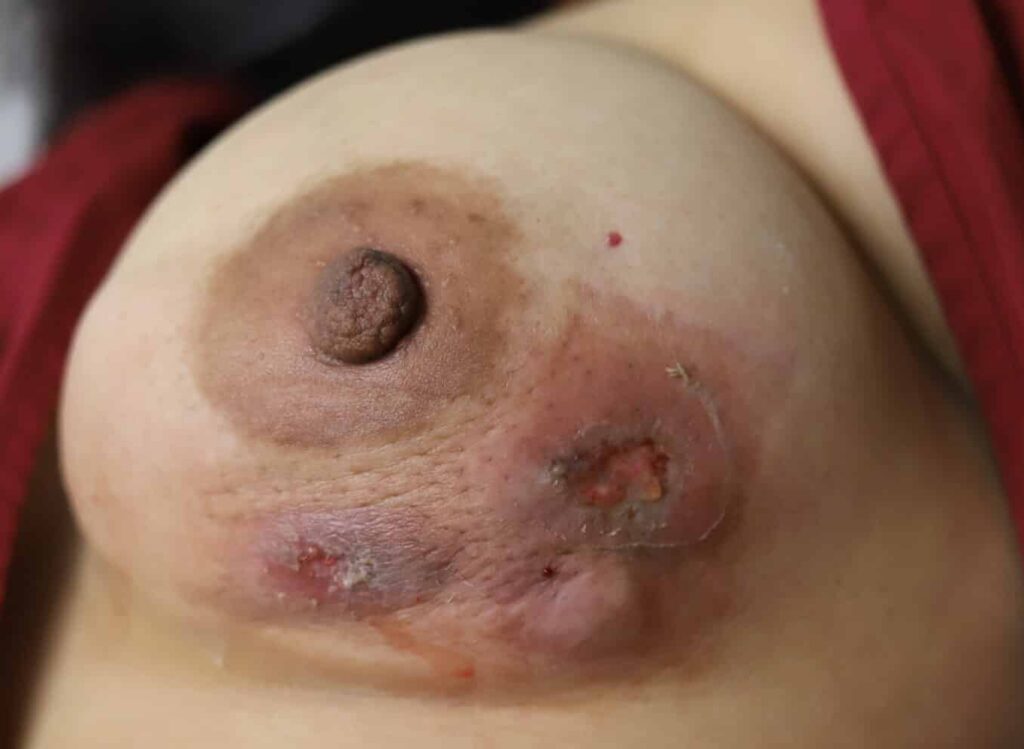
Though initially presenting only with a large mass, this patient unfortunately went on to flare despite starting azathioprine (oral medication/immunosuppresion). It does sometimes take a few months for a patient to notice dramatic improvement on azathioprine, and it does suppress even worse flaring. These wound resulted from fluid collections the patient had developed at the start of her azathioprine therapy, and the treatment definitely prevented this from getting worse.
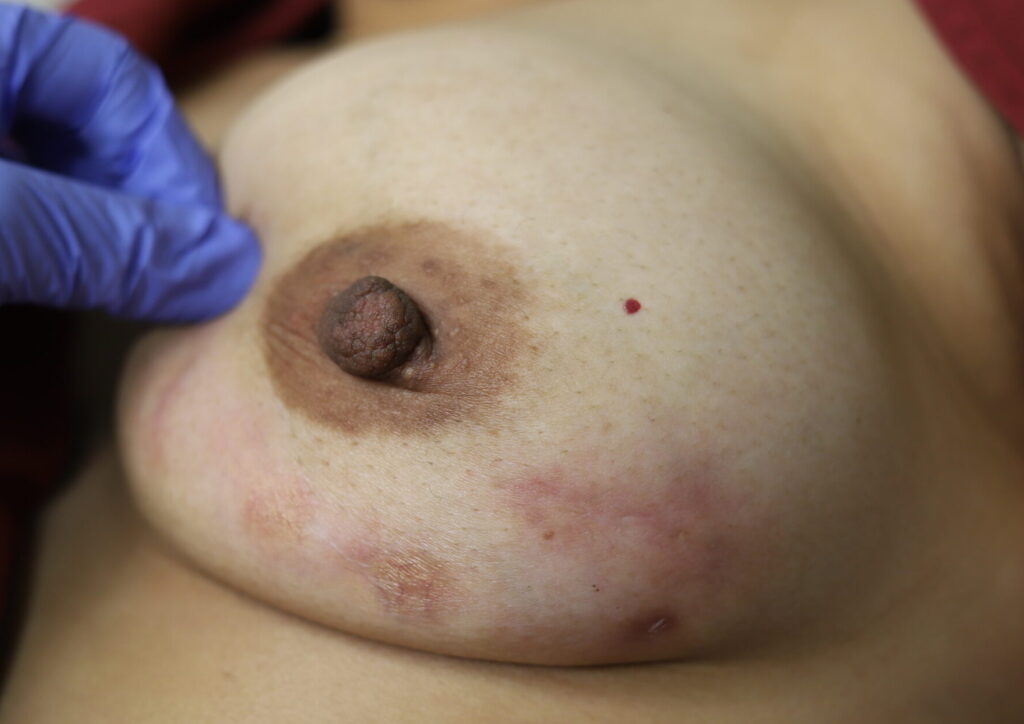
Underlying masses and wounds starting to close after three months on azathioprine.
Continued healing on azathioprine, three months later.
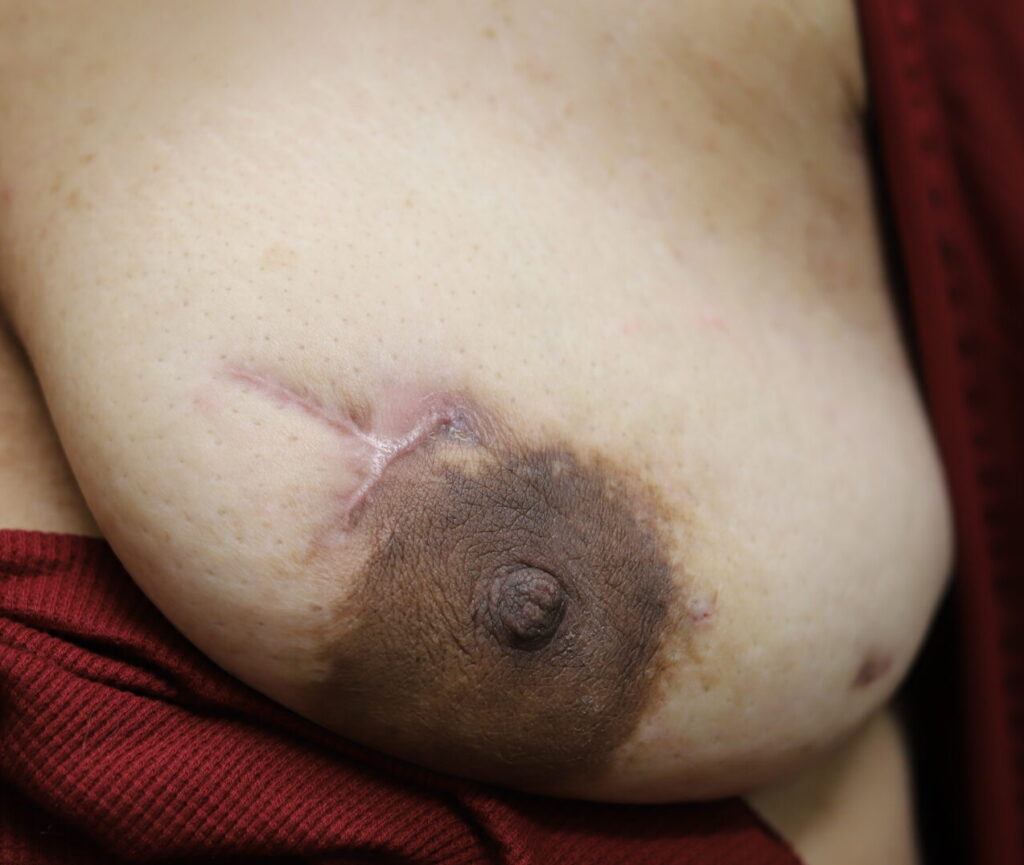
Now resolved on azathioprine.
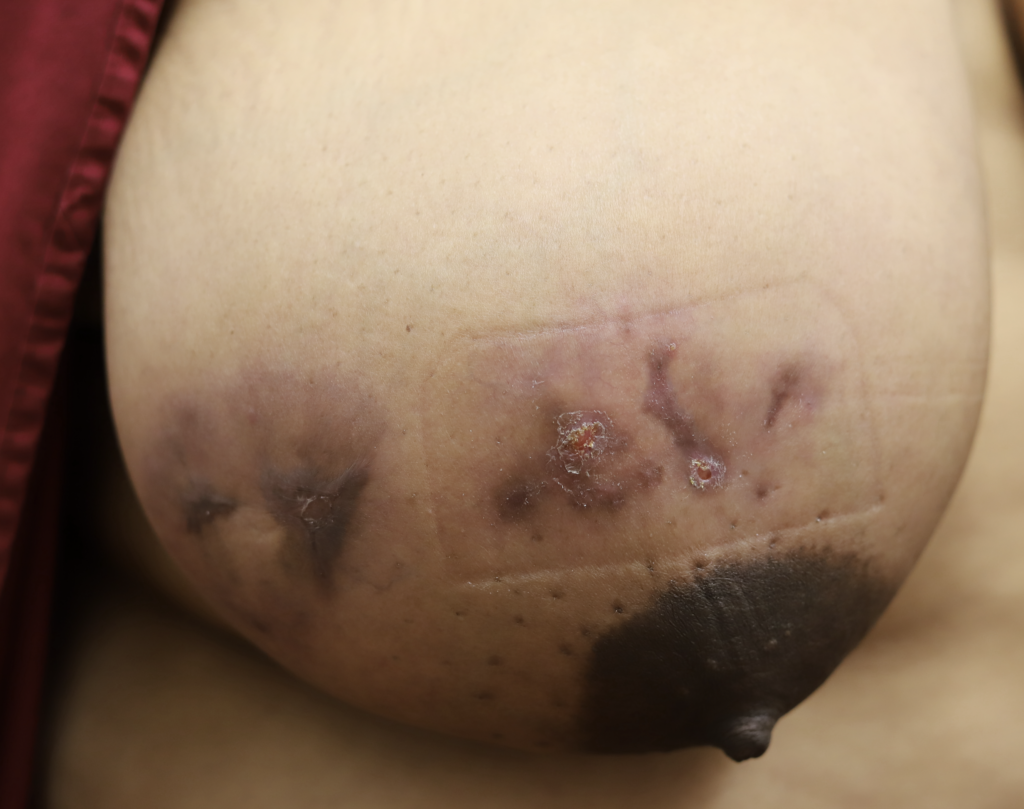
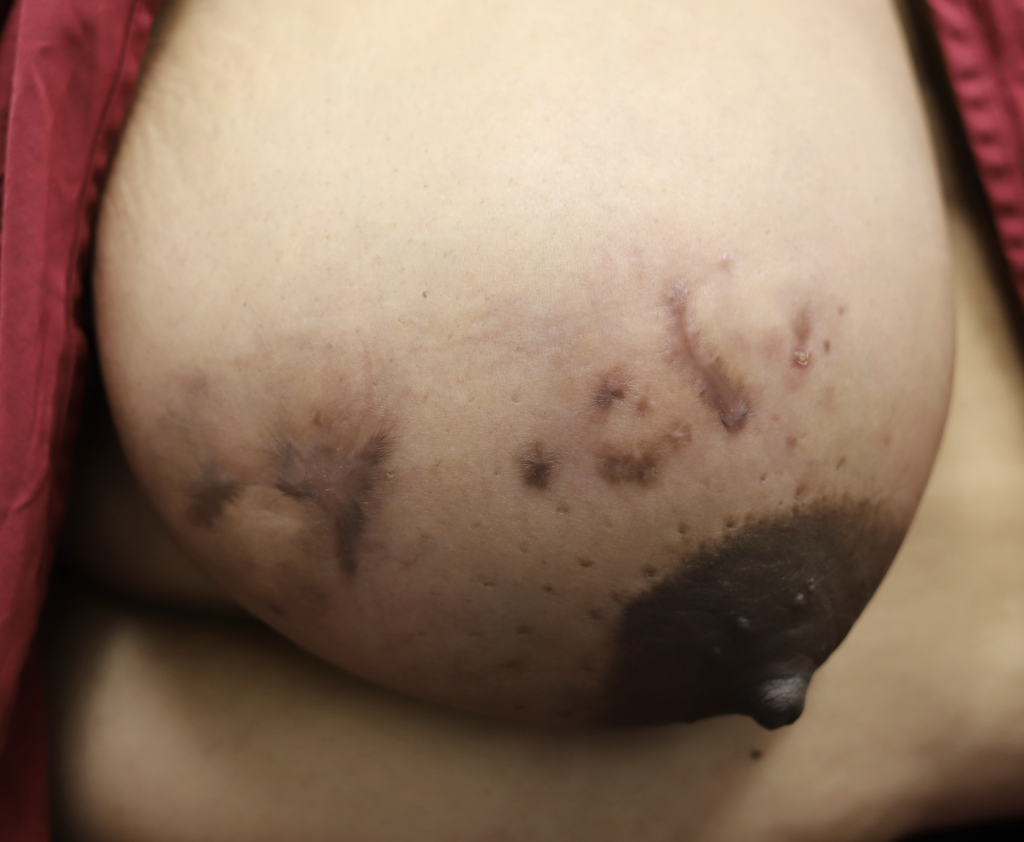
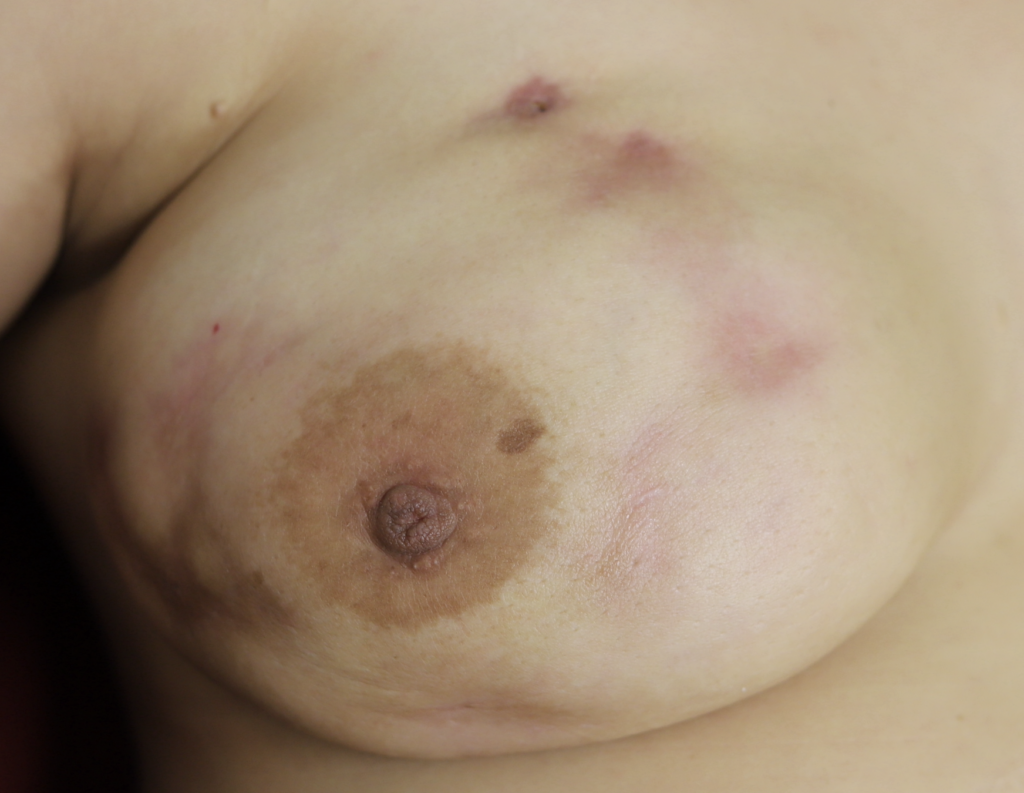
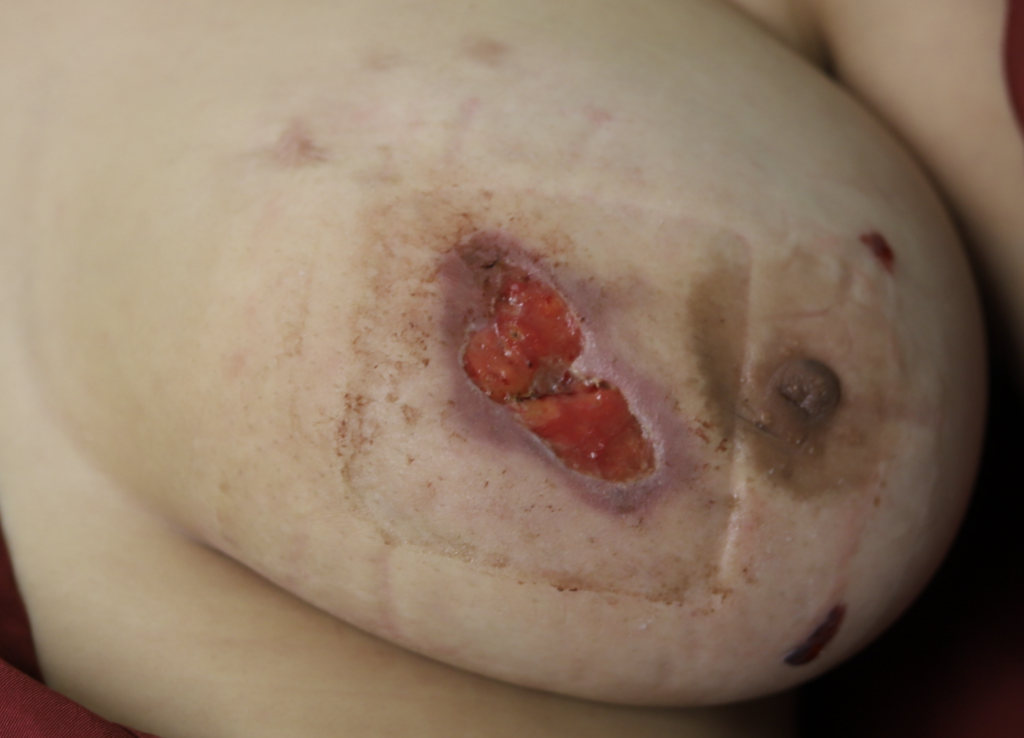
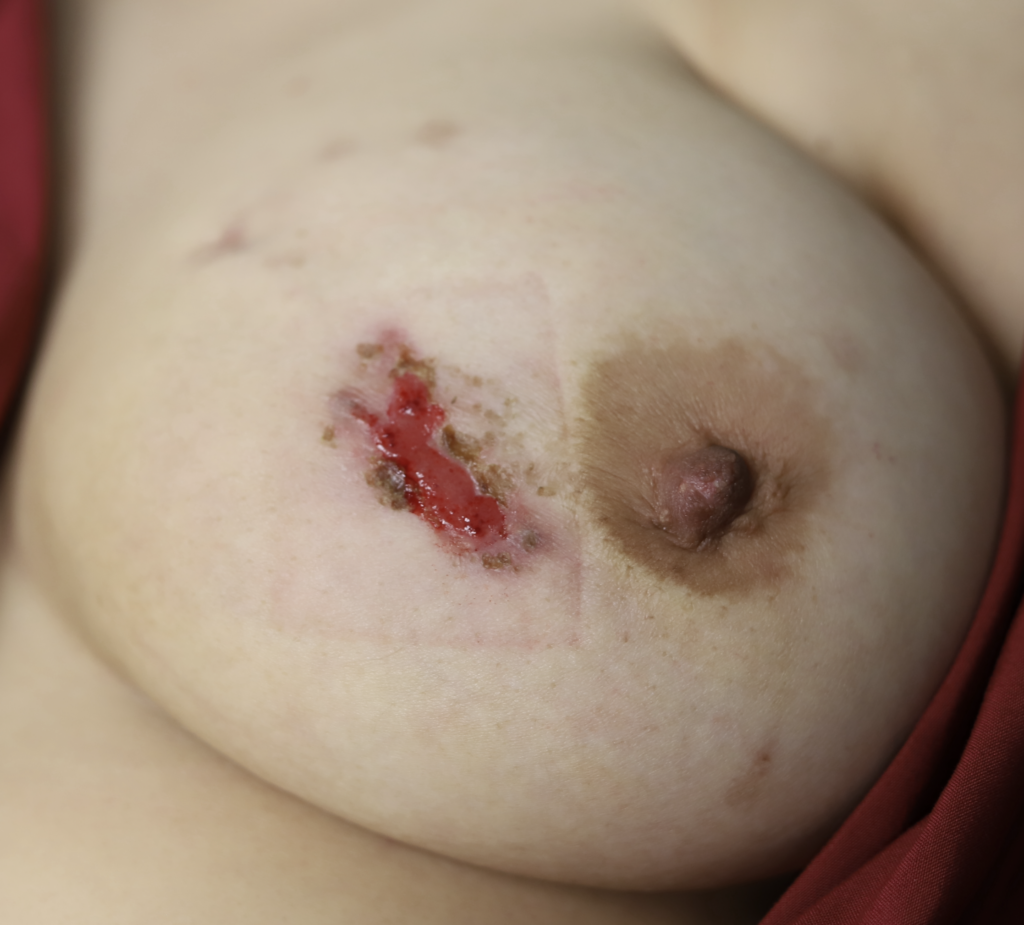
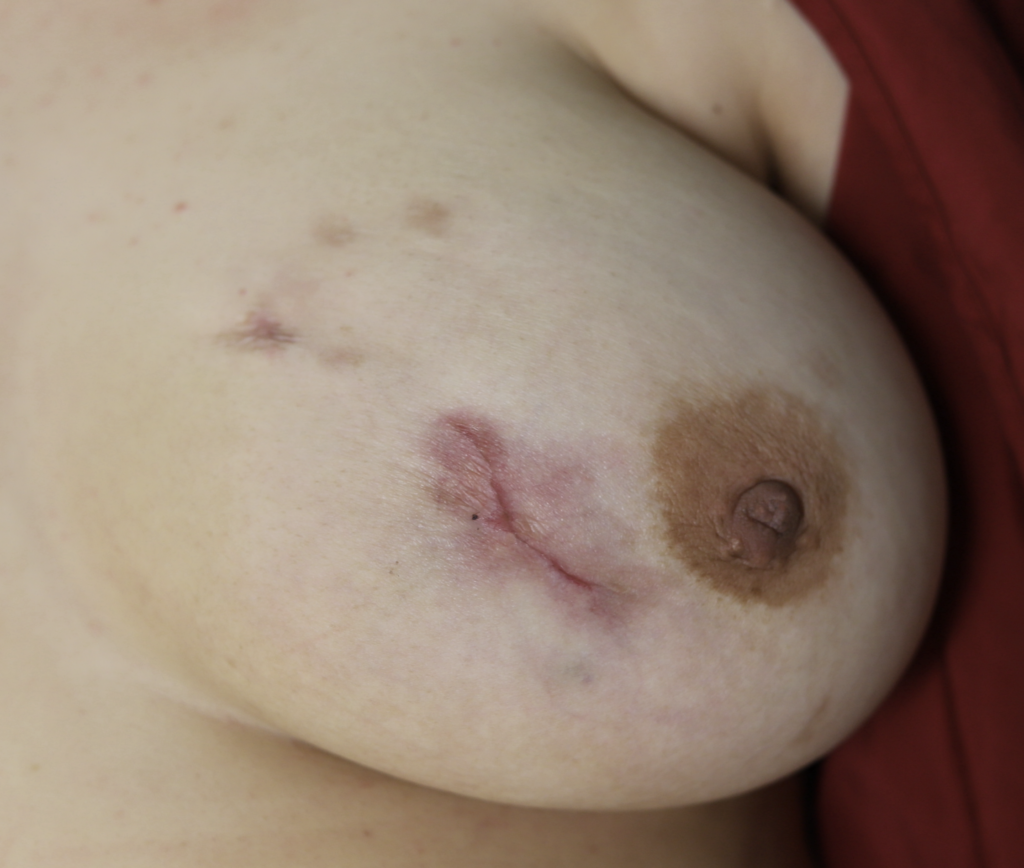
Above a patient with a history of right breast IGM that was treated only with repeated incisions and drainages and antibiotics and she was left with severe scarring. She presented to the ER with developing symptoms like this on the left breast. Fortunately, she was then referred to breast surgery rather than undergoing an invasive incision and drainage that would have scarred the left breast as well. Photo on right (her left breast) is just prior to initiating azathioprine. She received a steroid injection at this visit to help the symptoms and reduce the wound size, which is shown below.
The patient continued to experience decreased pain, swelling, and size of wound just before third injection (above).
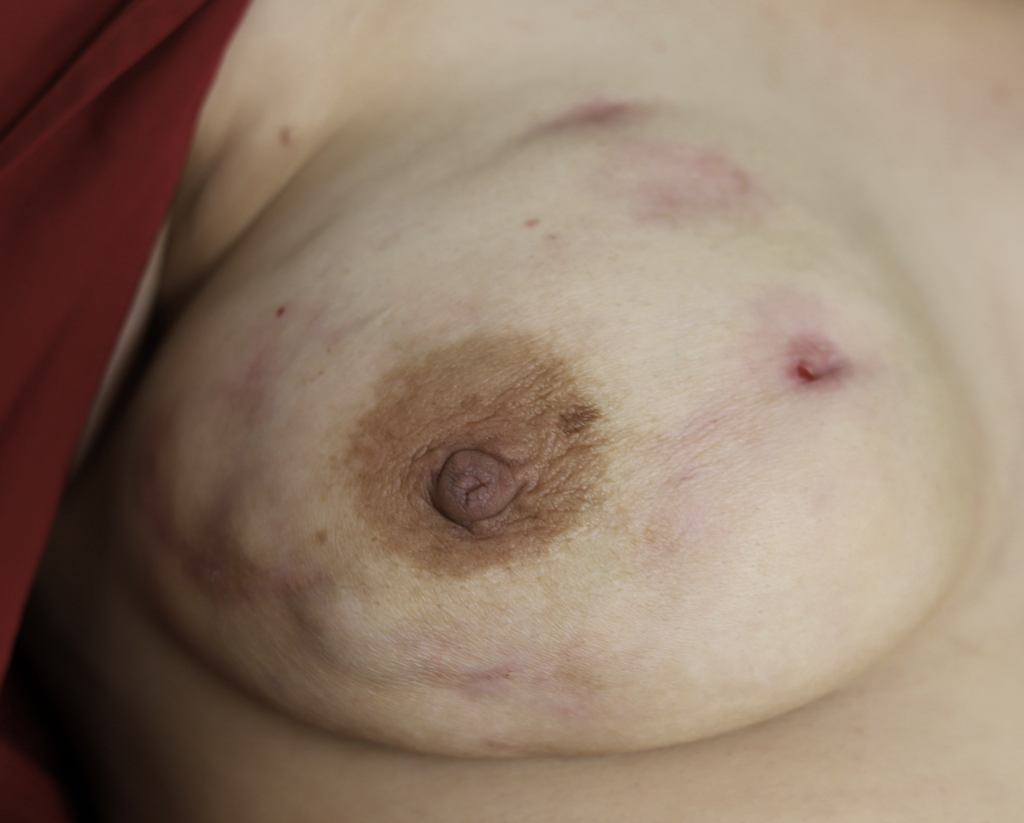
Completely healed with no residual pain or mass three weeks later (above). Unfortunately, her right breast started to flare (below) with a new fistula at 3:00 and fluid at 7:00, 8:00, 9:00. Fortunately, we were able to bypass some roadblocks in the system for referral to rheumatology and get her into an urgent appointment to start azathioprine. The patient previously had been hesitant to use oral medication, but recognized at this point it would help.
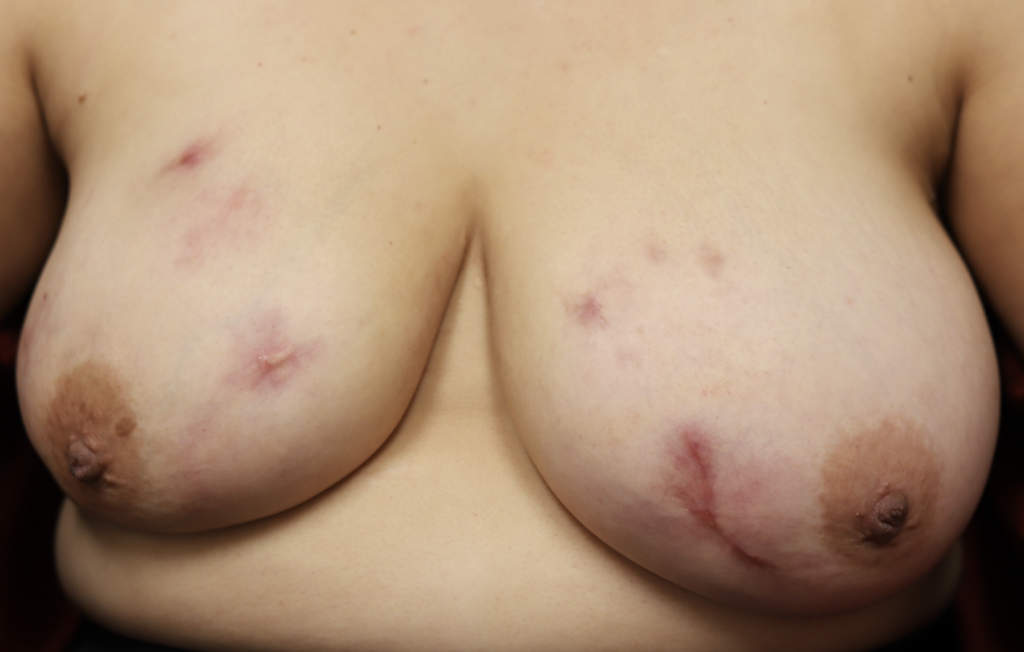
Bilateral IGM now resolved on methotrexate.
Presentation of initial IGM and post treatment
Patient with IGM treated with triamcinolone injection of left breast with continued breastfeeding from right breast.
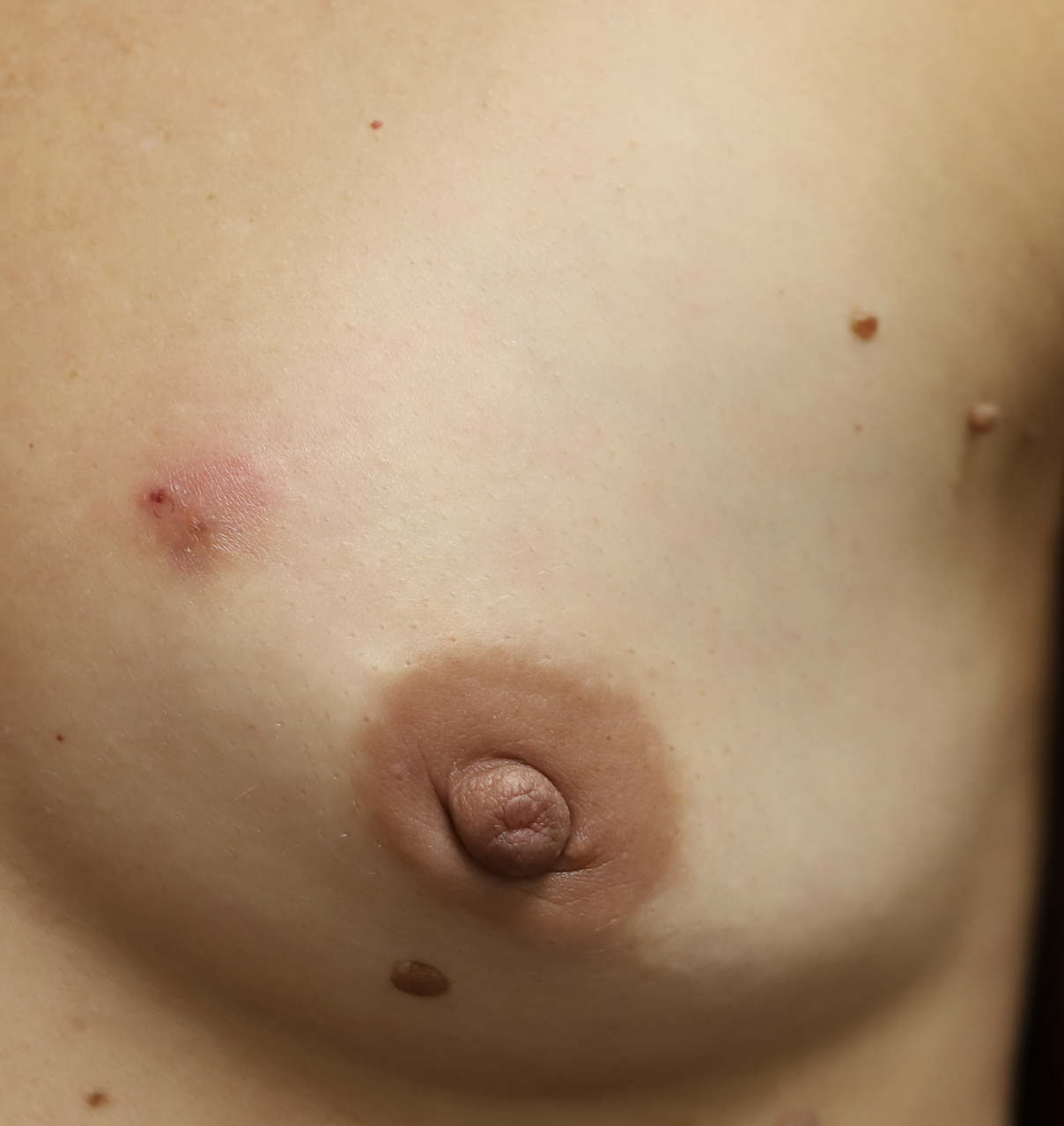
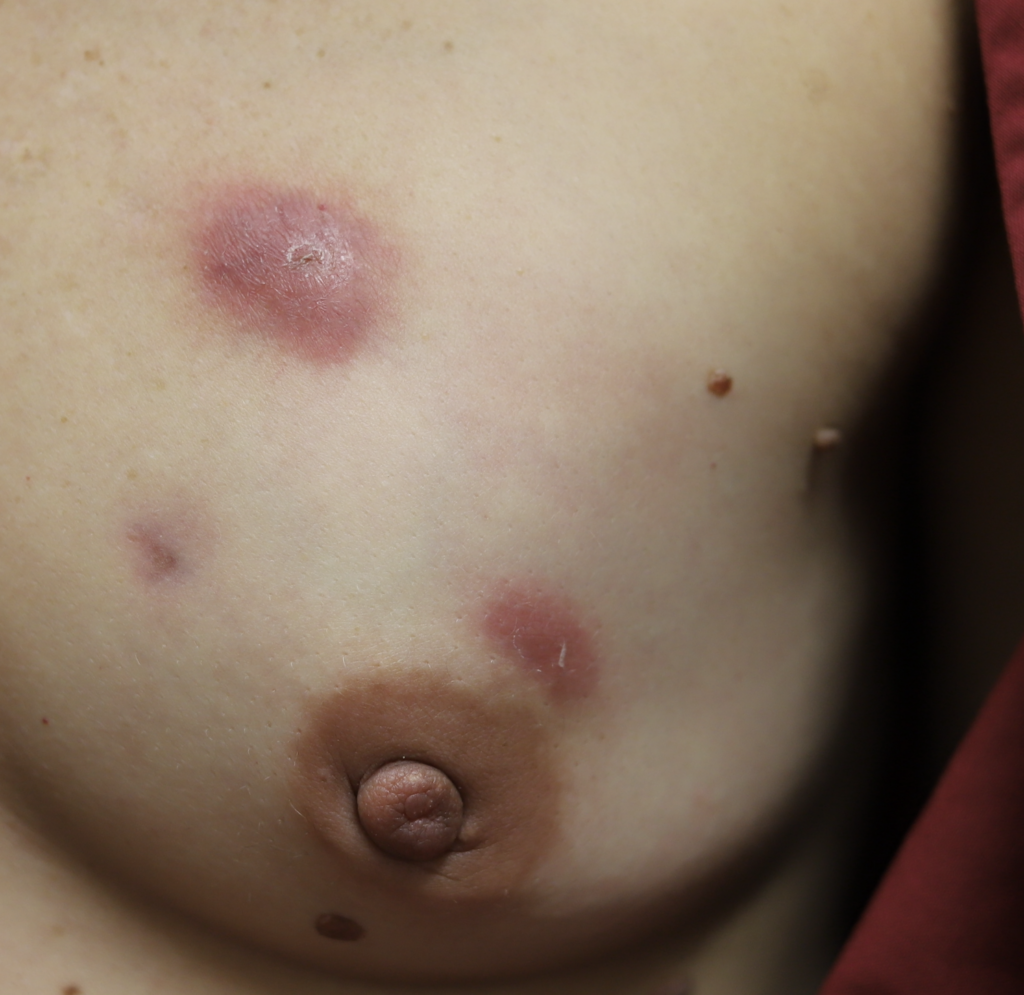
This patient presented with a nodule near her nipple and then developed swelling near her incision site for the biopsy. This did not flare further until months later and so she did not do any medical management until then.
The patient experienced significant new life stress and flared several months later. She elected to proceed with steroid injection at this time (above). She continued to flare (above right) in a new area and then started low dose naltrexone with a functional medicine doctor for other concerns. It ended up resolving her IGM as well.
41 year old experienced rapidly enlarging right breast mass over the past month then with development of fluid collection just under the skin (above). We injected her breast with steroid and referred to rheumatology for treatment with azathioprine. The steroid did such a good job of controlling her pain and swelling that she elected to hold off on azathioprine initially. However, with the resurgence of a painful mass and fluid collection (right) we repeated steroid injection and she decided to start the oral medication to resolve the disease definitively.
IGM at presentation with fistula and debris (dead tissue, inflammatory not bacteria).
Presentation of initial IGM and post treatment
Breastfeeding patient who resolved IGM symptoms within two weeks of starting azathioprine and continued breastfeeding from the affected breast without issue.
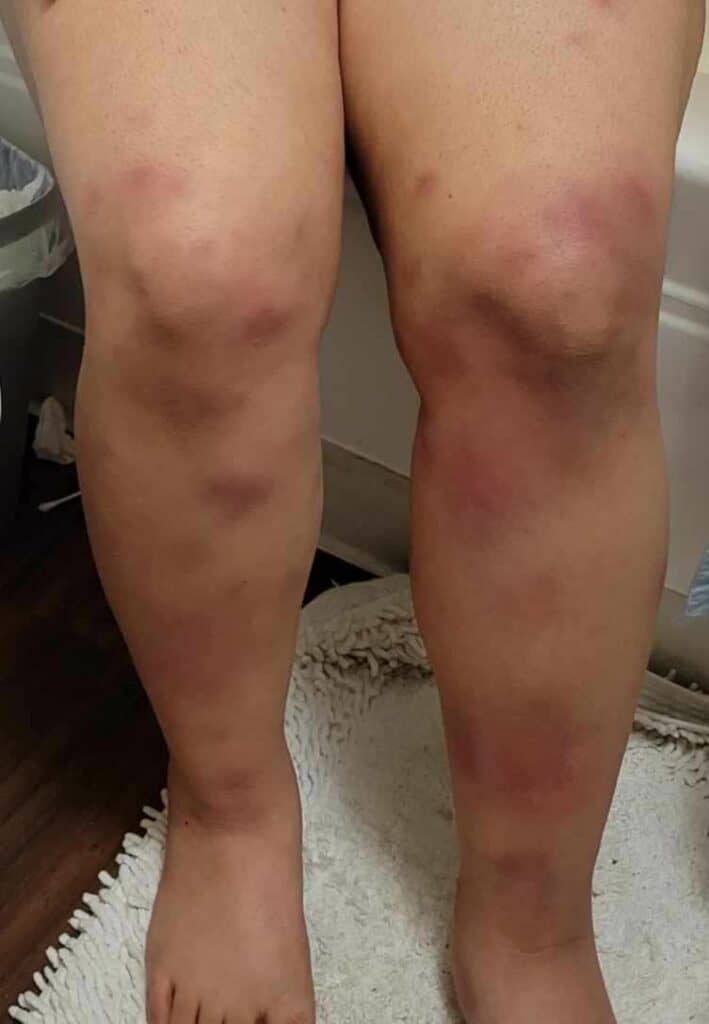
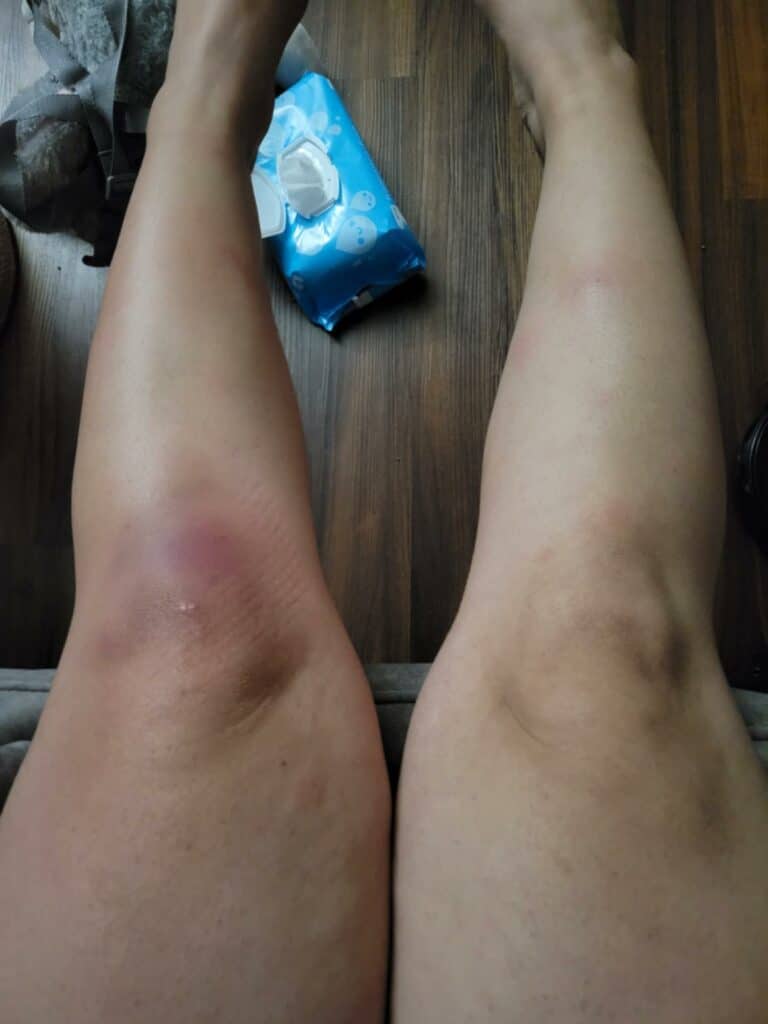
Erythema nodosum (painful, red, inflamed nodules on the front of the calves) may present at the same time as idiopathic granulomatous mastitis (IGM).
IGM in left breast needs AZA
Marked improvement after starting azathioprine
This is a patient who unfortunately had a large surgical incision to address the IGM, and she was left with much worse scarring than the patient above whose wounds started to heal nicely after starting azathioprine.
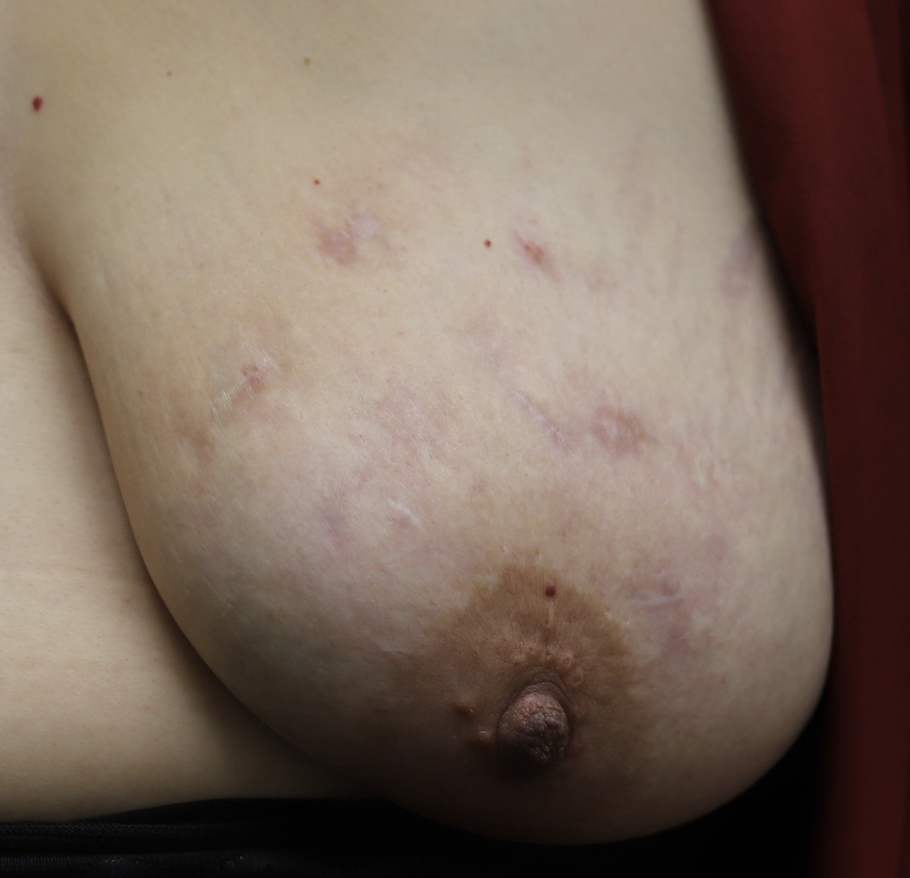
This patient suffered from IGM for 18 months. She underwent repeated incisions and drainages without steroid injections or systemic (oral) therapy with azathioprine or methotrexate. The disease eventually resolved, but she was left with multiple scars.
IGM in pregnancy presenting as a large, painful mass.
While some cases of IGM may resolve from a simple mass, many go on to form fluid collections (above and below) that may drain on their own. These are mistakingly called “abscesses.” They are in fact just fluid collections of dead inflammatory cells. Patients need either local treatment with needle drainage of the fluid (NOT large incisions with packing tape, which make inflammation worse) and steroid injection, or oral steroids/anti-inflammatories/immune suppressants.
Due to pregnancy, this patient declined oral medication. The granulomatous mastitis eventually healed in this region of the breast (above), but then flared the week prior to delivery in a new spot in the upper inner part of the breast (above, right):
The patient started chemotherapy for a very unfortunate postpartum lymphoma diagnosis and this quieted the IGM, though not entirely.
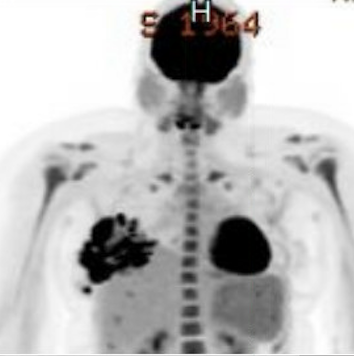
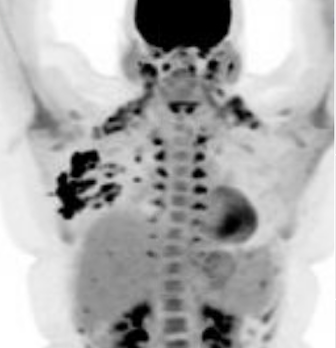
The PET scan (performed to evaluate lymphoma) early postpartum showed the remarkable metabolic activity of the lactating breast (above left: left breast lactating, right breast not because of active IGM; the IGM is still so inflammatory that it picks up the PET radiotracer). After the patient completed lymphoma therapy and was not breastfeeding due to chemotherapy (above right), a repeat PET scan showed no activity in the previously active, lactating left breast as well as residual inflammation in the right breast
IGM at presentation in a 44 year old patient.
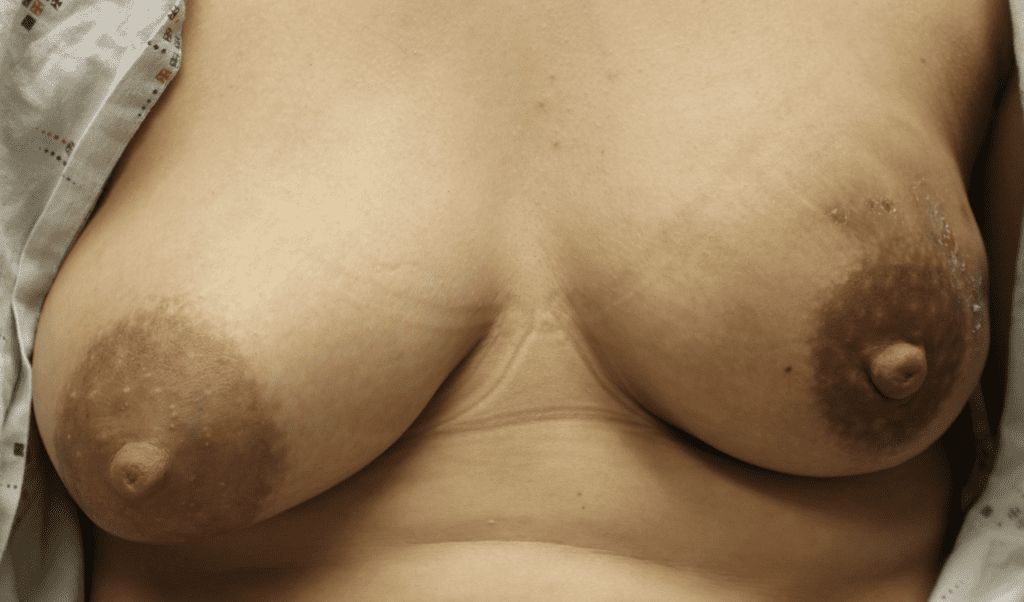
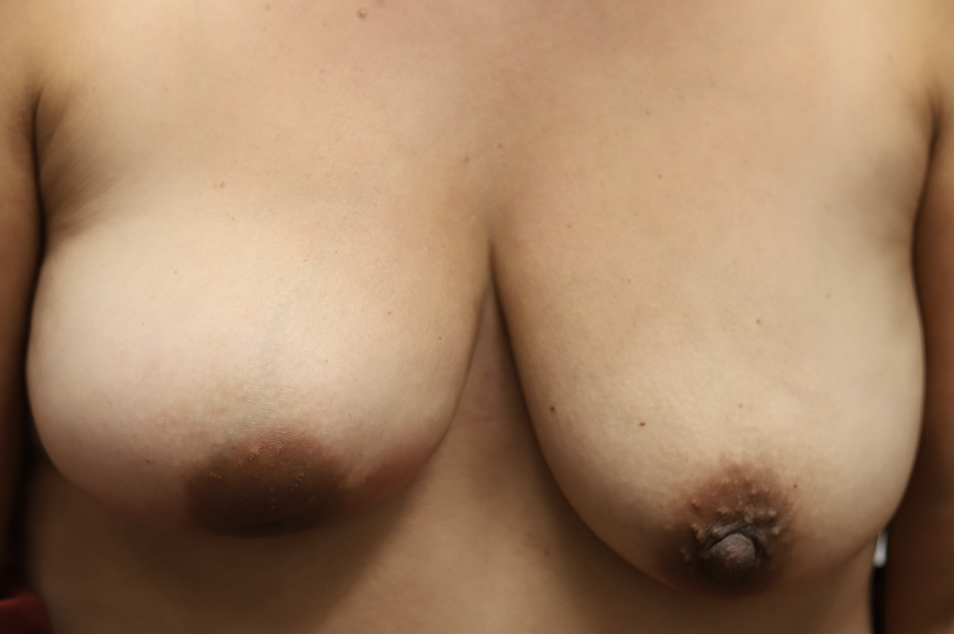
Classic appearance of retracted nipple compared to the left breast. Note that this nipple retraction is part of the entire presentation of IGM with associated redness, masses, fluid collection, and fistulae.
The patient elected to have no interventions and this was the appearance of the breast one year later.
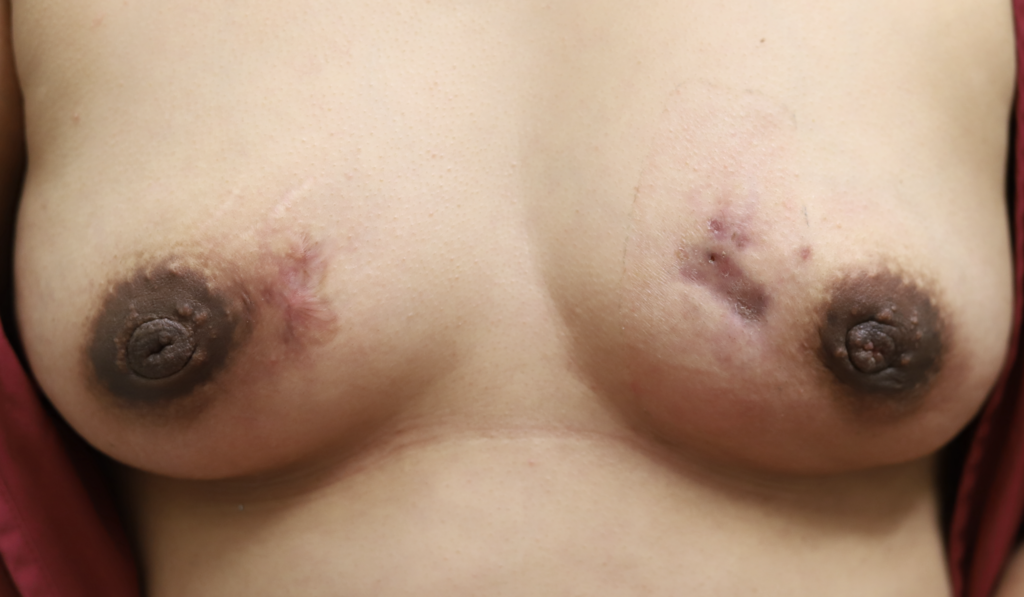
Bilateral granulomatous mastitis, now flaring on the left breast and presenting to breast surgery and rheumatology for treatment.
We use cookies on our website to give you the most relevant experience by remembering your preferences and repeat visits. By clicking “Accept”, you consent to the use of ALL the cookies.
This website uses cookies to improve your experience while you navigate through the website. Out of these, the cookies that are categorized as necessary are stored on your browser as they are essential for the working of basic functionalities of the website. We also use third-party cookies that help us analyze and understand how you use this website. These cookies will be stored in your browser only with your consent. You also have the option to opt-out of these cookies. But opting out of some of these cookies may affect your browsing experience.
Necessary cookies are absolutely essential for the website to function properly. These cookies ensure basic functionalities and security features of the website, anonymously.
Cookie
Duration
Description
cookielawinfo-checkbox-analytics
11 months
This cookie is set by GDPR Cookie Consent plugin. The cookie is used to store the user consent for the cookies in the category "Analytics".
cookielawinfo-checkbox-functional
11 months
The cookie is set by GDPR cookie consent to record the user consent for the cookies in the category "Functional".
cookielawinfo-checkbox-necessary
11 months
This cookie is set by GDPR Cookie Consent plugin. The cookies is used to store the user consent for the cookies in the category "Necessary".
cookielawinfo-checkbox-others
11 months
This cookie is set by GDPR Cookie Consent plugin. The cookie is used to store the user consent for the cookies in the category "Other.
cookielawinfo-checkbox-performance
11 months
This cookie is set by GDPR Cookie Consent plugin. The cookie is used to store the user consent for the cookies in the category "Performance".
viewed_cookie_policy
11 months
The cookie is set by the GDPR Cookie Consent plugin and is used to store whether or not user has consented to the use of cookies. It does not store any personal data.
Functional cookies help to perform certain functionalities like sharing the content of the website on social media platforms, collect feedbacks, and other third-party features.
Performance cookies are used to understand and analyze the key performance indexes of the website which helps in delivering a better user experience for the visitors.
Analytical cookies are used to understand how visitors interact with the website. These cookies help provide information on metrics the number of visitors, bounce rate, traffic source, etc.
Advertisement cookies are used to provide visitors with relevant ads and marketing campaigns. These cookies track visitors across websites and collect information to provide customized ads.