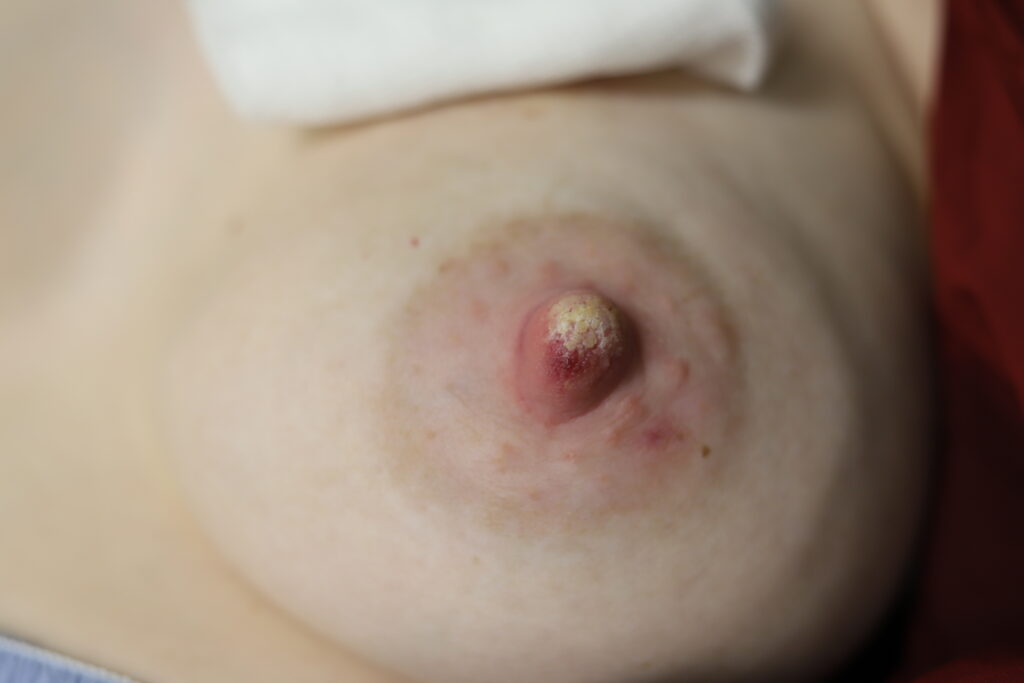
If you feel silly doing it, it’s because it IS.
This includes traditional lactation advice like feeding the baby in strange and dangerous positions or “pumping on all fours” to “loosen a plug,” soaking nipples or breasts in epson salt or laundry detergent, hair drying the nipple, or walking around the house naked to avoid anything touching the nipple. Plugs are not relieved by anything external like body position, infant position, or change in bras. Plugs (which are congested areas of blood vessels, lymphatics, and milk-making cells) are relieved with attention to BAIT (Breast rest, Advil, Ice!!, and tylenol), addressing hyperlactation (oversupply), and resolving breast microbiome disruption (e.g. exclusive pumping transition to baby at breast).
I recently heard from a patient that she was told to do the following (on continuous repeat):
- Soak her breast in epsom salt
- Pump
- Apply castor oil wraps with heating pad on top
- Massage vigorously
- Pump
The patient was understandably exhausted and her breast was inflamed and extraordinarily sore. Like so many patients, she KNEW what she was doing couldn’t possibly be right. She even said, “our kitchen looked like an episode from ‘Breaking Bad’!” Nothing about lactation should ever look like ‘Breaking Bad’ — TRUST YOURSELF and question advice that seems contrary to common sense.
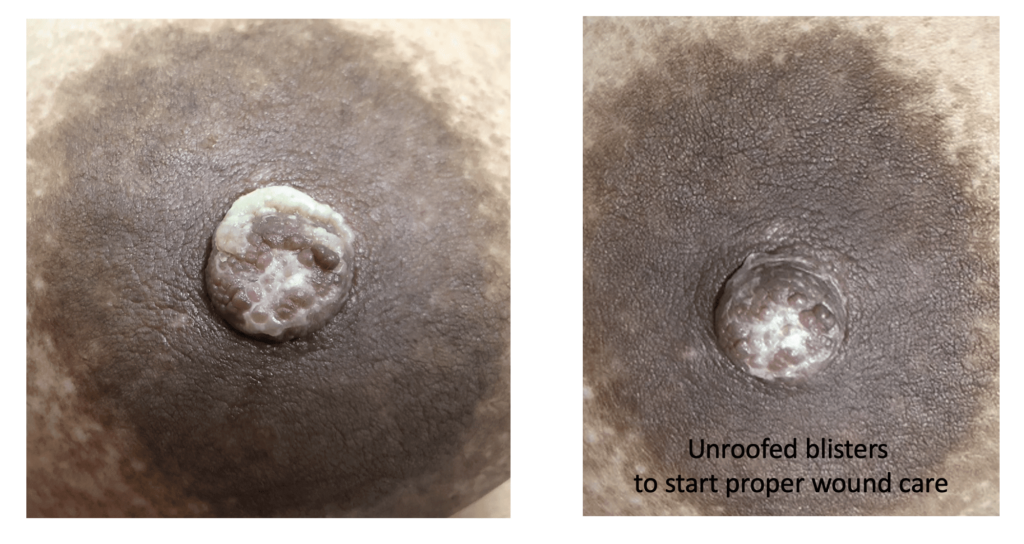
Soaking any body part in salt water or plain water will break down the skin (think of being in the pool or ocean or bathwater too long), as will excessive drying with hairdryers or “air drying” nipples.
Overall, care for your nipples like any other skin surface on your body. For more information on treating nipple trauma, see Nipple Complications section, but otherwise follow these guidelines:
- Do not use drying agents such as antiseptics, alcohol, borax, or apple cider vinegar.
- Gentian violet can produce significant tissue ulceration and should never be used on a nipple.
- Some women may lubricate dry skin with nursing balms. They should be aware of potentially allergenic ingredients such as lanolin, petroleum, and coconut.
- Balms containing multiple ingredients may result in dermatitis from allergens.
- Antifungals creams worsen pain and vasospasm, and can cause dermatitis. They are not indicated for use on nipples.
- APNO (All Purpose Nipple Ointment) is an expensive compounded product that should be avoided. It contains an antifungal, antibacterial (which is similar to antifungals in that it is not indicated for use on a nipple and can cause dermatitis), and a steroid. The steroid is the component that provides relief from pain. If a steroid is indicated, it should be prescribed separately (e.g. 0.1% triamcinolone). Most dermatitis and pain does not respond to over-the-counter non-prescription strength steroids. 4th Trimester Physician Michelle Haggerty has a great blog post on the dangers of APNO as well.
- Breast shells designed to “keep the nipple dry” or “protect the nipple from the bra” worsen swelling in the nipple, cause areola compression,and subsequently worsen pain.
- Using a hair dryer on nipples causes drying and increases risk of skin breakdown.
- Epsom salt soaks are used to promote opening and drainage of skin, such as with abscesses in the buttock region. Epsom salt soaks will similarly breakdown nipple skin and should not be utilized for the purposes of nipple care.
- Wet tea bags and warm compresses similarly increase the risk of skin breakdown.