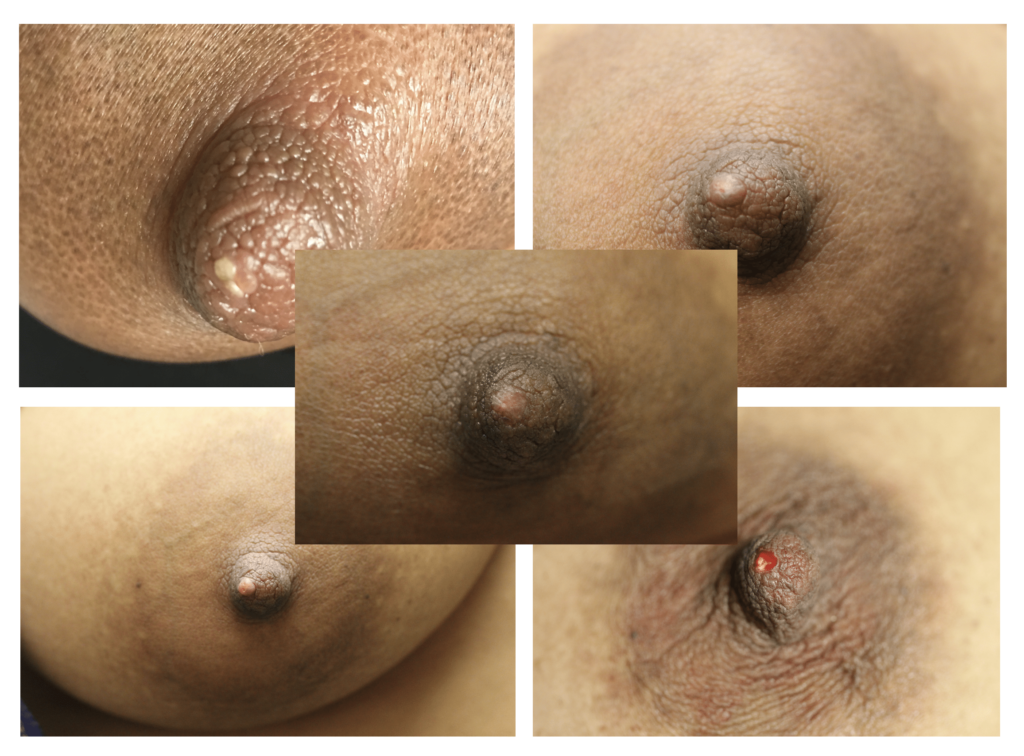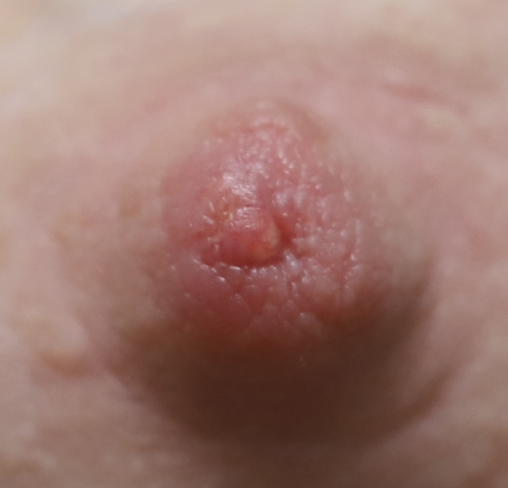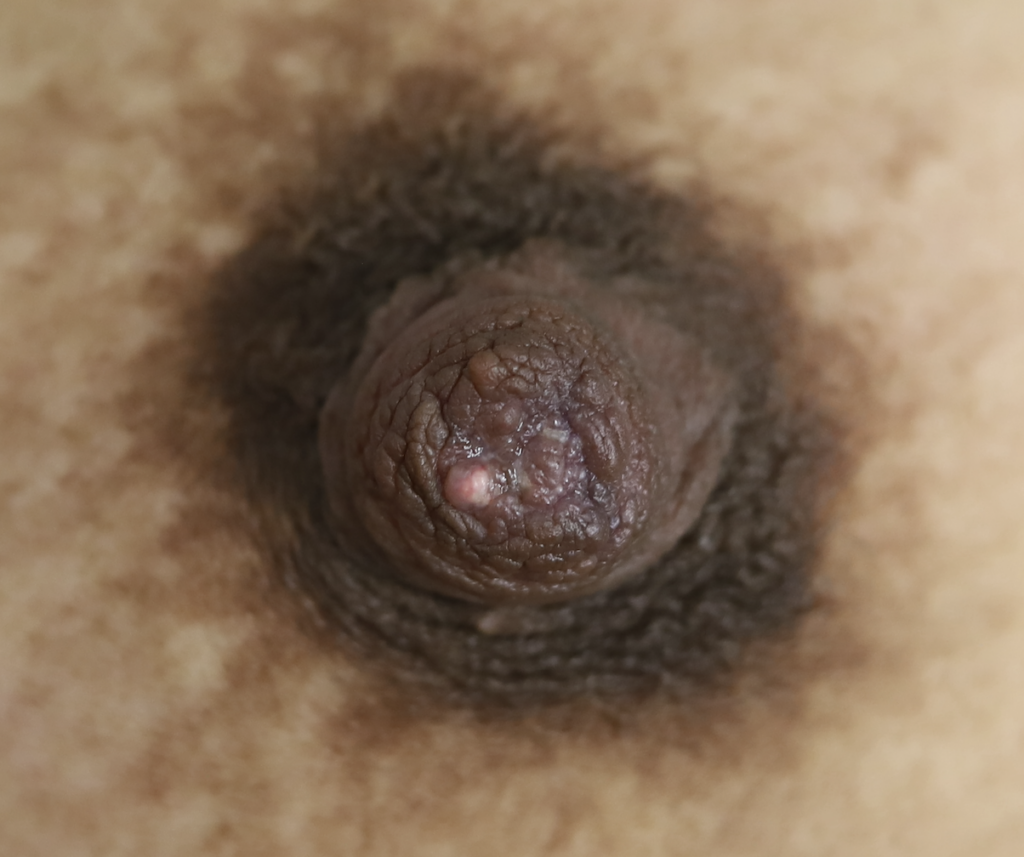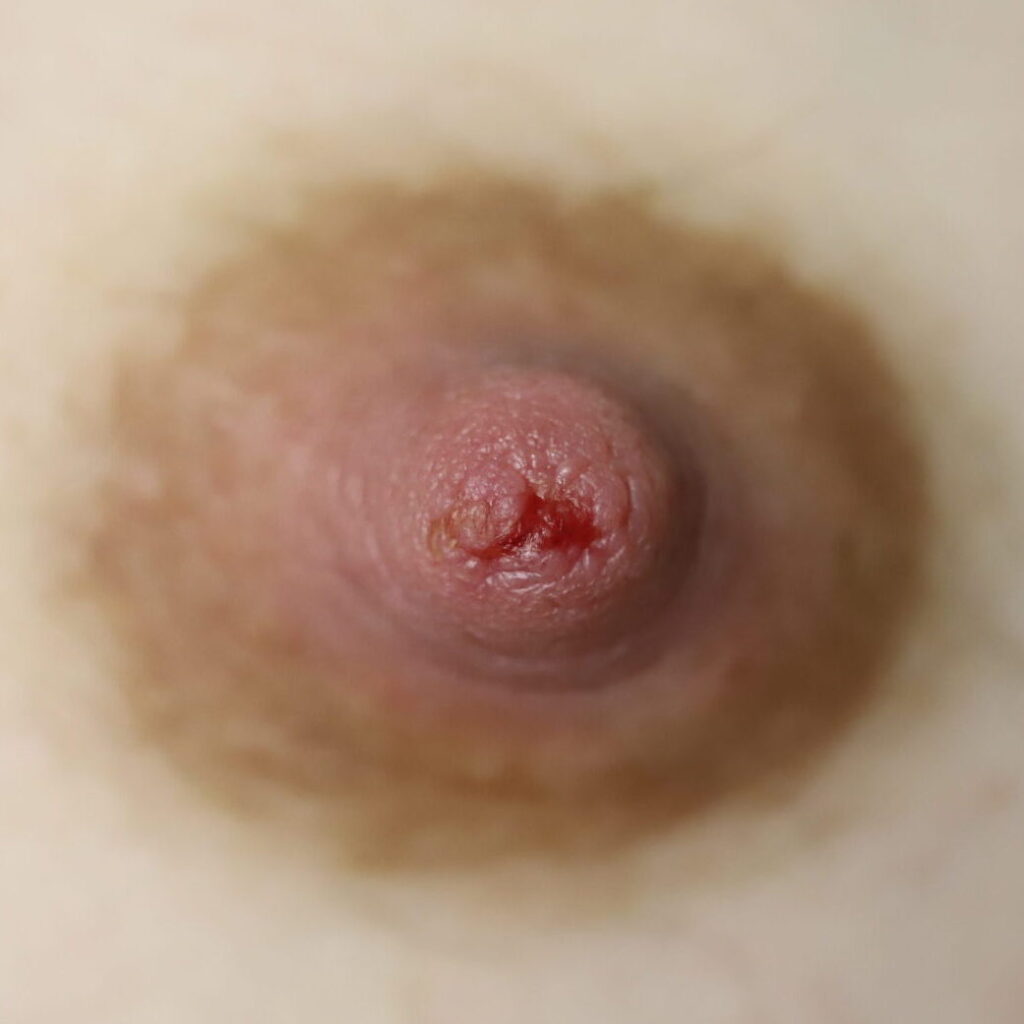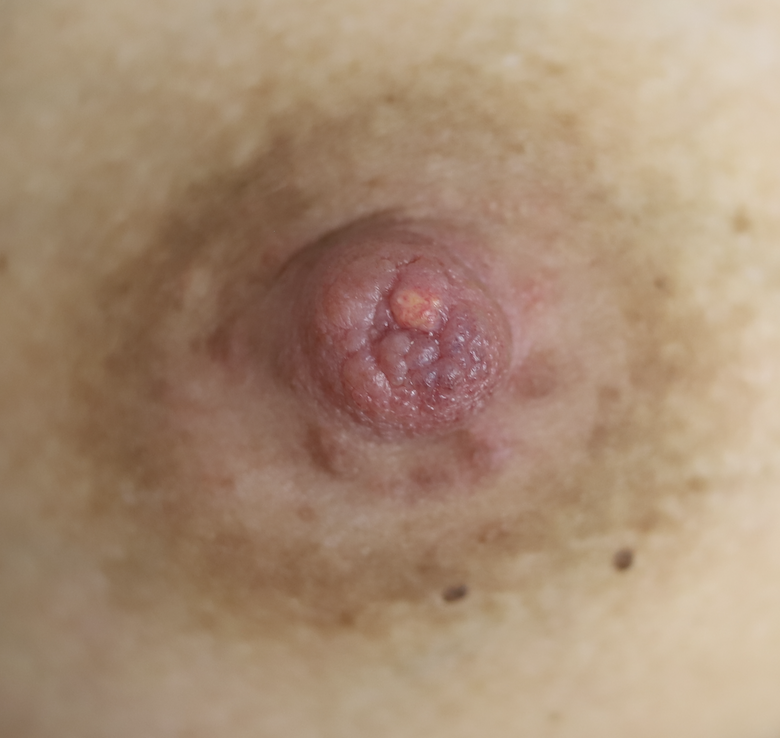


Blebs, inflammatory lesions on the surface of the nipple orifice, reflecting the interface of shedding inflammatory cells, cholesterol/fats in milk, and bacterial byproducts. They may be described as “blisters” or “scabs.” Patients also may describe “shards,” “stones,” or “pebbles” being expressible from their nipples. This is all ductal debris, like a storm gutter getting congested with leaves that eventually float down the stream. While uncomfortable, it isn’t harmful or dangerous. Continually “expressing” these little “pebbles” is not healthy for the breast tissue nor for mom’s mental health.
Blebs are common with hyperlactation (oversupply), pumping (alters microbiome), and c-section births (altered microbiome). They are not related to infant trauma or latch in any way. Because blebs are very painful, moms often believe the infant has a poor latch or otherwise has contributed to the problem. However, this is another example of association rather than cause and effect in lactation.
It’s also important for breastfeeding moms to understand that blebs can be different in different people. I describe it as analogous to acne: some people experience one pimple that goes away on its own, some have more generalized acne that overall improves with treatment, and some people have breakouts no matter what they do. Like irritable bowel syndrome, this can feel like “irritable breast syndrome” and we just need better research to better understand it.

Do NOT unroof blebs with needles! This may transiently relieve milk congestion in an associated ductal orifice, or it may not. Repeatedly unroofing the bleb just promotes more inflammation and can result in permanent scarring. Attempting to squeeze out a bleb can cause tissue damage and bleeding. If you have a bleb that has caused milk obstruction in your breast, apply BAIT (Breast rest, Advil, Ice, Tylenol) principles and seek medical evaluation for triamcinolone for the nipple orifice, therapeutic ultrasound, and instructions regarding sunflower lecithin by mouth.