Add a header to begin generating the table of contents
Breast Growth and Engorgement
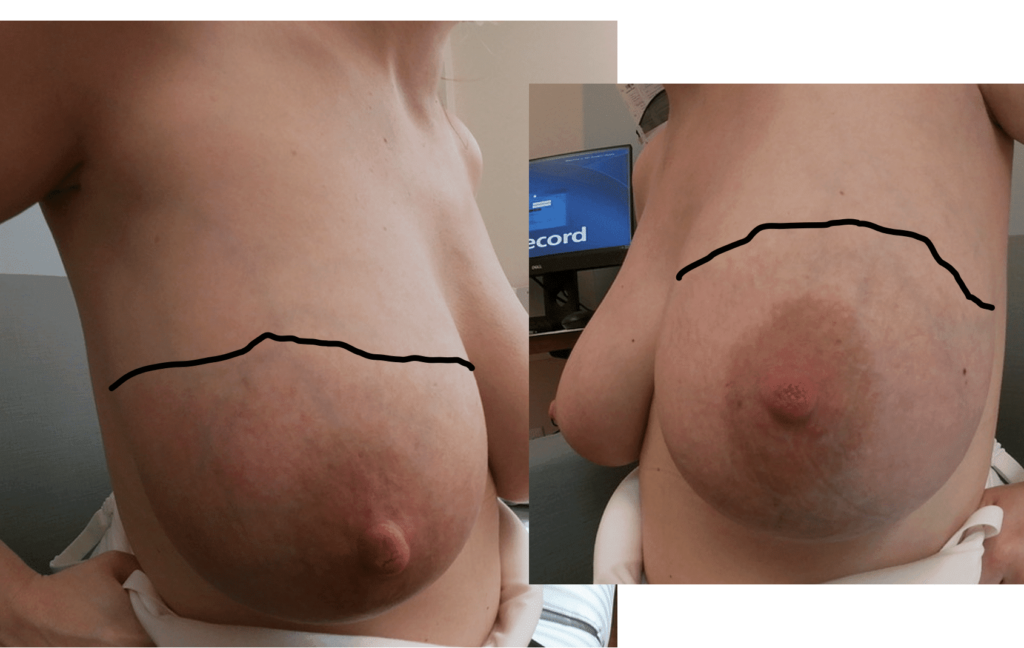
Significant breast growth can be painful, and cause the lower parts of the breasts to swell and develop a pink or reddish color. This is called breast “lymphedema” (similar to swelling of ankles when sitting for too long). The first step is to obtain a very supportive bra, as tight fitting as you can handle with comfort (similar to compression stockings for your calves). It is a myth that tight fitting bras cause breast problems or mastitis after the baby is born. Mastitis results from factors such as hyperlactation (oversupply) and high blood flow into the breast, NOT from external compression. It is also very uncommon to develop mastitis during pregnancy. If you do experience symptoms, you should be evaluated by a breast specialist to ensure the changes are consistent with normal breast growth versus another process such as granulomatous mastitis (which is not caused by pregnancy or lactation, but can occur in women of childbearing age).
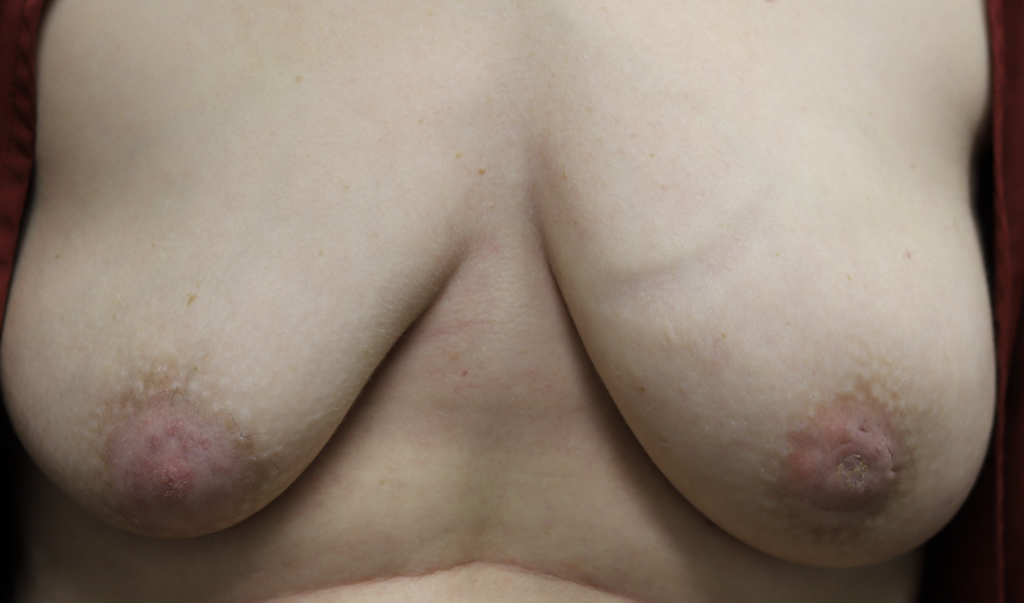
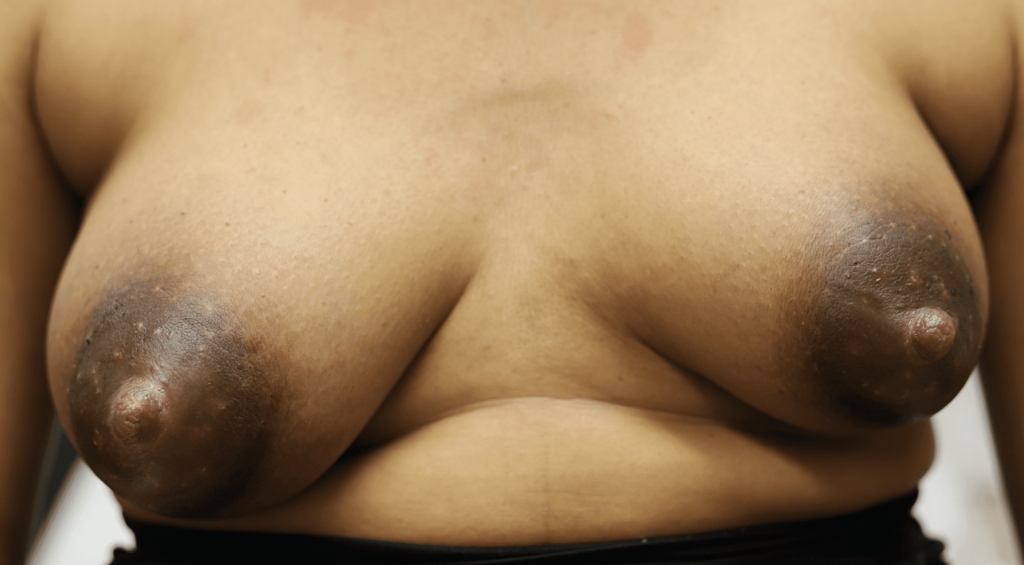
Faint redness, swelling, and pain in a symmetric fashion in lower (dependent) portions of both breasts from breast growth and engorgement
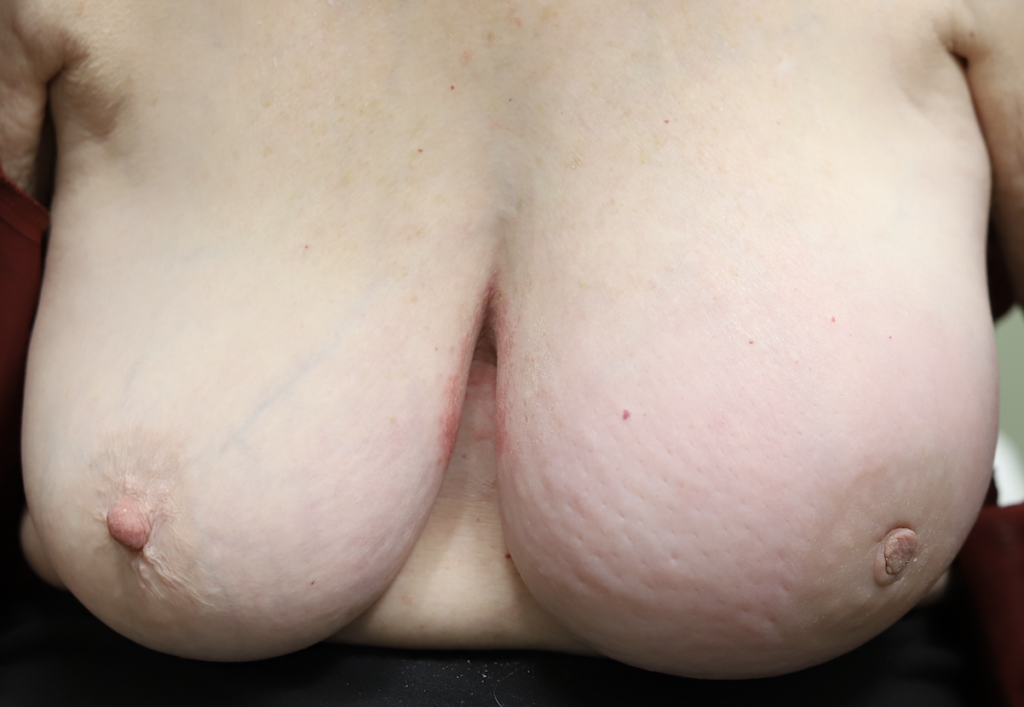
Chronic breast lymphedema. Patient had a history of significant breast growth during first pregnancy that was not treated with lymphatic drainage or supportive bra. She developed “pitting" in the lower parts of her breasts from chronic unresolved swelling.
Redness, pitting, and swelling (edema) on in the lower part of both breasts during mid-pregnancy (above). Symptoms greatly improved after initiating lymphatic drainage and wearing a compressive, supportive bra (below).
Prairie Wear bras are incredibly supportive and helpful for larger breasts (strap adjustments, larger straps so they don't groove, etc).
Lymphedema and stretch marks in pregnancy.
Lymphedema and stretch marks.
Lymphedema
Lymphedema with pitting and bra indentation.
Unfortunately, the patient went on a business trip and was unable to find a more supportive bra prior to this. So on her follow up two weeks later, her lymphedema was actually worse, with more pronounced bra indentations.
Inflammatory Breast Cancer Versus Engorgement
It is not uncommon for women to experience significant breast growth and notice that the lower parts of their breast are faint pink or red in color, or even pucker a bit as shown in the breast growth photos above. However, it’s important to assess the swelling and puckering for symmetry (i.e. it is the same on both breasts, and focused the lower portion where fluid collects, much like swollen ankles on a long plane flight).
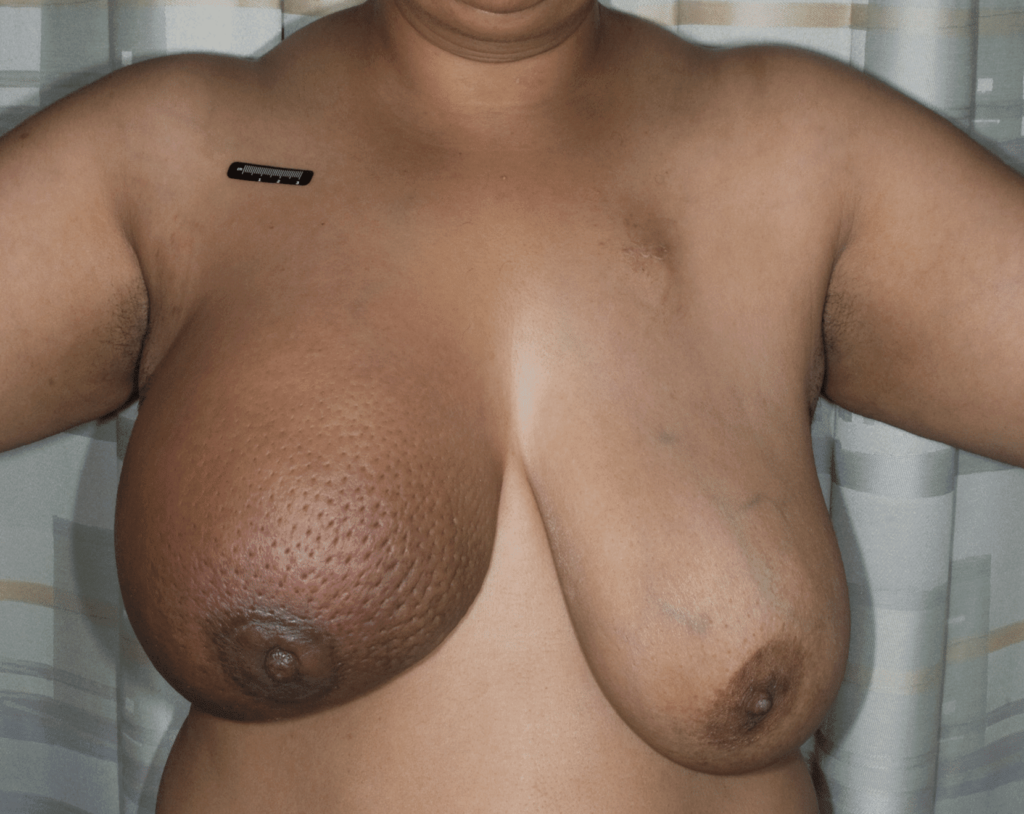
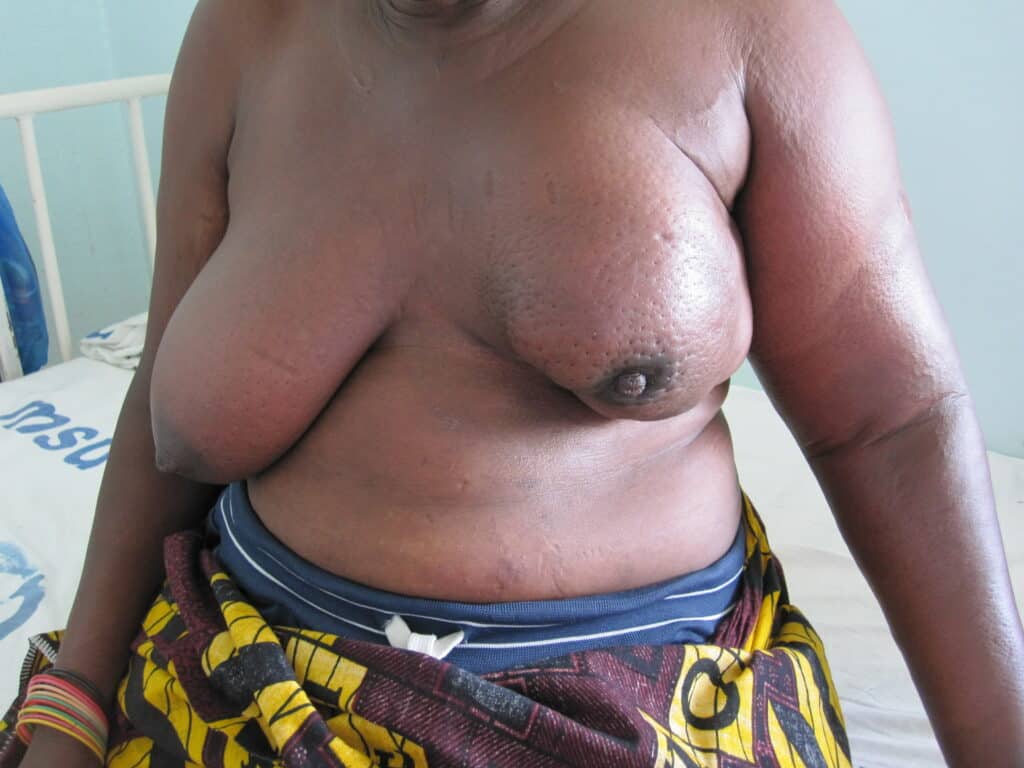
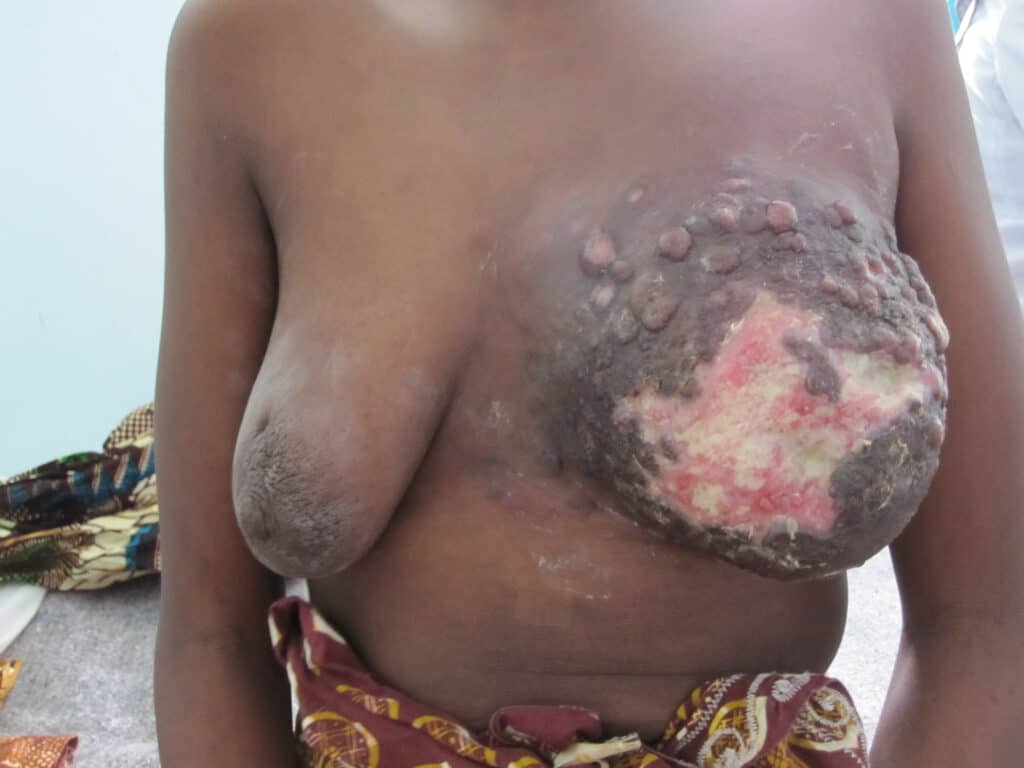
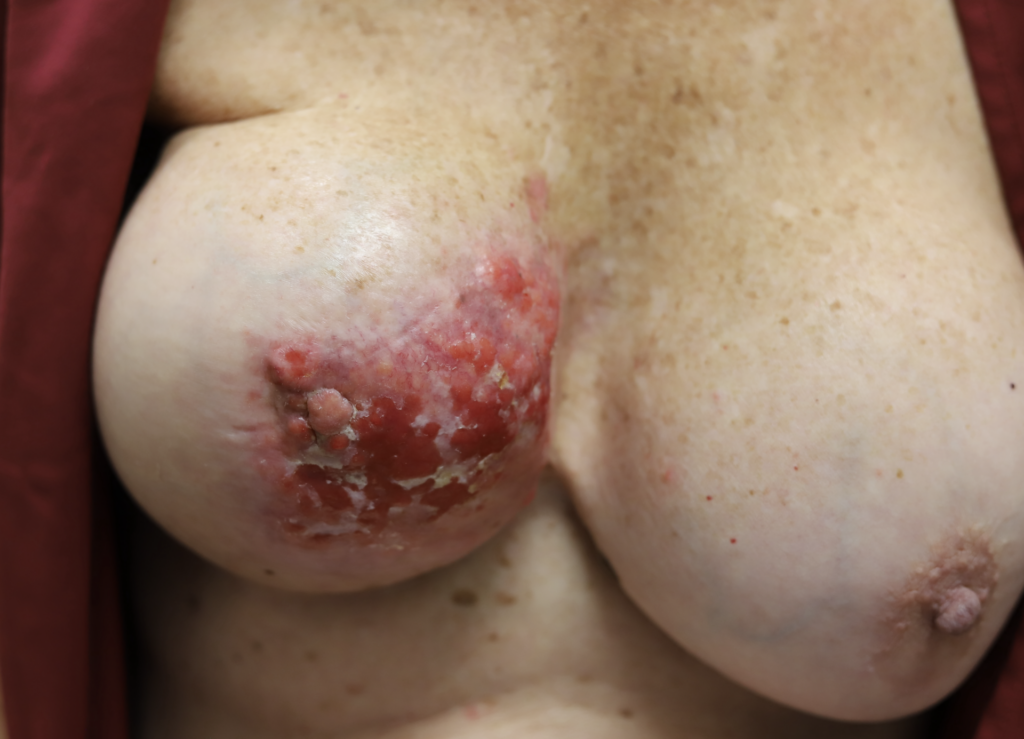
The appearance of inflammatory breast cancer can be alarming. However, I am asked so frequently about “ruling out” inflammatory breast cancer in the setting of perinatal breast growth that I share this image for clarity. This is a unique process that does not affect both breasts in symmetric fashion.
As you can see, this image of inflammatory breast cancer below are very different from the photos above that show both breasts being affected in the same way, mainly in the lower parts of the breast. Further, swelling caused by significant breast growth responds to a tight fitting bra and lymphatic drainage, whereas breast cancer does NOT.
Inflammatory breast cancer with left arm lymphedema
Inflammatory breast cancer with ulceration and modularity of skin
This is a very early presentation of inflammatory breast cancer without any delay to diagnosis (therefore the redness and peas d’orange had not started to take place). This patient noticed left breast growth/firmness (where her breasts had previously been symmetrical) a few months after weaning her baby. Imaging showed concerning tumor masses, lymph nodes, and biopsy of the skin showed dermal lymphatic involvement. You can see that her left nipple has started to become retracted, and you also see some new edema (upper inner quadrant) from her bra (lymphatic system of breast not working well when involved with tumor cells).
Untreated breast cancer that became locally advanced over many years.
Left breast inflammatory breast cancer. The key to the diagnosis here is the asymmetry (the right breast is soft and mobile, and the left breast is fixed and retracted with peau d'orange changes not seen on the right breast. In addition, this person had a large firm, irregular, immobile mass encompassing her entire left breast (i.e. not a skin finding in isolation).
This is an older patient, but a classic IBC presentation. The key is the asymmetry (breasts can get bigger/swollen before they start to retract and be extremely firm and the left NAC is fixed and pulled inward). Classic start of red hue and peau d'orange (again, the asymmetry and story is important in terms of distinguishing from bilateral dependent lymphedema with symmetric NAC).
Colostrum in Pregnancy
From the beginning of pregnancy, the breasts prepare to make milk after delivery. Breast growth may be the first sign of pregnancy, even before a missed period. Breast growth tends to be the most significant during the first trimester and the last trimester. Lactogenesis I, or “secretory initiation,” occurs in the second half of pregnancy and is when the breast cells begin to prepare to make milk.
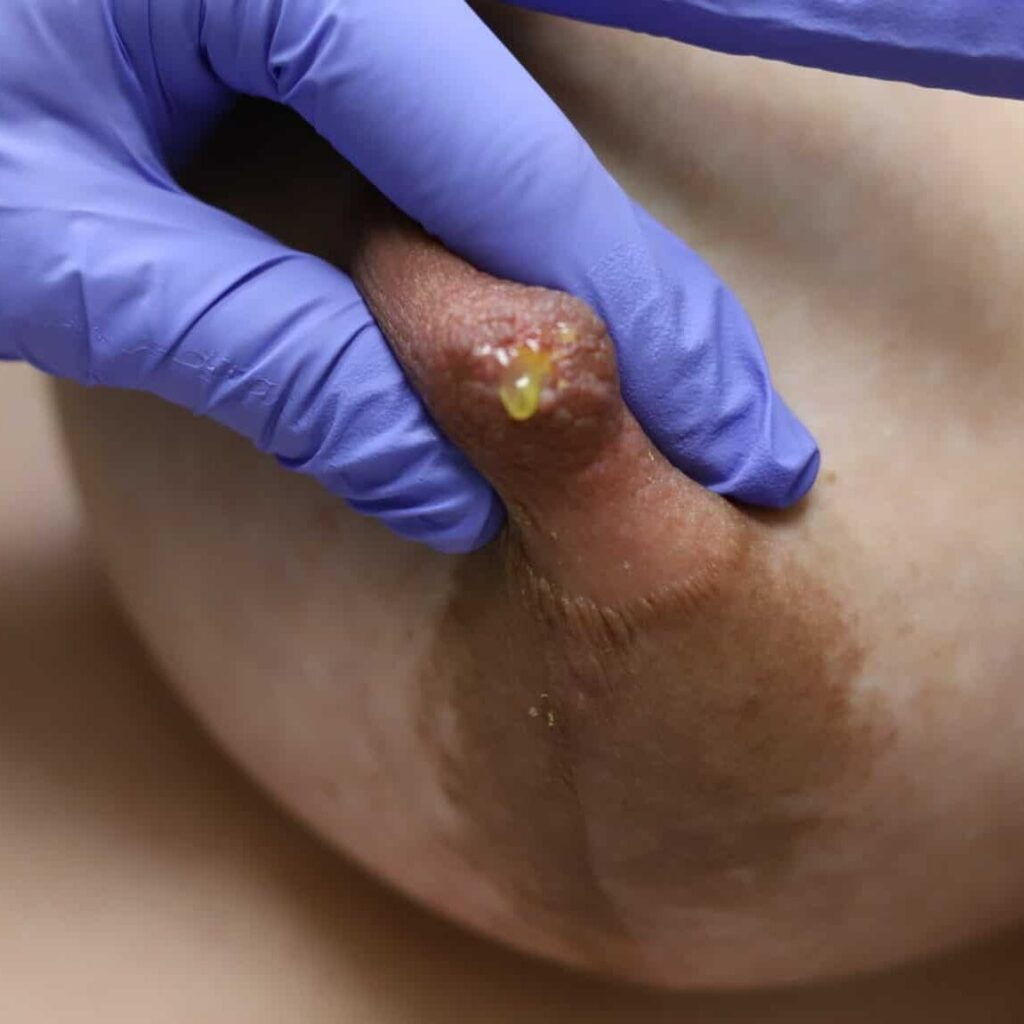
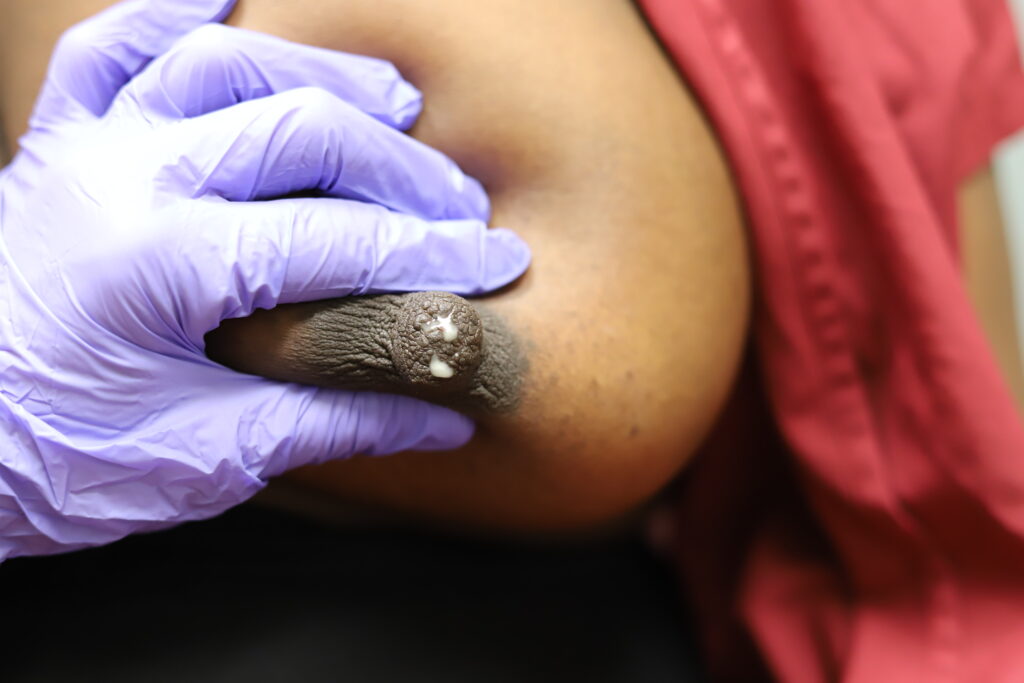
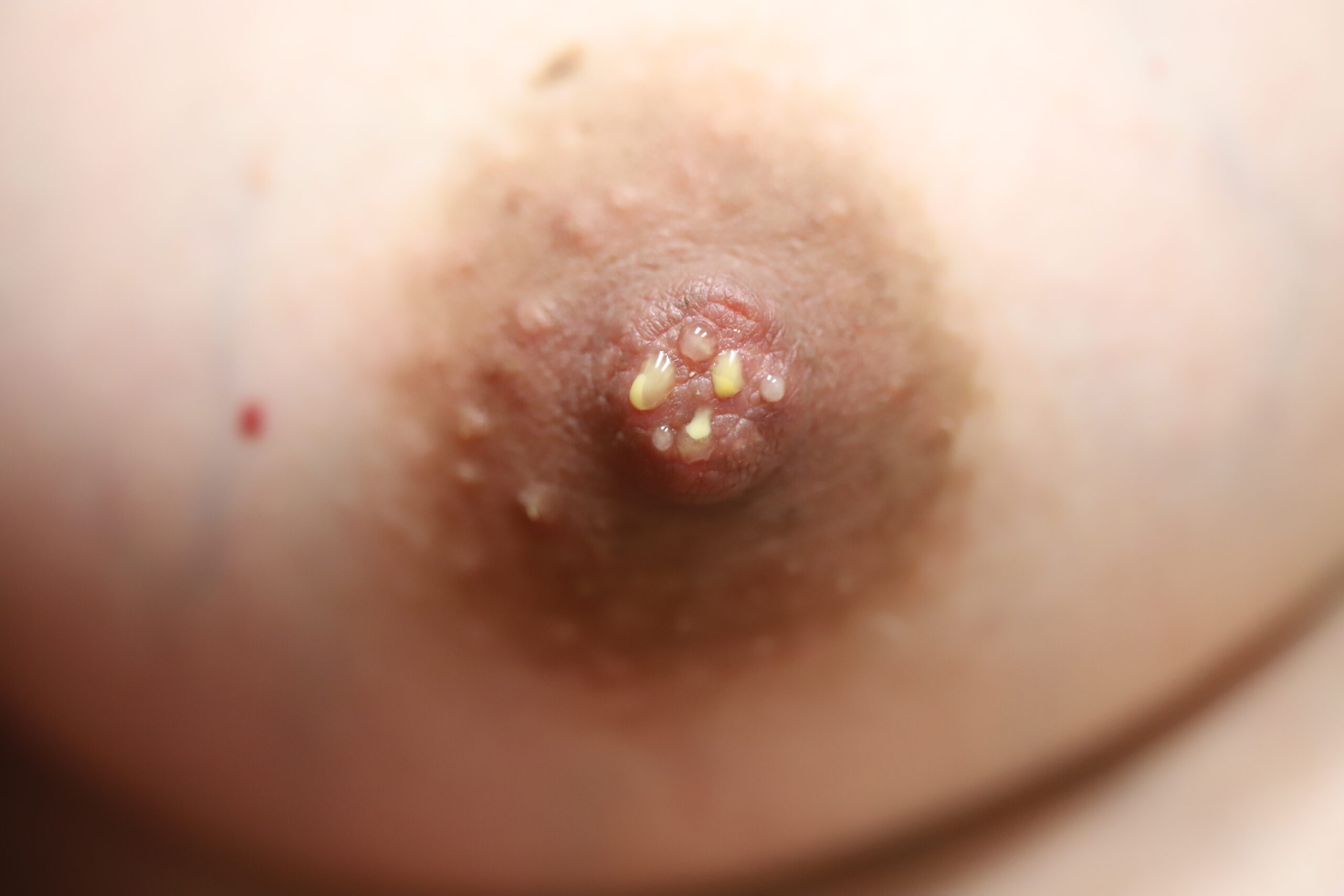
It is normal to notice colostrum (clear or yellow tinged “early milk”) in the second or third trimester of pregnancy. Mothers who may be at risk for lower milk production (e.g. diabetes, obesity, infertility, previous breast surgery and others as detailed in the Maternal Health and Illness section of Maternal Concerns. Moms also canlearn hand expressionto stimulate their breasts and store colostrum prior to delivery.
Colostrum production with hand expression in third trimester of pregnancy
Left nipple liquid gold
Colostrum
Colostrum
Bloody Nipple Discharge
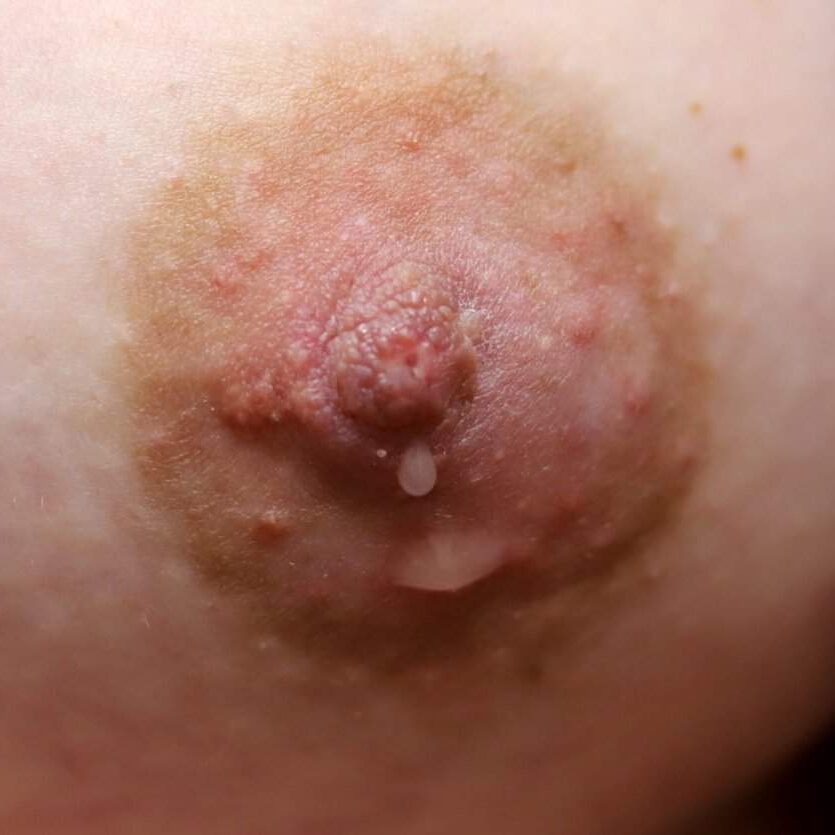
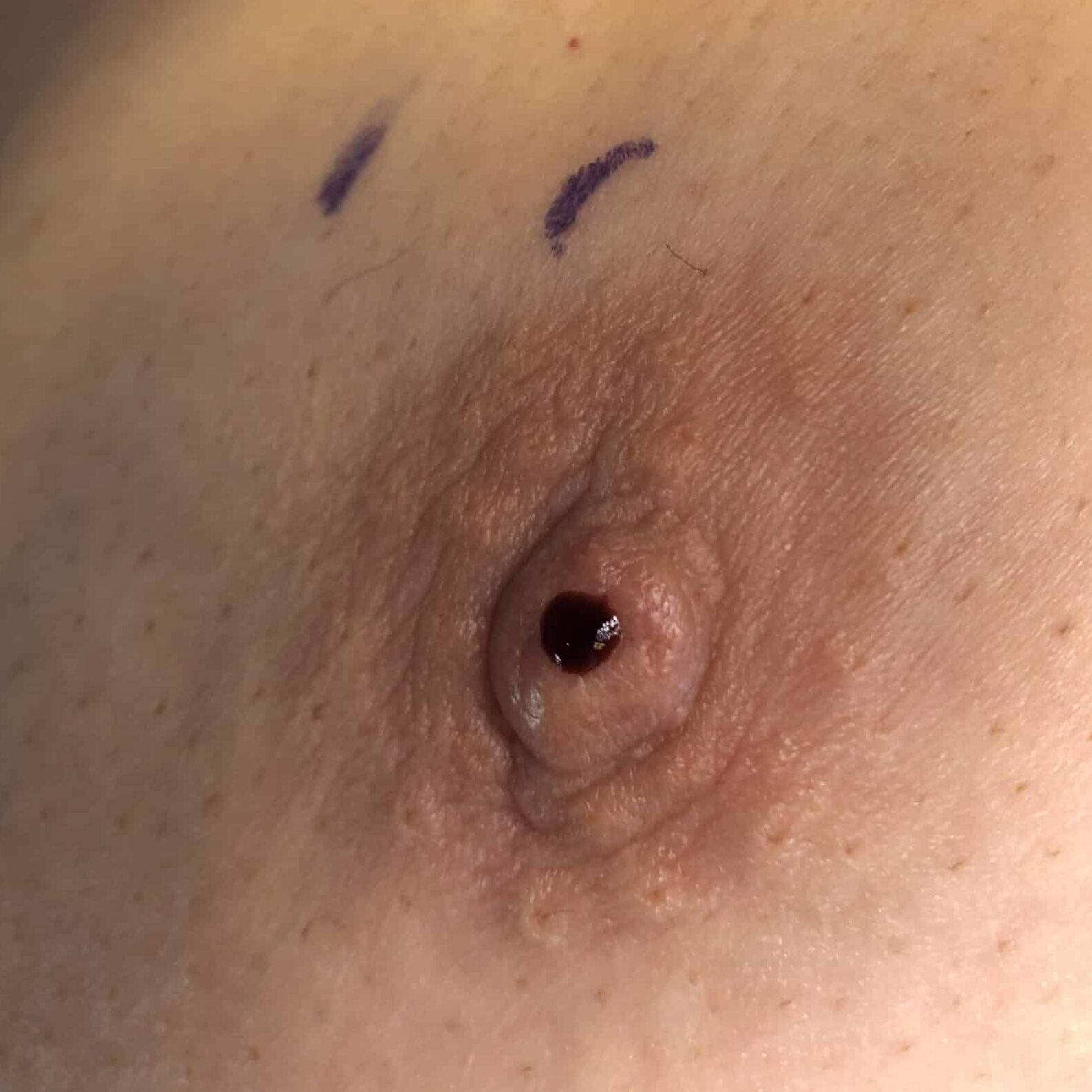
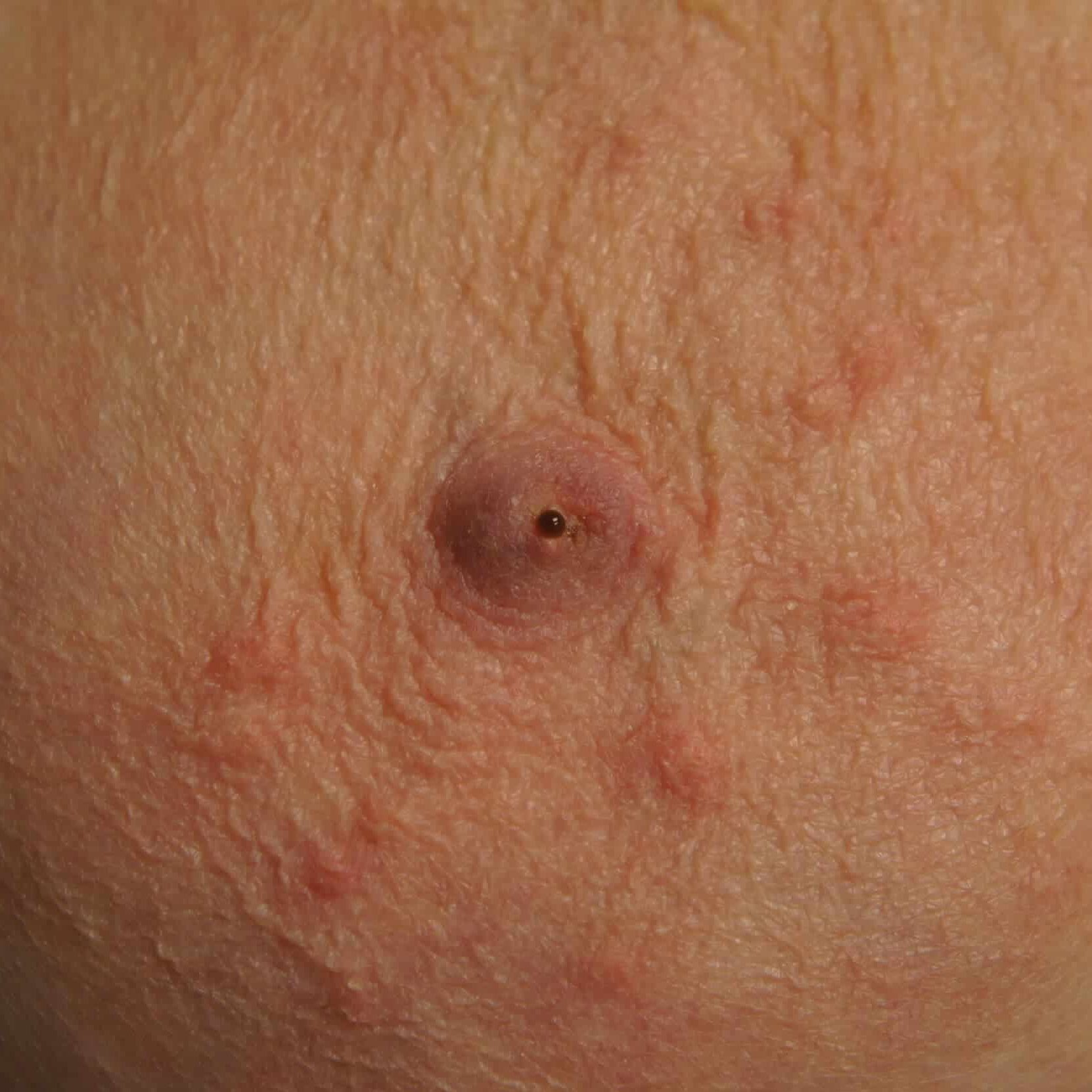
Bloody nipple discharge may occur in up to 20 percent of women in the pregnant and early postpartum period. It is related to breast growth, increased blood flow, and preparation of the breast to make milk. It generally occurs in both breasts and from several nipple orifices and will worsen with nipple stimulation. If you have any concerns, you should seek evaluation by your healthcare provider. More concerning discharge is from one breast and one ductal orifice.
Pathologic bloody discharge
Abnormal discharge occurs without stimulation from a single orifice on one breast.
Prenatal Breastfeeding Support
See prenatal breastfeeding counseling if you have a history of any of the following conditions, as these may impact need for supplementation postpartum:
Significant medical history that has required medications (e.g. high blood pressure, thyroid disease, diabetes)
Cosmetic breast surgery history (implants, reductions, nipple procedures)
Breast cancer or other cancer history
Breast surgery history
Surgery anywhere in the chest (e.g. heart surgery in infancy)
Breasts that are significantly different sizes and/or have a more tubular appearance
Infertility
History of struggling with breastfeeding with a previous child
Anything else that may concern you – it’s never wrong to ask for help
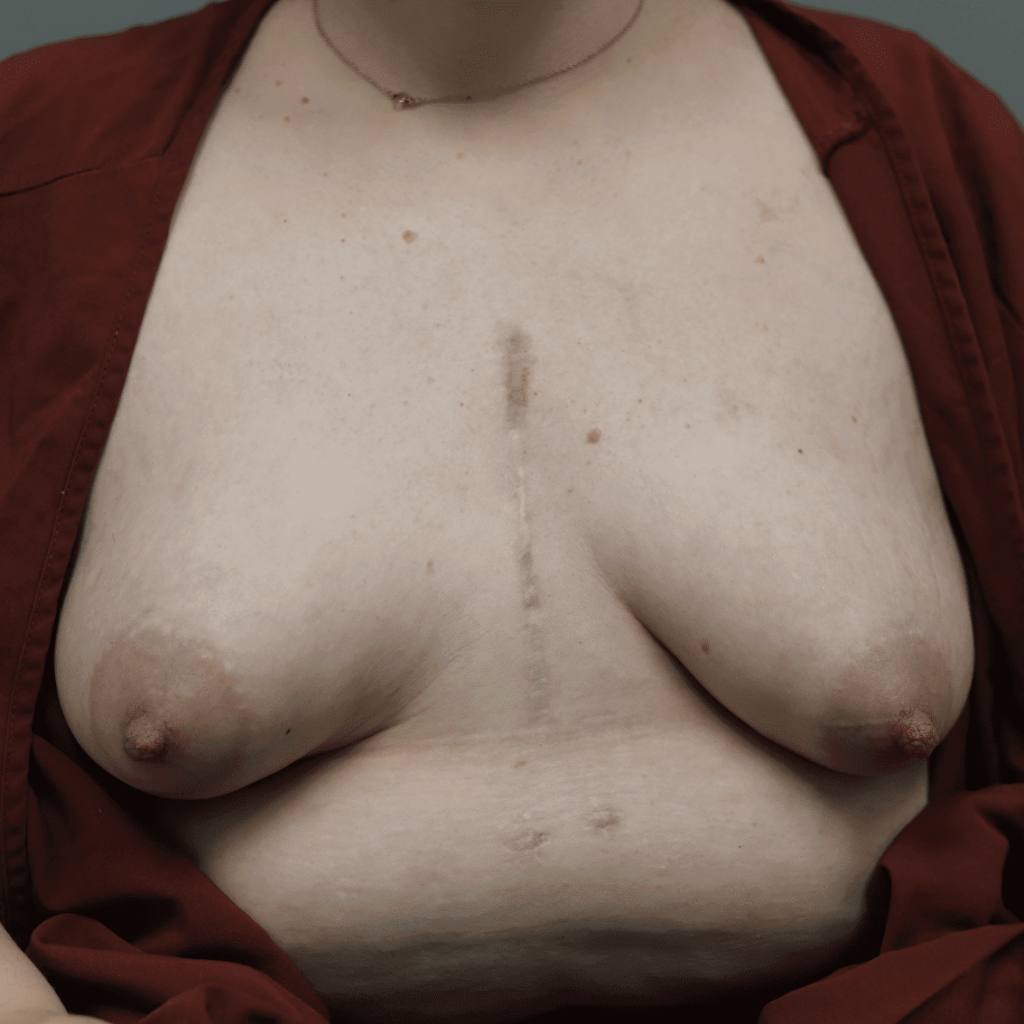
Patient with history of heart surgery as well as moderate tubular appearance of breasts.
Mild tubular breast appearance with asymmetry (left breast smaller than right).
The “4th Trimester"
Two young children holding a knitted breast for demonstrating breastfeeding
Many 4th Trimester programs and medical practices are being established throughout the United States. The University of North Carolina Jordan Institute for Families has a good set of resources for their 4th Trimester Project. This project has a very helpful Toolkit for pregnant moms to review. My favorite “tools” in this group are the Postpartum Planning Tool and the Postpartum Healthcare Visit Checklist. While some women have a “birth plan,” many are less prepared to anticipate exactly what they need as a “postpartum plan” for help and self care.
Breastfeeding Supply List
I do not have any commercial conflict of interest in my medical practice, and do not receive any financial compensation for recommending or supporting particular brands. That said, like anyone, I have some “favorites” that I tend to recommend. This printable list is an example, but any variation on it in terms of branding is absolutely fine!
Nipple and Breast Care
Organic nipple balm (organic balm has many fewer ingredients than other balms, and does not contain lanolin)
Lansinoh “Soothie” gel pads
LanaCare Wool pads (“Uggs for the Breast”)
Reusable breastmilk pads (causes less allergy than disposable pads)
Silicone milk collector (e.g. Haaka)
Hot and cold packs or heating pad
Supportive maternity and breastfeeding bras
Nursing pillow
Haaka catching letdown from right breast as baby feeds on left.
Pumping and Bottles
Hands free pump bra
Pump bag
Hand/Manual pump for middle of the night, small volume milk removal to enable easier baby latch in the setting of engorgement
Breastmilk storage bags
Extra pump parts and membranes (breastmilk is not sterile – you do not need to order sterilizing bags because the dishwasher is adequate)
Postpartum Care for Mom
Advil (ibuprofen) and Tylenol (acetaminophen) or preferred herbal remedies for pain
Postpartum disposable mesh or reusable underwear (postpartum bleeding should subside over a week or two like a menstrual period)
Ice pads designed for vaginal/rectal region
Miralax – Colace and Senna provided by the hospital are not enough!
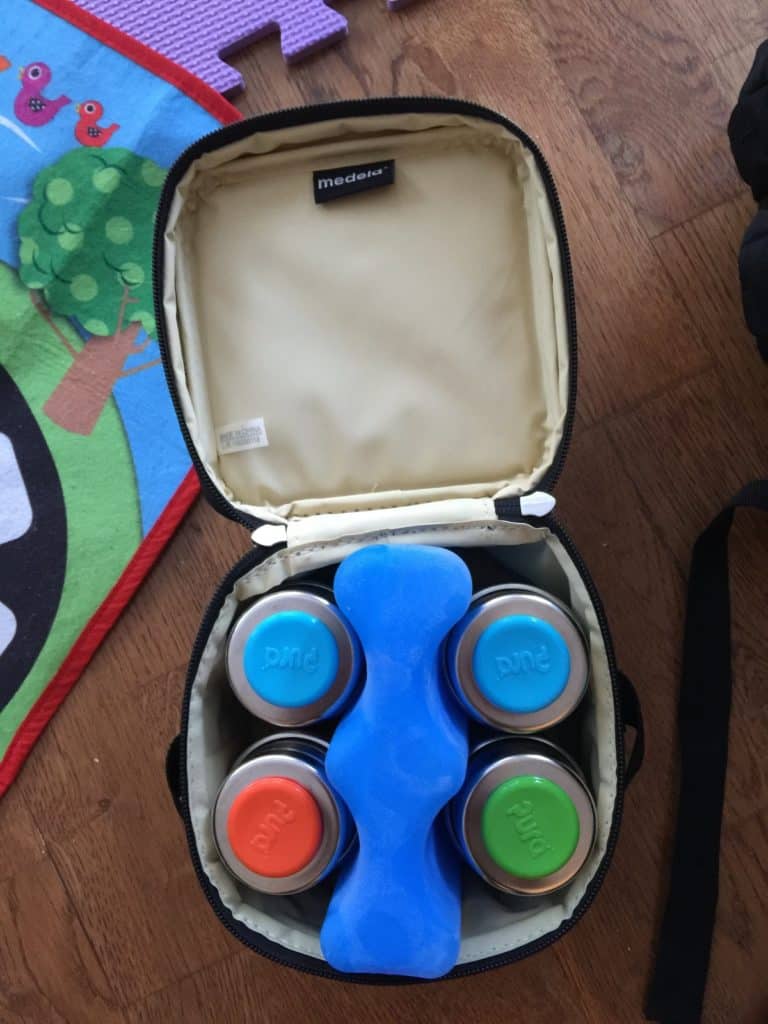
Travel bag and cooler for breastmilk plane flight.
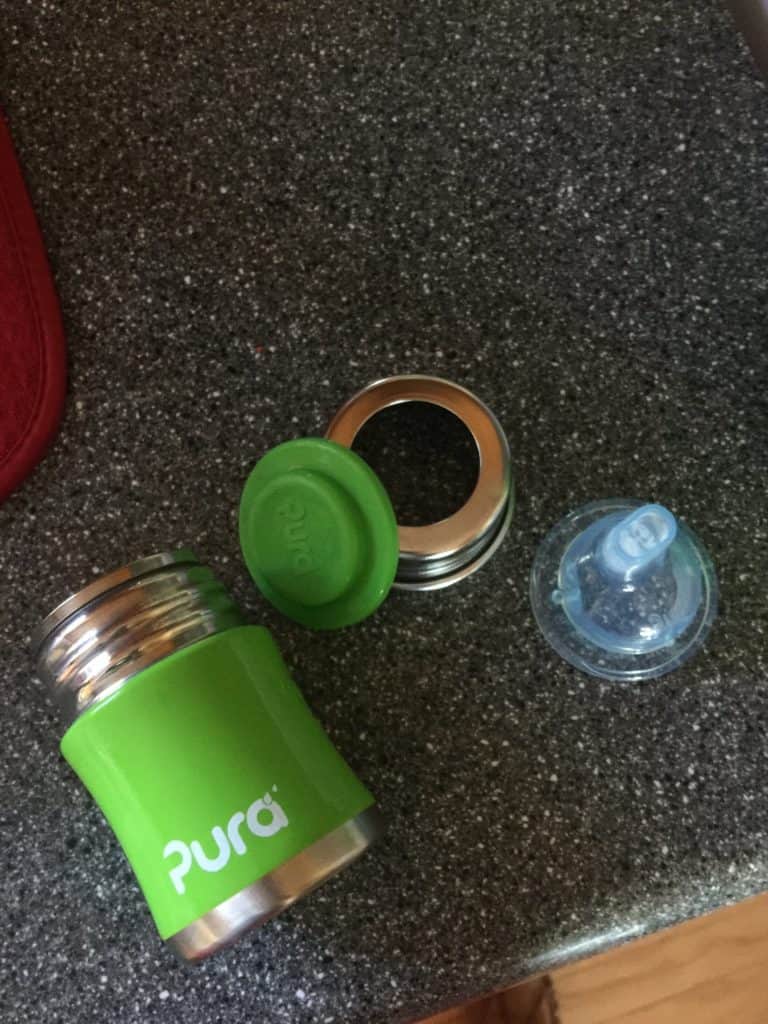
Pura Kiki with sippy type transition nipple.
Breastfeeding pillow designed for twins.
Hospital Or Birthing Center
The World Health Organization (WHO) Baby Friendly guidelines support breastfeeding against commercial interests of formula companies and protect maternal-infant health.
The Academy of Breastfeeding Medicine has an excellent Model Maternity Policy Protocol regarding hospital guidelines for protecting breastfeeding.
For delivery, take your pump (have the lactation consultant ensure your flanges fit well and the settings are correct), nursing bra, organic nipple balm, and hydrogel pads.
Wear home comfortable outfit – you will still look pregnant after birth and won’t be wearing your regular clothes yet!
Water birth with midwife delivering placenta.
Labor
Mom breastfeeding right after birth
If possible, it is ideal to limit IV fluids as well as sedating pain medications. Infants of moms that receive epidurals and pain medication with long labors are more sleepy and less coordinated with nursing after birth. This does not mean breastfeeding is not possible. It just means you should be prepared to ask for help if the baby does not latch to the breast immediately.
Skin to skin with your baby after birth is an incredible way to use nature to stabilize yours and baby’s blood pressure, heart rate, temperature, blood glucose, minimize blood loss, and promote breastfeeding. This is particularly important with c-section births and preterm babies.
If birth does not occur in the way you were hoping, and in fact even became traumatic, it is important to seek counseling regarding birth PTSD.
Older Siblings
Depending on the age, older siblings can have variable difficulty in adjusting to a new baby. If your older child is near weaning age and may wean during pregnancy or at the birth of the new baby, you can help ease the transition by finding other ways to “hold” and comfort your older child.
If you are able, it is helpful to allow siblings, other family members, and curious young friends to observe breastfeeding. This can help children identify the breast as a functional organ that provides nutrition and comfort to an infant and older nurslings.
Mom breastfeeding twins at beach with older brother
Tandem Breastfeeding
Mom tandem breastfeeding
It is safe to breastfeed an older child during pregnancy and to breastfeed children “tandem” when the new baby is born. This continued breastfeeding can help the older child adjust to the addition to the family.
Tandem nursing newborn and three year old
Induced Lactation
Adoptive or surrogate moms as well as same sex female parents may wish to induce lactation. This is most successful when the mom has previously breastfed a child or multiple children for years.
Ideally, patients should begin taking an oral contraceptive without interruption (no “blank pills”) to simulate pregnancy. The oral contraceptive is stopped one month prior to delivery of the baby. She also takes prescription medications or herbs to development of glandular cells that make milk (e.g. domperidone or morgina as prolactin-stimulating agents). When mom stops contraceptive, she begins pumping every three hours with no more than a five hour break at night.
When patients present to me shortly before the birth of the baby, I discuss realistic expectations as well as the effect of sleep deprivation on maternal mental health. Each individual patient discussion is different regarding risks/benefits of inducing lactation.
If you have a trauma or assault history, the entire experience of pregnancy and/or birth can be triggering for reactivation of memories. It is important to work with a therapist during this time, as well as inform your medical care team of your history and concerns.
We use cookies on our website to give you the most relevant experience by remembering your preferences and repeat visits. By clicking “Accept”, you consent to the use of ALL the cookies.
This website uses cookies to improve your experience while you navigate through the website. Out of these, the cookies that are categorized as necessary are stored on your browser as they are essential for the working of basic functionalities of the website. We also use third-party cookies that help us analyze and understand how you use this website. These cookies will be stored in your browser only with your consent. You also have the option to opt-out of these cookies. But opting out of some of these cookies may affect your browsing experience.
Necessary cookies are absolutely essential for the website to function properly. These cookies ensure basic functionalities and security features of the website, anonymously.
Cookie
Duration
Description
cookielawinfo-checkbox-analytics
11 months
This cookie is set by GDPR Cookie Consent plugin. The cookie is used to store the user consent for the cookies in the category "Analytics".
cookielawinfo-checkbox-functional
11 months
The cookie is set by GDPR cookie consent to record the user consent for the cookies in the category "Functional".
cookielawinfo-checkbox-necessary
11 months
This cookie is set by GDPR Cookie Consent plugin. The cookies is used to store the user consent for the cookies in the category "Necessary".
cookielawinfo-checkbox-others
11 months
This cookie is set by GDPR Cookie Consent plugin. The cookie is used to store the user consent for the cookies in the category "Other.
cookielawinfo-checkbox-performance
11 months
This cookie is set by GDPR Cookie Consent plugin. The cookie is used to store the user consent for the cookies in the category "Performance".
viewed_cookie_policy
11 months
The cookie is set by the GDPR Cookie Consent plugin and is used to store whether or not user has consented to the use of cookies. It does not store any personal data.
Functional cookies help to perform certain functionalities like sharing the content of the website on social media platforms, collect feedbacks, and other third-party features.
Performance cookies are used to understand and analyze the key performance indexes of the website which helps in delivering a better user experience for the visitors.
Analytical cookies are used to understand how visitors interact with the website. These cookies help provide information on metrics the number of visitors, bounce rate, traffic source, etc.
Advertisement cookies are used to provide visitors with relevant ads and marketing campaigns. These cookies track visitors across websites and collect information to provide customized ads.