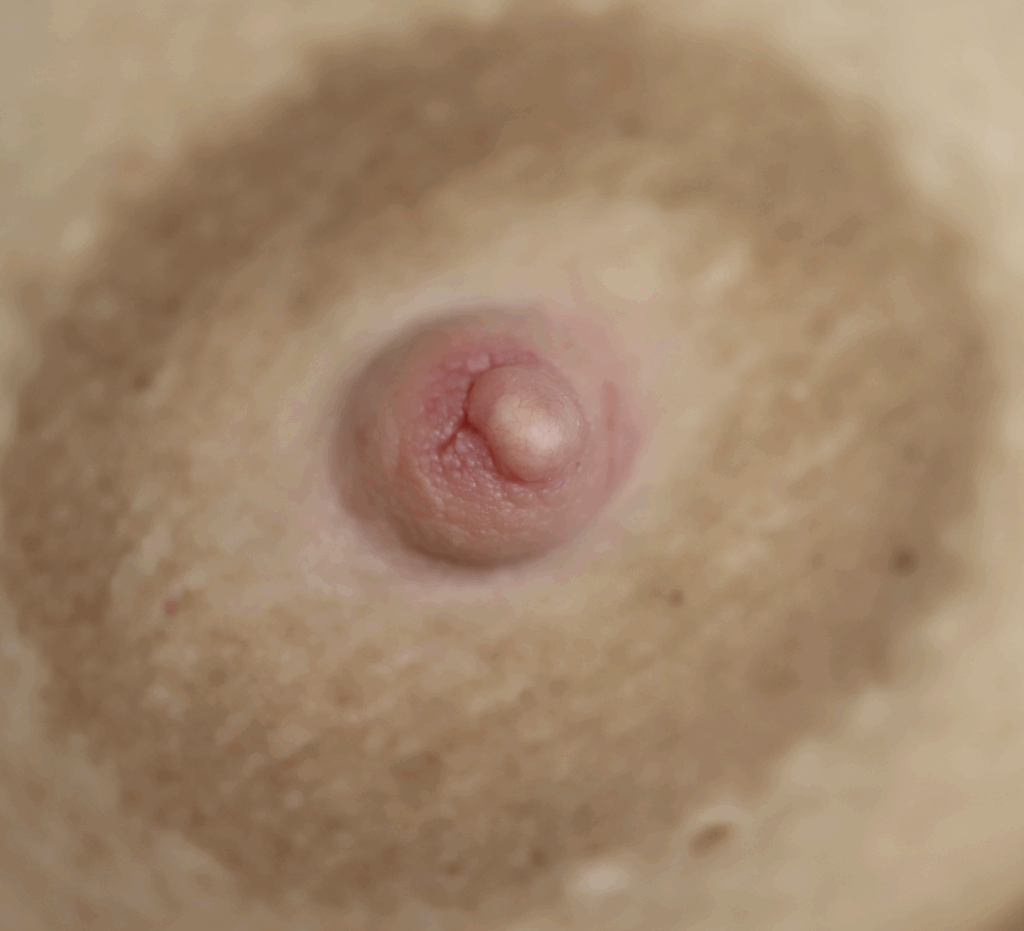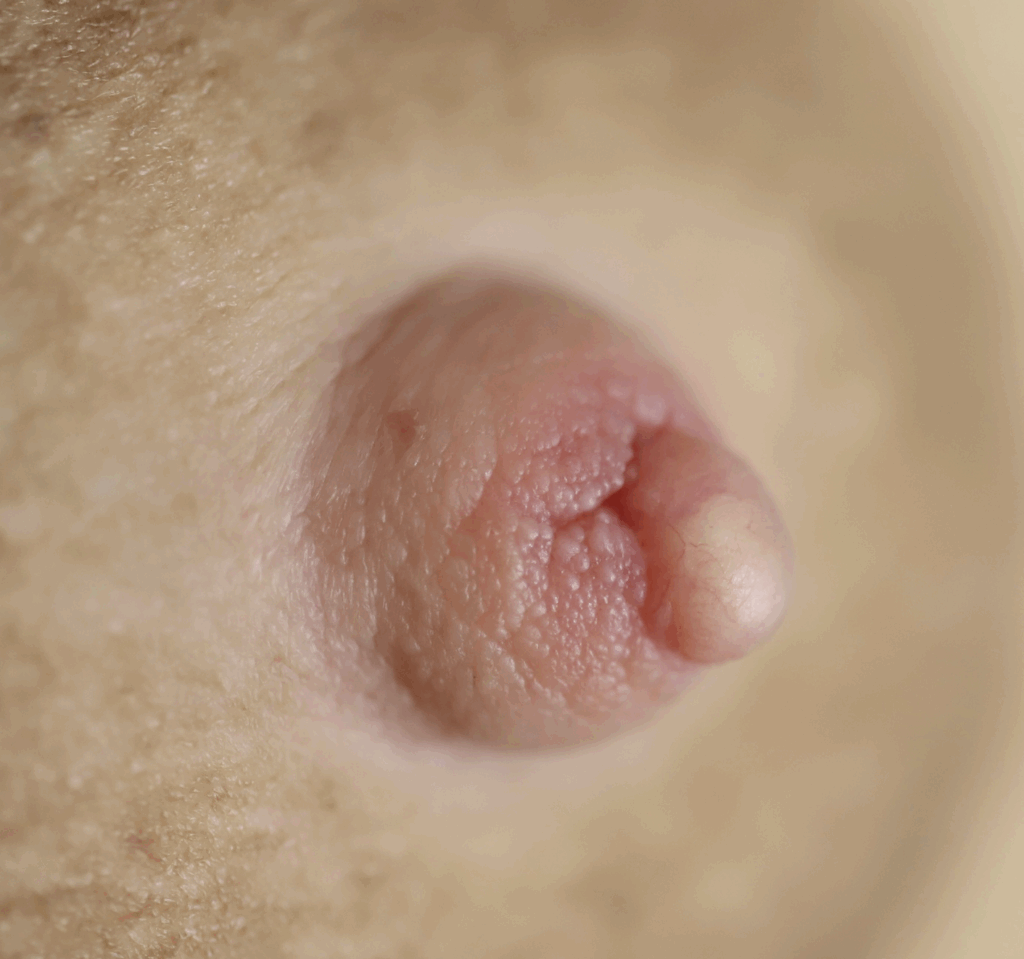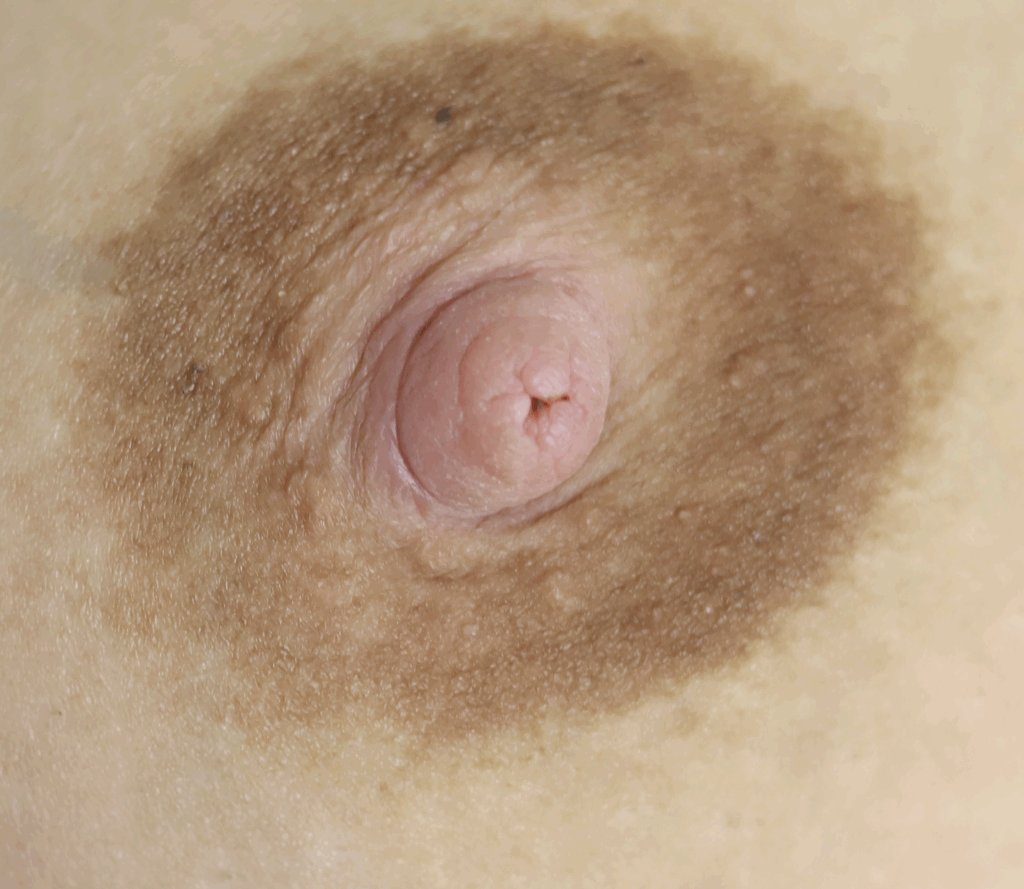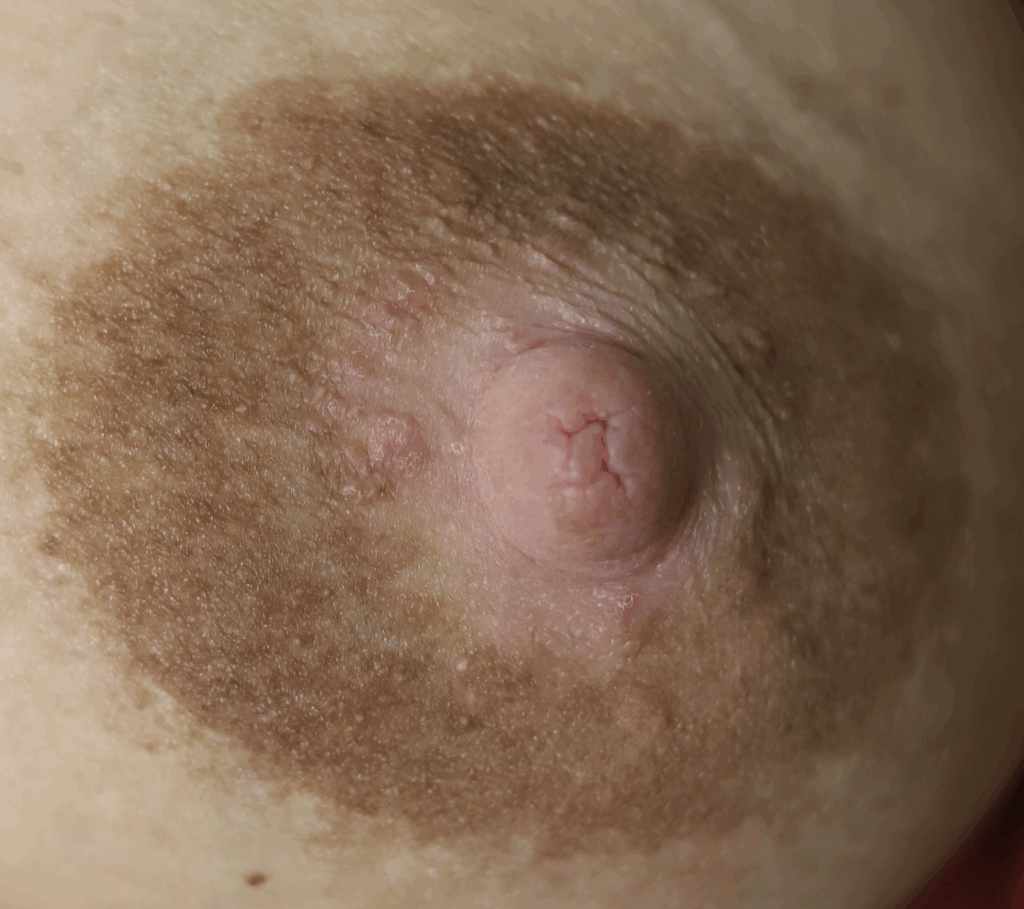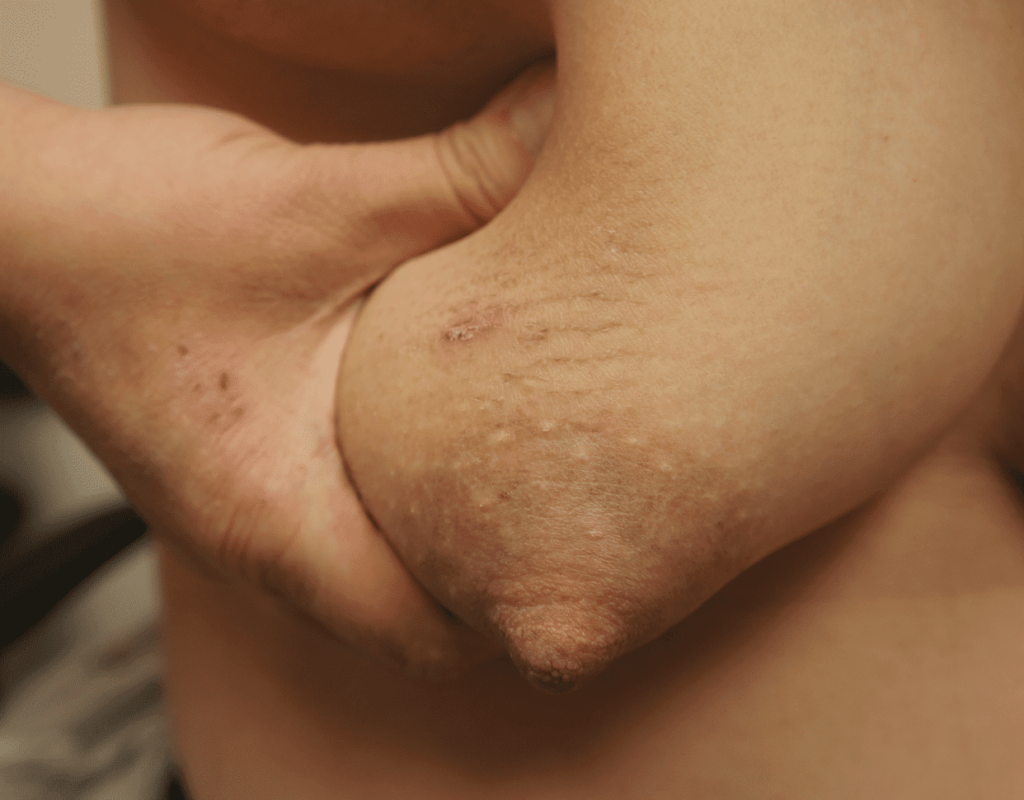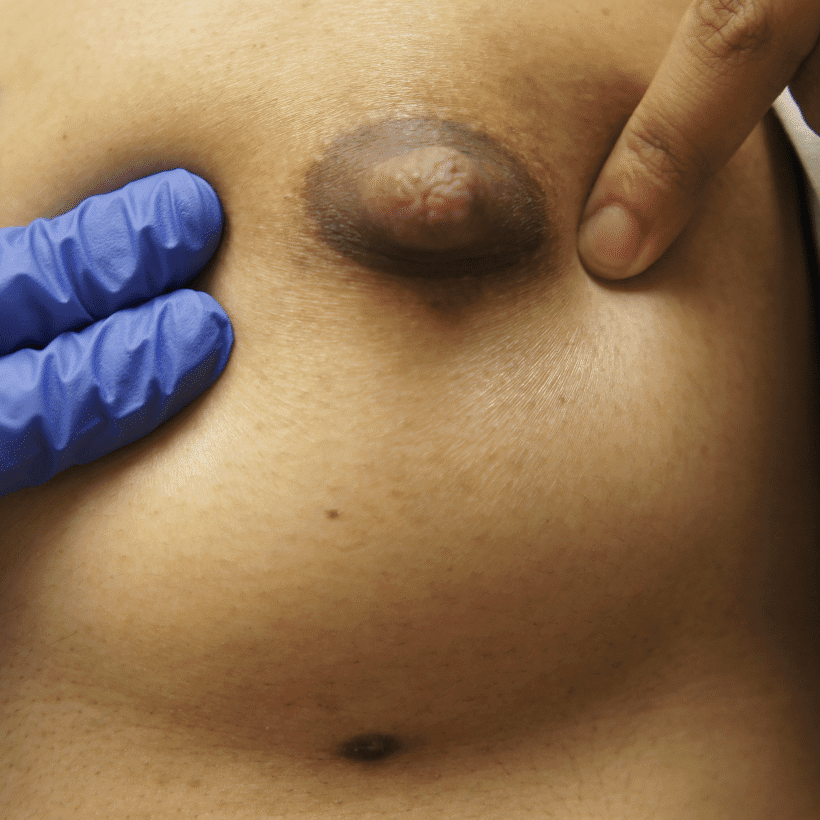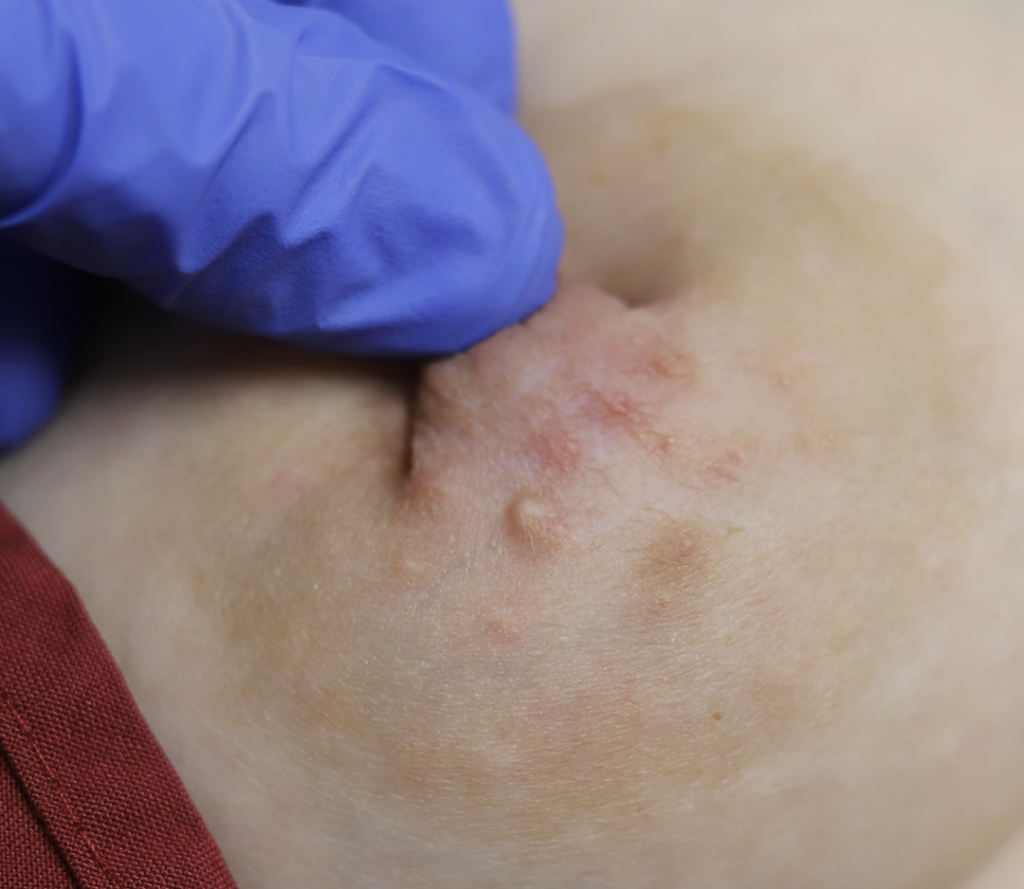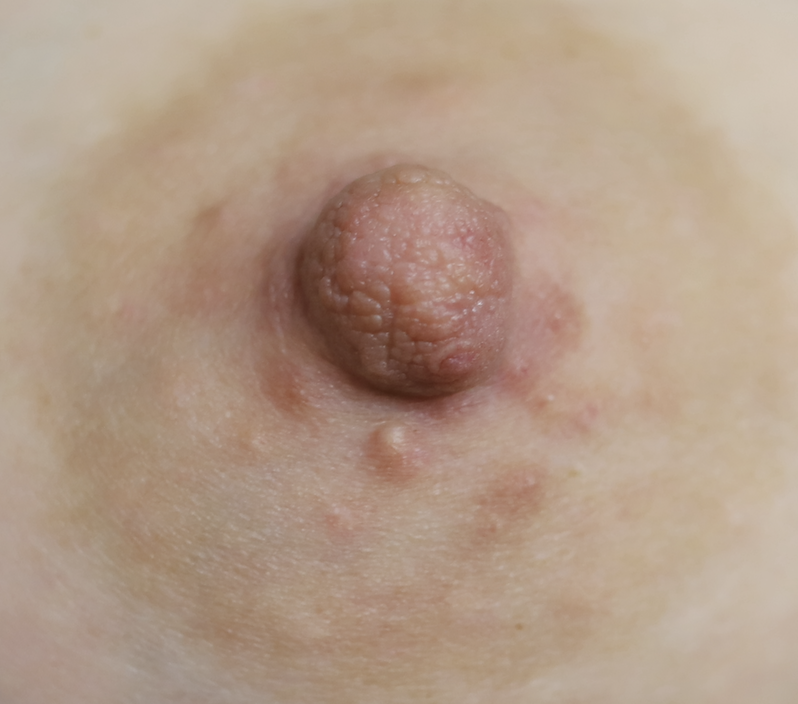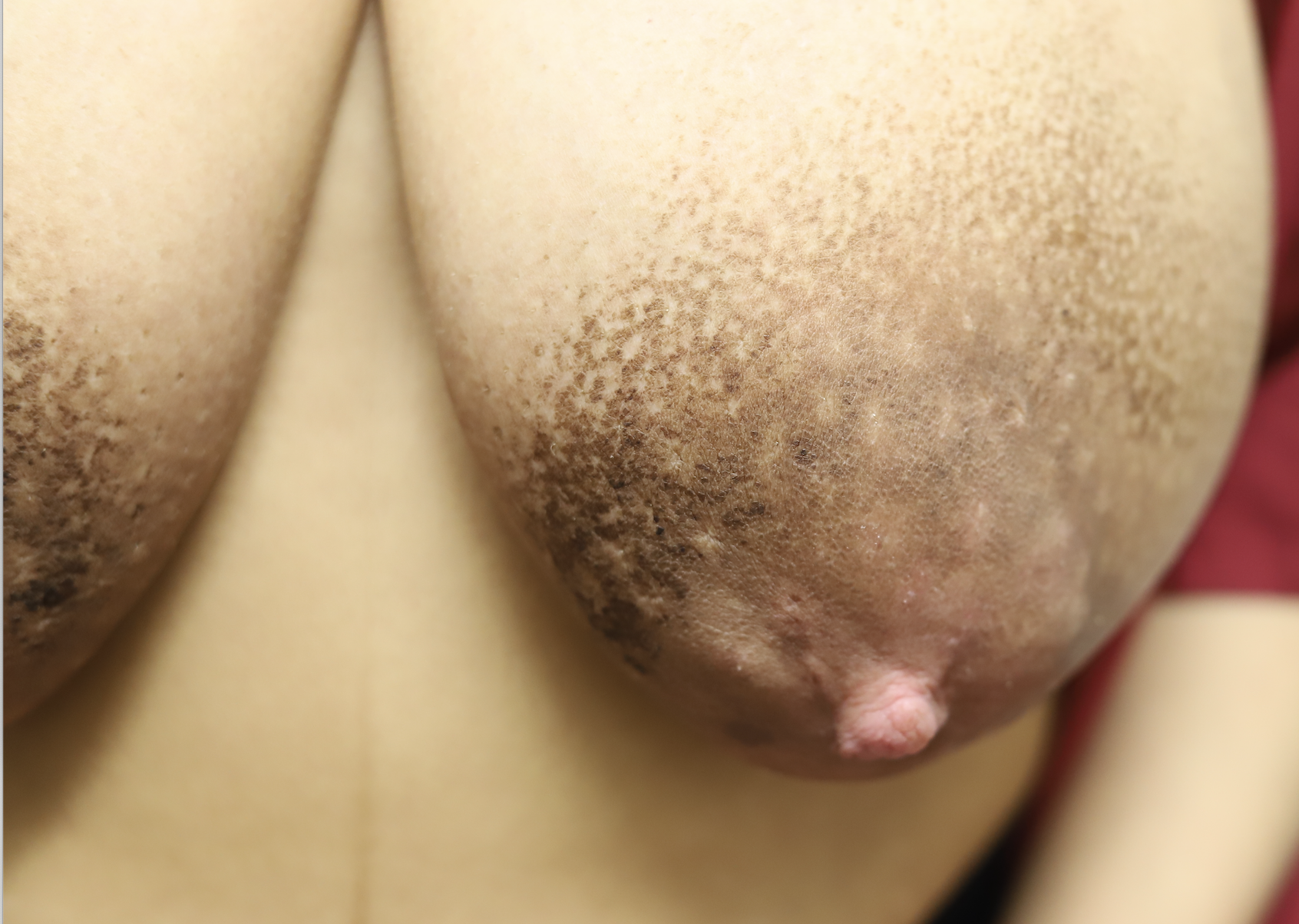
Nipples

Jump to...
    Add a header to begin generating the table of contents

    A full review of all maternal breast conditions in lactation is available with the new edition of Breastfeeding for Medical Professionals (Lawrence and Lawrence) textbook We also review the management of common complications in  Obstetrics and Gynecology Clinics.

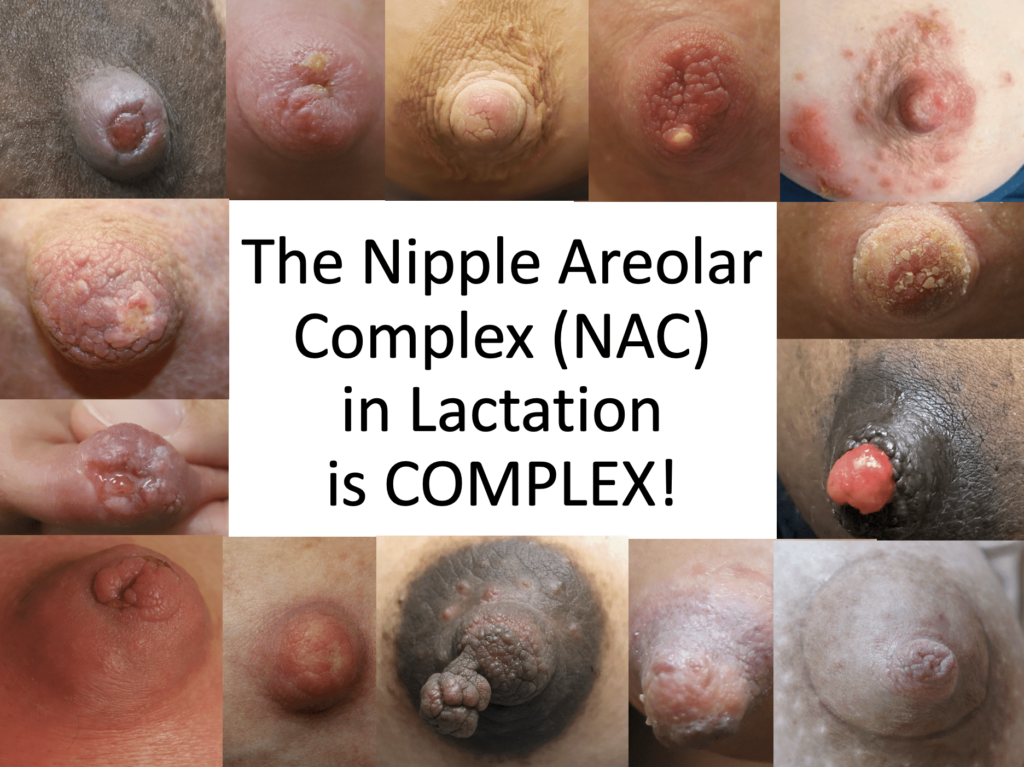
    The Nipple Areolar Complex (NAC) in Lactation is COMPLEX!

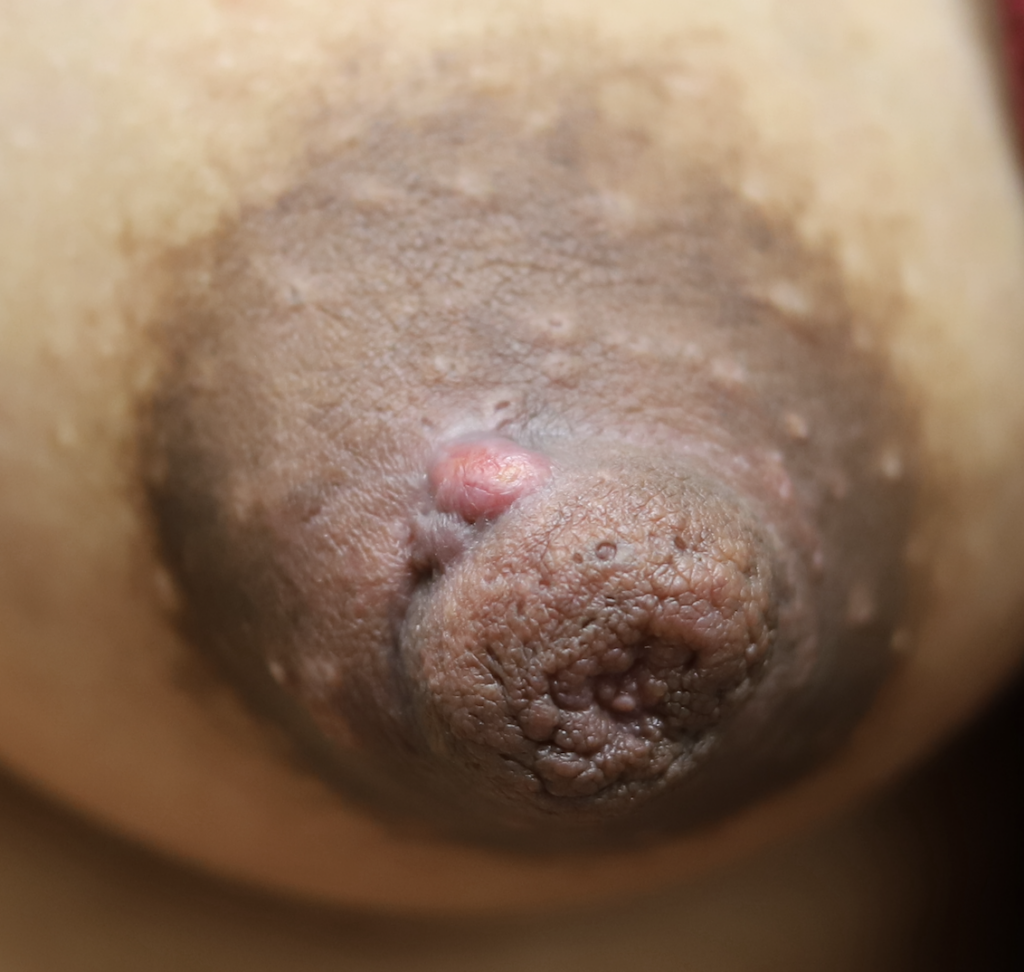
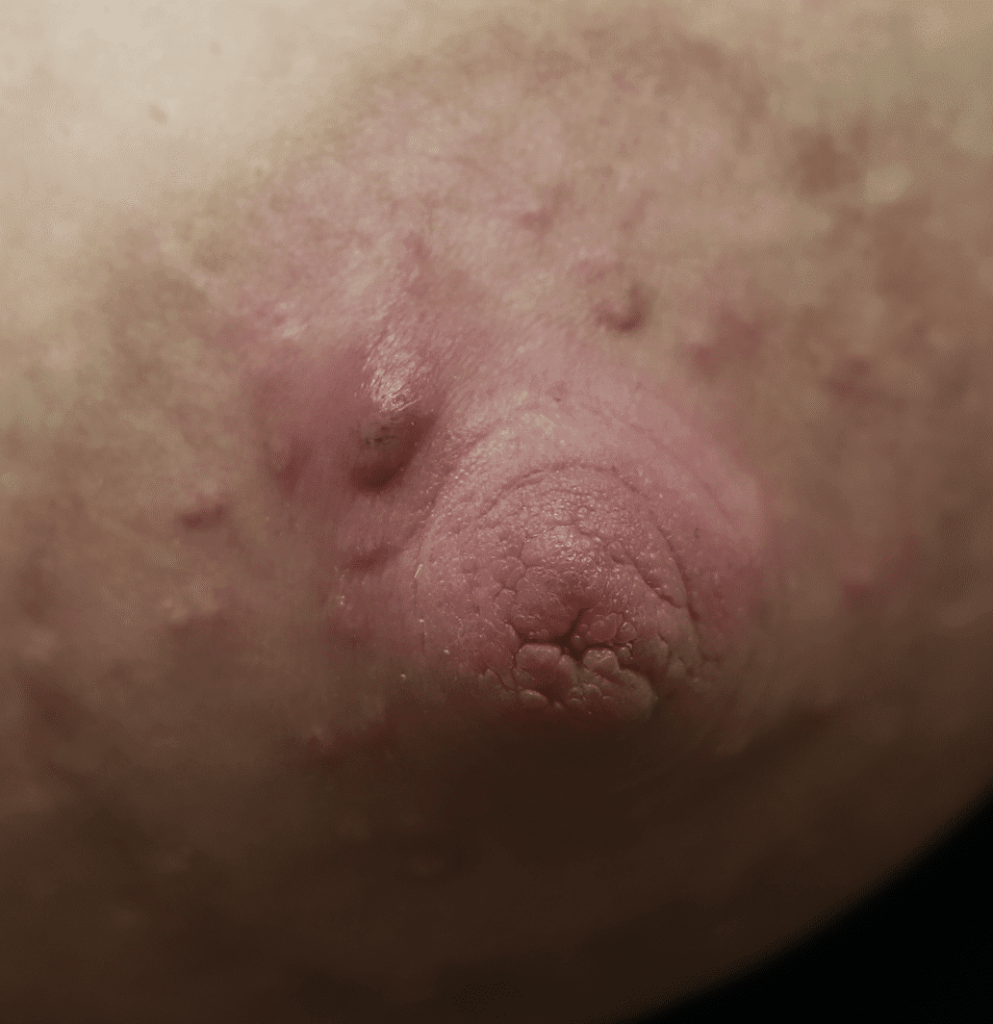
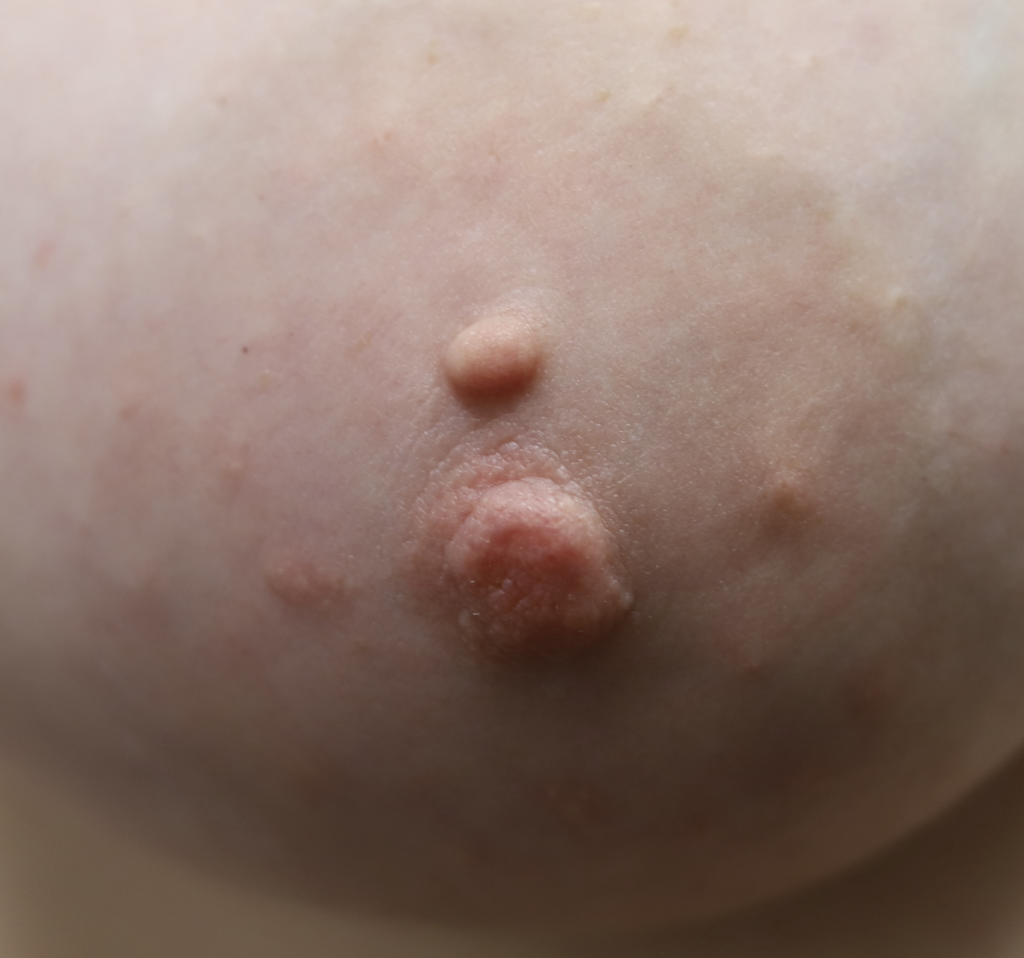
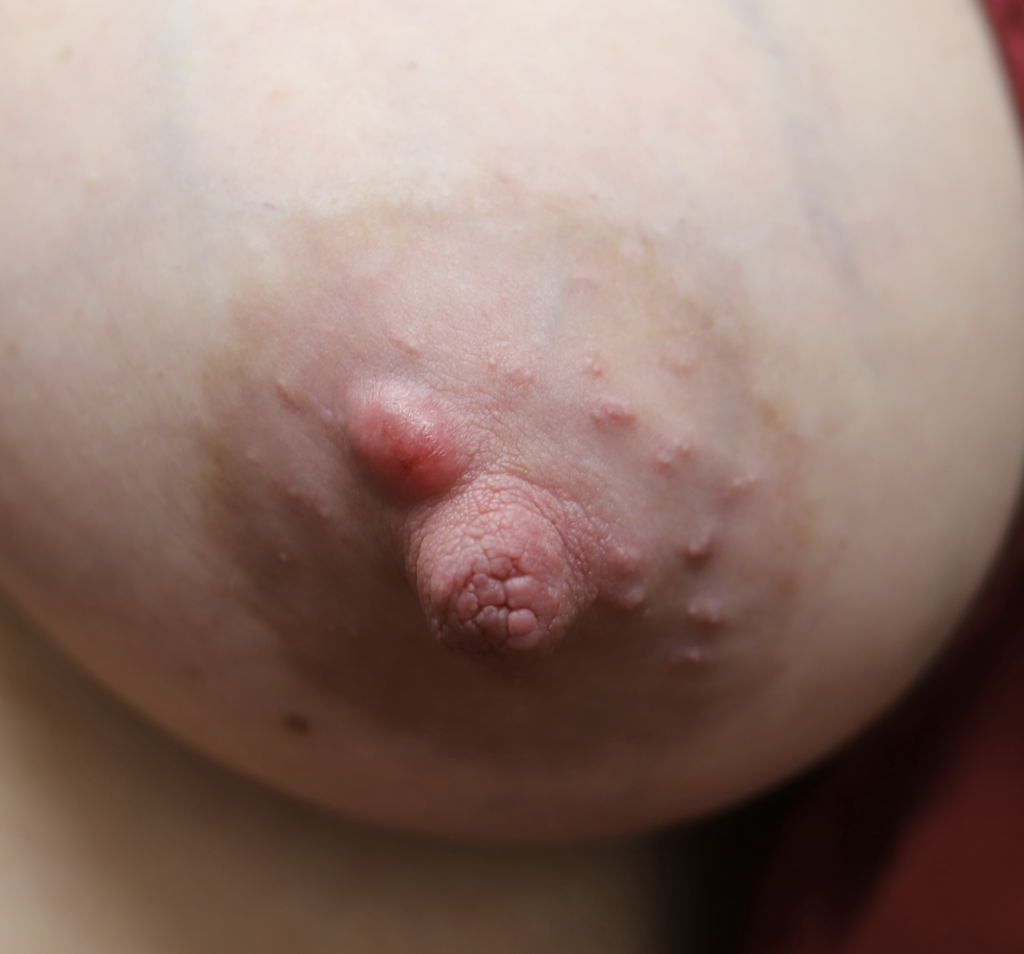
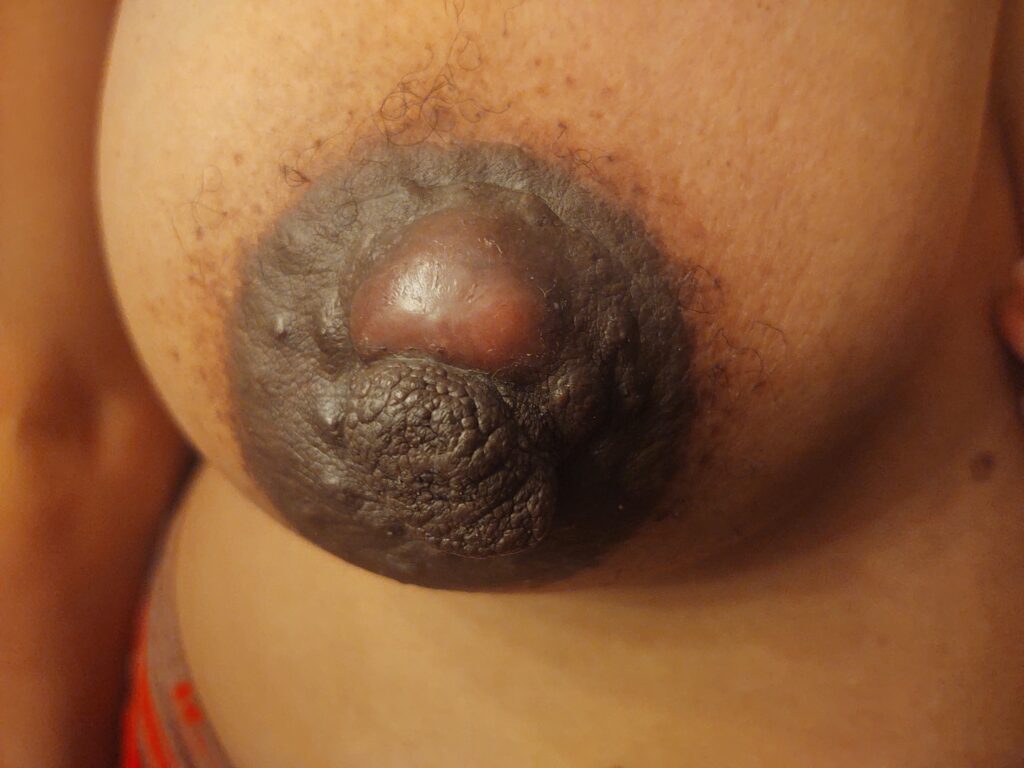
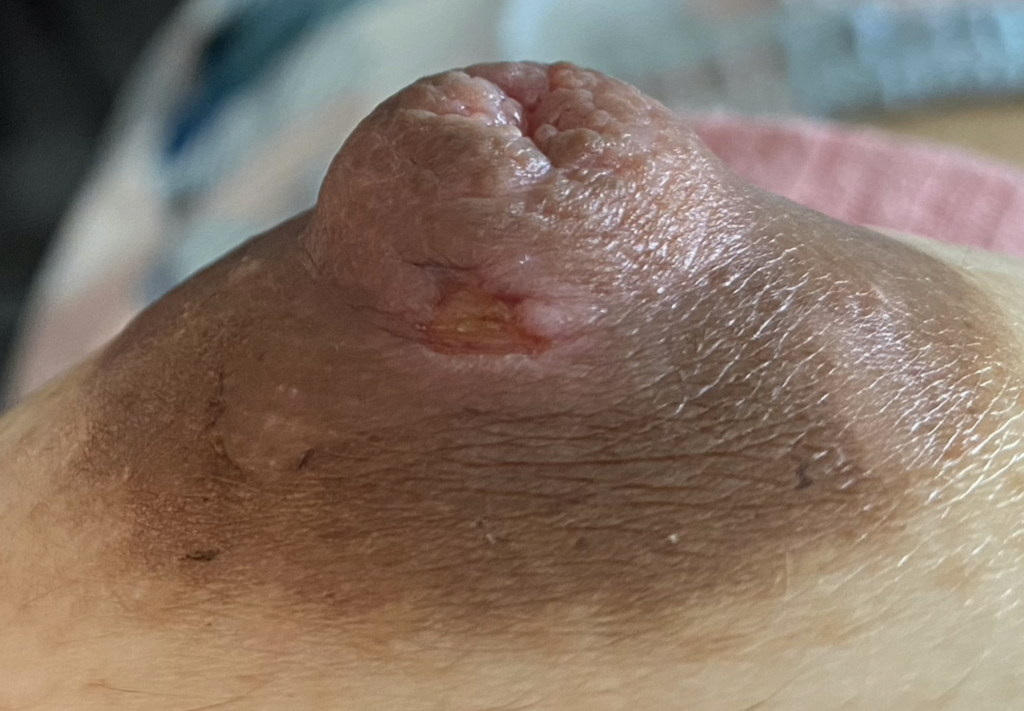
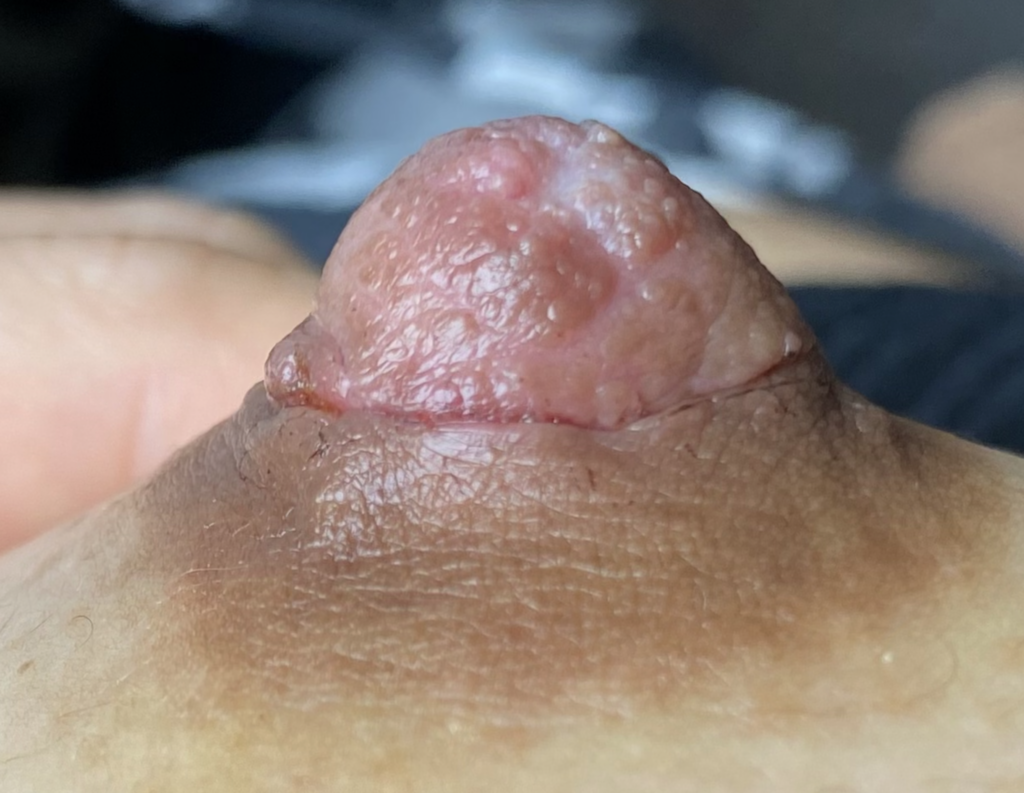
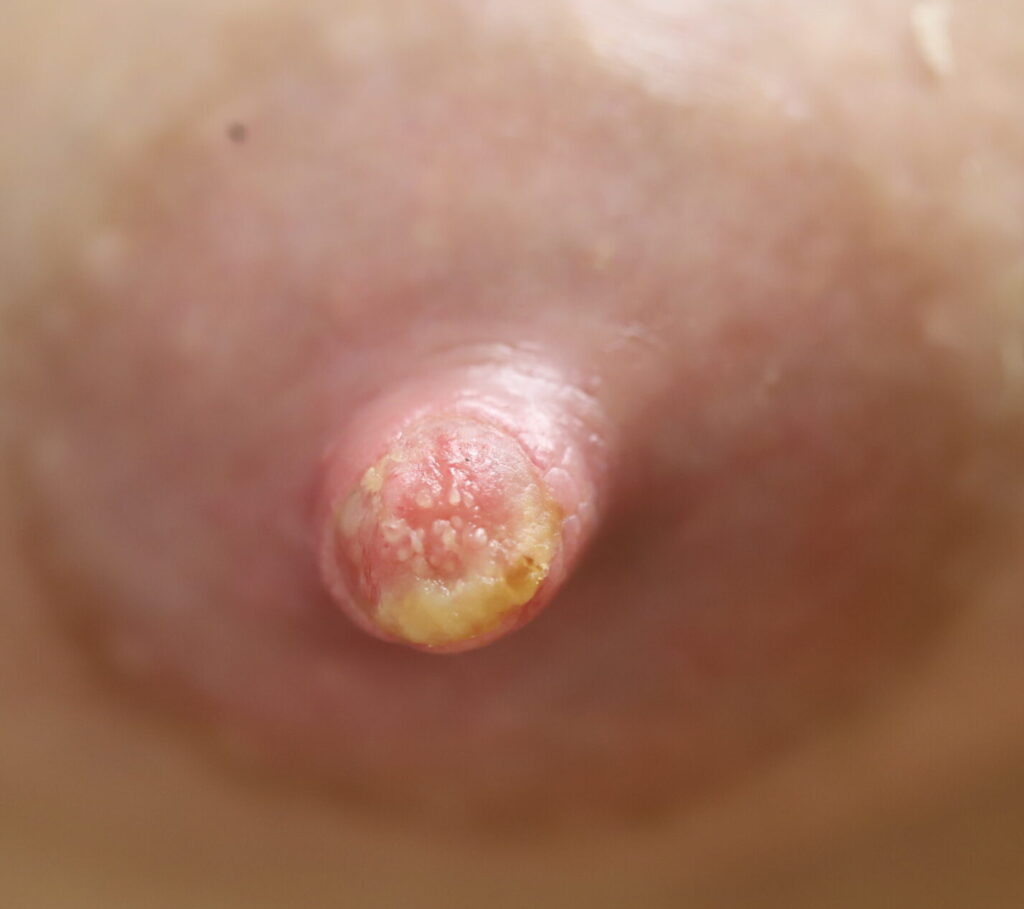
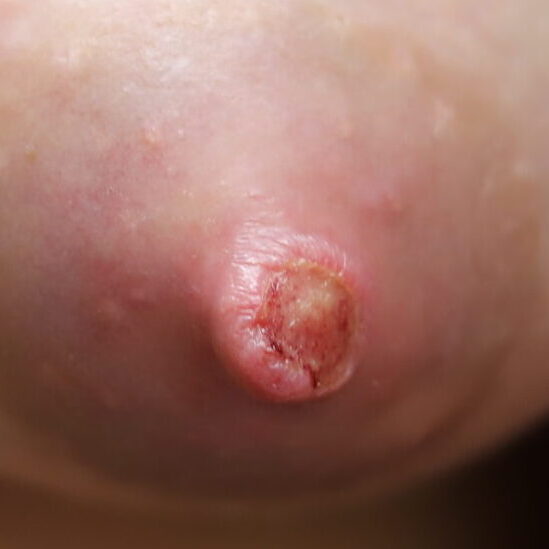
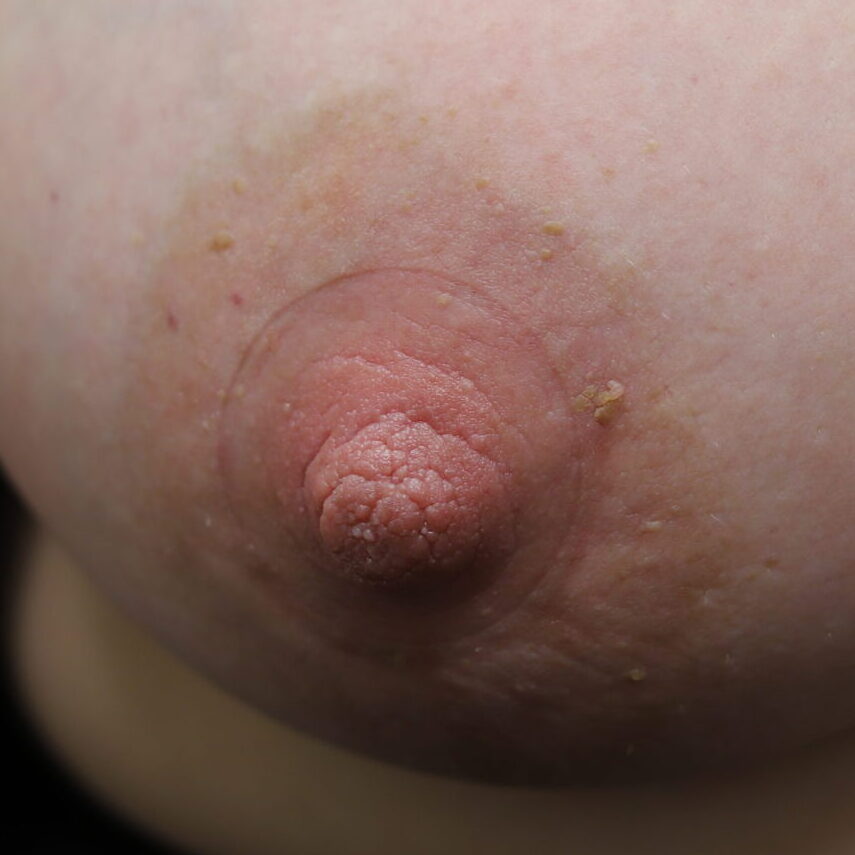
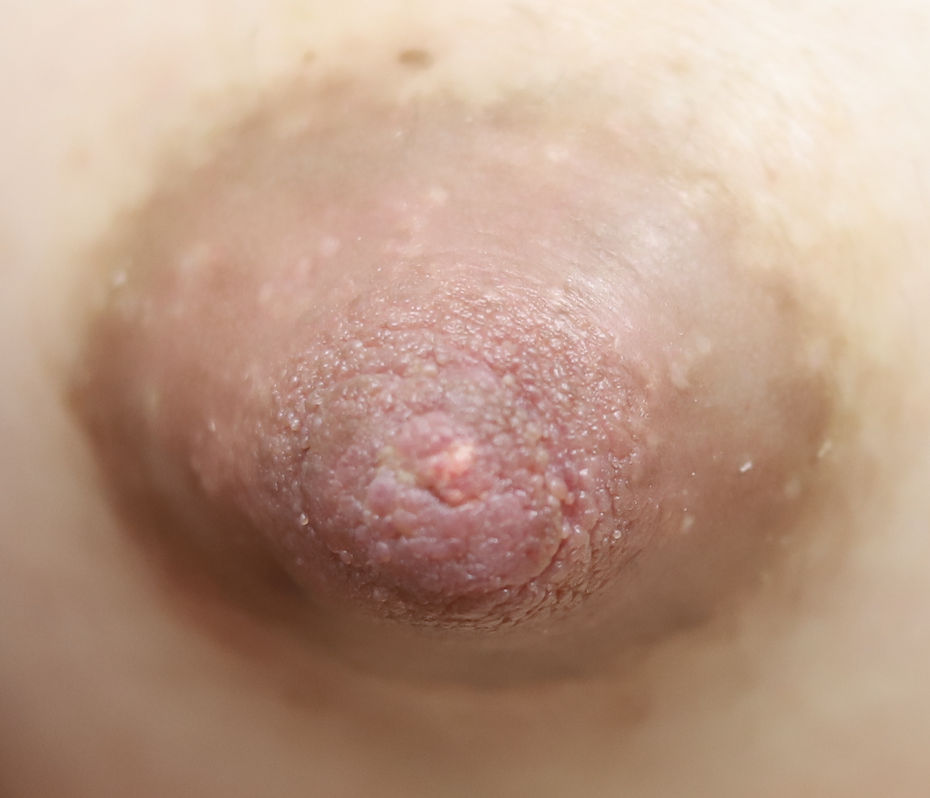
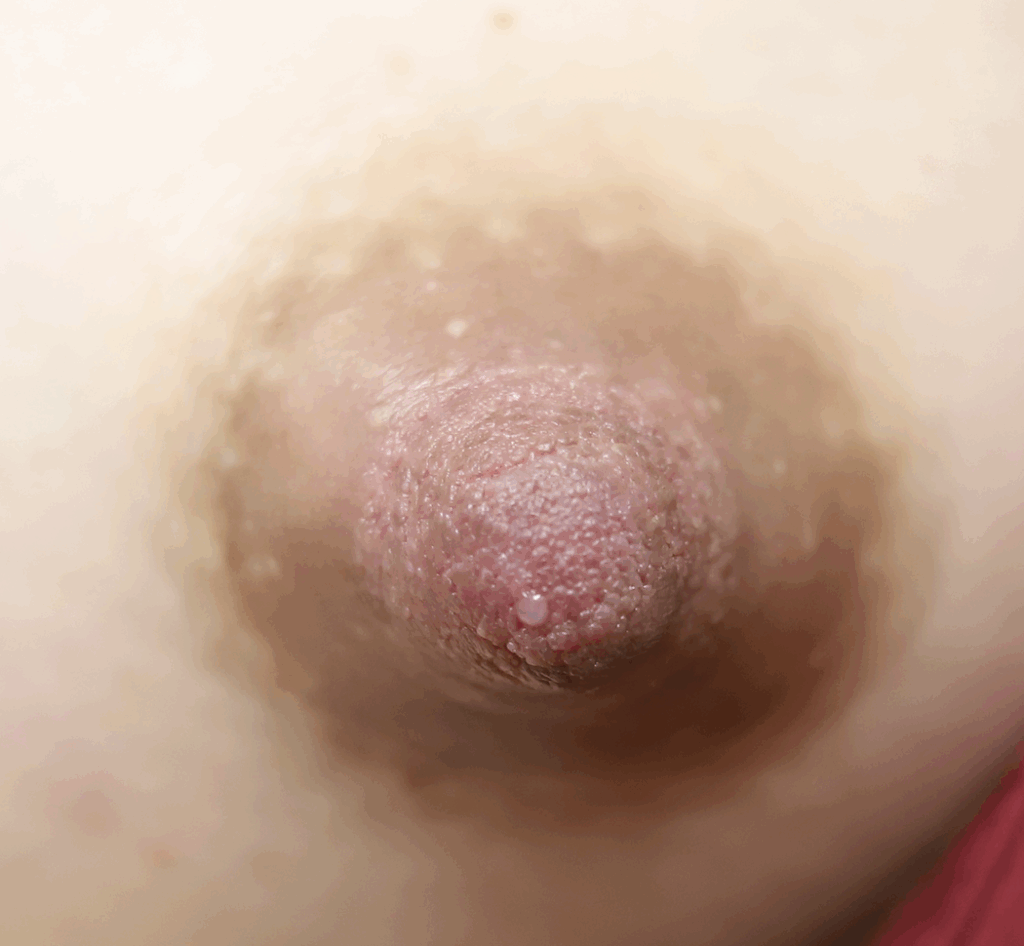
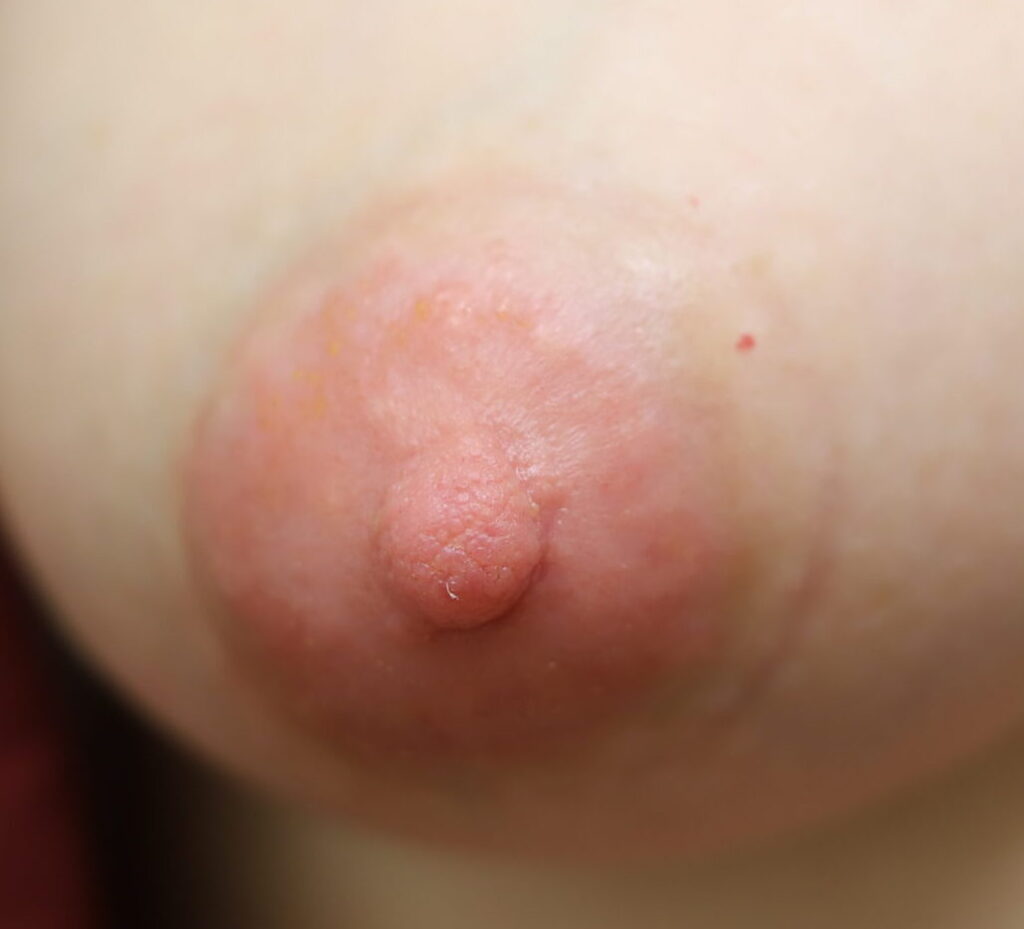
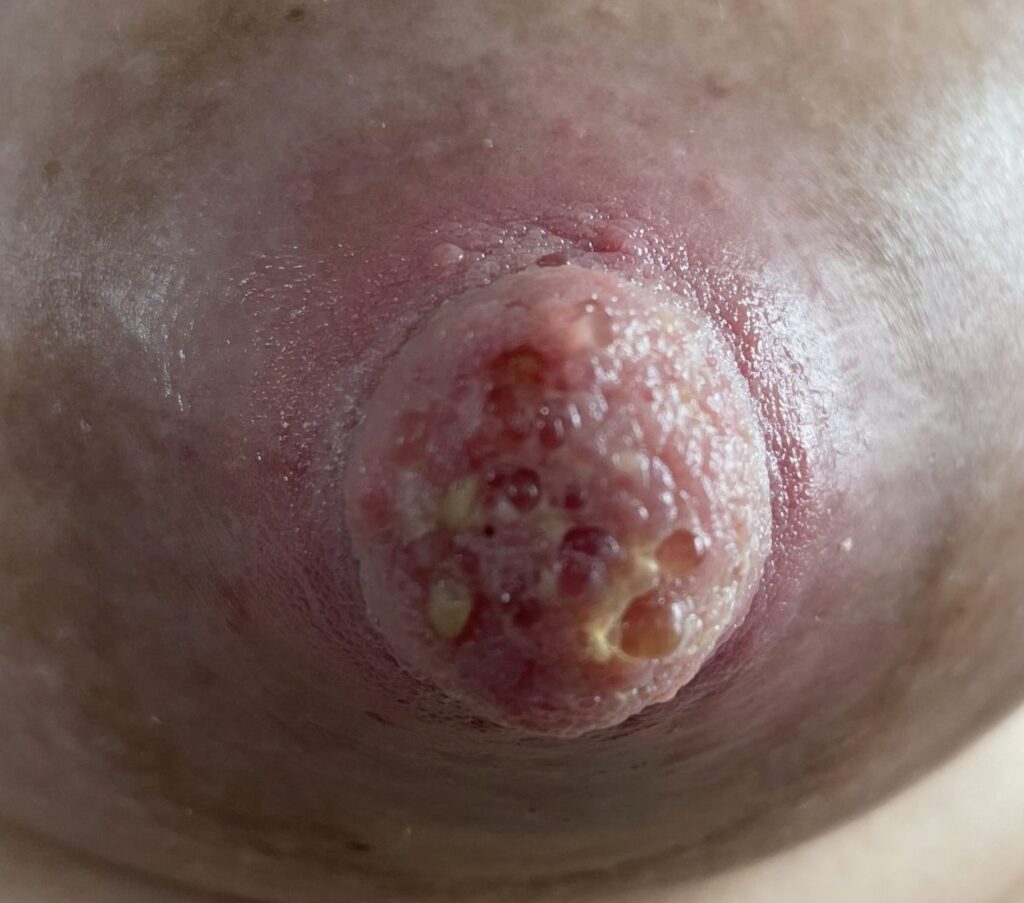
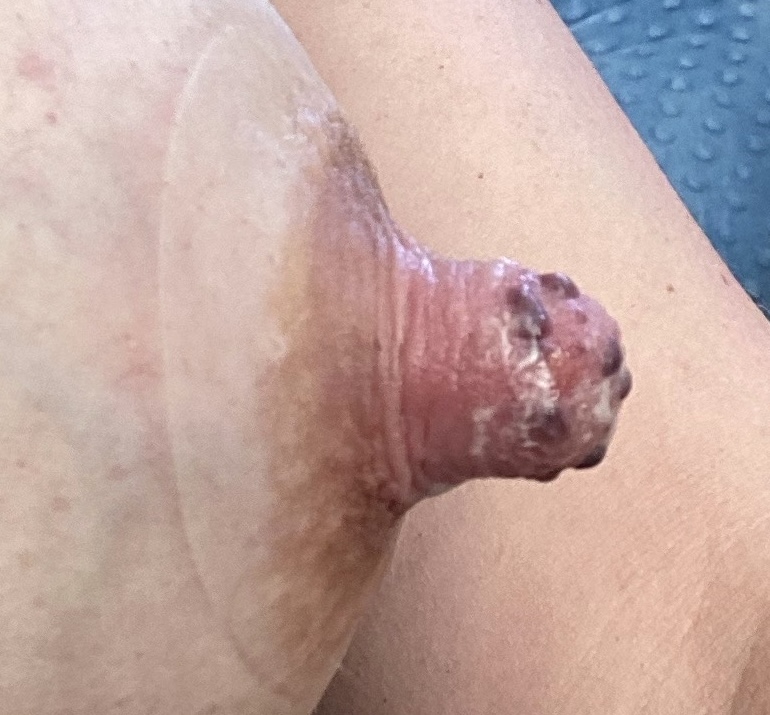
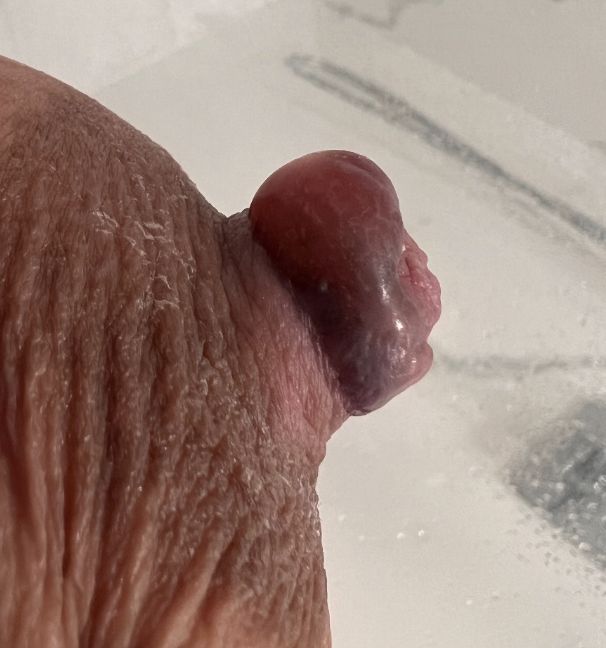
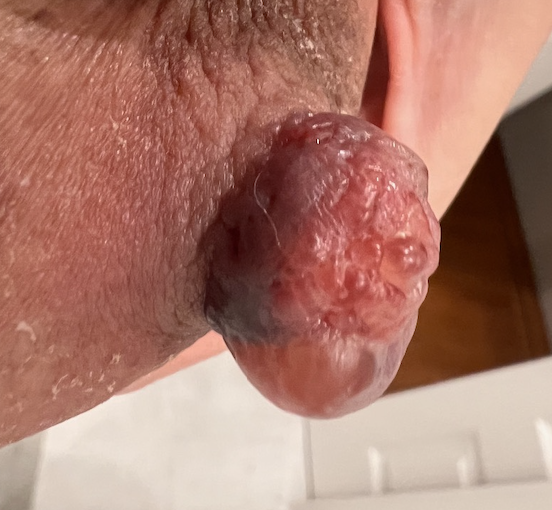
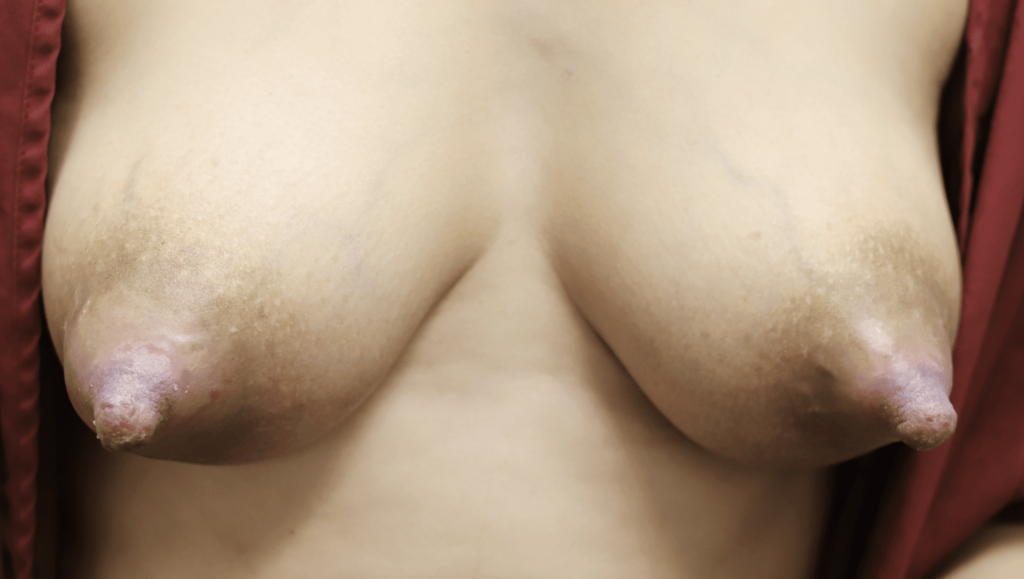
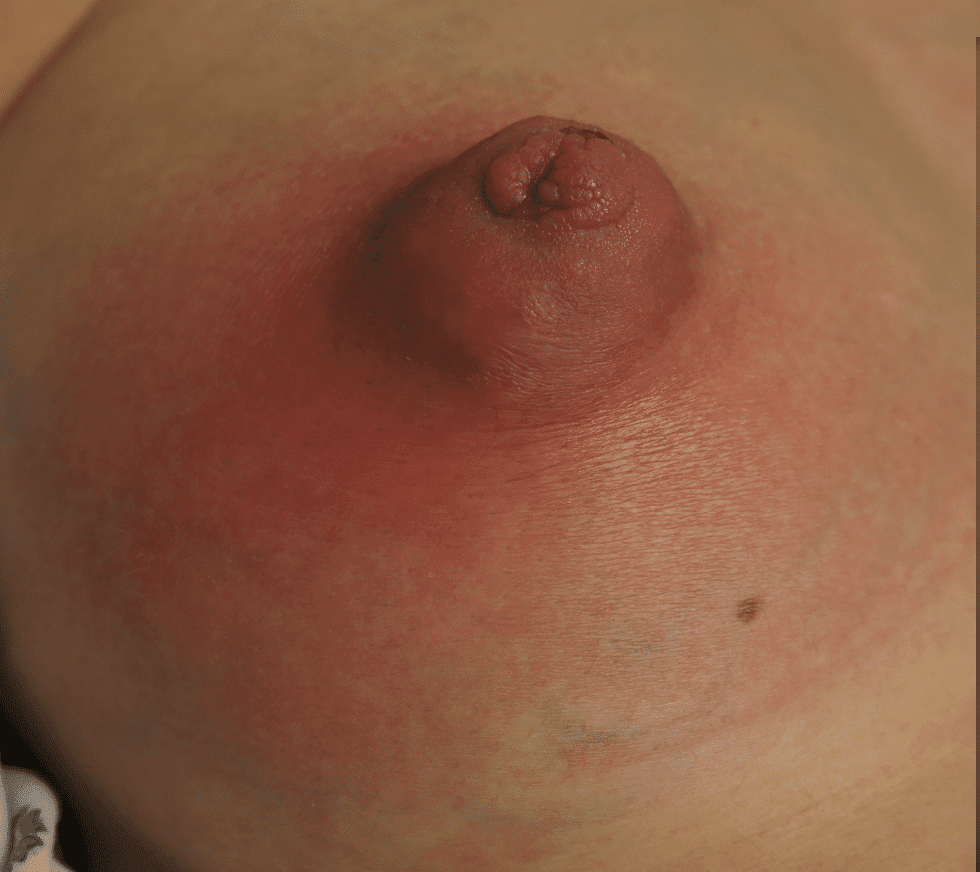
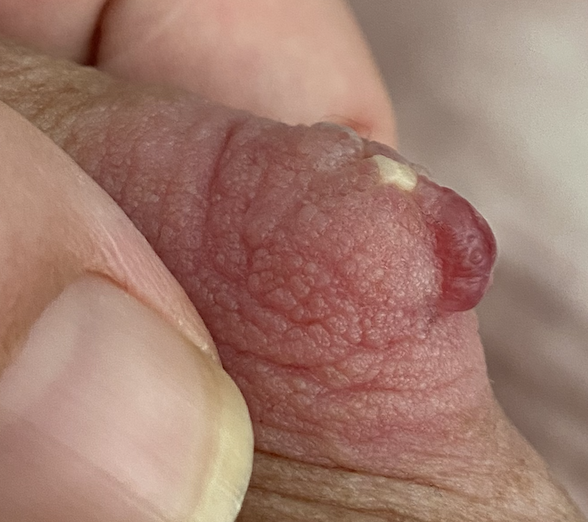
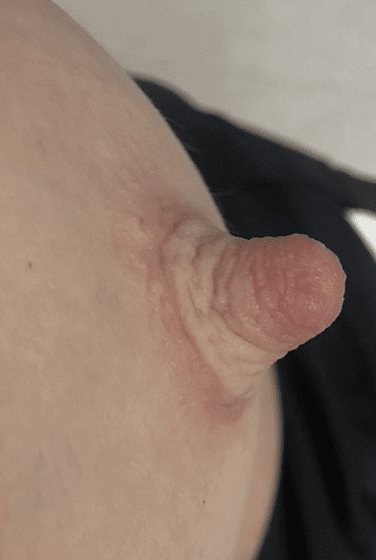
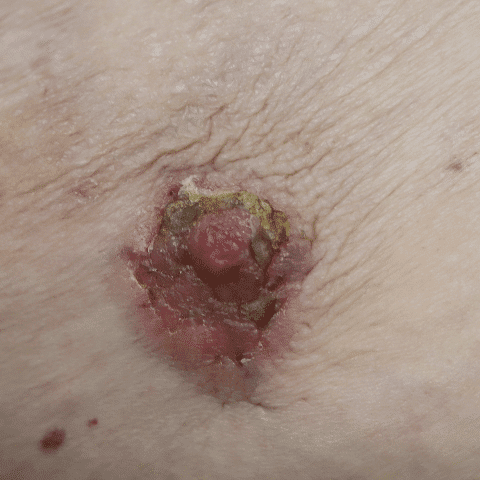
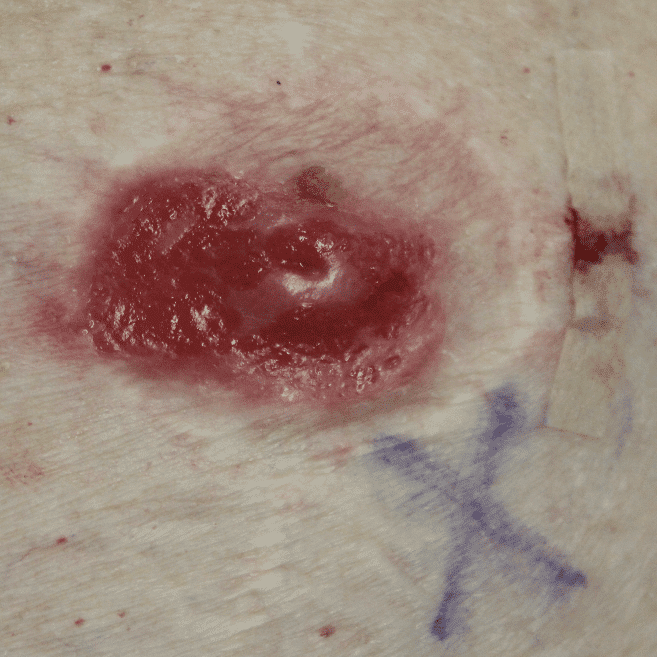
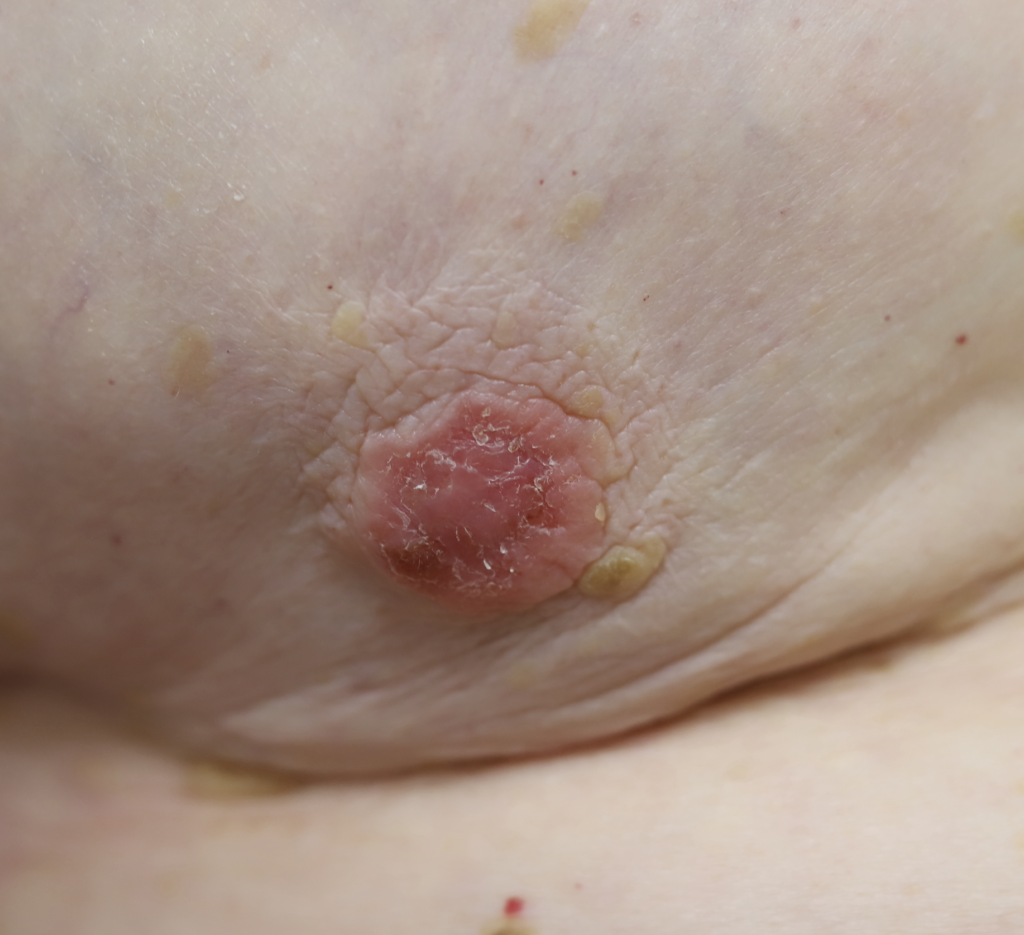
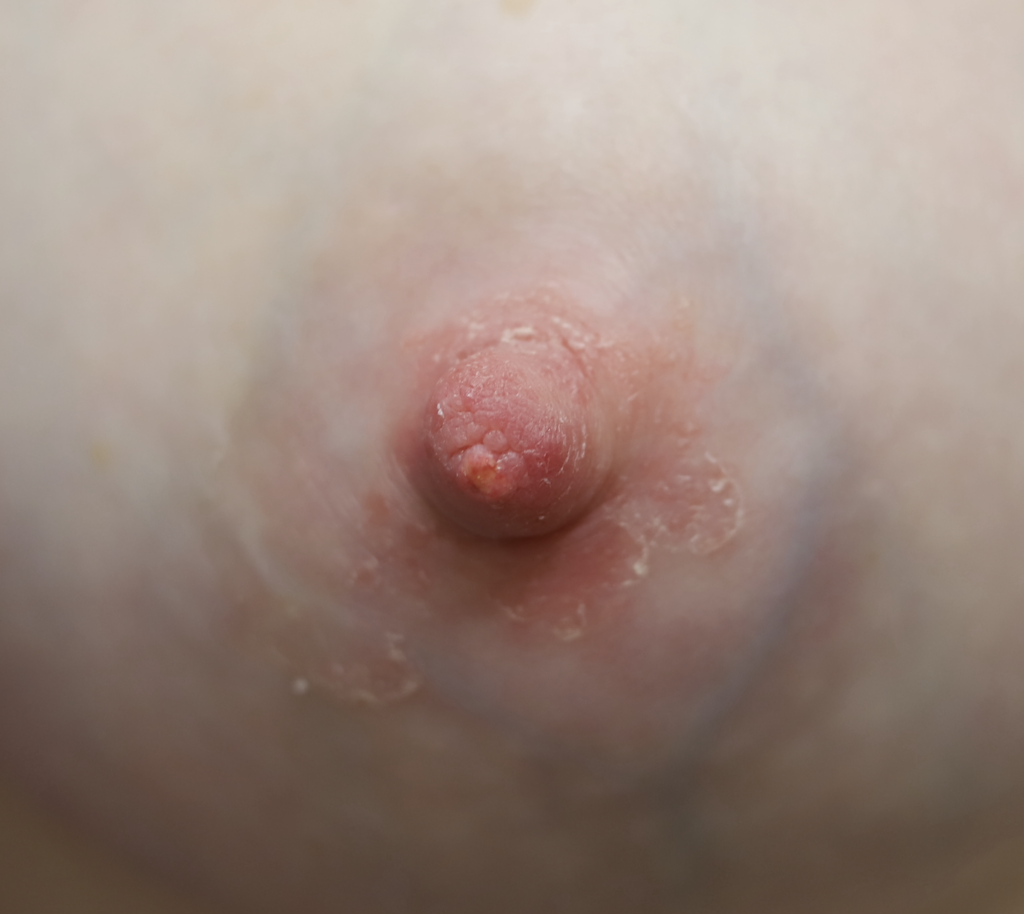
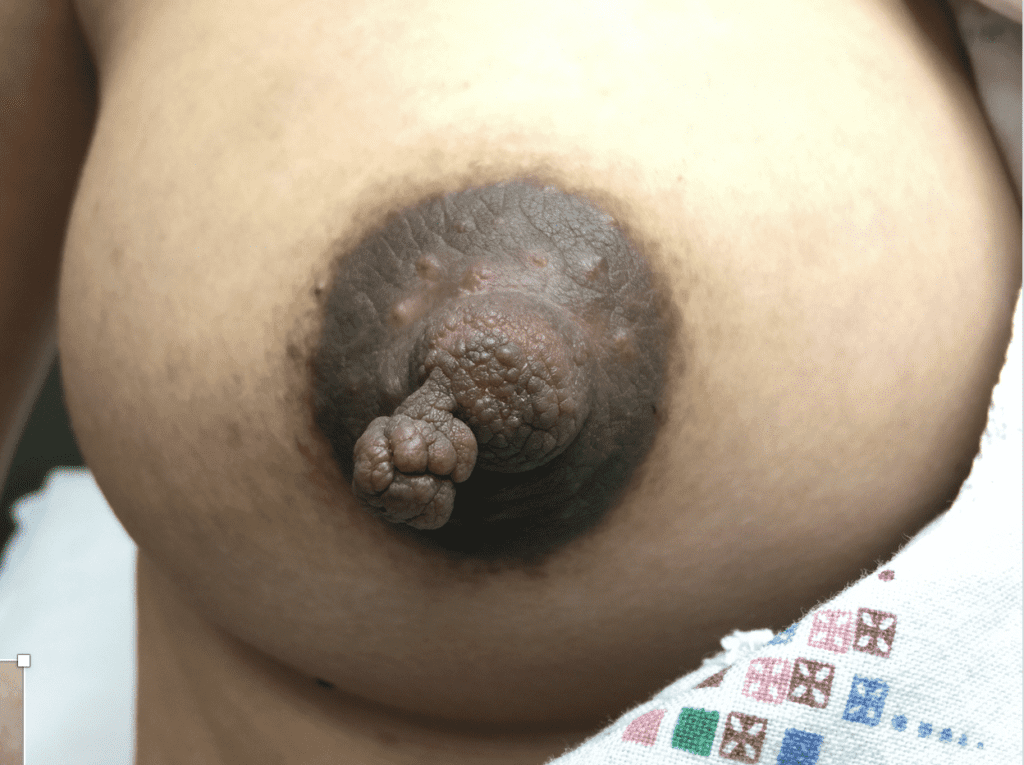
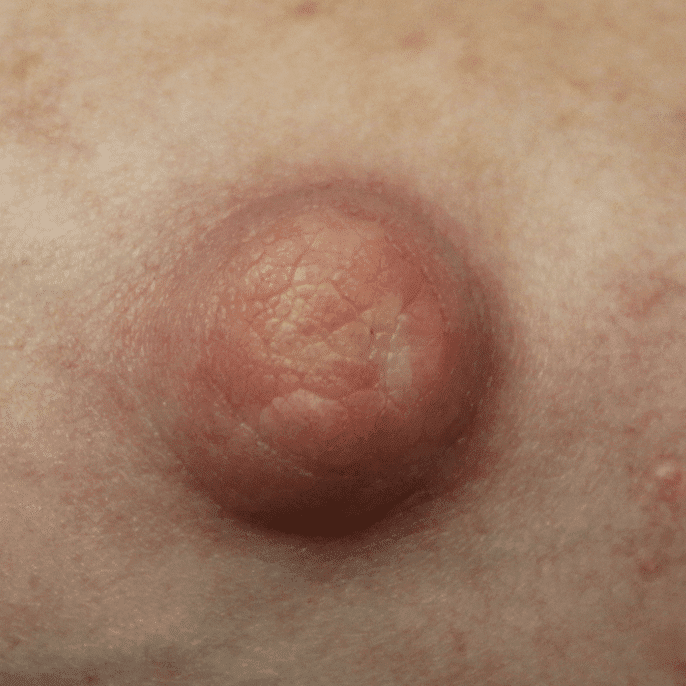
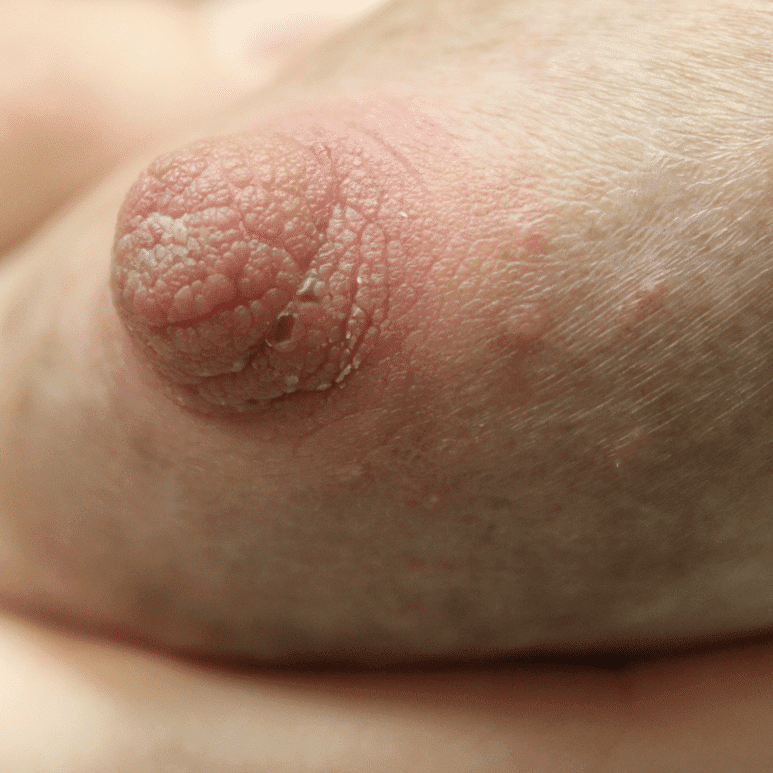
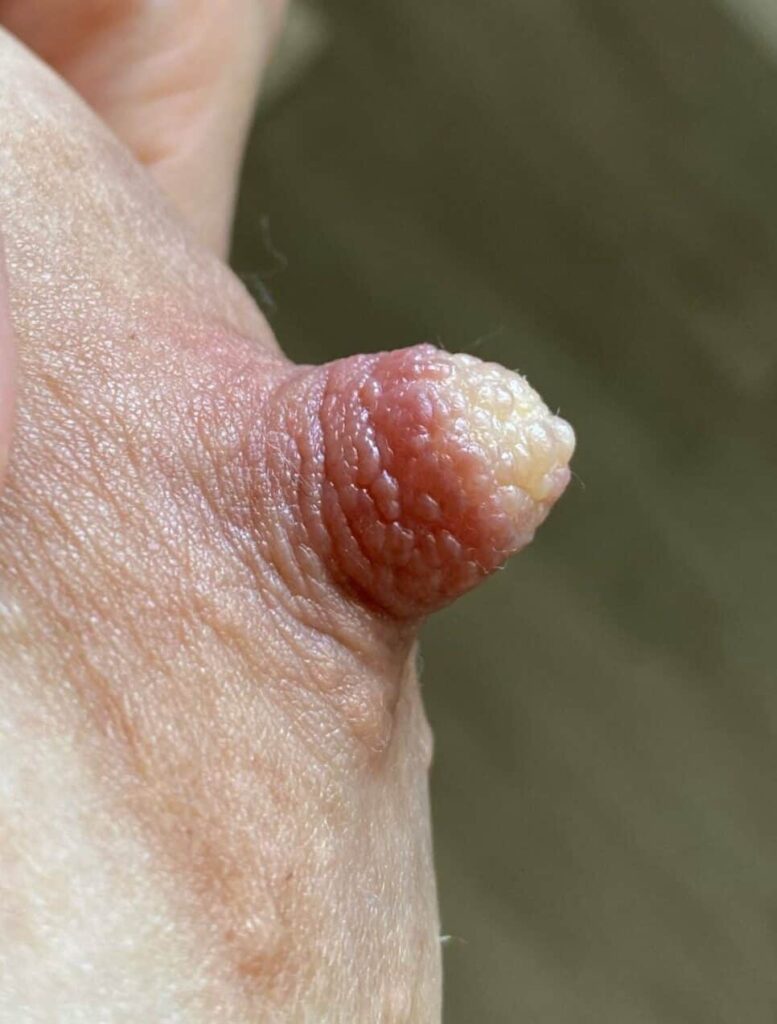
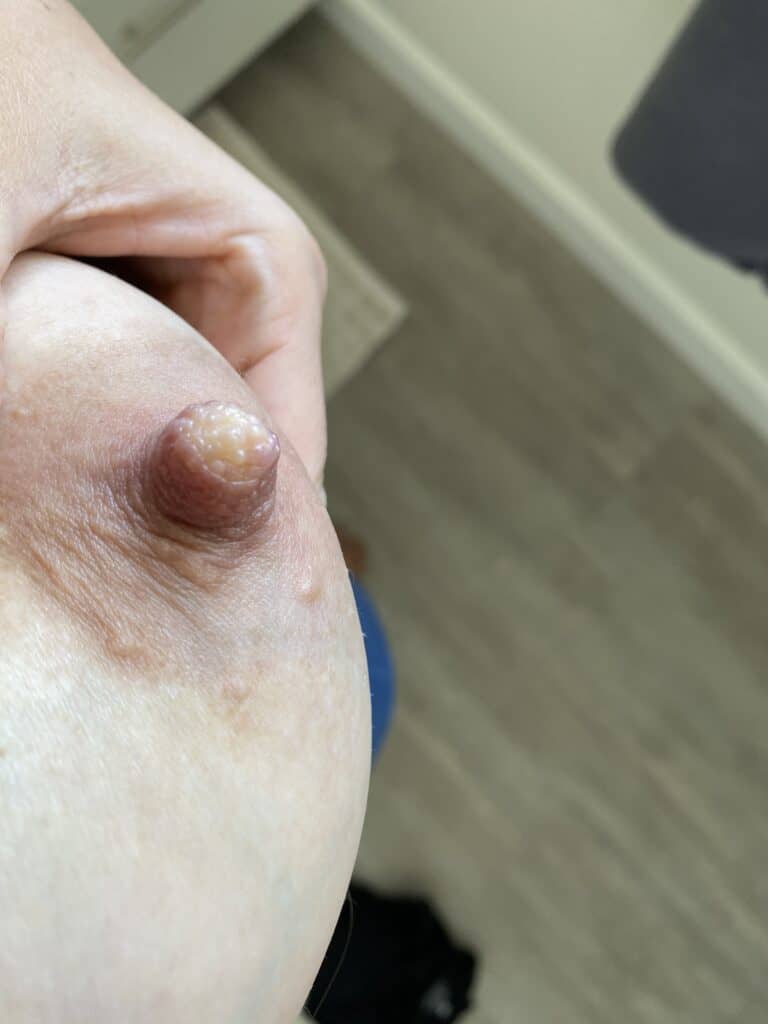
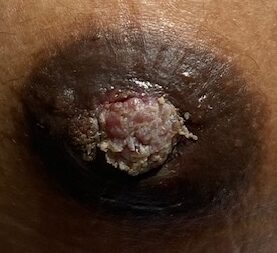
    Adenoma

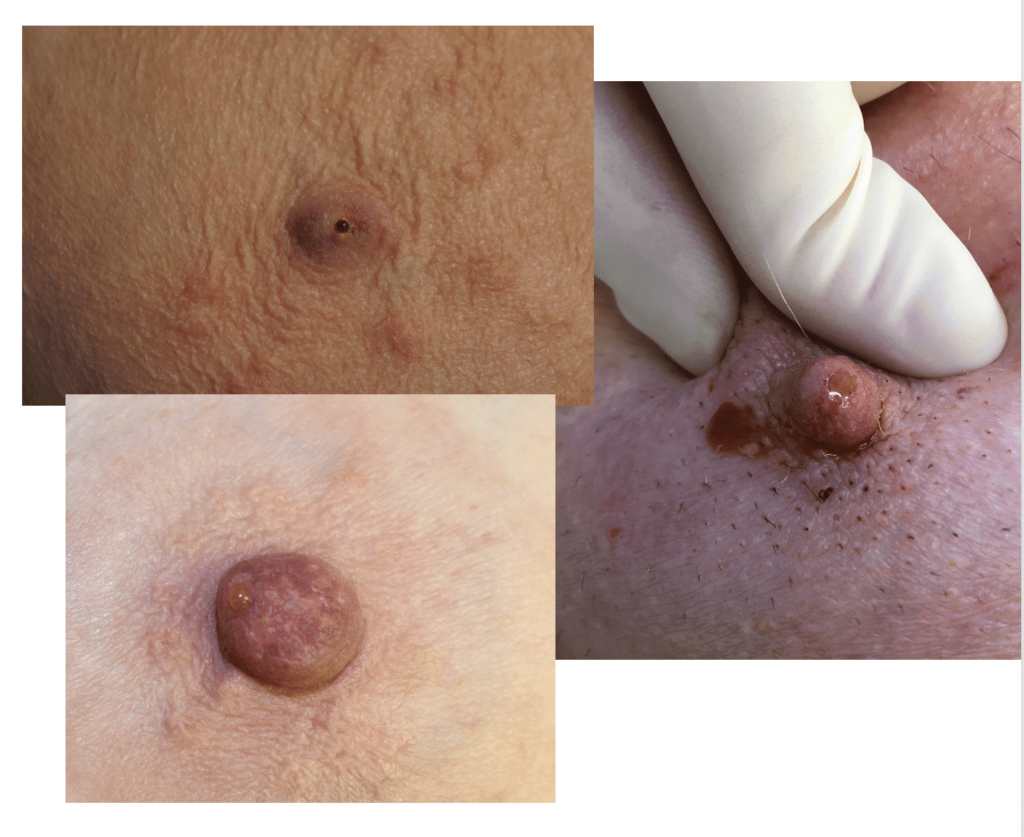
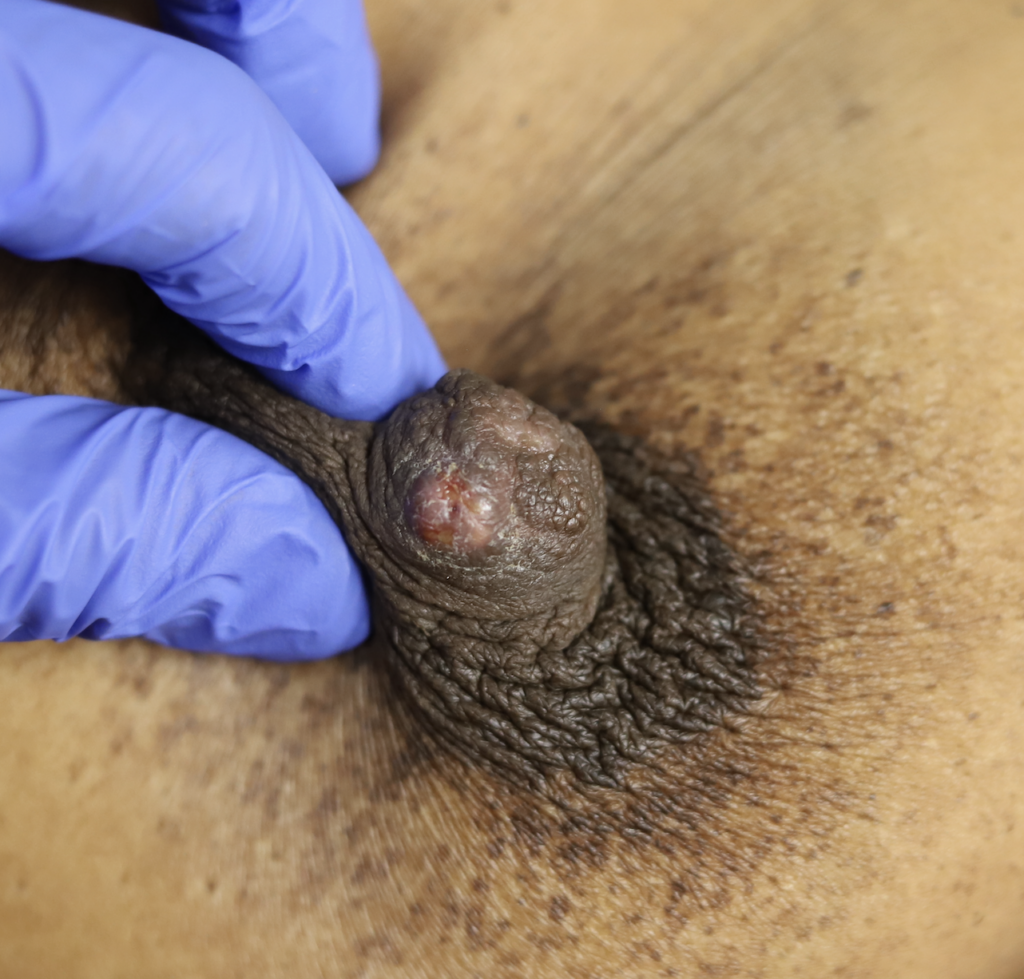
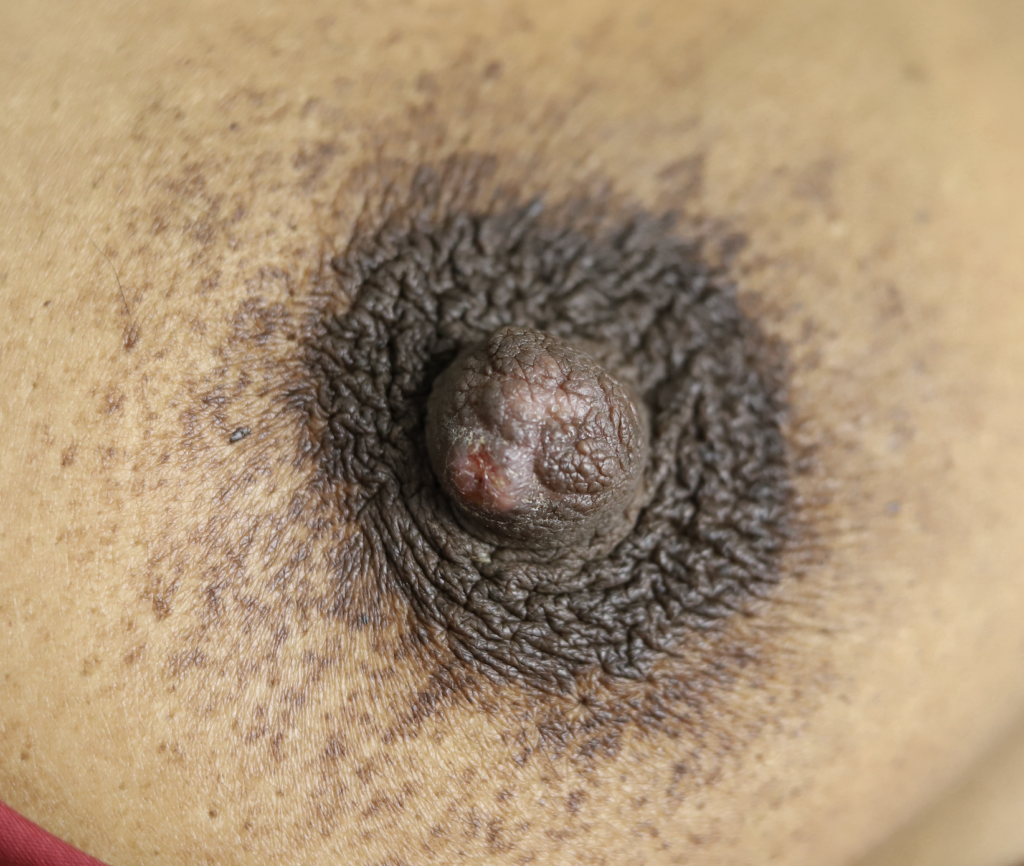
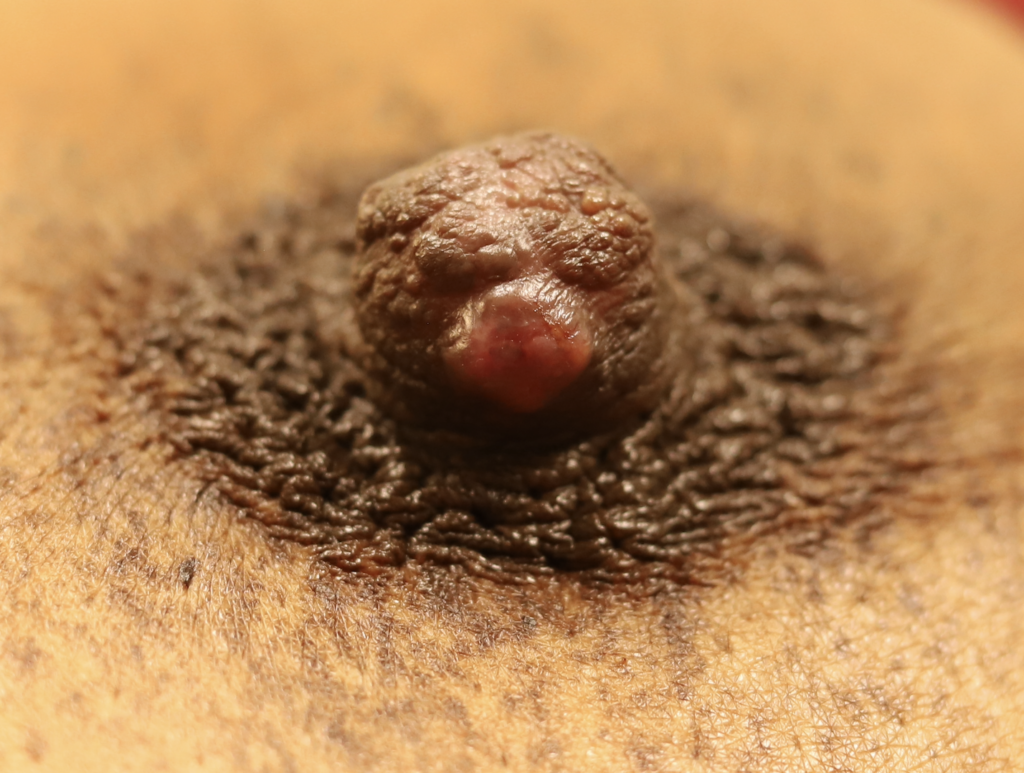
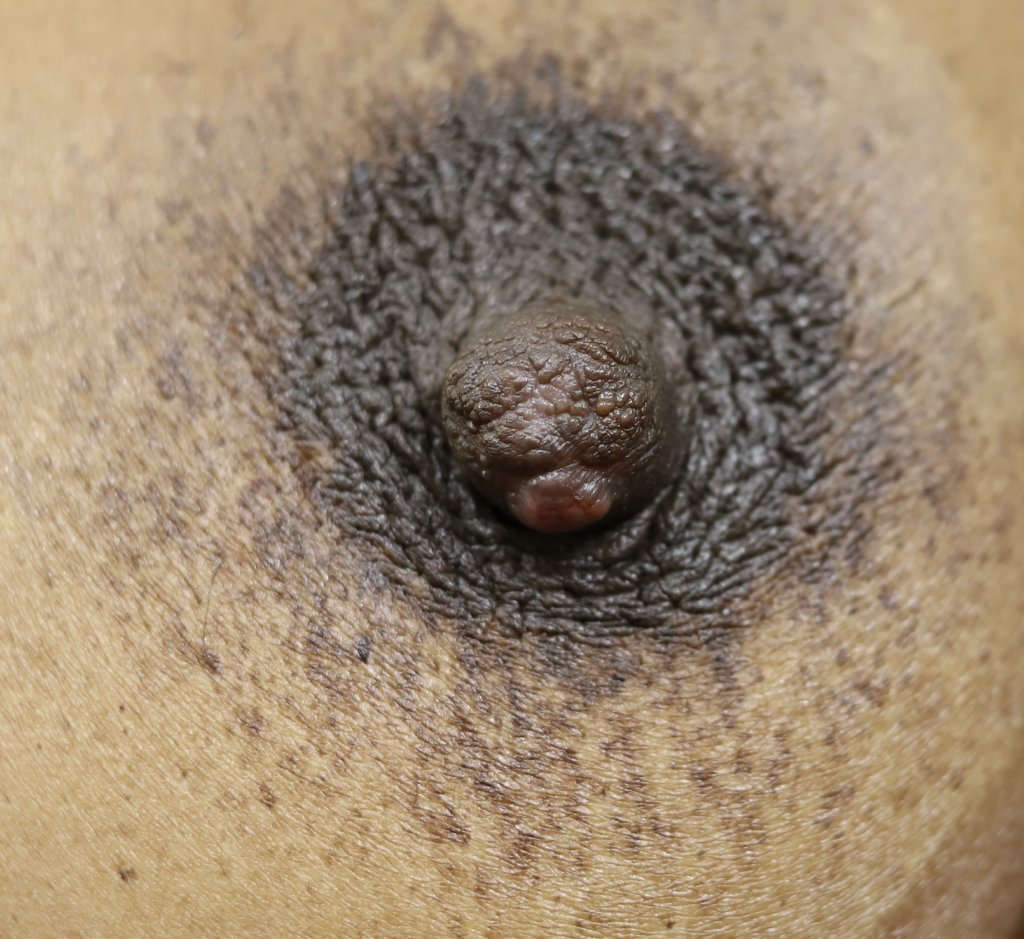
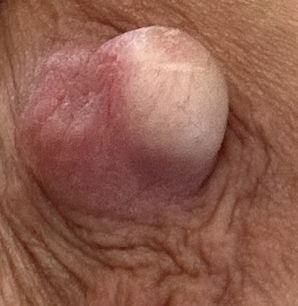
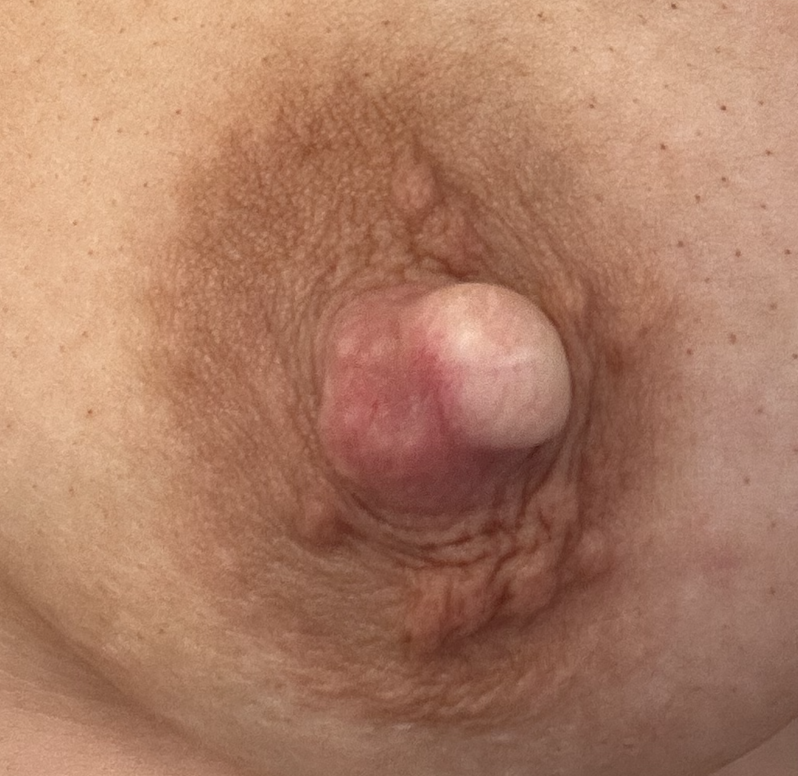
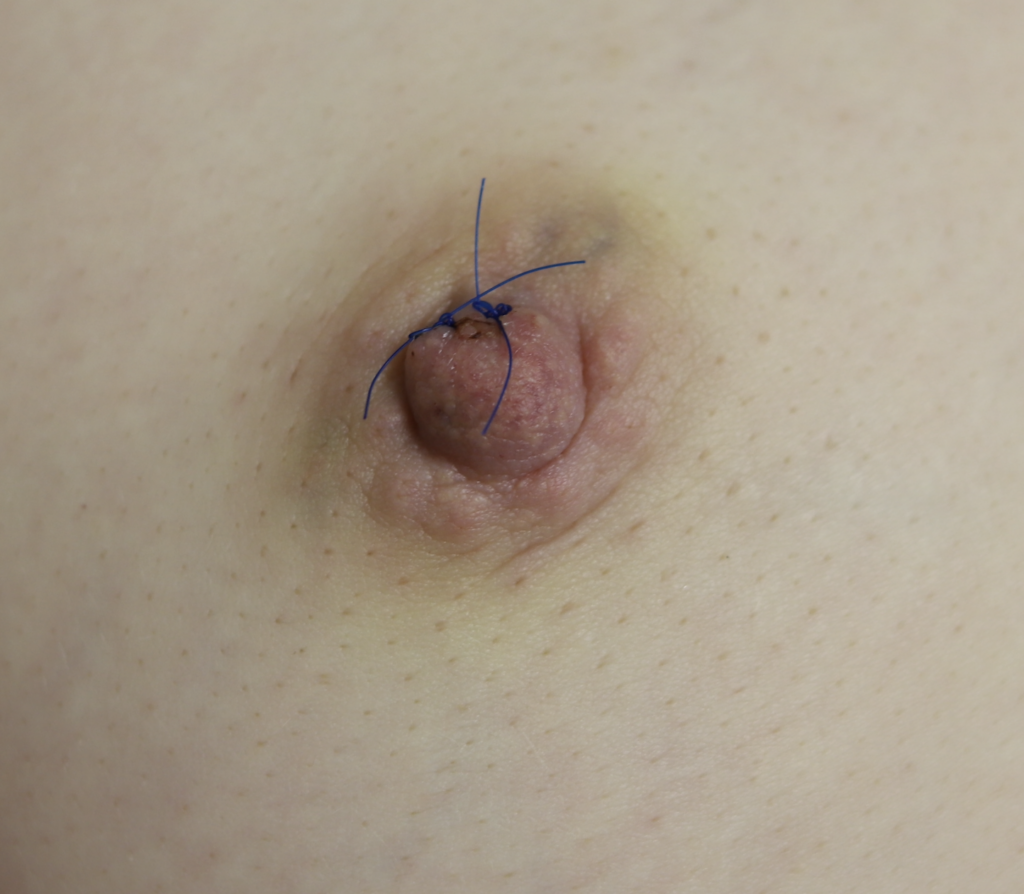
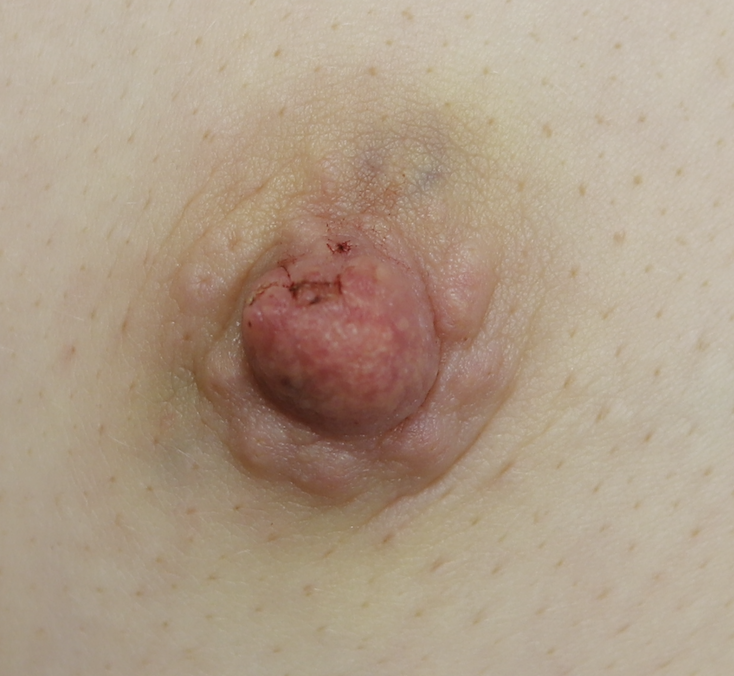
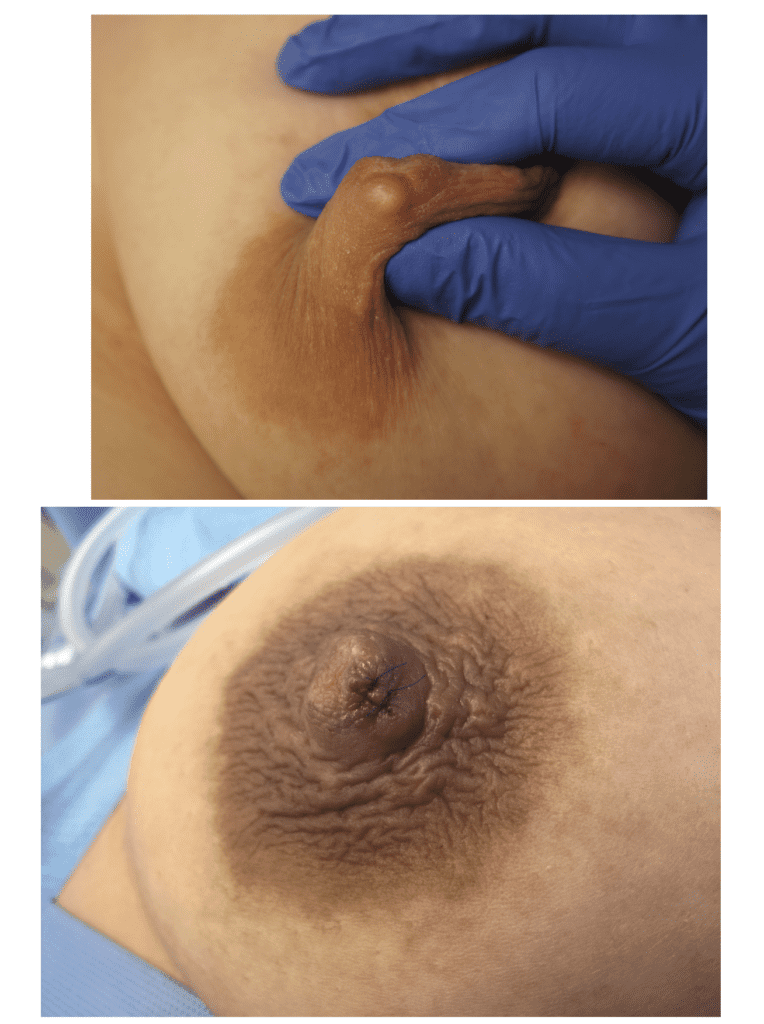
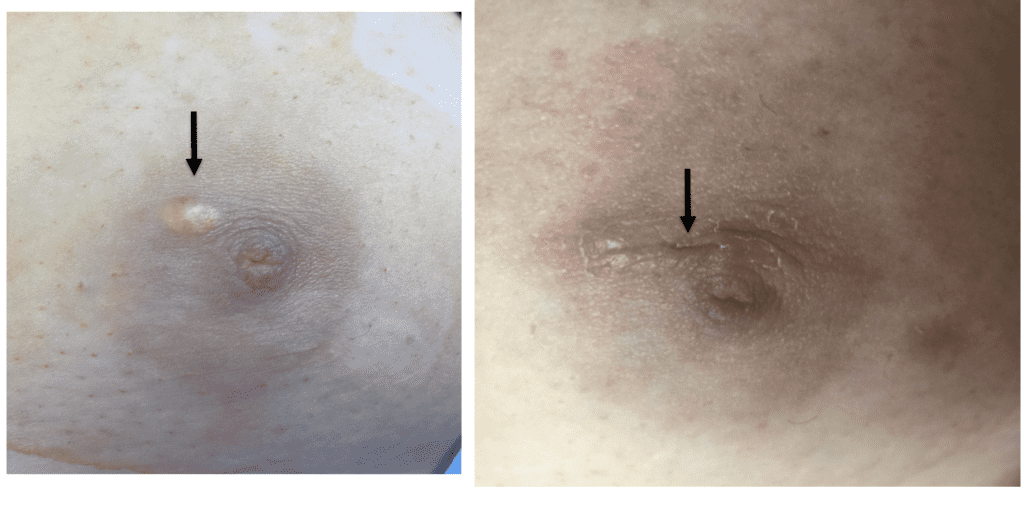
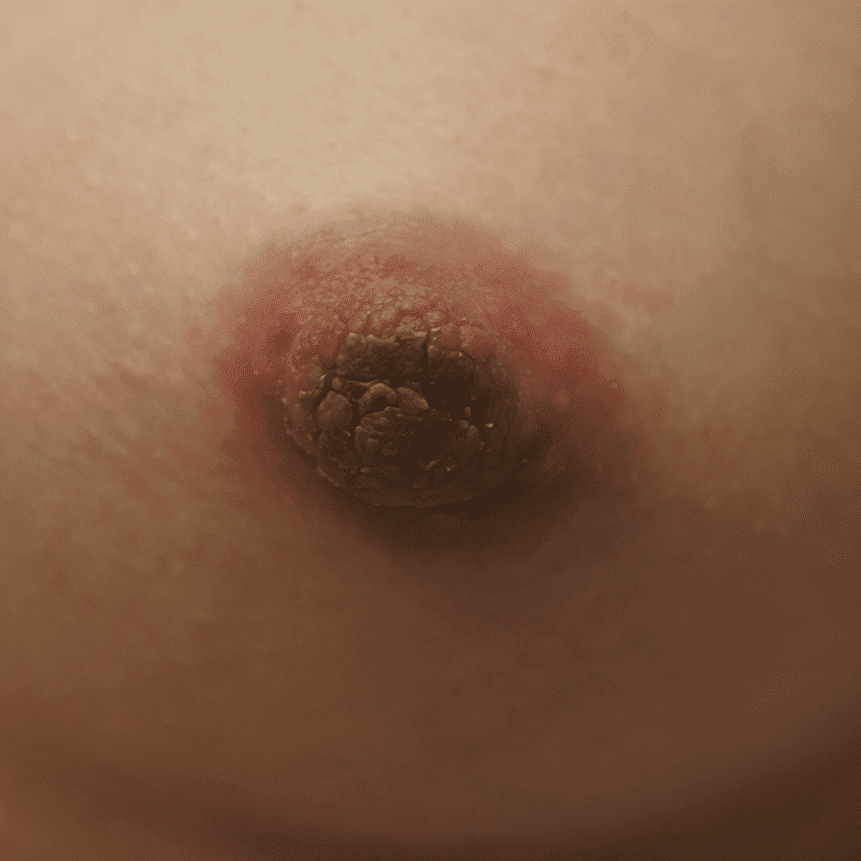
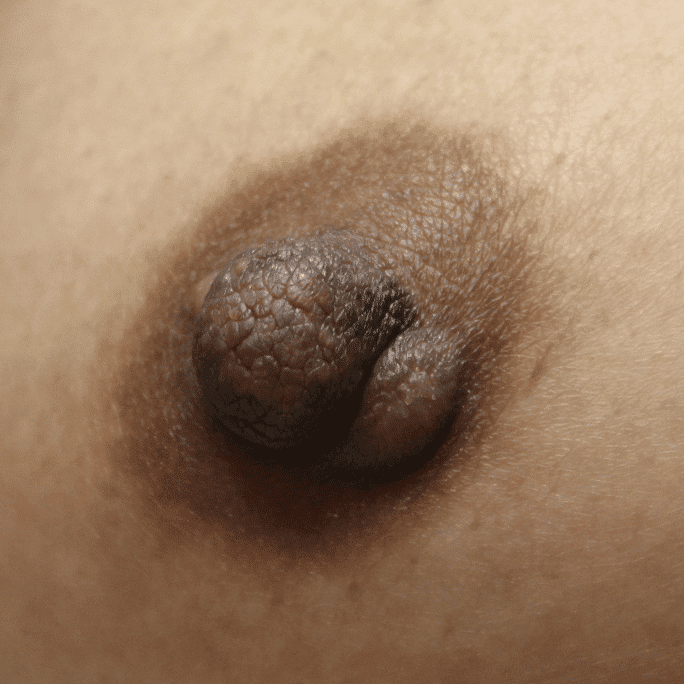
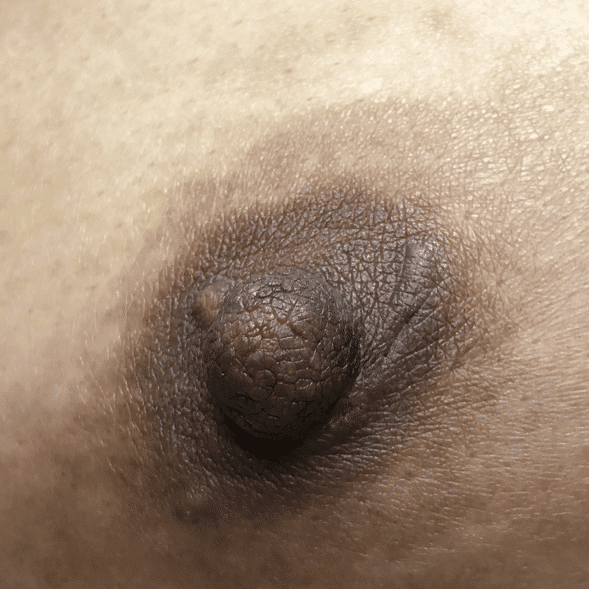
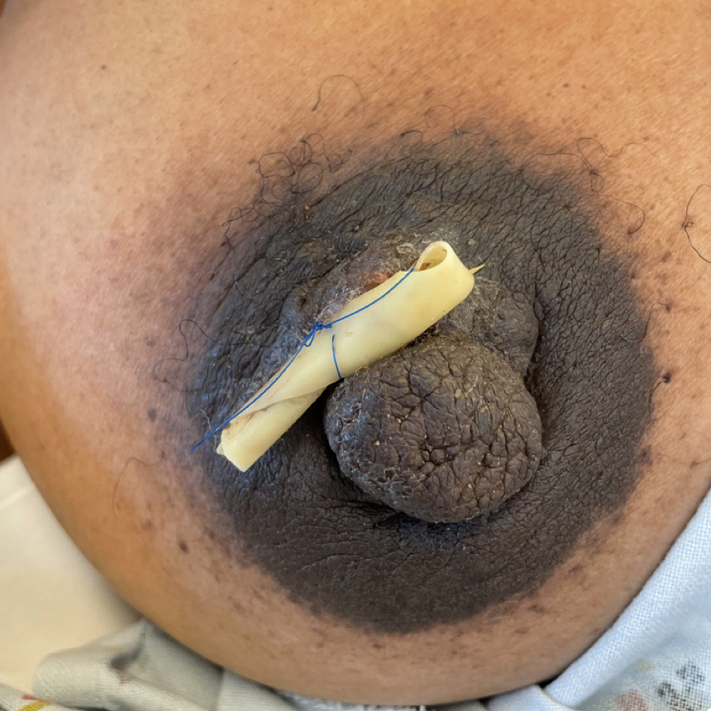
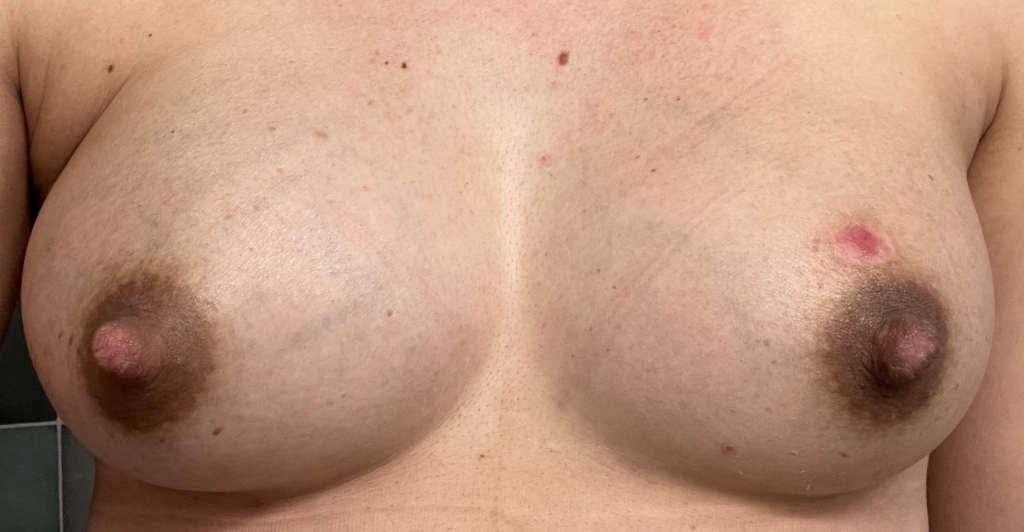
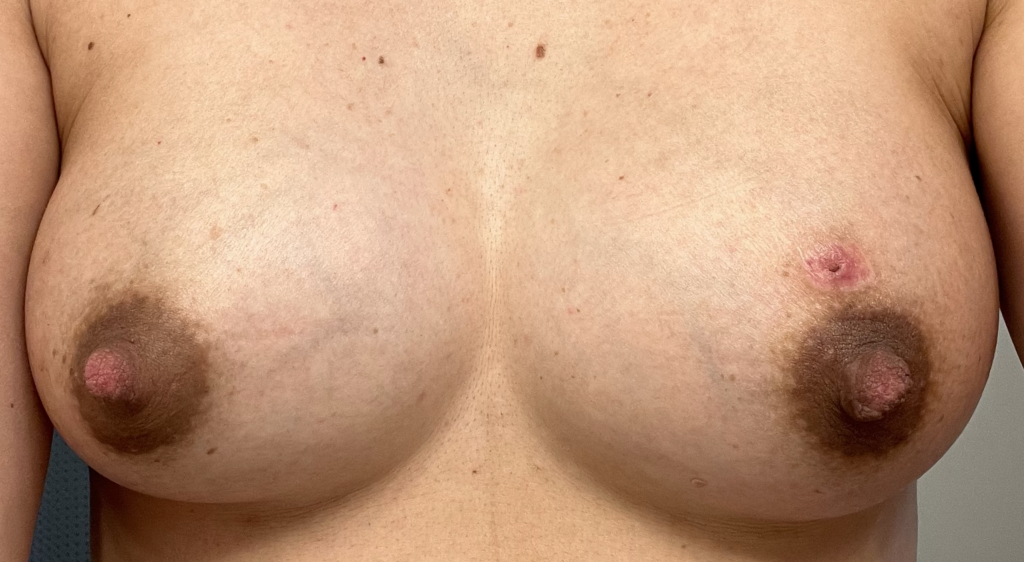
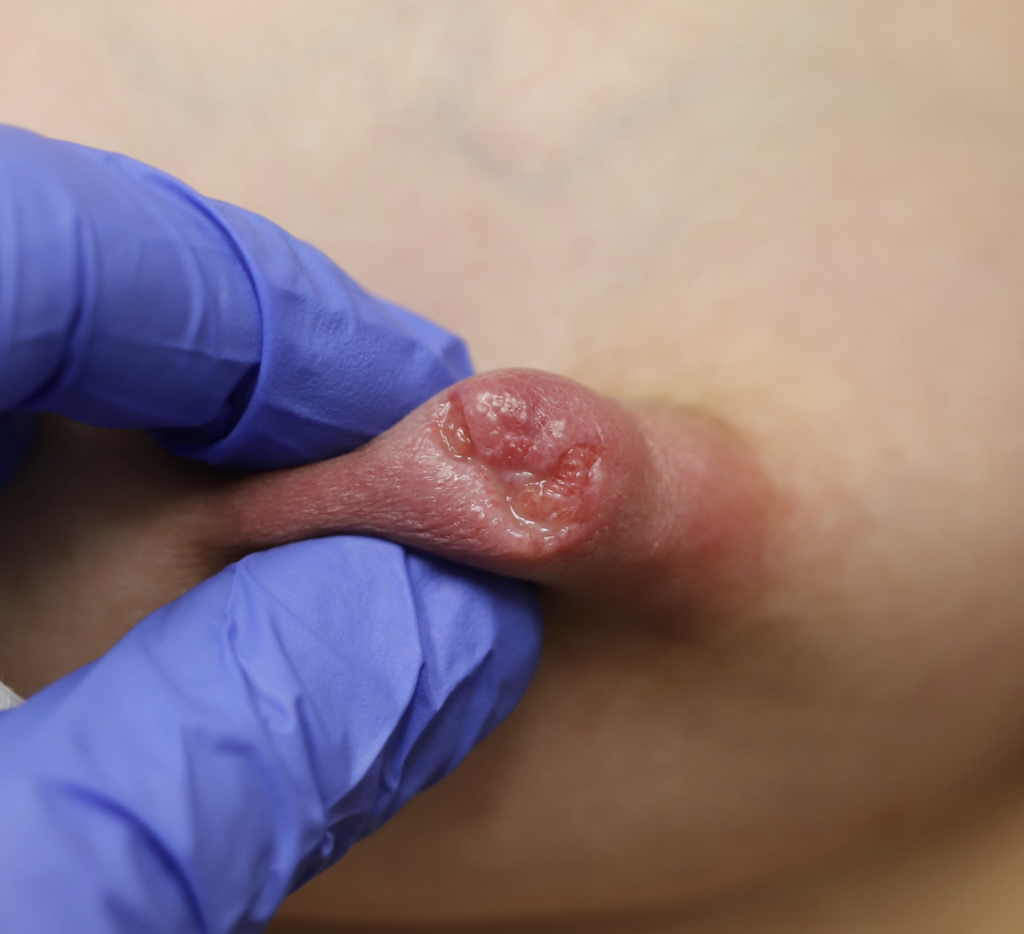
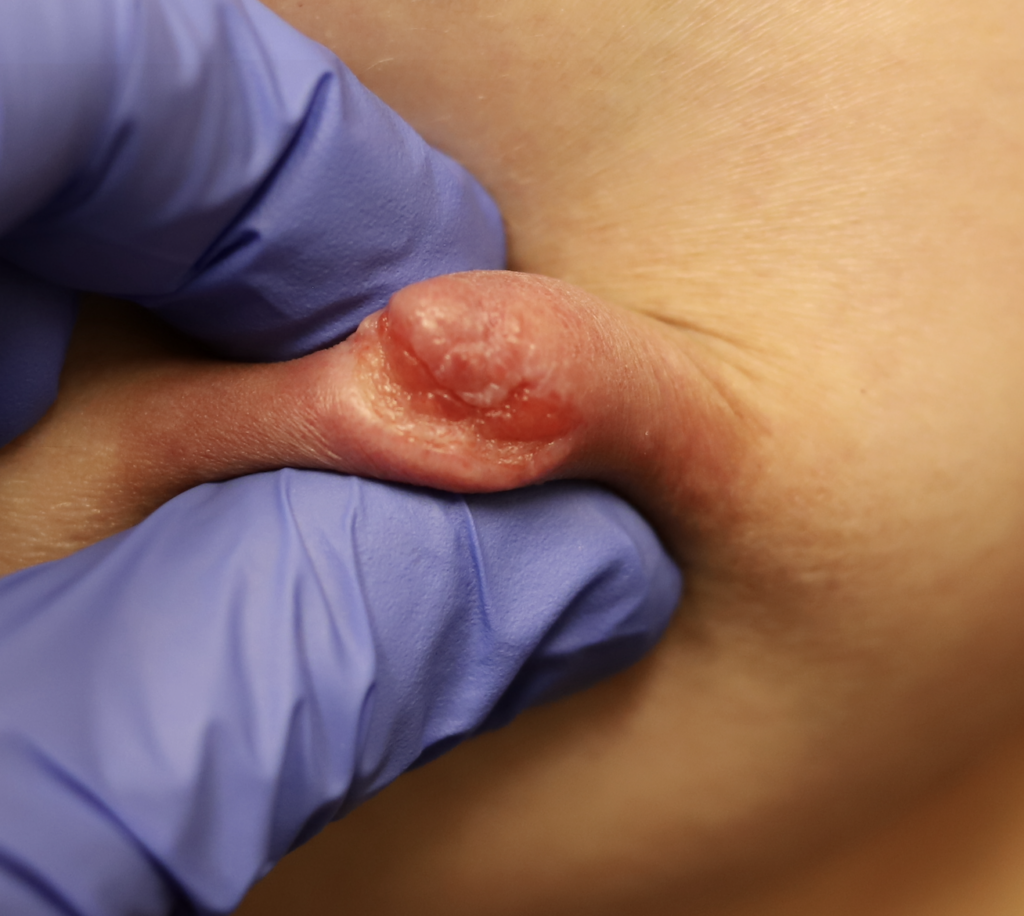
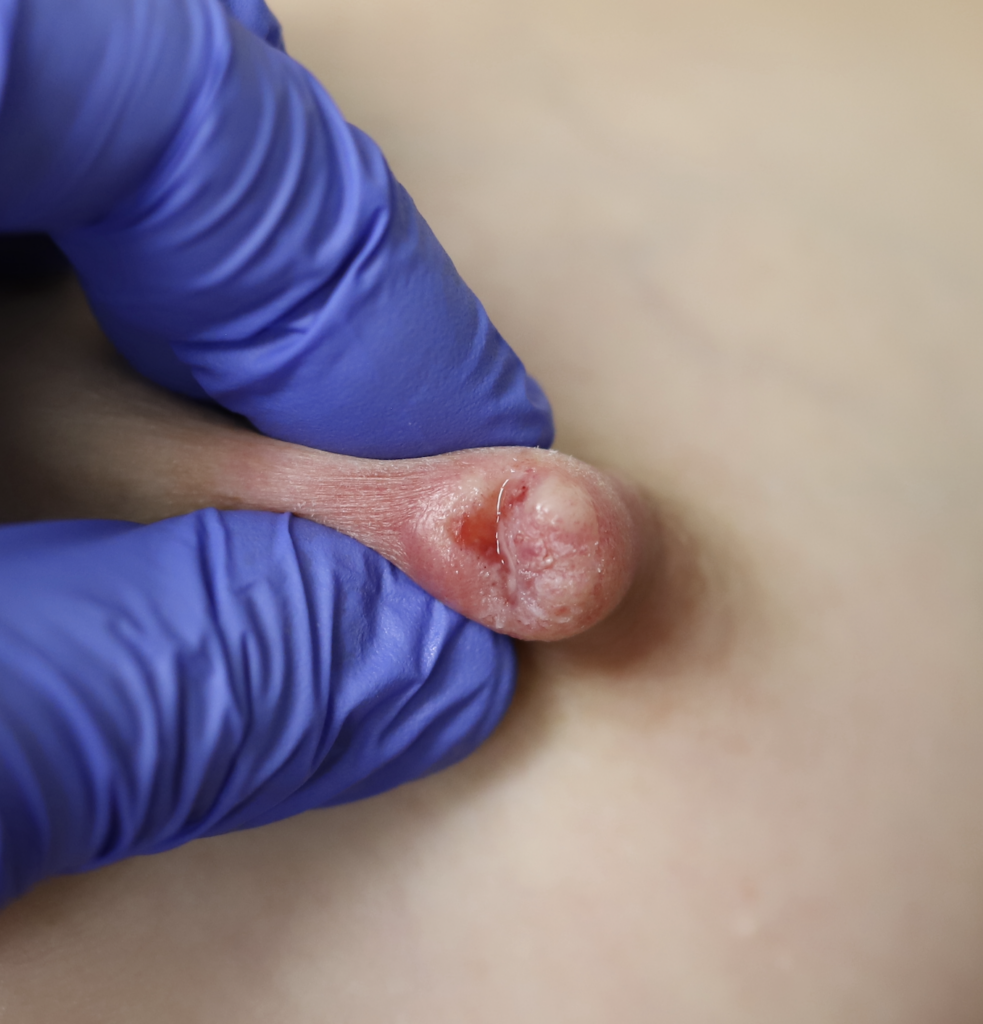
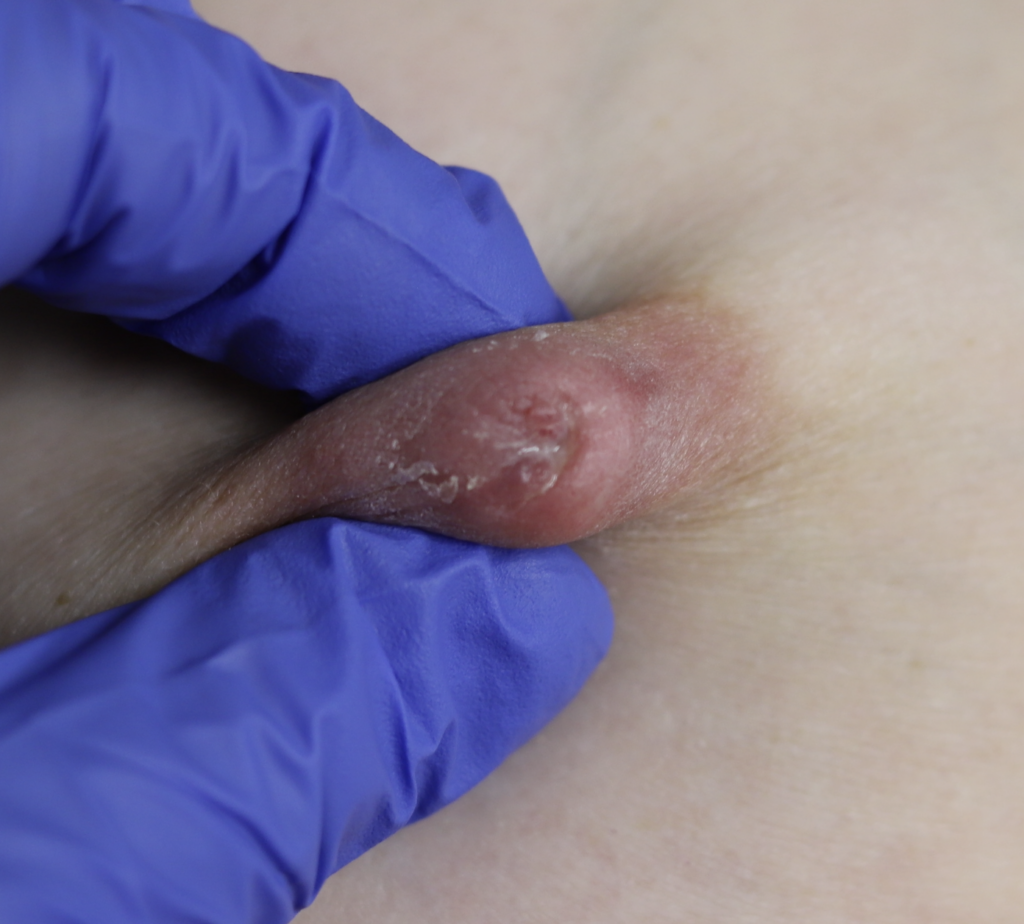
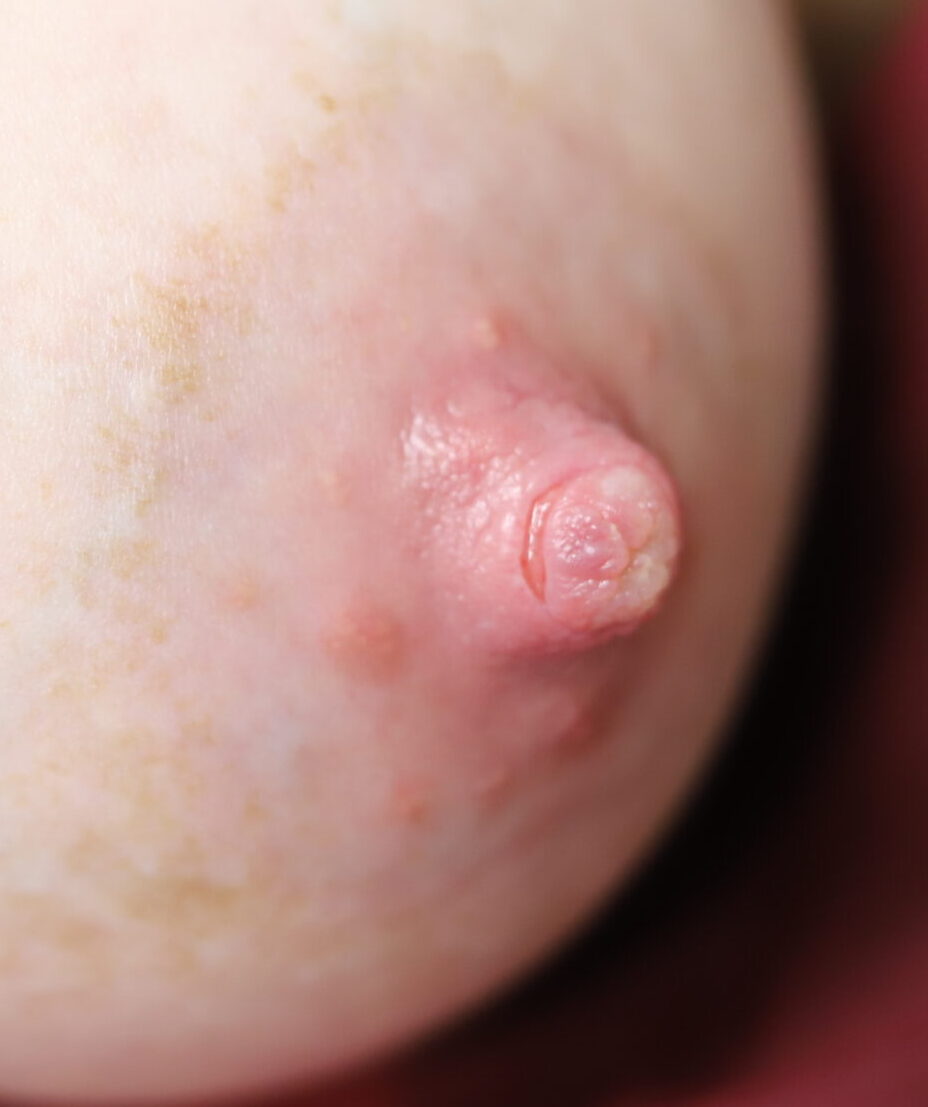
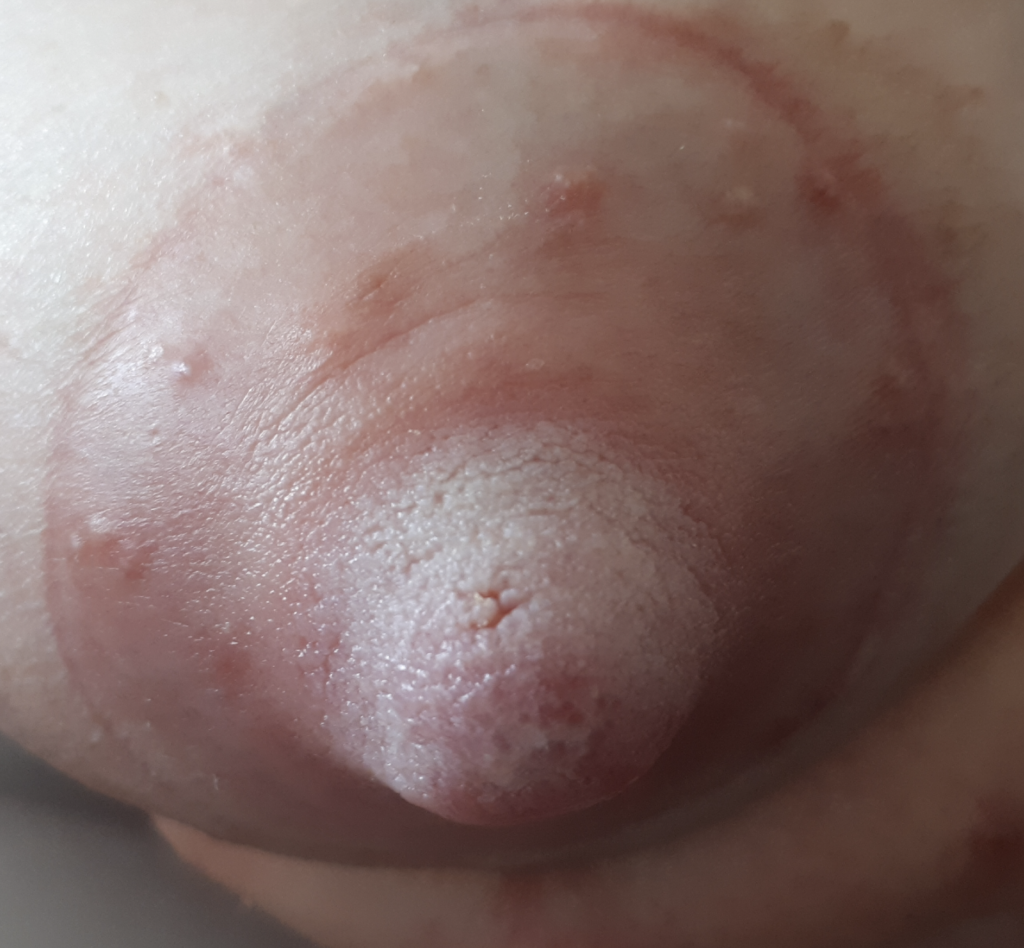
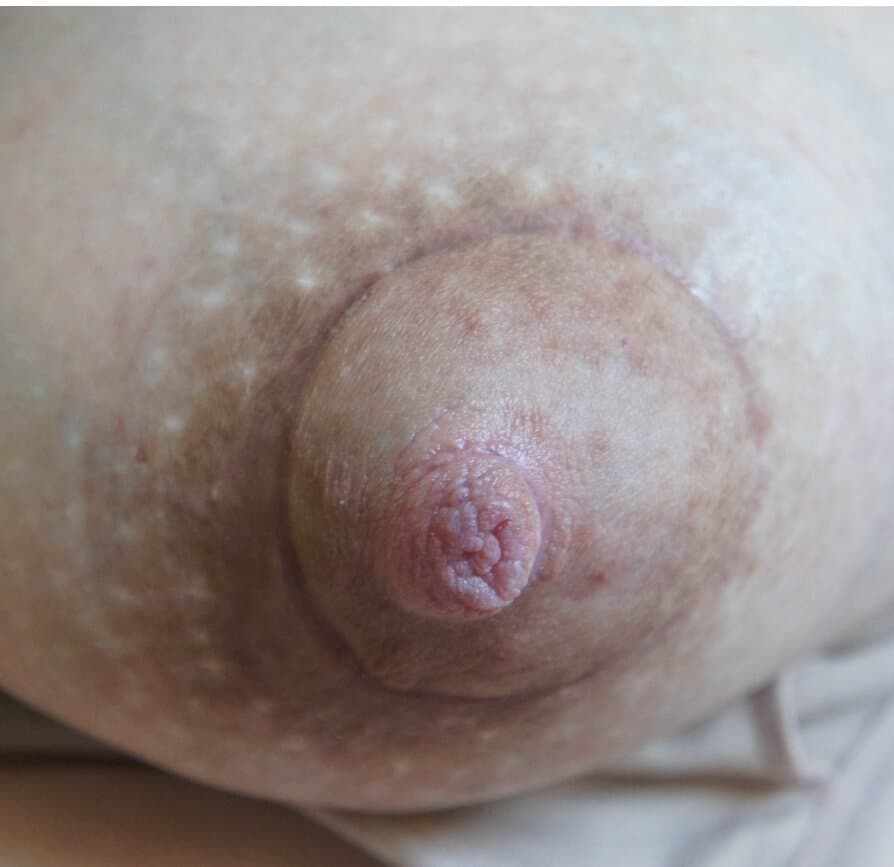
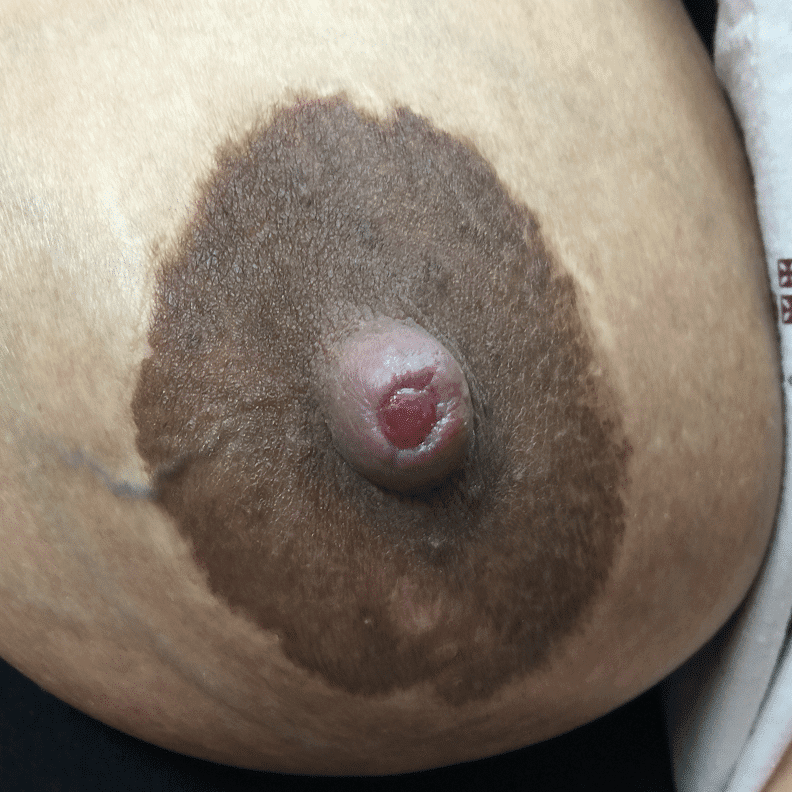
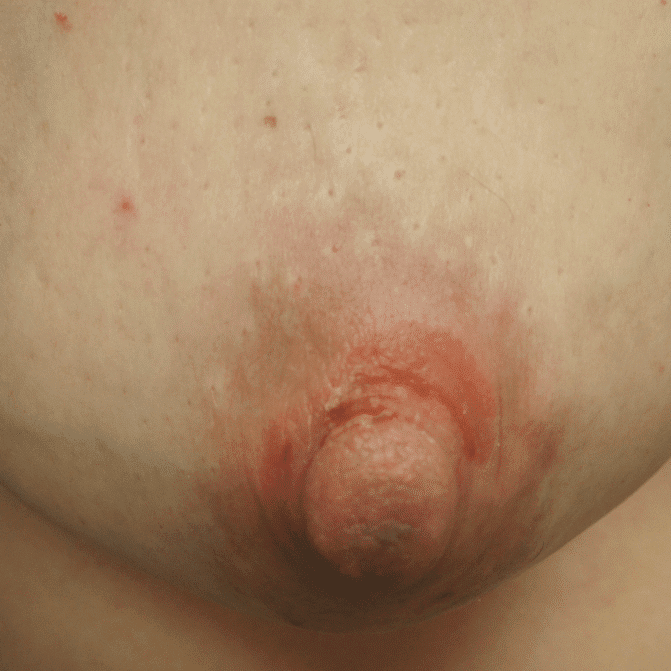
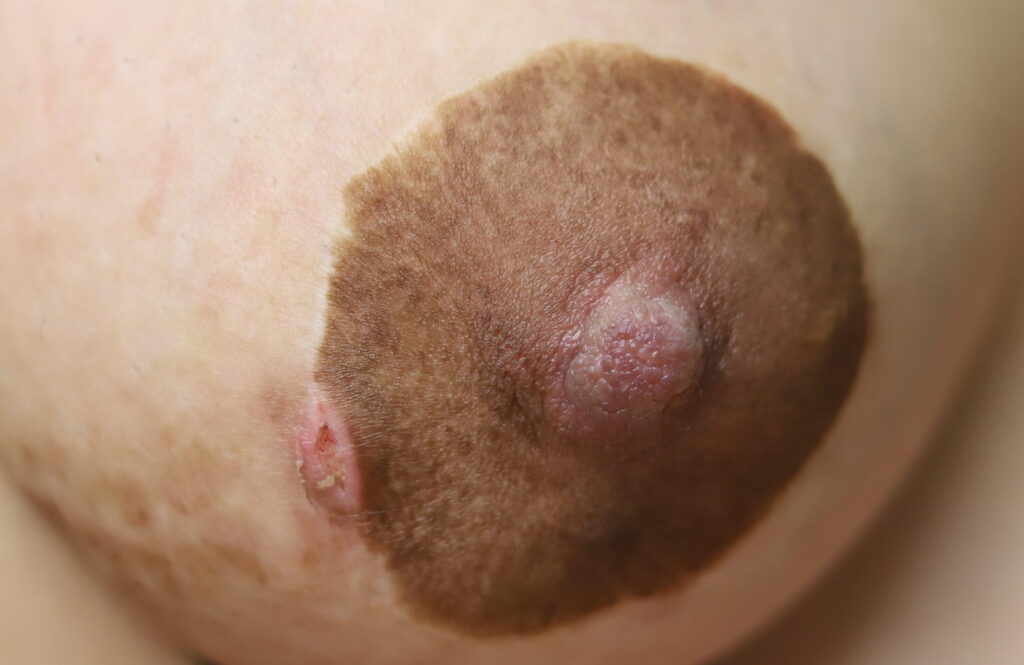
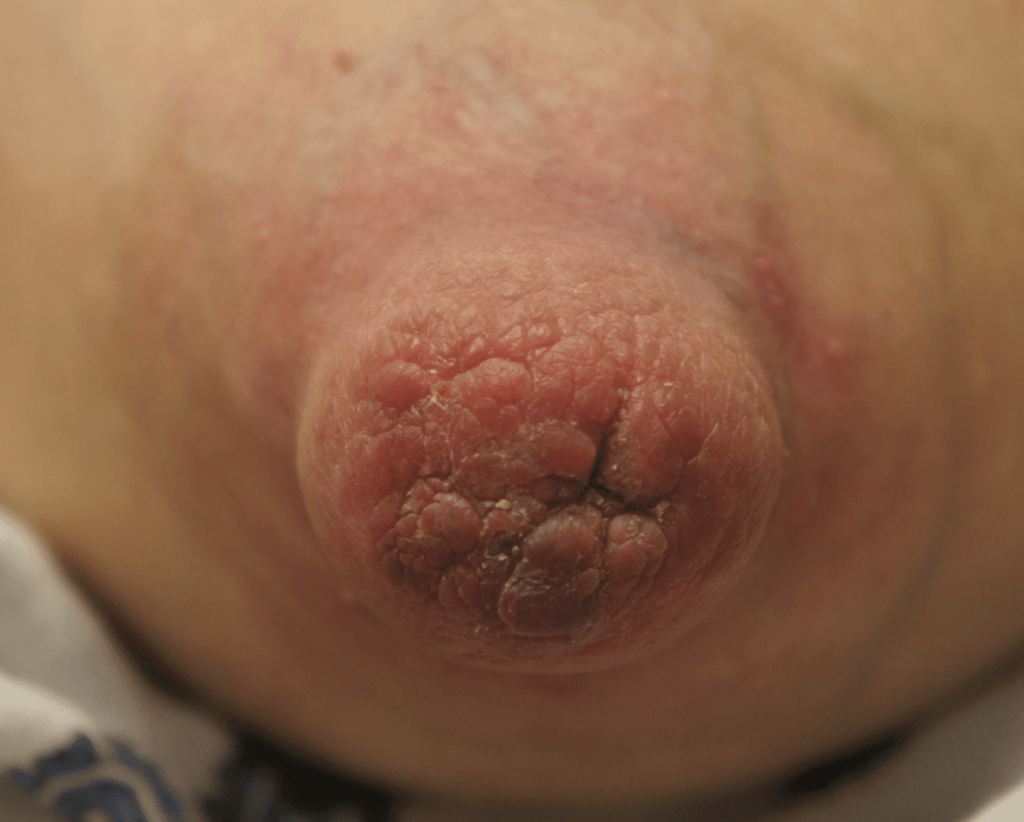
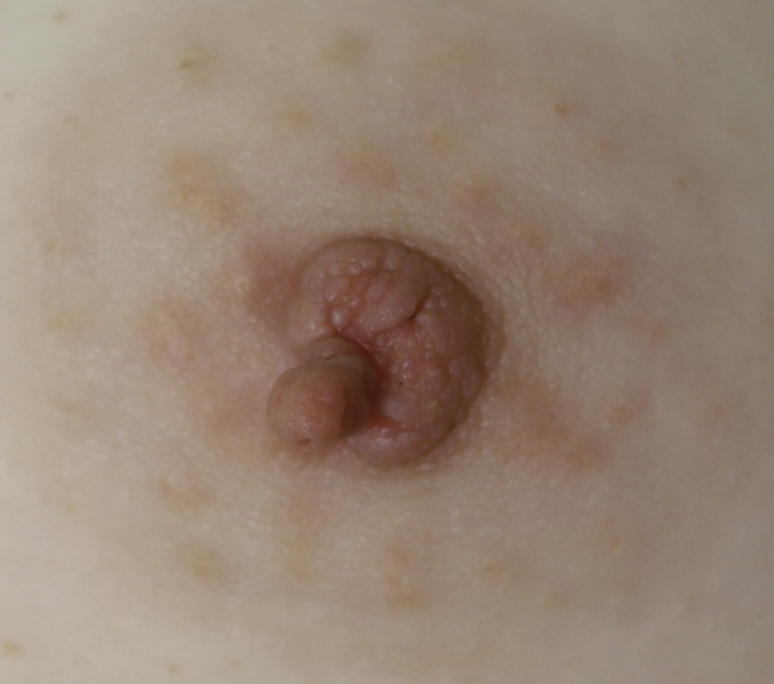
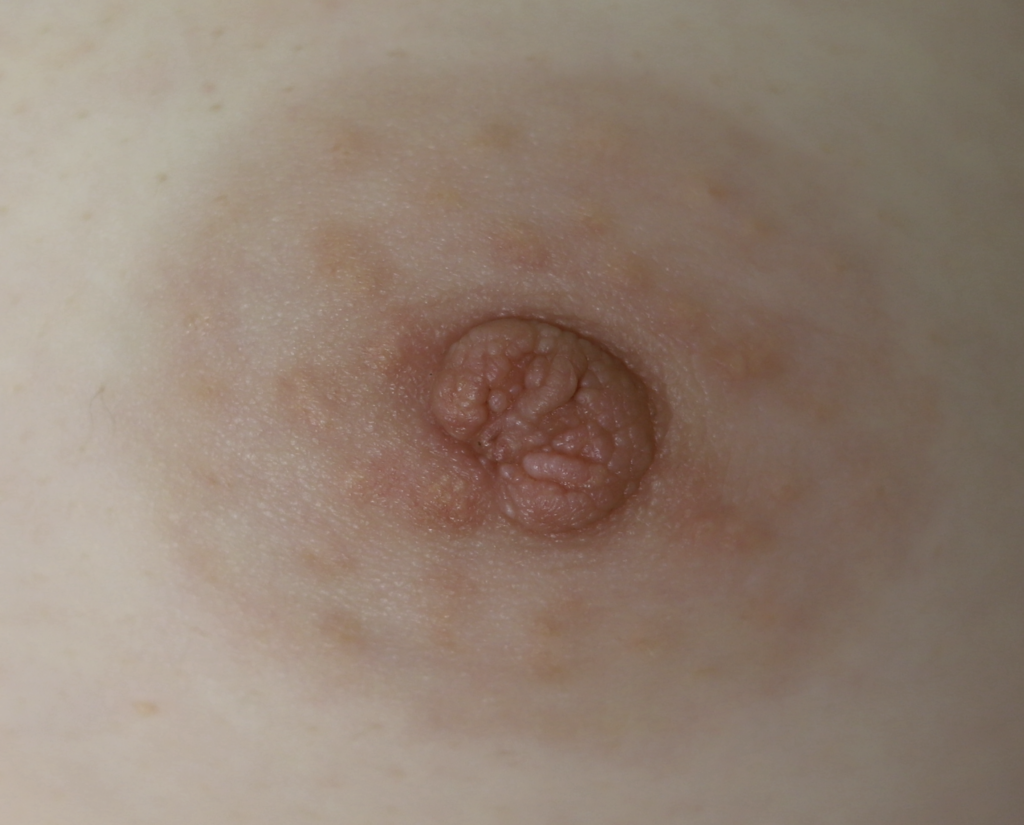
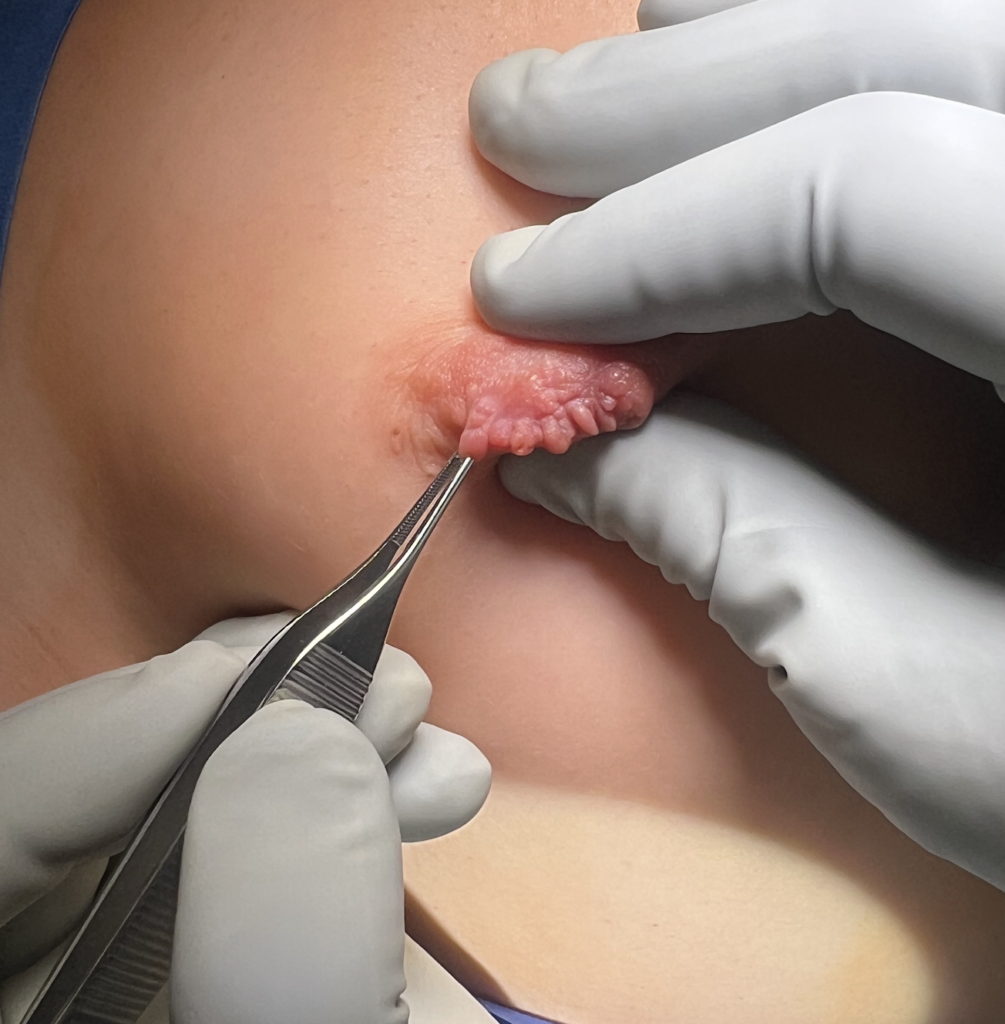
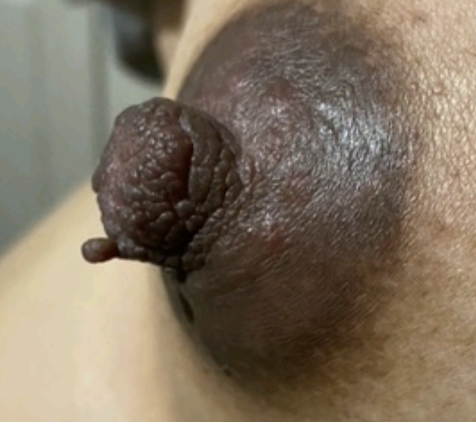
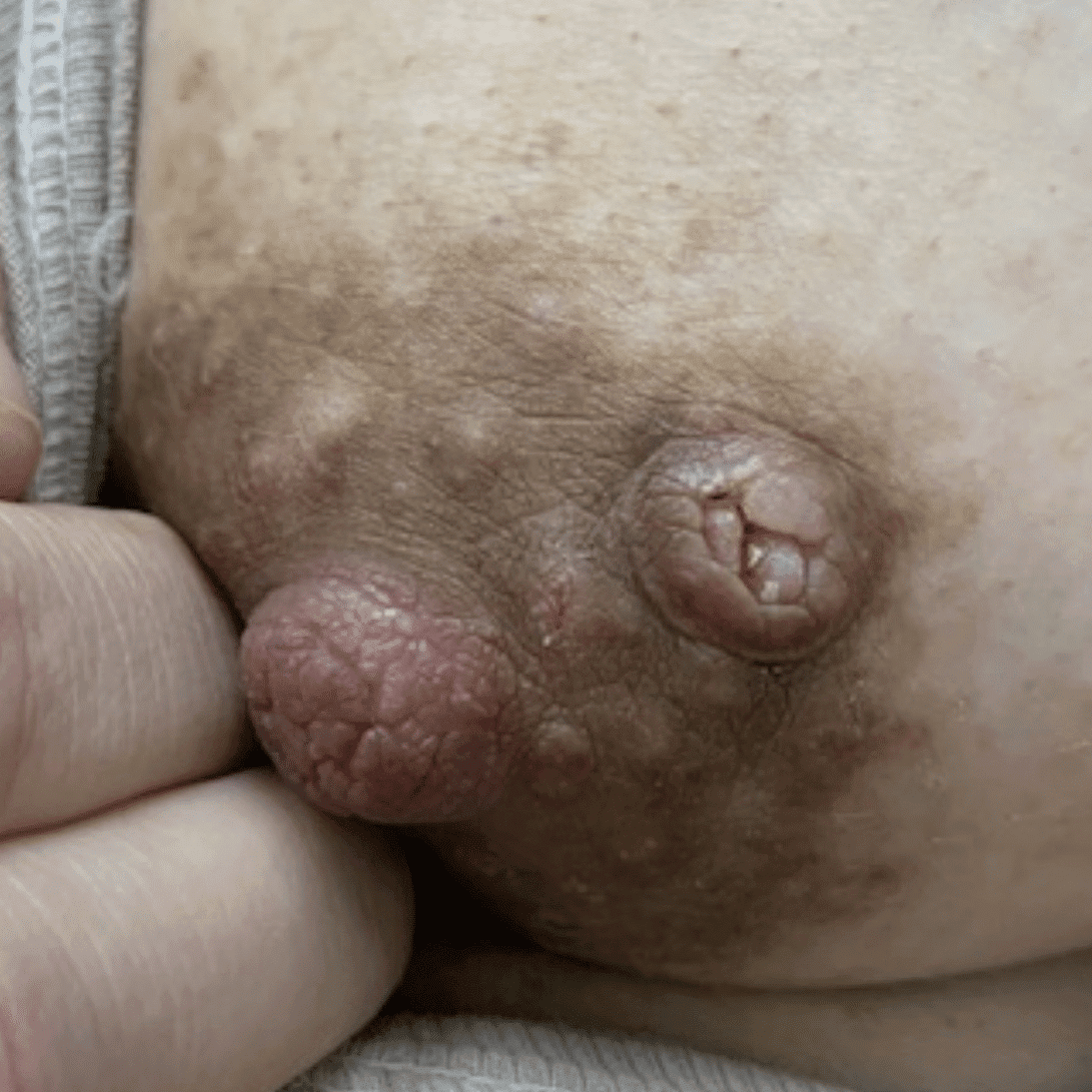
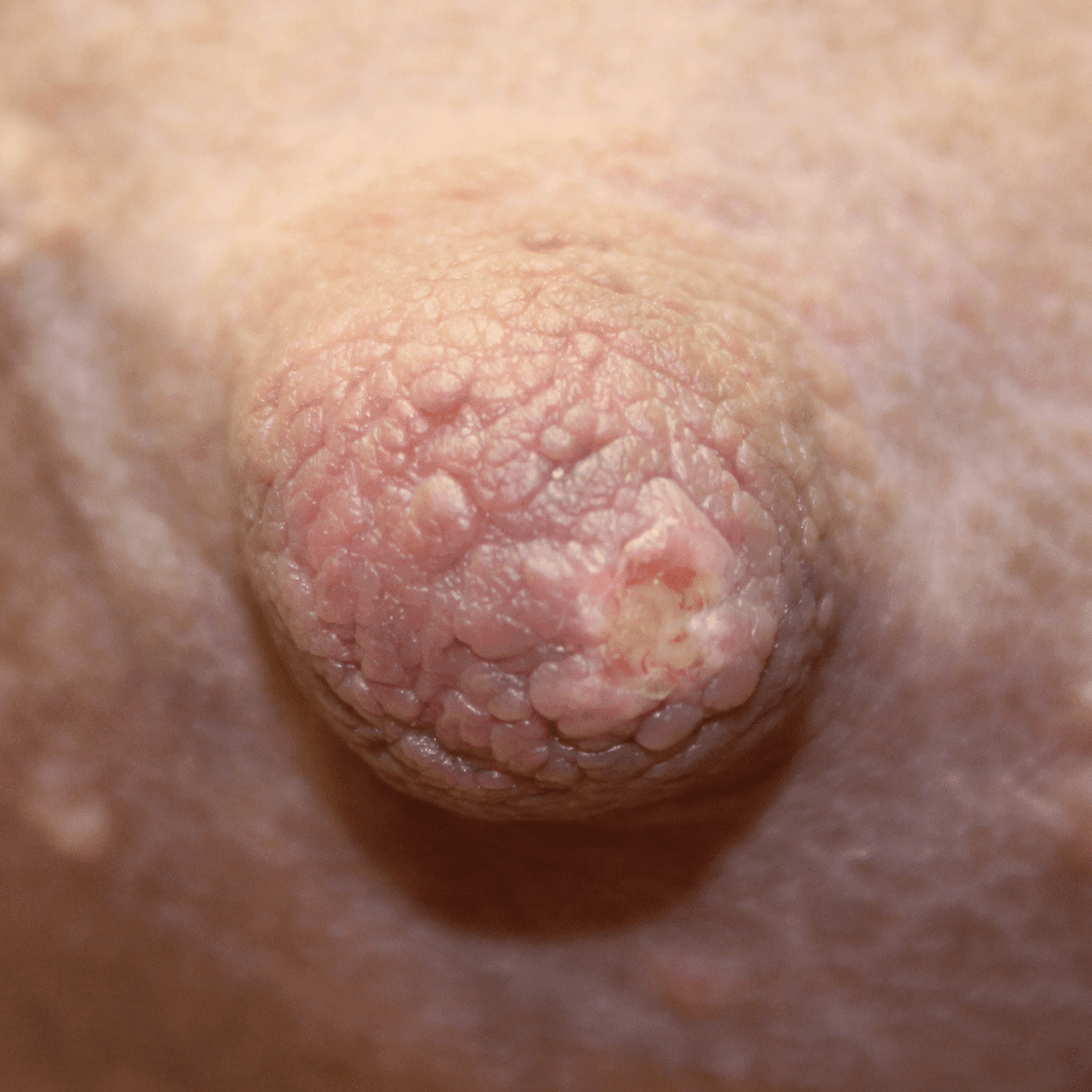
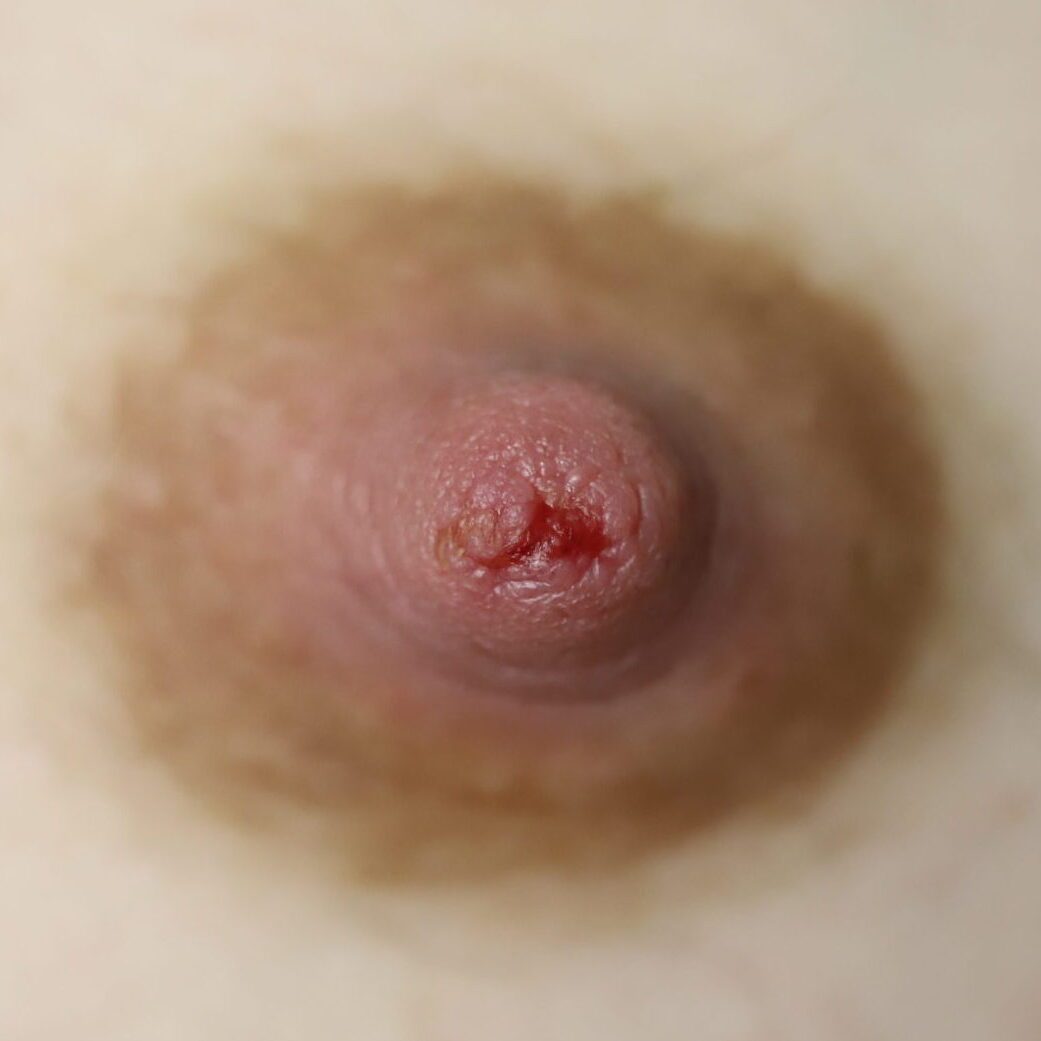
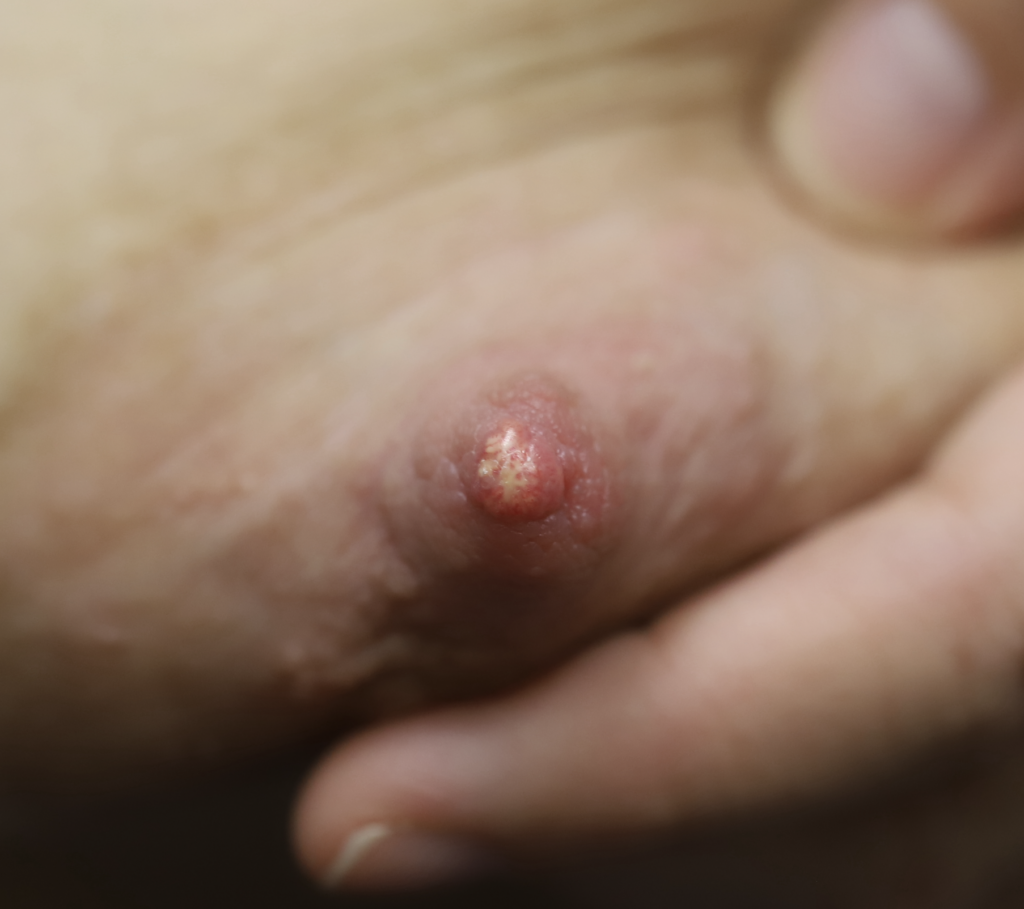
    Nipple adenoma, also known as erosive adenomatosis of the nipple (EAN) or nipple papillomatosis, is characterized by nipple nodularity and can progress to erosion.  It generally is a benign lesion not associated with atypical cells or cancer.  Any nipple disorders not resolving with proper intervention should be referred for further evaluation with a breast surgeon.  Biopsy is often performed to confirm diagnosis and treatment generally consists of excision, which may be able to be deferred if the lesion is not interfering with breastfeeding.

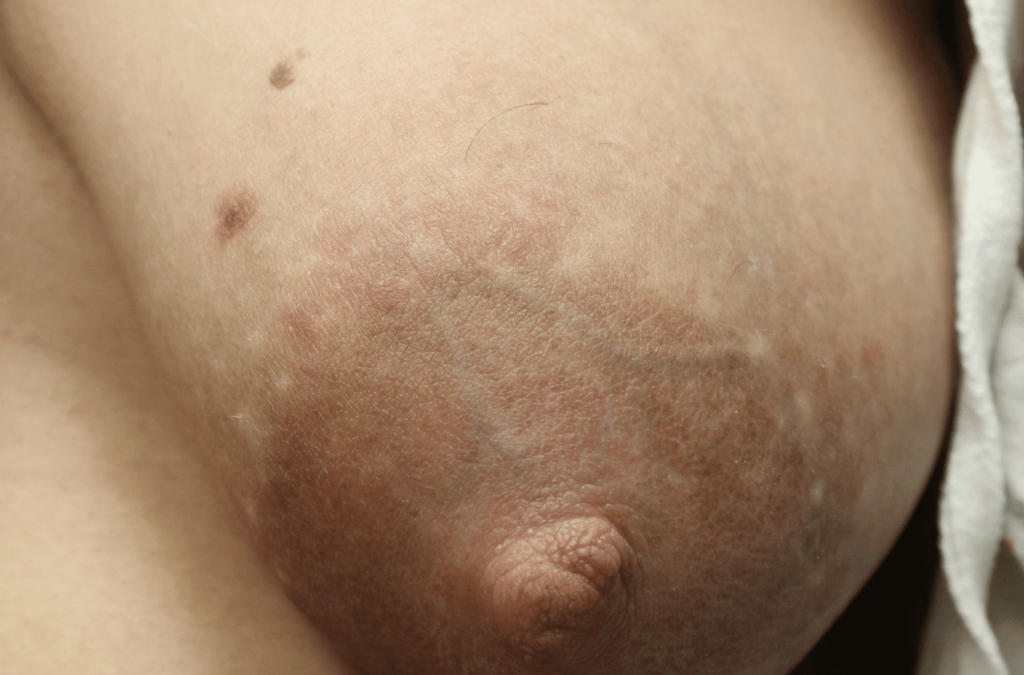
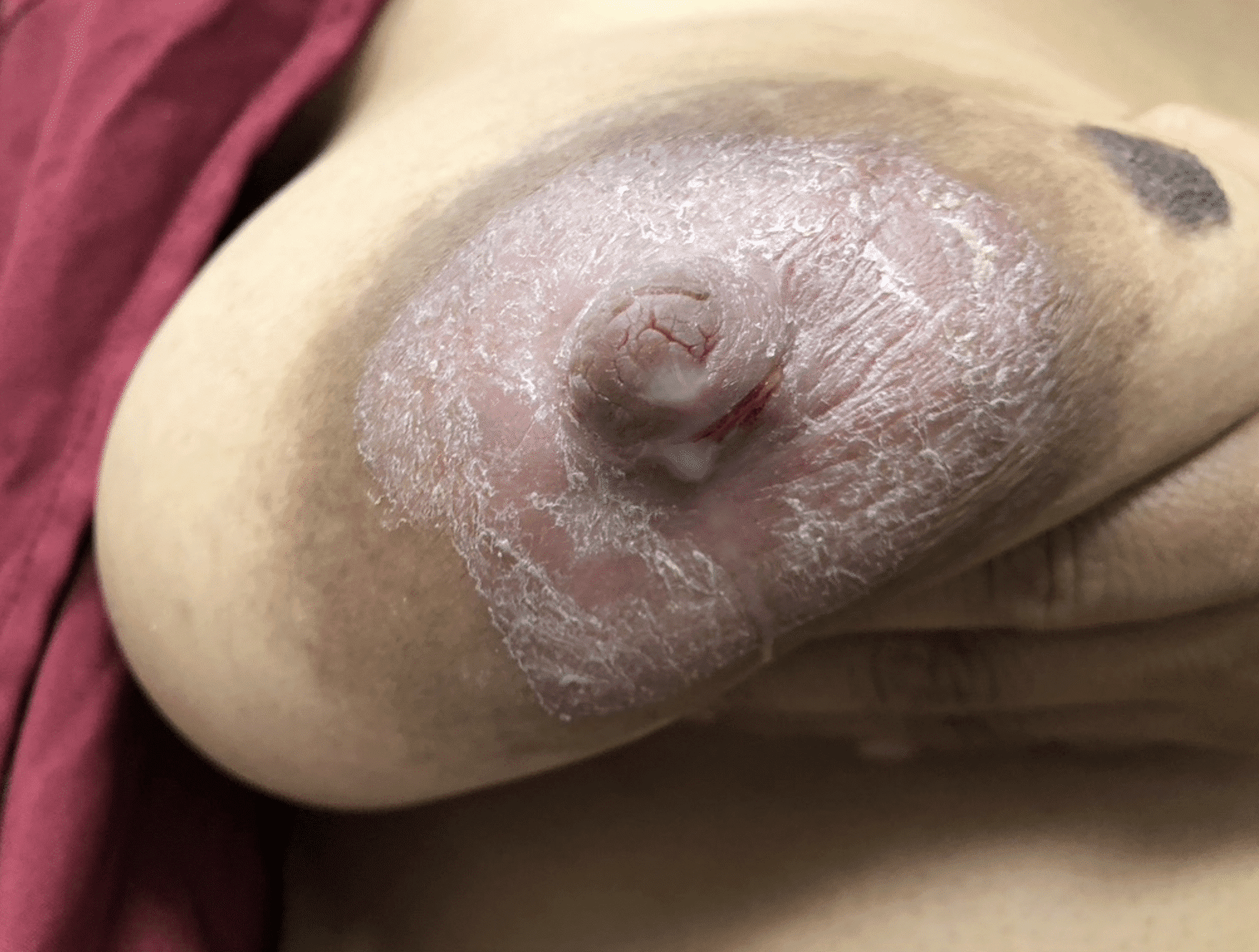
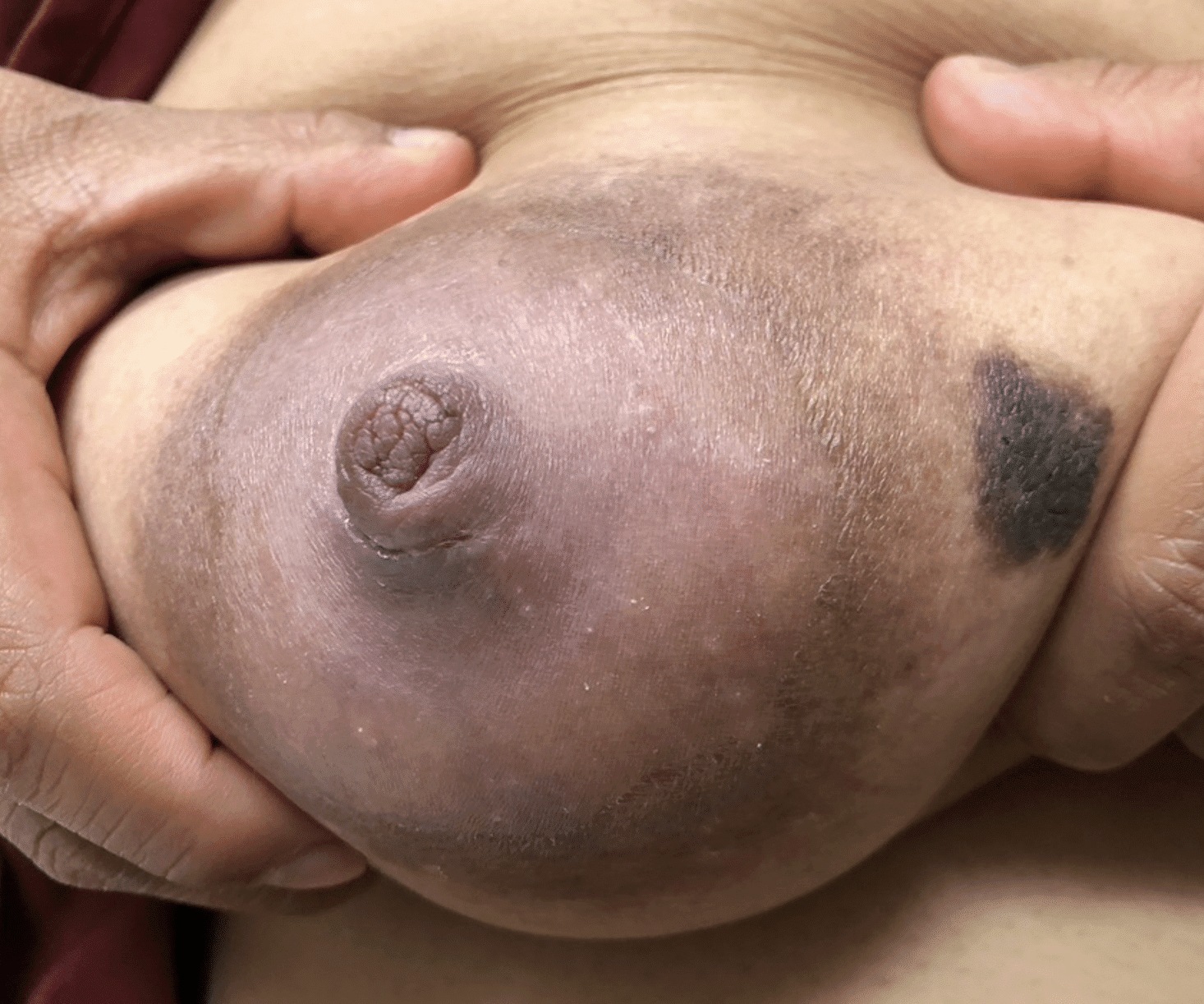
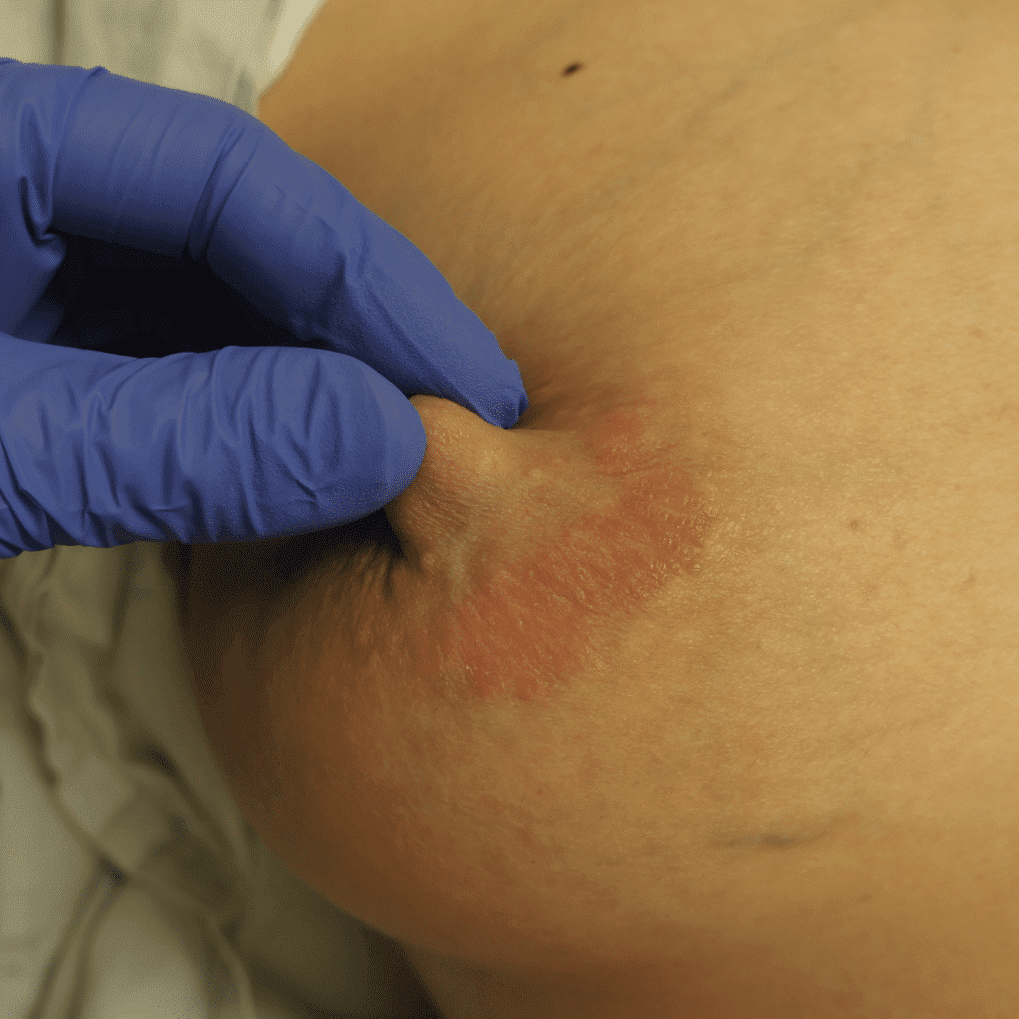
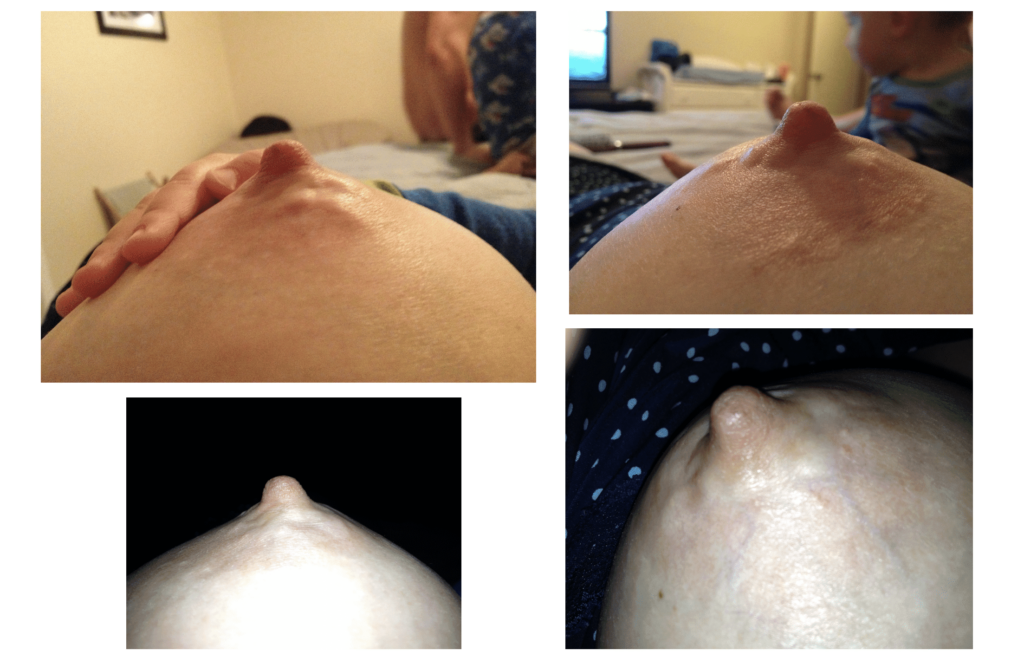
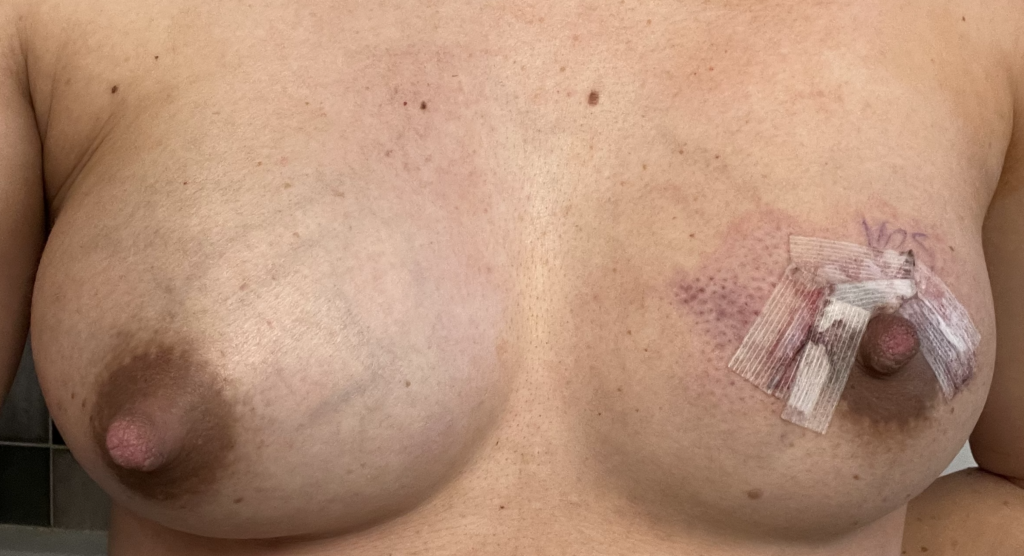
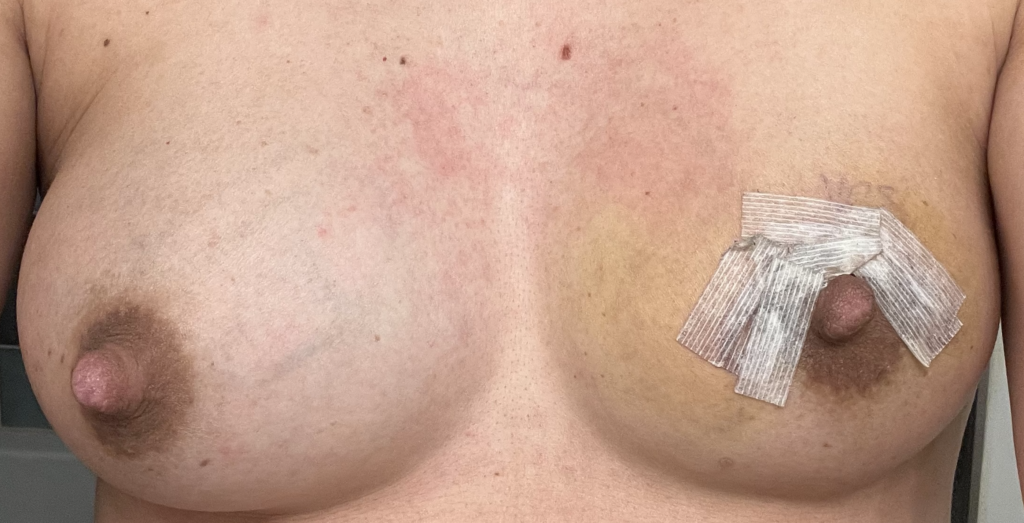
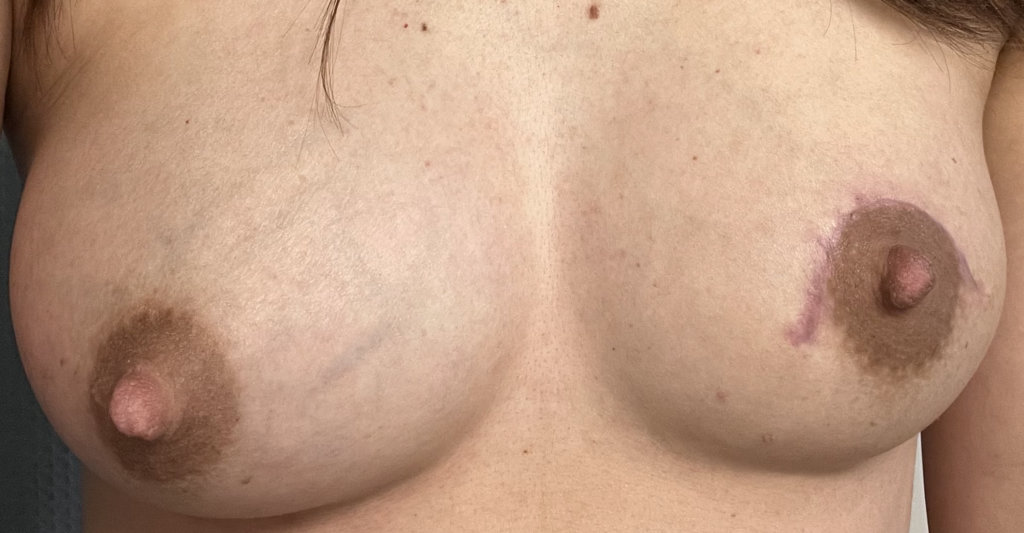
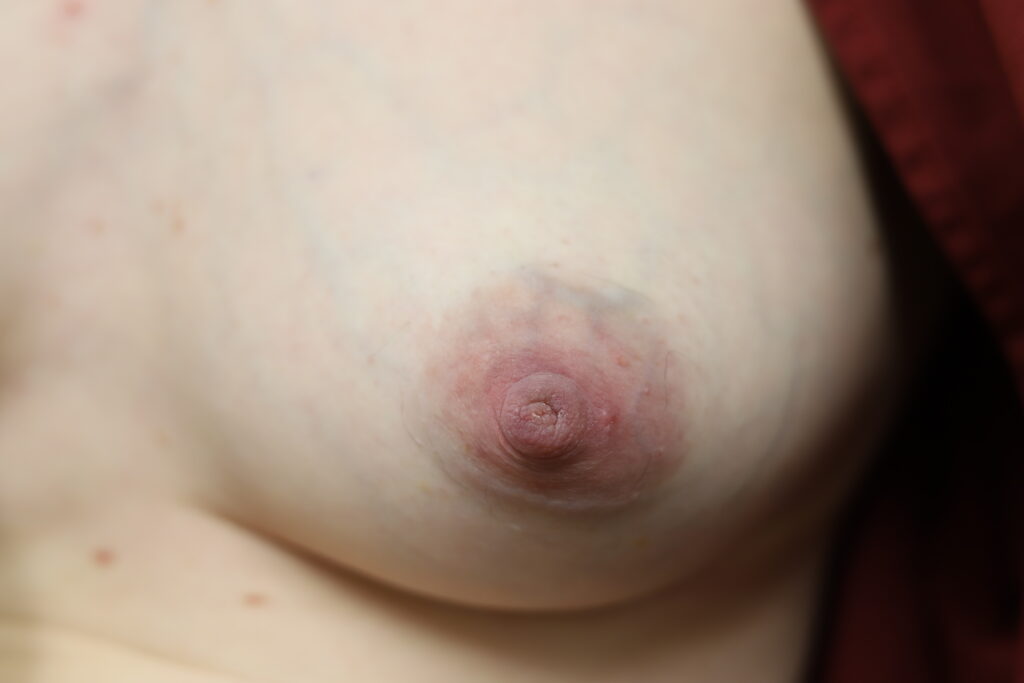
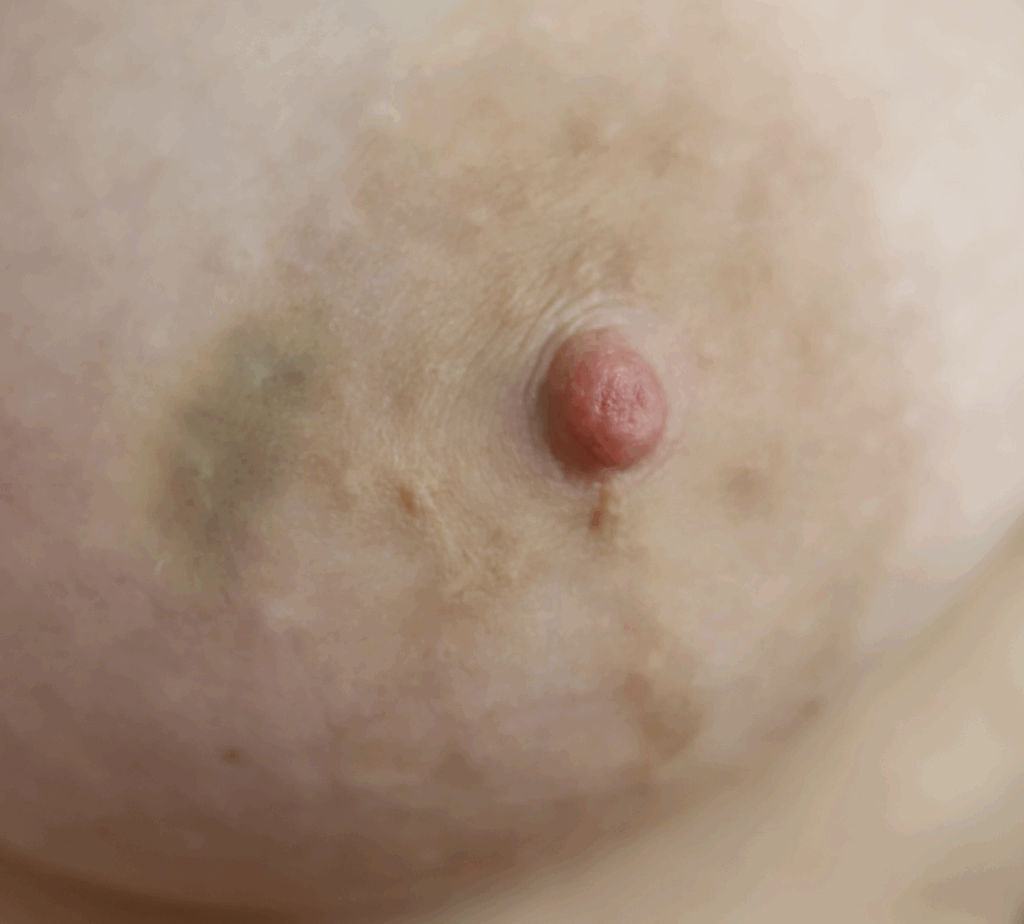
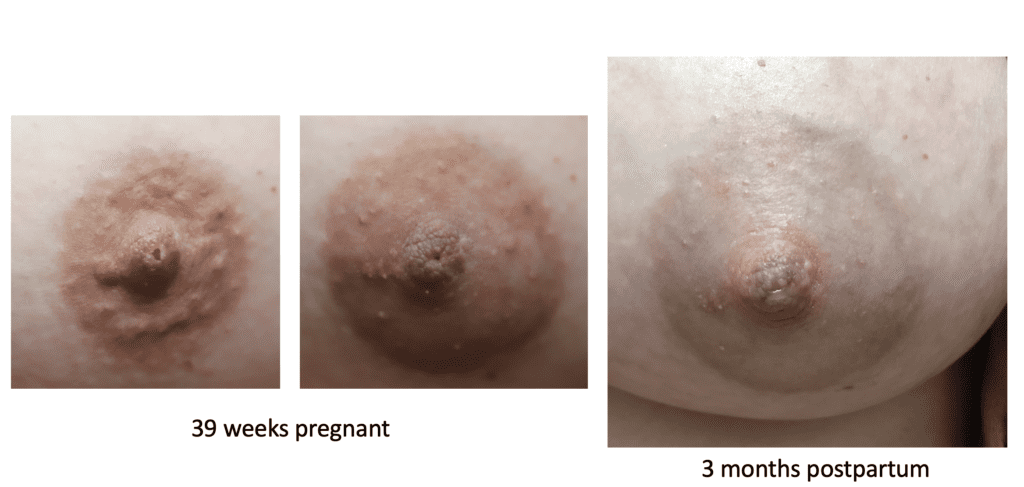
    Nipples at 39 weeks and 3 months
    Patient who underwent partial excision of left nipple adenoma three months prior to pregnancy. She breastfed using a nipple shield to reduce trauma to the residual adenoma on the left nipple (which bled with trauma) and did not use a nipple shield on the right breast.
    Nipple adenoma pre op
    Nipple adenoma pre op (above) and post op (right)
    post nipple excision
    image001 e1721856078582
    Niple adenoma encompassing most of nipple. To treat fully, this would require full nipple excision. The patient can try breastfeeding, but the skin may breakdown and bleed. Photo credit: Anne Saladyga, MD
    Syringomatous adenoma, which is more prone to growth and tissue destruction, required removal in the postpartum time period and precluded breastfeeding on this breast prior to that.
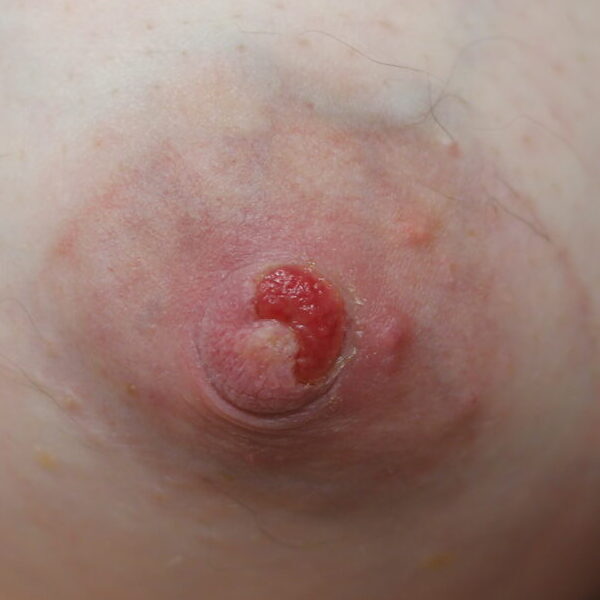
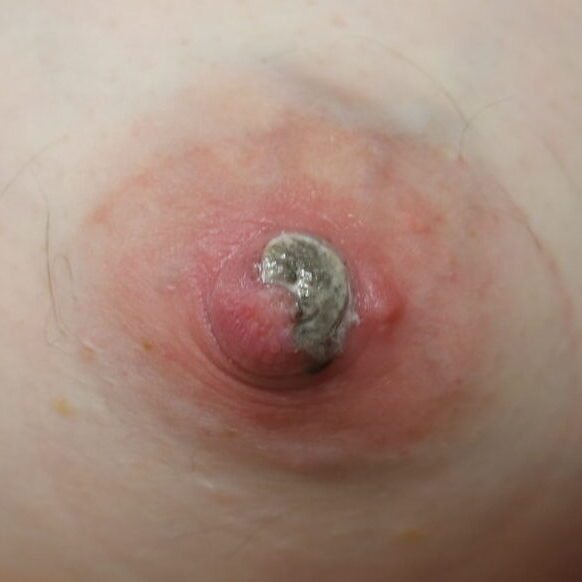
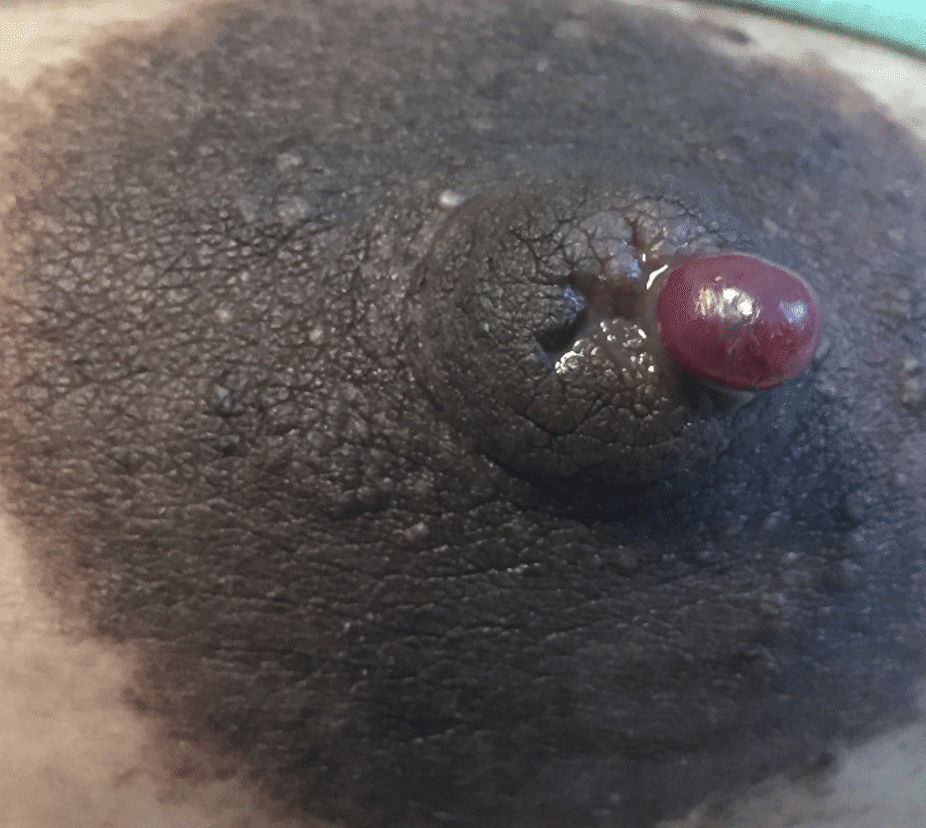
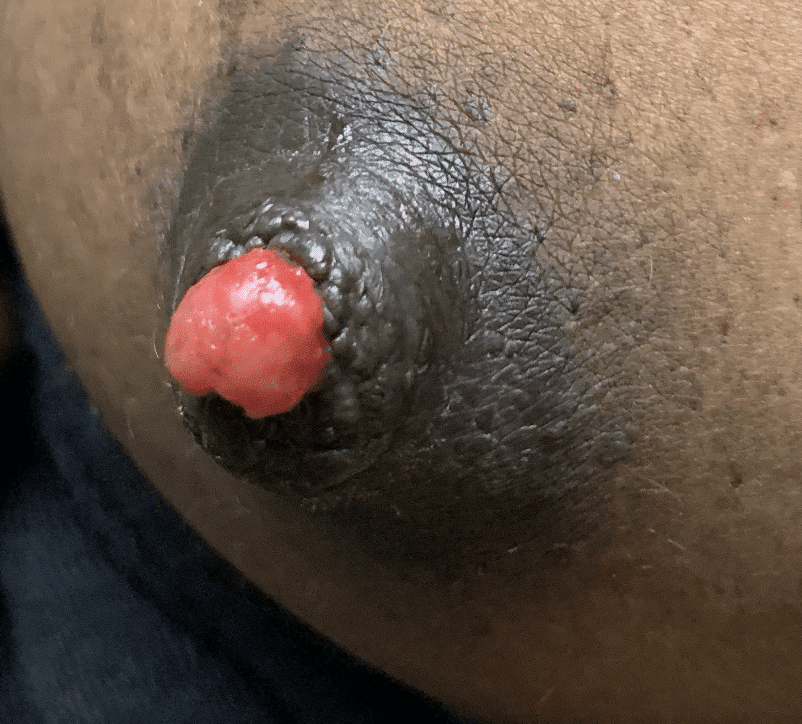
    Nipple adenoma is different from pyogenic granuloma, which is a benign (non-cancerous) tumor of blood vessels. This was excised and bleeding controlled with silver nitrate during lactation.
    Syringomatous adenoma, which is more prone to growth and tissue destruction, required removal in the postpartum time period and precluded breastfeeding on this breast prior to that.
    Syringomatous adenoma, which is more prone to growth and tissue destruction, required removal in the postpartum time period and precluded breastfeeding on this breast prior to that.

    Blebs

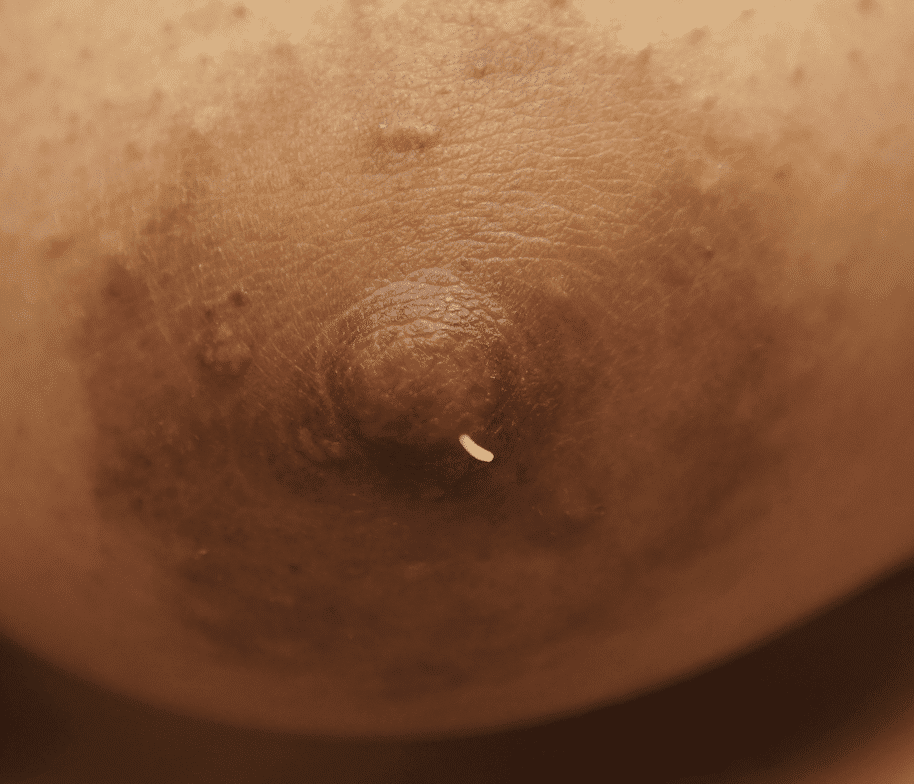
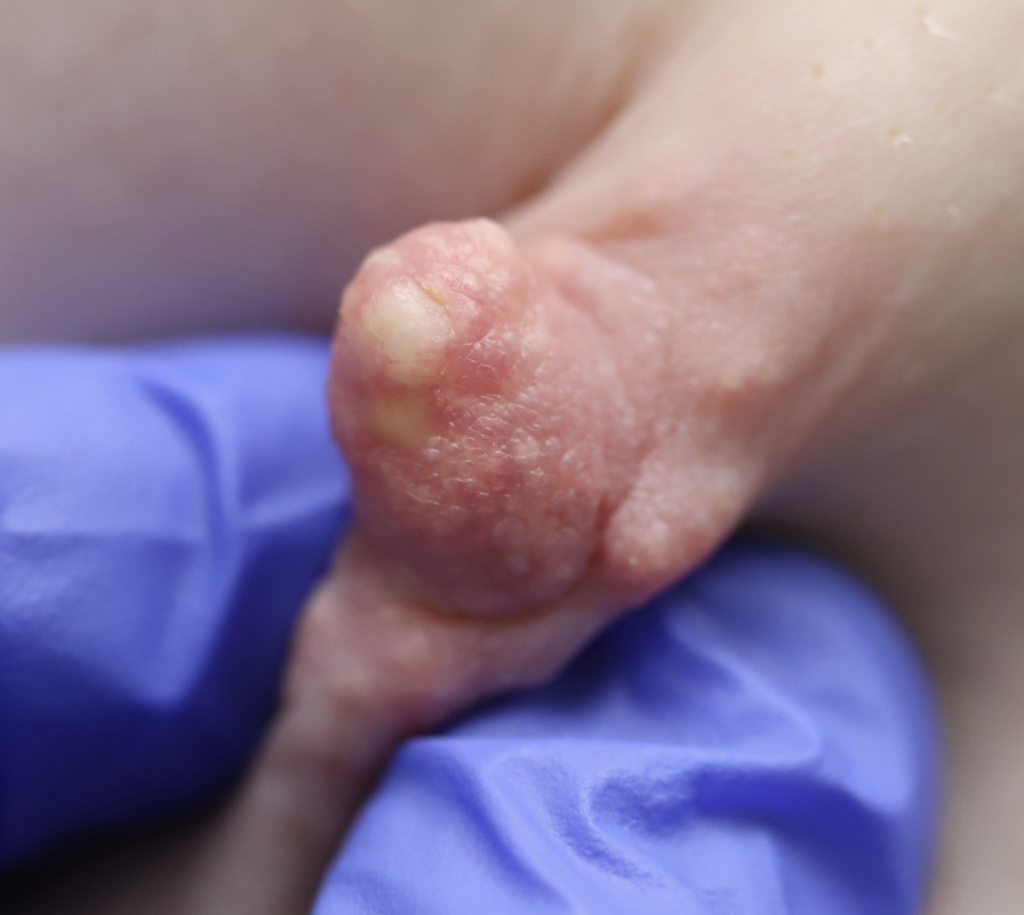
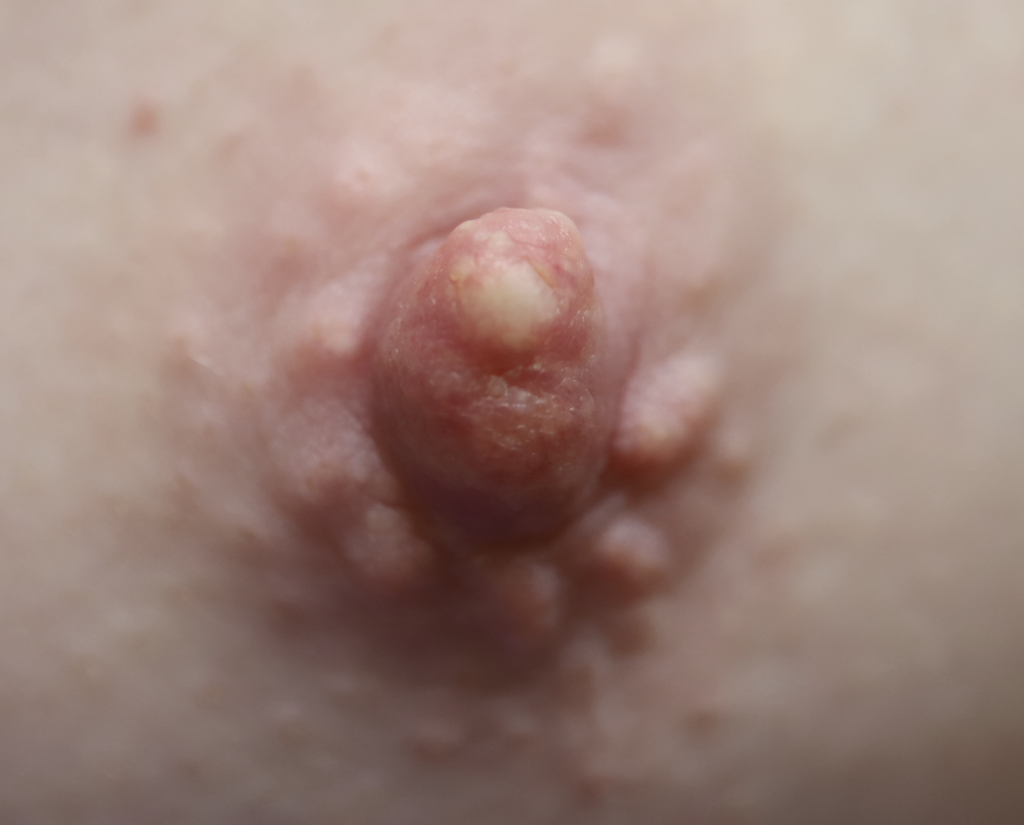
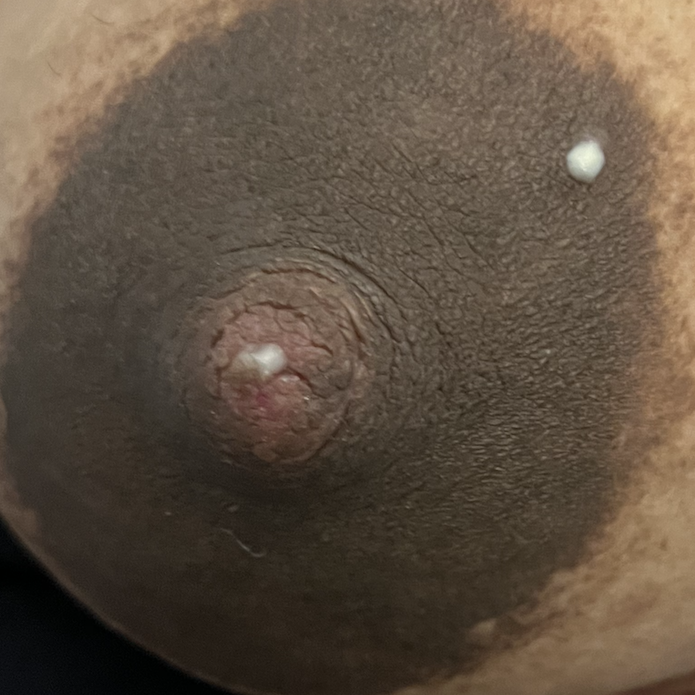
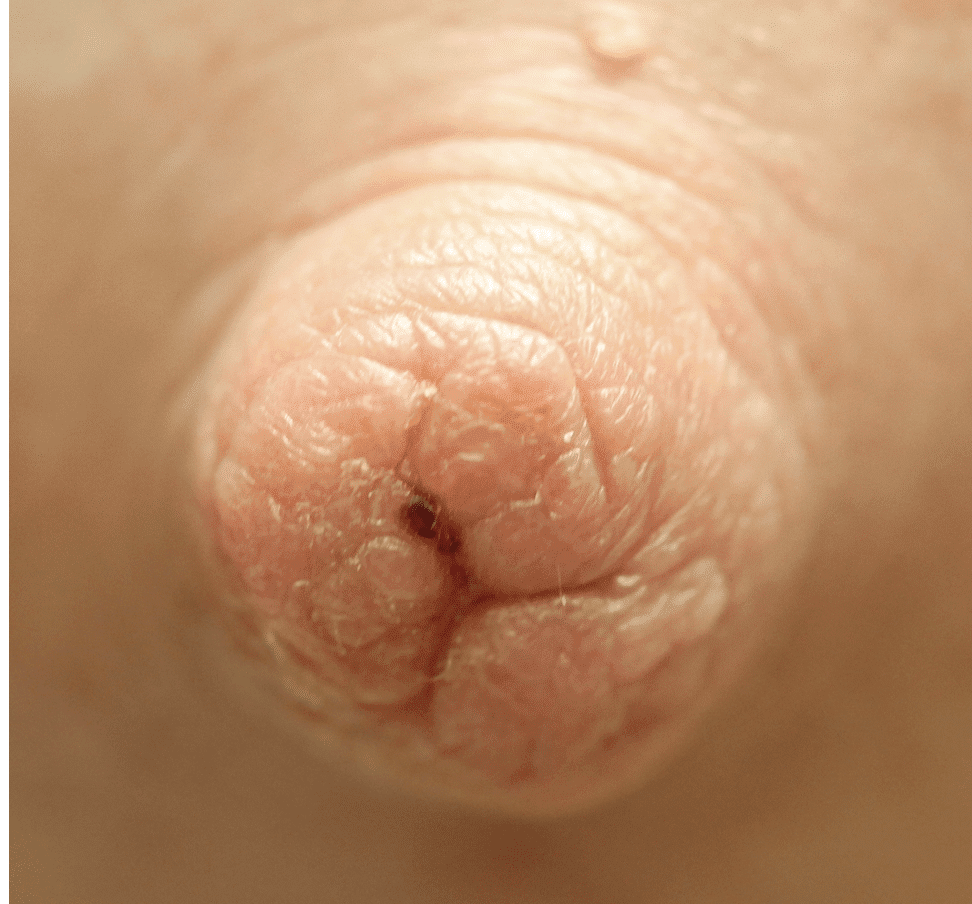
    Blebs can have a wide variety of appearances, including being single on one nipple surface versus multiple on both nipple surfaces.
    Blebs can have a wide variety of appearances, including being single on one nipple surface versus multiple on both nipple surfaces.
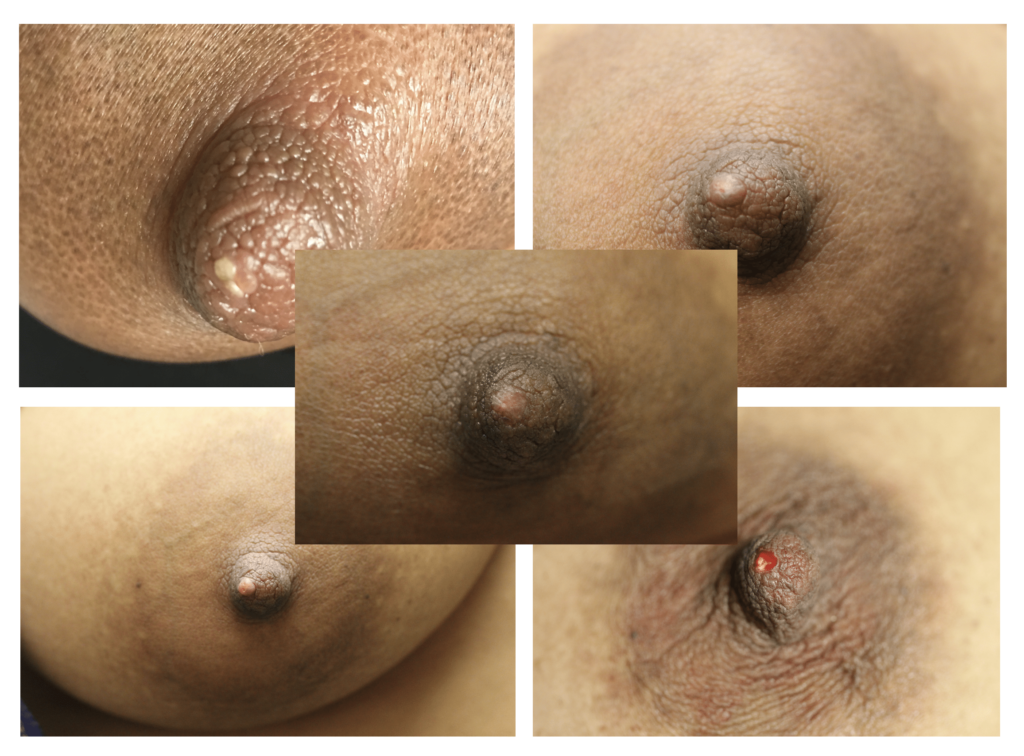
    Patients may describe a “scab” on their nipple and think it is related to latch trauma. Instead, this is a bleb that is presenting with hemorrhage (bleeding) that is a result of internal ductal inflammation.
    Patients may describe a “scab” on their nipple and think it is related to latch trauma. Instead, this is a bleb that is presenting with hemorrhage (bleeding) that is a result of internal ductal inflammation.
    Patient with early bleb (upper left image) that was continually unroof and eventually developed a scar (lower left and upper right). She requested excision of the surface scar (lower right). Center image shows resolution of scar but residual pinpoint bleb still representing an inflamed ductal system.
    Patient with early bleb (upper left image) that was continually unroof and eventually developed a scar (lower left and upper right). She requested excision of the surface scar (lower right). Center image shows resolution of scar but residual pinpoint bleb still representing an inflamed ductal system.
    Nipple ulceration from Gentian Violet
    Gentian violet ulceration of the surface of a nipple. The patient was diagnosed with a yeast infection when she in fact had a bleb.
    unroofed traumatized bleb
    Another bleb continually unroofed that developed scar tissue.
    Bleb
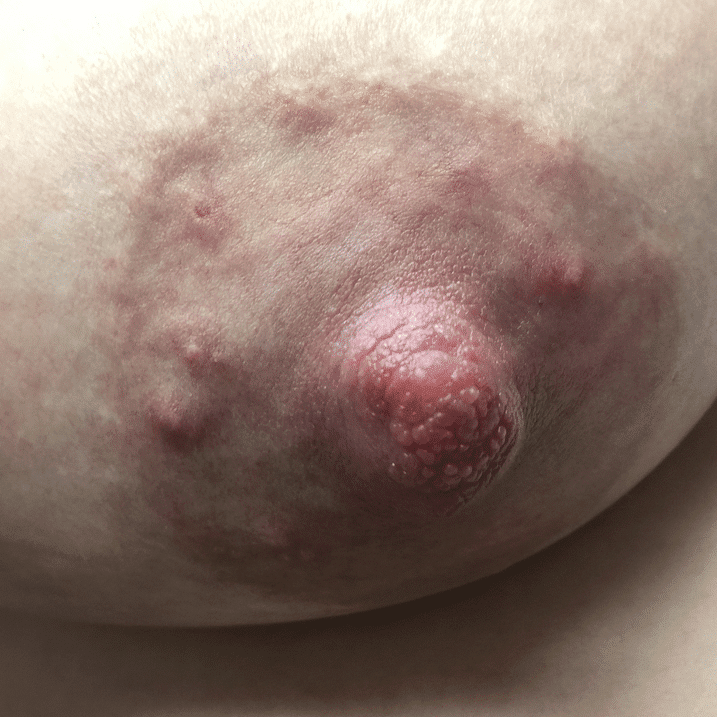
    Large central bleb with surrounding skin hypertrophy (overgrowth/metaplasia).
    Bleb
    Subtle nipple bleb at 3:00 presenting initially with bleeding but alternating with the classic white dot at times.

    Often described as a “white dot” or a “scab,” nipple blebs are lesions on the surface of a single or multiple nipple orifices that reflect underlying ductal inflammation.  They can cause exquisite pain when the baby breastfeeds.  They also can cause obstruction of milk flow through the nipple orifice.  Blebs have no association with candida (yeast), but are associated with hyperlactation, exclusive pumping, and localized breast tissue swelling.  Some appear and regress and new ones reappear.  Other patients experience one persistent bleb in one location. 

    Juan Rodriguez’s lab in Spain has produced excellent illustrations of how debris narrows ducts — this debris has many different components:  sloughing inflammatory cells, cholesterol, other lipids (fats), biofilms, and likely countless others.

    Do NOT unroof with a sterile needle or by “popping” the bleb.  This may cause temporary relief, but it will worsen inflammation and eventually cause chronic scarring.  Infants may release a superficial bleb while nursing, or more tenacious blebs may persist regardless of interventions. 
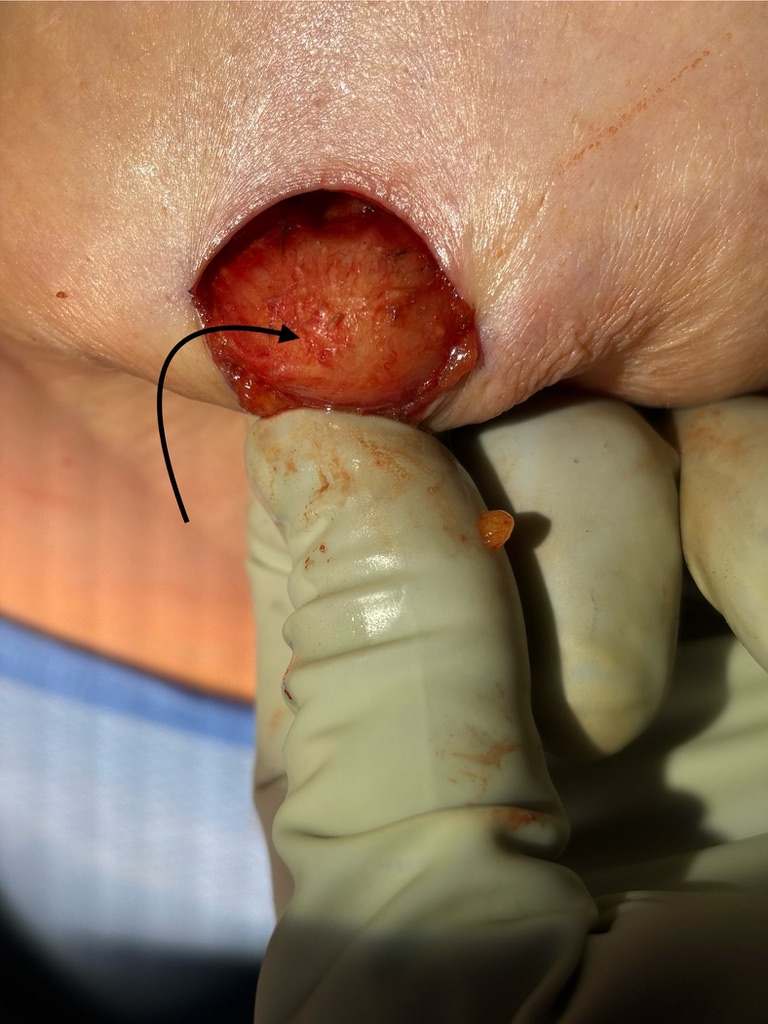
    Nipple ducts This is one of the reasons why you don’t want to attempt to squeeze or extract a bleb or “plug”: Even within the nipple (the largest convergence of ducts in the breast), the ducts are extraordinarily small and delicate (the arrow is pointing out the biggest ones visible with naked eye when I am in the OR inverting a nipple from the outside). If you try to squeeze these, all it will do is damage ductal tissue, cause bleeding, and cause a lot of pain and ultimately scarring.

    Blebs are not related to surface trauma or infant latch.  Infants may pull off the breast in the setting of oversupply, and patients assume this caused the bleb.  Instead, it’s the oversupply that causes the ductal inflammation that causes the bleb.  And the infant is simply pulling off the breast because of being choked by high flow in high supply. Other infants may pull at the breast due to distraction or frustration with lower flow. Though less common, blebs are possible with low supply in the setting of subacute mastitis.

    Appropriate treatment includes utilization of 0.1% triamcinolone crème (over the counter products such as hydrocortisone are not potent enough to be effective) on the surface of the nipple to reduce inflammation.  Sunflower lecithin by mouth reduces underlying ductal congestion and inflammation.  Therapeutic ultrasound is also helpful.   Underlying hyperlactation also must be treated.

    It should be noted that blebs are different from the sucking blister that appears early in lactation and results from vigorous suckling, malposition, or high pump suction. This type of blister covers a larger area, appears more blister-like with a thin membrane and underlying fluid, and is not associated with underlying associated conditions as described above. 
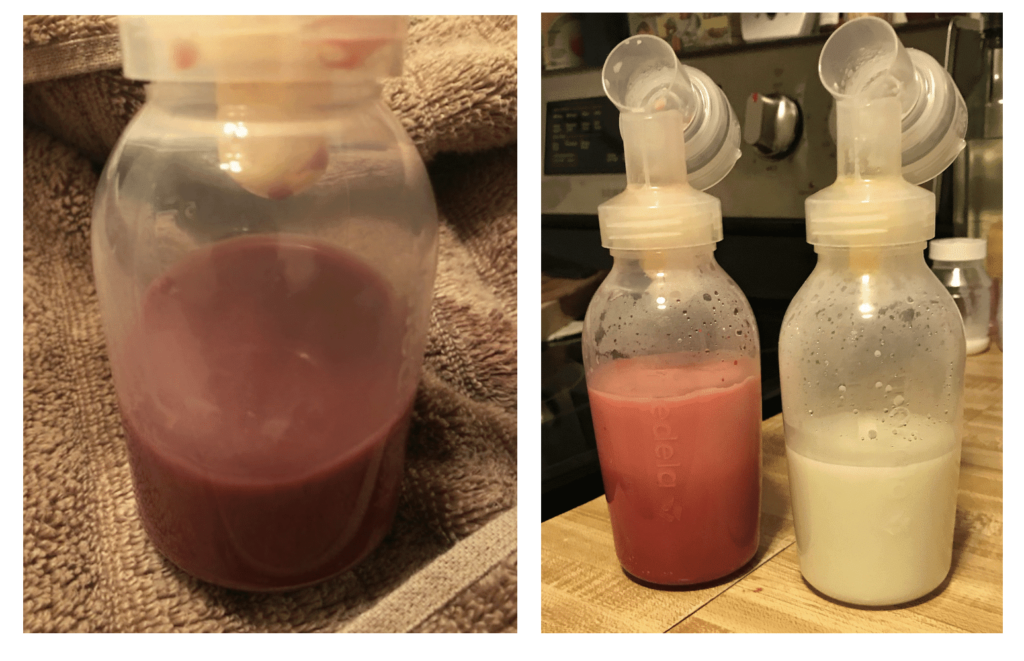
    Bloody Milk

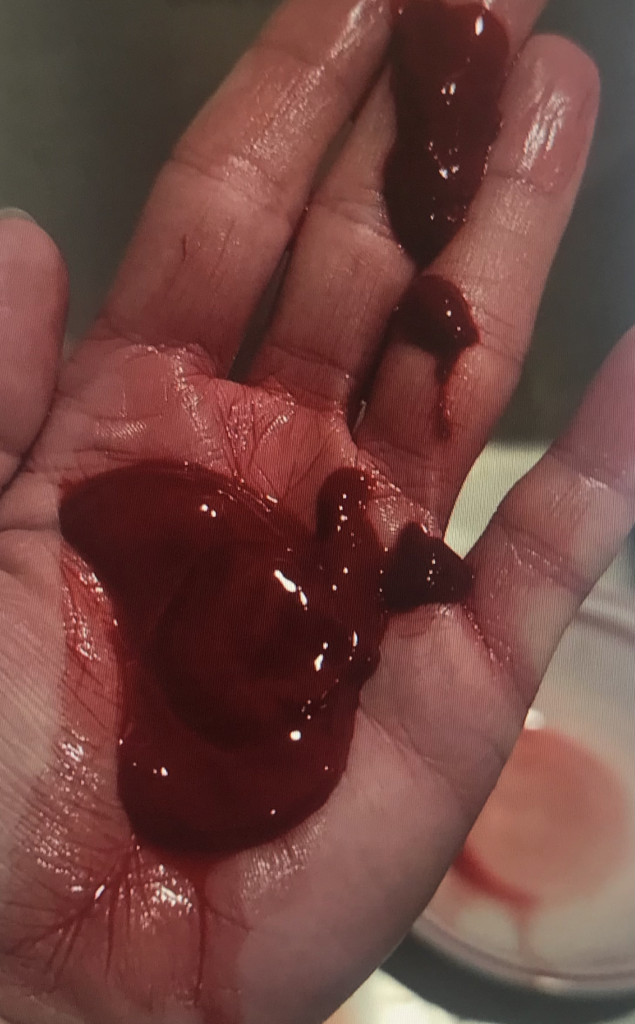
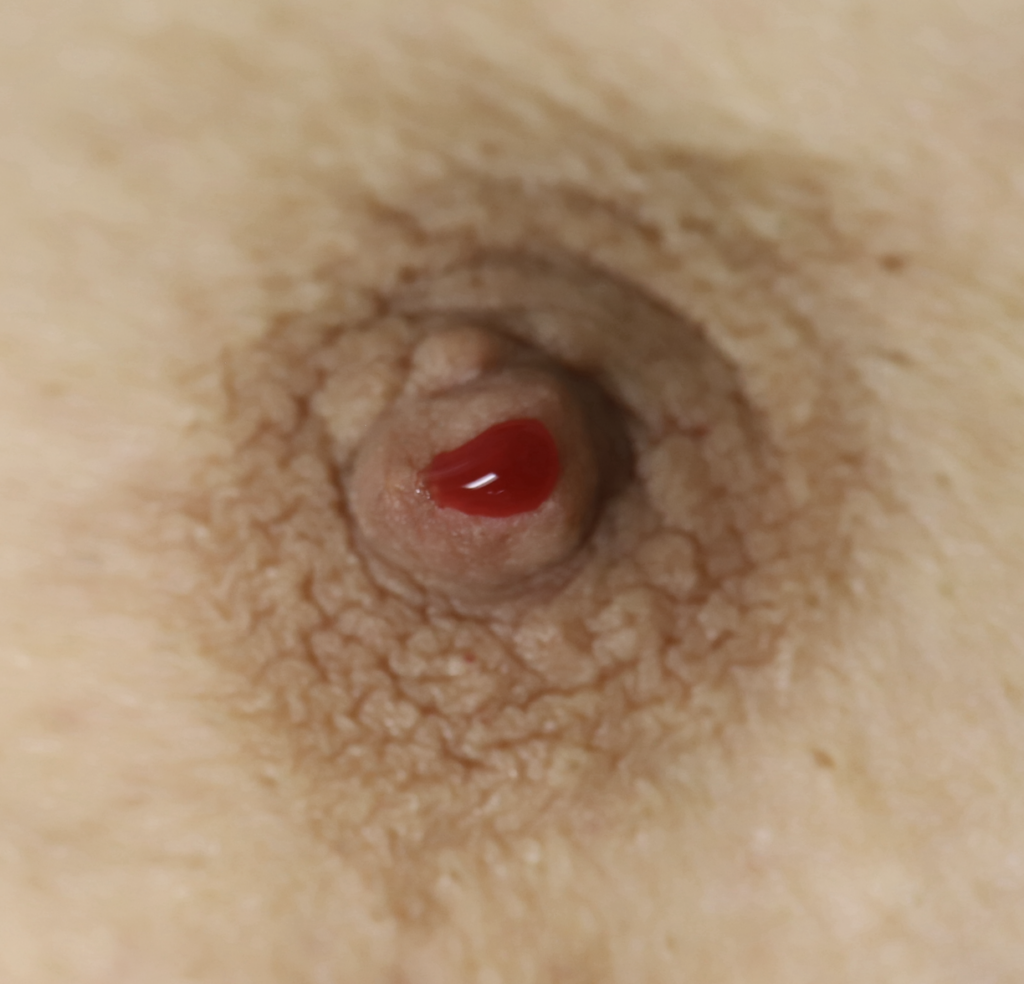
    Bloody nipple discharge may occur in up to 20 percent of women in the pregnant and early postpartum period.  It is related to breast growth, increased blood flow, and preparation of the breast to make milk.  It generally occurs in both breasts and from several nipple orifices, and will worsen with nipple stimulation.  If you have any concern, you should seek evaluation by your healthcare provider.  More concerning discharge is from one breast and one nipple orifice. 

    Mothers with hyperlactation, exclusively pumping, doing lots of massage or compressions of the breast, or those taking blood thinning medications may also experience transient bloody milk.  These cases should be evaluated carefully with history and exam, and also may warrant imaging. 

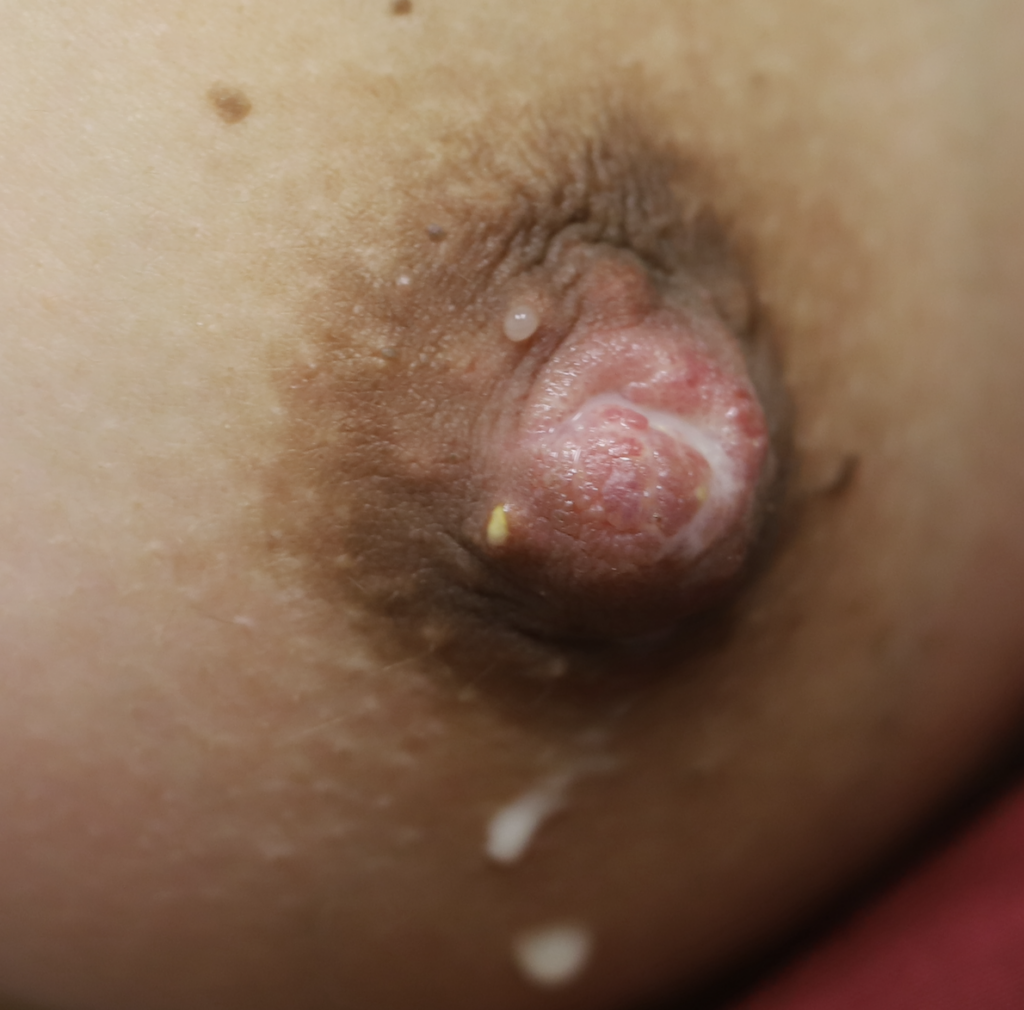
    Breastmilk tinged with blood in the setting of early lactation (left) and hyperlactation (right).
    Breastmilk tinged with blood in the setting of early lactation (left) and hyperlactation (right).
    Blood clots in milk
     Lower image shows faint redness consistent with subacute mastitis and congested blood vessels. This is not acute mastitis and does not require antibiotics for treatment. Treatment includes BAIT (Breast rest, Advil, Ice, Tylenol), therapeutic ultrasound, resolution of hyperlactation, and antibiotics or probiotics directed at subacute mastitis.
    Blood clots expressed after heavy massage. Note bleb circled in both images. Bleb is simply surface symptom of underlying debris throughout the ductal system. They should NOT be forced out in this way as it only causes damage to the breast and doesn't treat the root of the problem
    Pathologic discharge that is clear and bloody, and appears without stimulation from one orifice.
    Pathologic discharge that is clear and bloody, and appears without stimulation from one orifice.
    bloody discharge
    Copious amounts of bright red bloody discharge from one single orifice in one breast, consistent with retroareolar papilloma.

    Cysts

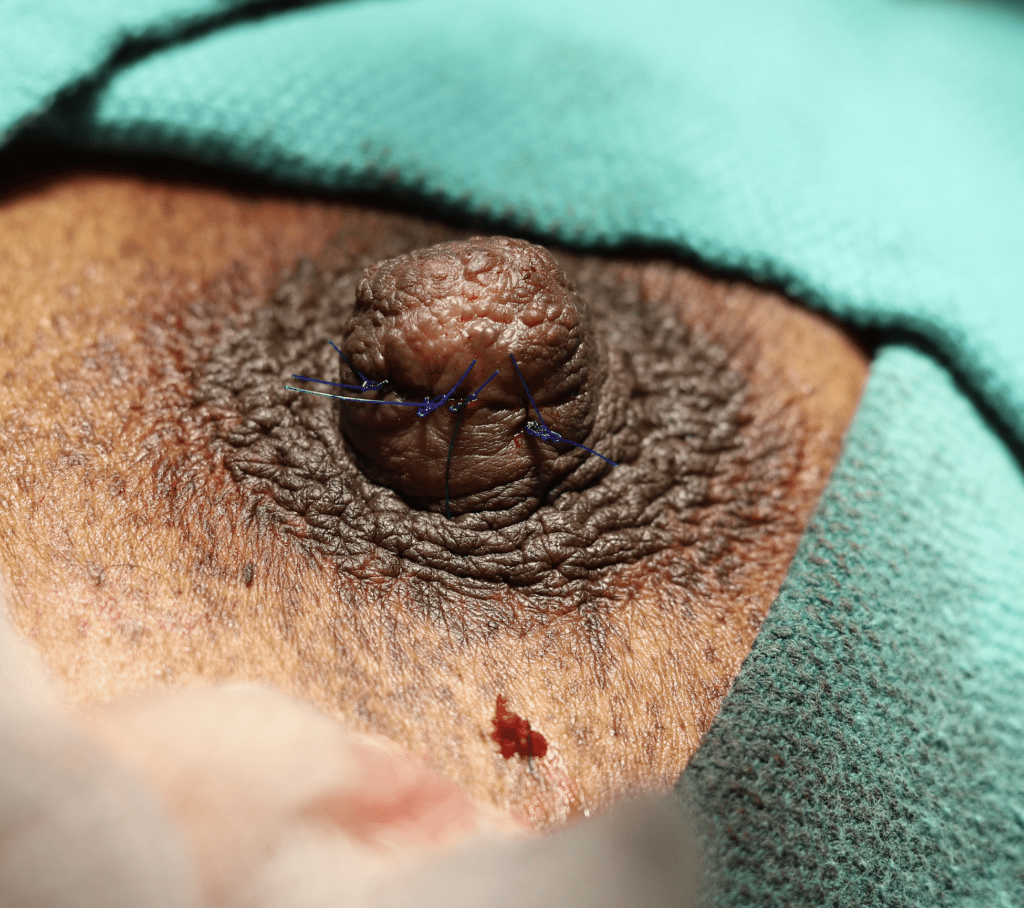
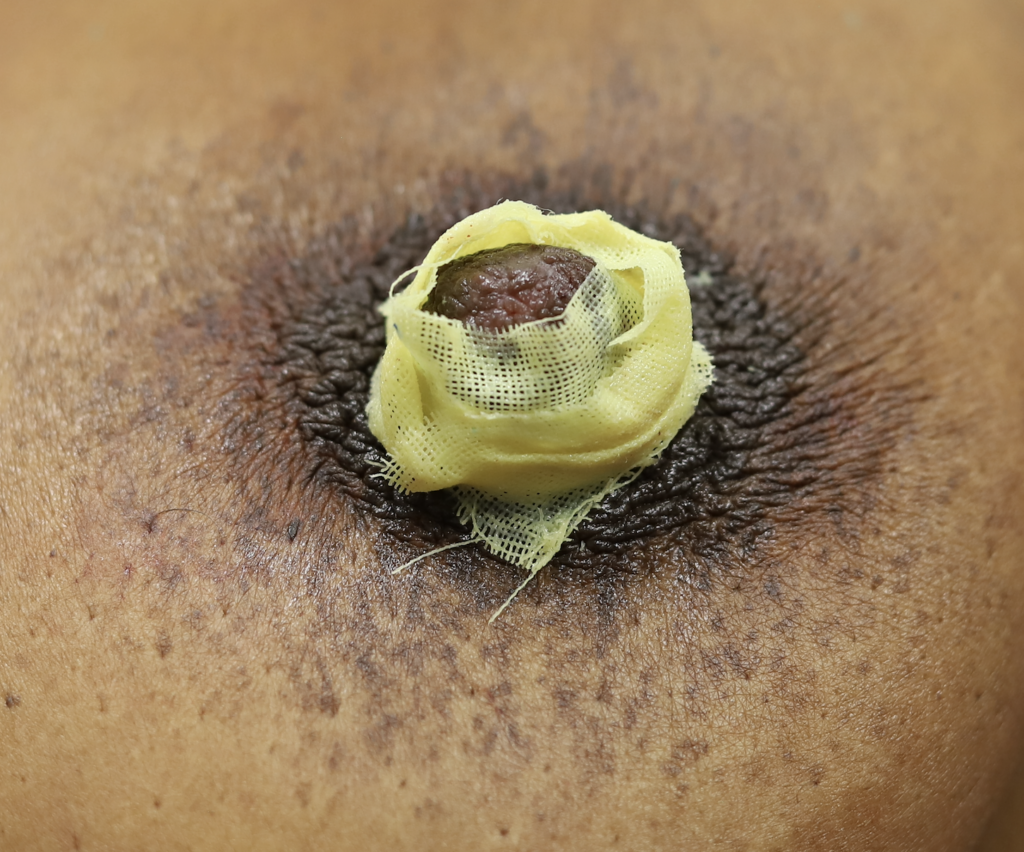
    Sebaceous cysts and epidermal inclusion cysts (EICs) present most commonly on the nipple or areola.  Nipple areolar dermal cysts can be repeatedly traumatized by a nursing infant and may become painful.  If this occurs, warm compresses and/or antibiotics may be indicated.  If diagnosed prenatally, surgical excision under local anesthesia may prevent future trauma, pain, and infection while breastfeeding.  Given cysts are dermal (skin) lesions, excision should not affect underlying ductal tissue or nipple orifices, though attention should be given to careful placement of incision, closure, and suture type.  Non-absorbable suture produces less tissue reaction and scarring and would be an ideal choice in this circumstance.

    Sebum emanating from nipple sebaceous cyst.
    Sebum emanating from nipple sebaceous cyst.
    NIpple sebaceous cyst in breastfeeding.
    NIpple sebaceous cyst in breastfeeding.
    nipple sebaceous cyst
    NIpple sebaceous cyst in breastfeeding.
    The fact that the cyst is on the shaft of the nipple and not the face confirms sebaceous cyst rather than nipple bleb.
    The fact that the cyst is on the shaft of the nipple and not the face confirms the diagnosis of sebaceous cyst rather than nipple bleb (which occurs on face of nipple).
    Nipple sebaceous cyst
    Nipple sebaceous cyst
    Nipple sebaceous cyst
    After excision (four 4.0 interrupted prolene sutures).
    Nipple sebaceous cyst
    Balm and xeroform dressing to promote oil-based closed/moist wound healing. Just like a circumcision!!
    nipple sebaceous cyst
    Two months after excision, healed and closed.
    Nipple sebaceous cyst at base of nipple
    Previous lumpectomy patient for unrelated condition returns with growing cyst at base of nipple. An obstructed/blocked Montgomery gland (normal spots/protrusions on areola) will drain with a warm compress and return to normal size. A true cystic implanation will continue to grow, not drain, and be at the base or shaft of a nipple.
    sebaceous cyst
    Nipple sebaceous cyst.
    Nipple sebaceous cyst.
    Nipple sebaceous cyst.
    Screenshot 2023 10 06 at 4.39.00 PM
    Nipple sebaceous cyst present after completion of lactation and ready for excision.
    nipple sebaceous cyst
    nipple sebaceous cyst
    Nipple sebaceous cyst after excision with sutures to remove.
    nipple sebaceous cyst
    Healed and sutures removed after nipple sebaceous cyst excision.

    Video of this procedure below:

    Large sebaceous cyst that was repeatedly problematic for patient excised under local anesthesia during pregnancy. Incision was closed with two interrupted 6.0 prolene stitches taking care to avoid surface nipple orifices, and removed 5 days later. She breastfed without difficulty postpartum.
    Large sebaceous cyst that was repeatedly problematic for patient excised under local anesthesia during pregnancy. Incision was closed with two interrupted 6.0 prolene stitches taking care to avoid surface nipple orifices, and removed 5 days later. She breastfed without difficulty postpartum.
    Simple cyst on areola excised pre-pregnancy to reduce potential for postpartum trauma during lactation.
    Simple cyst on areola excised pre-pregnancy to reduce potential for postpartum trauma during lactation.
    nipple cyst
    Cyst on face of nipple rather than on side/shaft and appears most consistent with a chronic bleb and squamous metaplasia (a cellular adaptation where one type of cell is replaced by another, usually in the setting of chronic inflammation or trauma).
    Nipple cyst
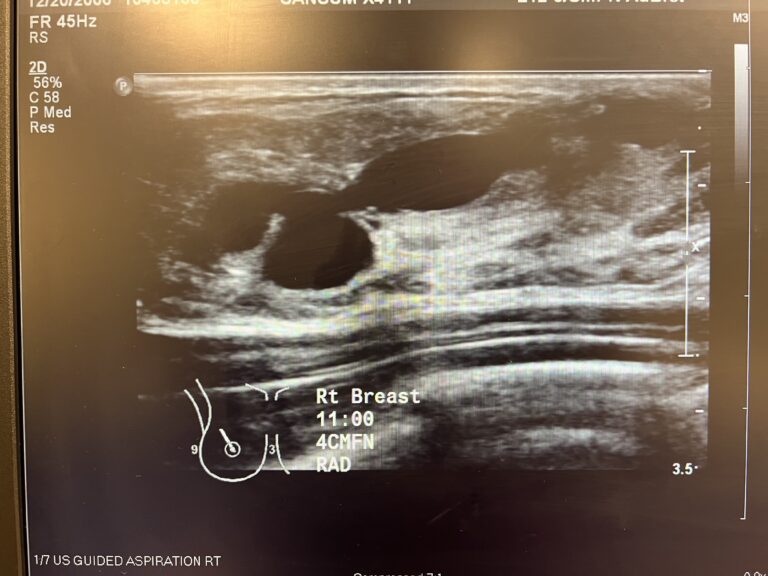
    Ultrasound appearance of sebaceous cyst with tract to skin.
    Ultrasound appearance of sebaceous cyst with tract to skin.
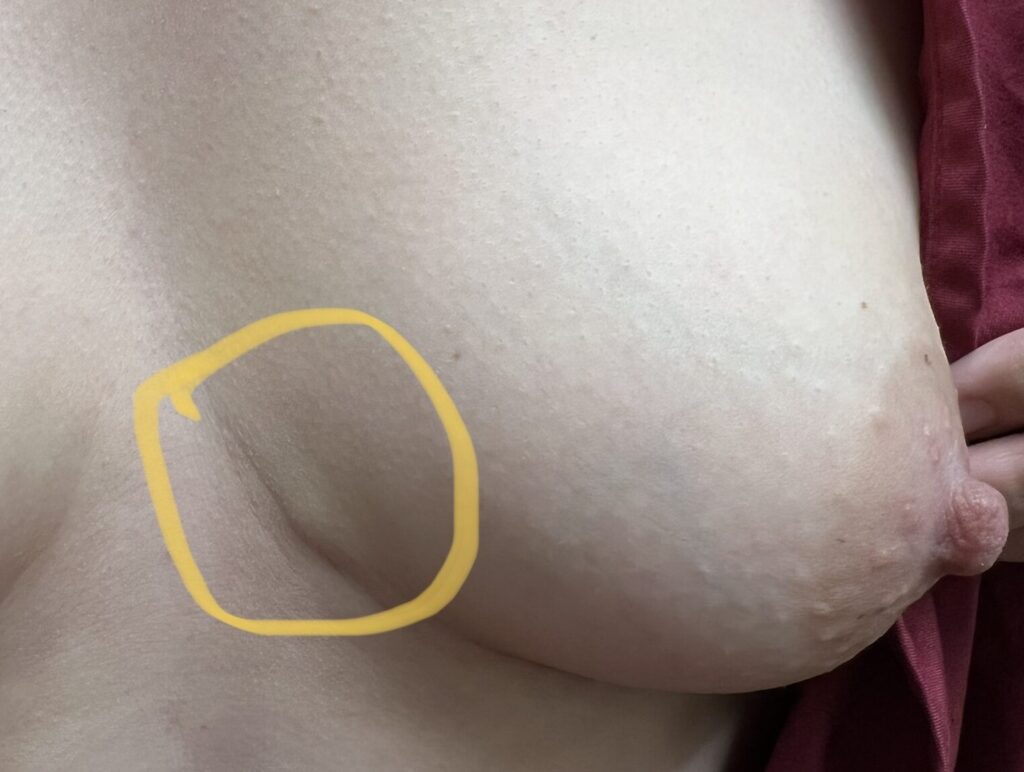
    Outside of the nipple, sebaceous cysts most commonly occur along the inframammary fold (underside of breast)
    Outside of the nipple, sebaceous cysts most commonly occur along the inframammary fold (underside of breast)
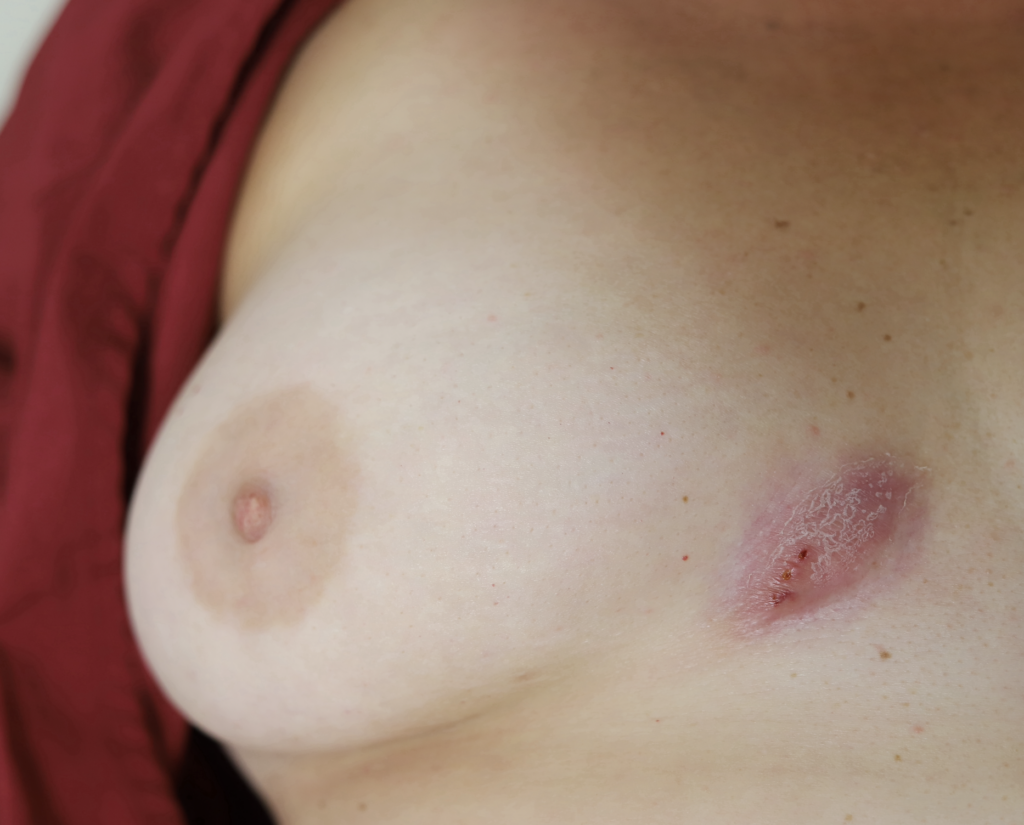
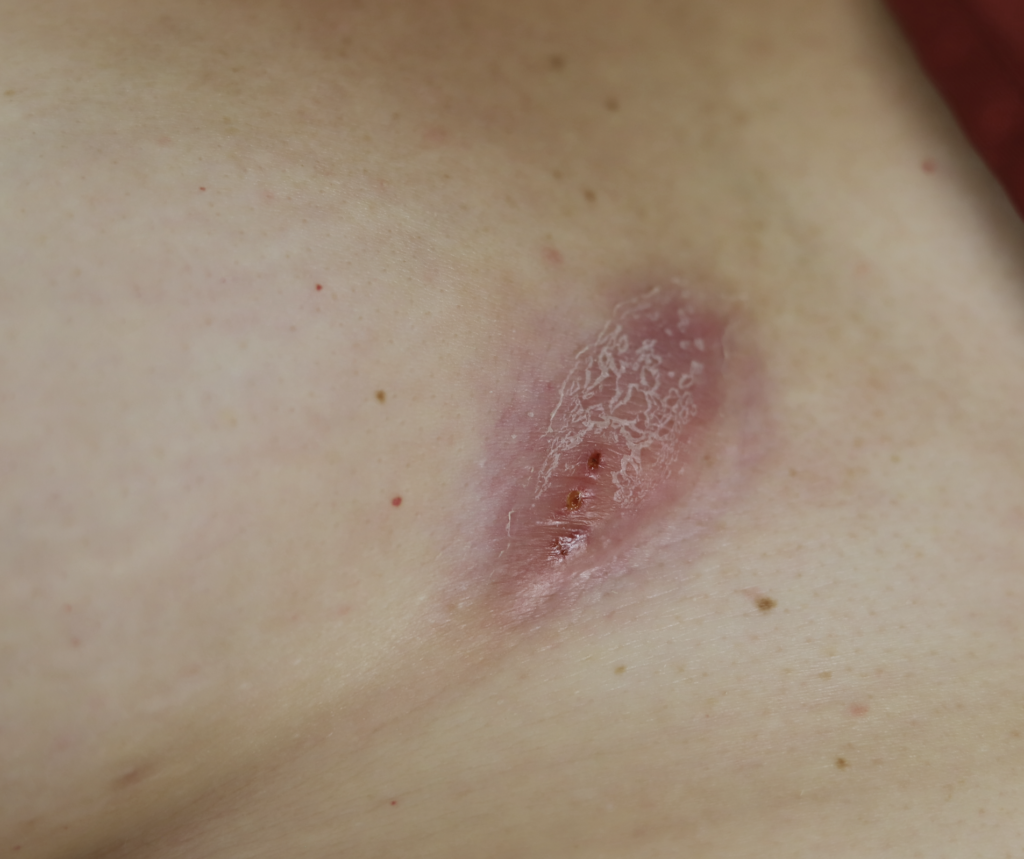
    Infected sebaceous cyst and abscess
    Infected sebaceous cyst and abscess. The abscess needs drainage and then the cyst can be removed surgically once the infection has completely cleared.
    Infected sebaceous cyst and abscess
    Classic sebaceous cyst at sternal border of breast with track to skin (black mark)
    Classic sebaceous cyst at sternal border of breast with track to skin (black mark)
    Classic sebaceous cyst at sternal border of breast with track to skin (black mark)
    sebaceous cyst
    Classic nipple sebaceous cyst appearance.
    question of nipple sebaceous cyst
    This patient presented with redness and swelling of her nipple (left, above) but drainage showed very little pus. A biopsy was performed that showed non-specific findings of inflammation. At follow up two weeks later, the area was much improved after antibiotics.
    resolving infection of nipple
    sebaceous cyst
    Sebaceous cyst at base of nipple (pink cyst) with previous ruptured/scarred area just below it (darker appearing cyst).
    Sebaceous cyst nipple
    Sebaceous cyst on nipple edge 10:00 position.

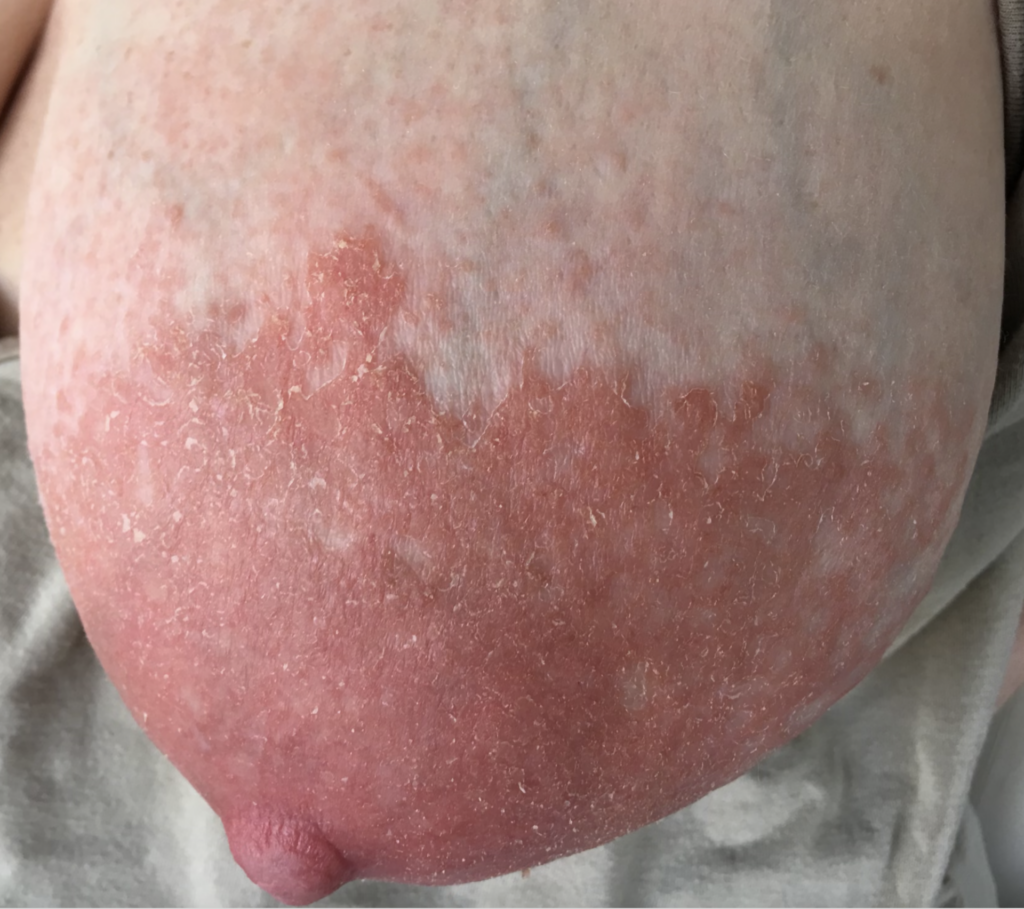
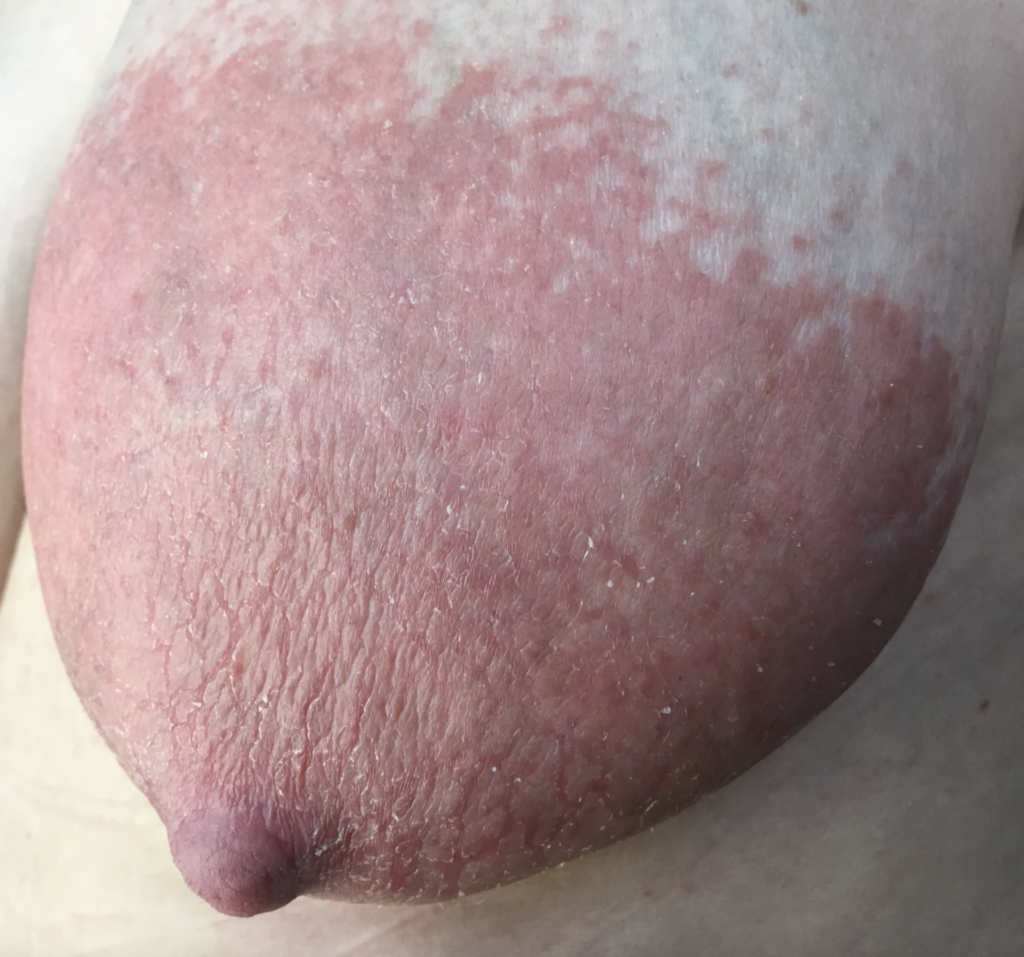
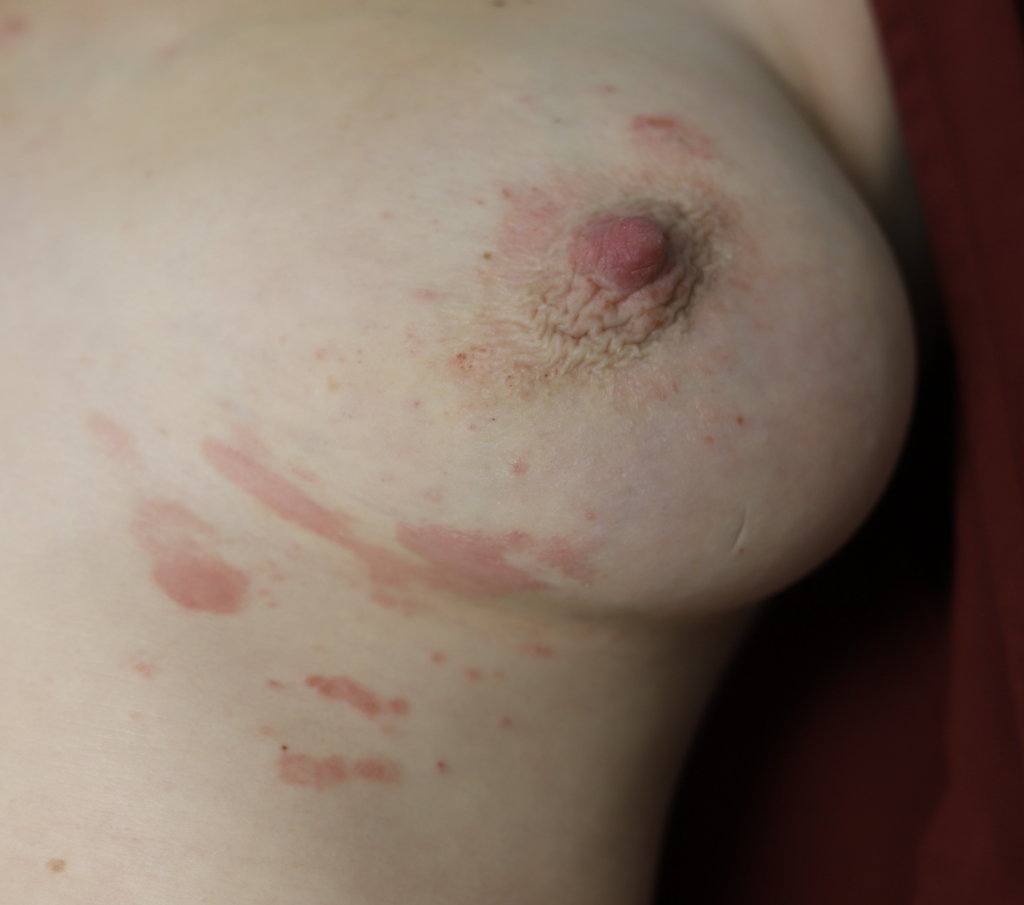
    Dermatitis (Eczema)

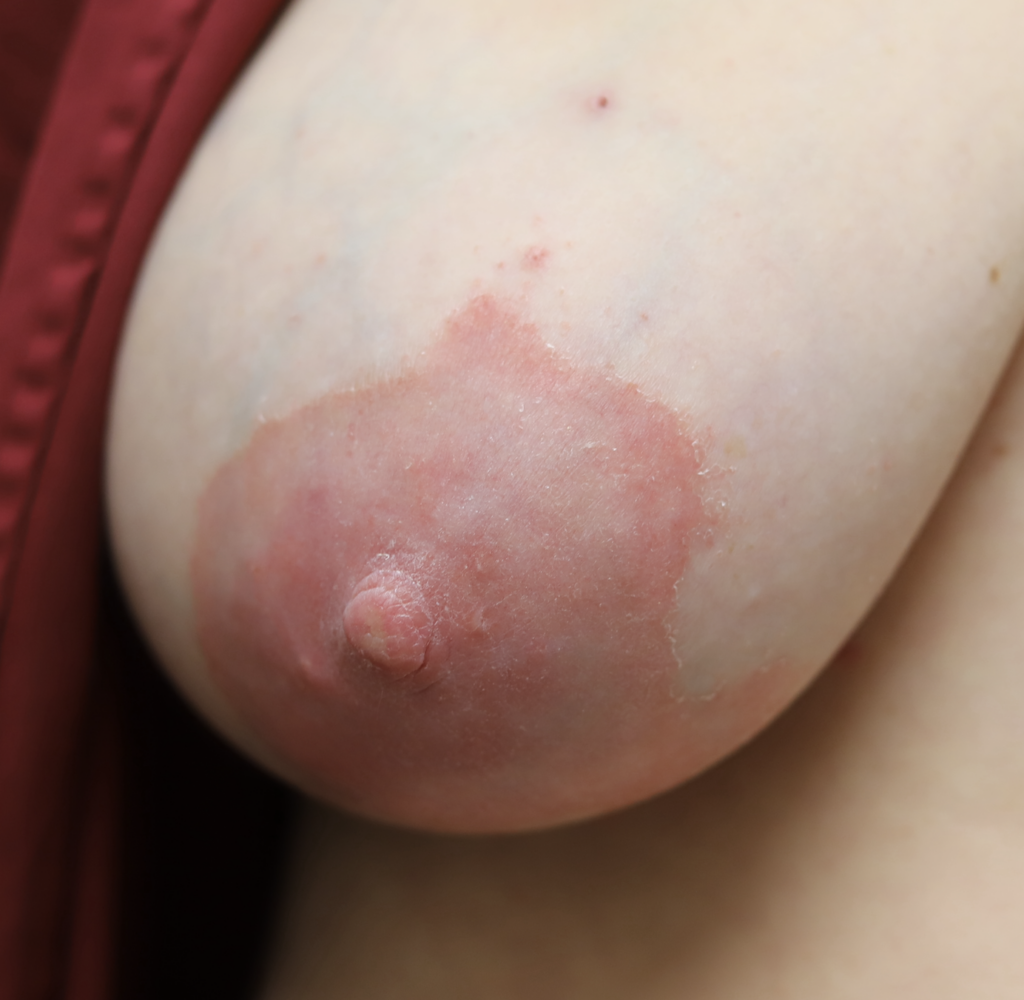
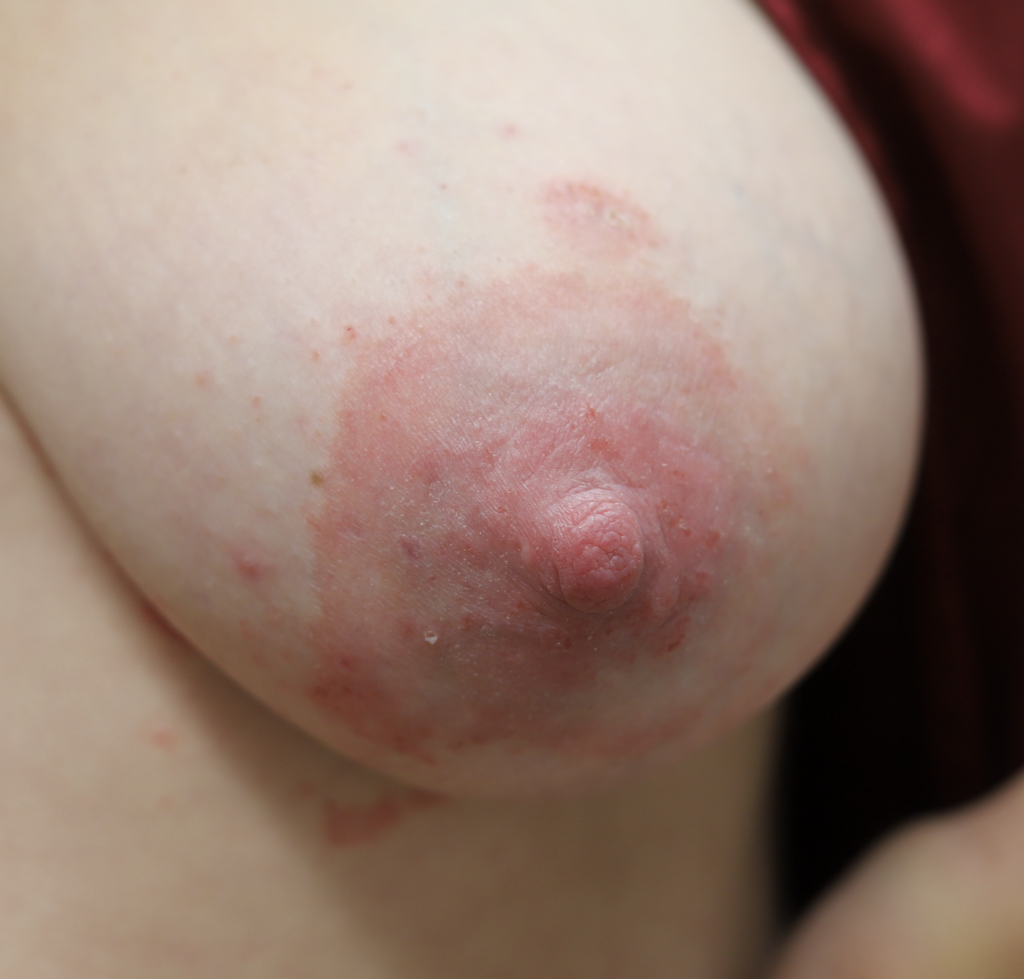
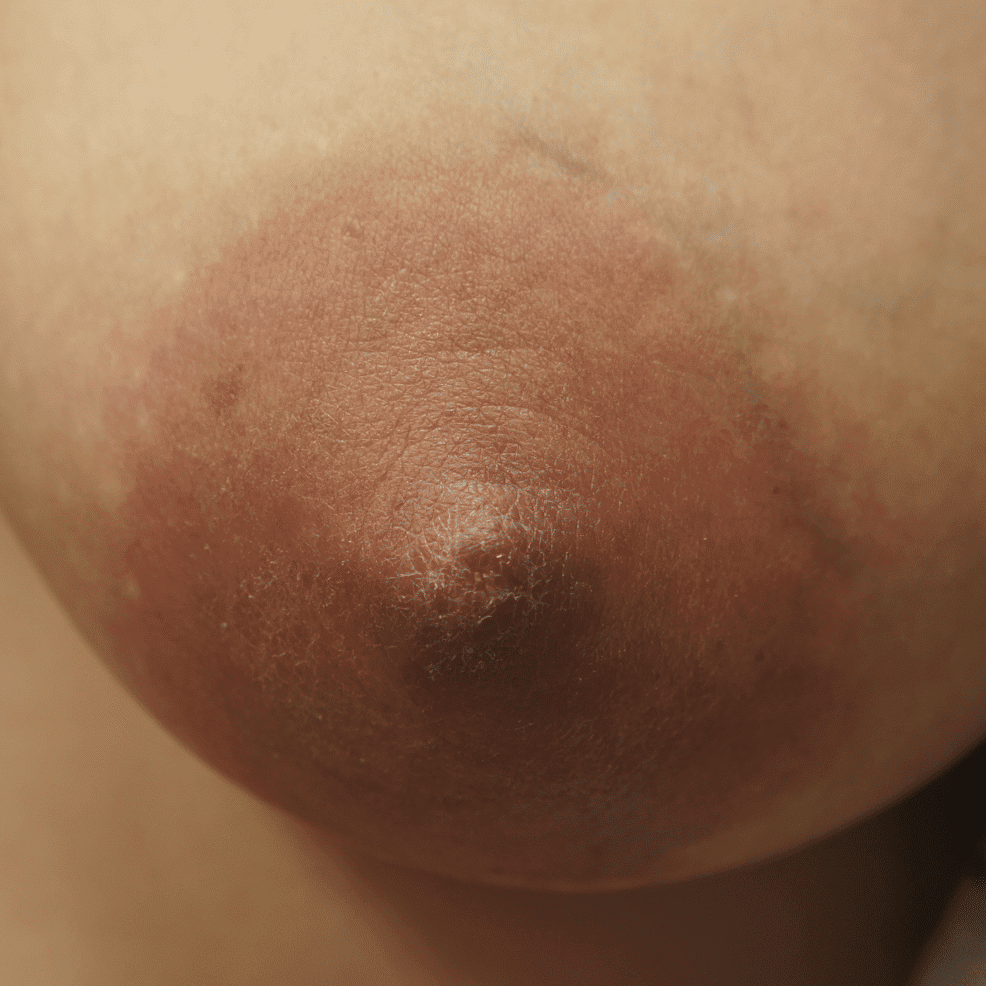
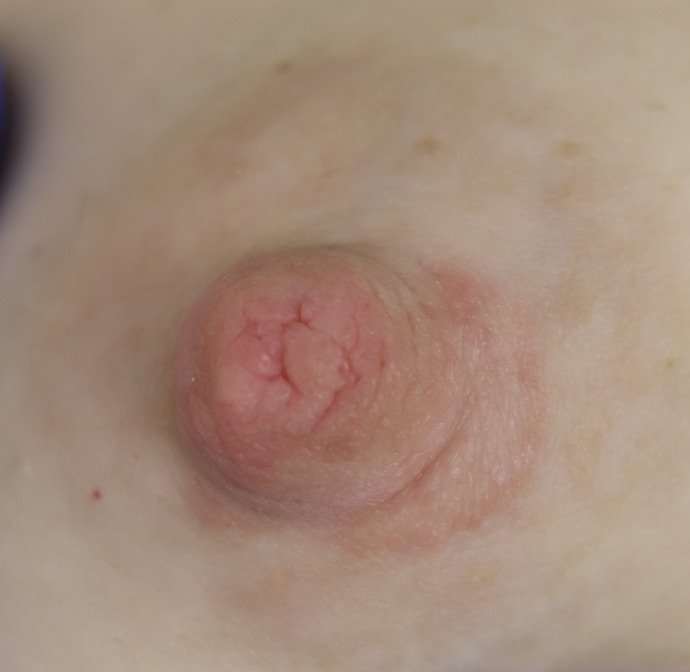
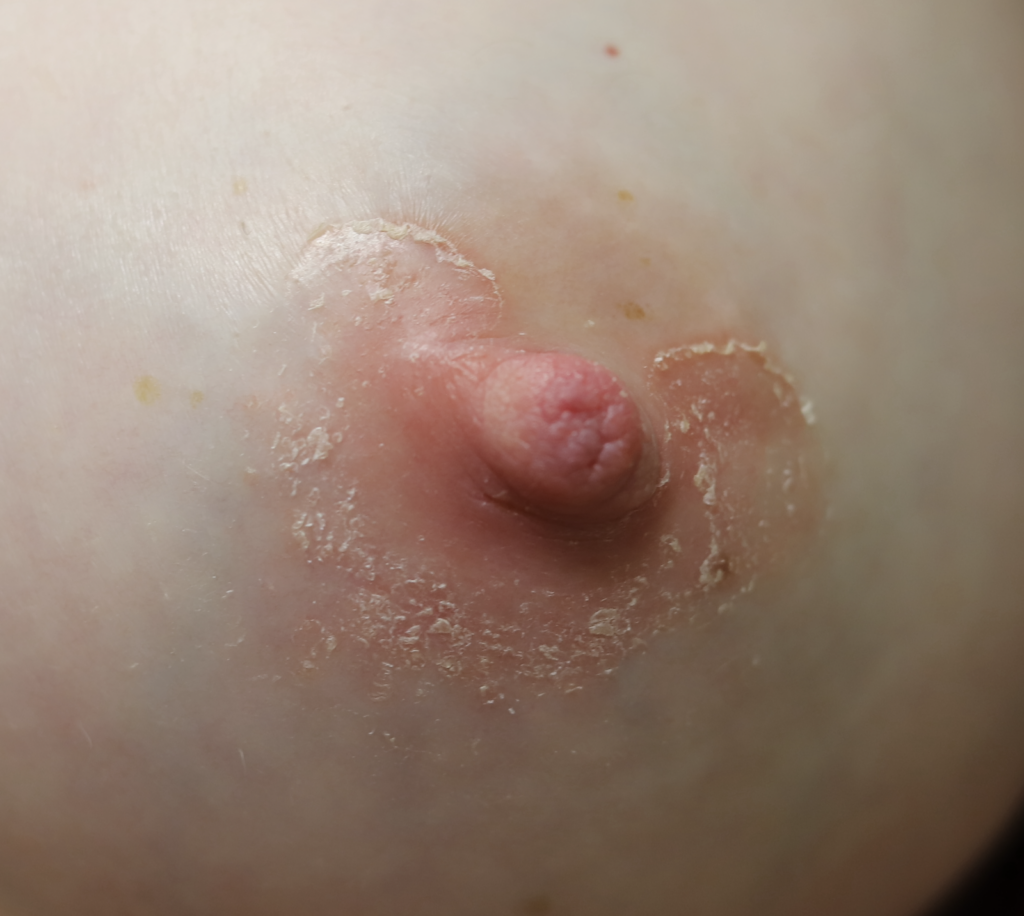
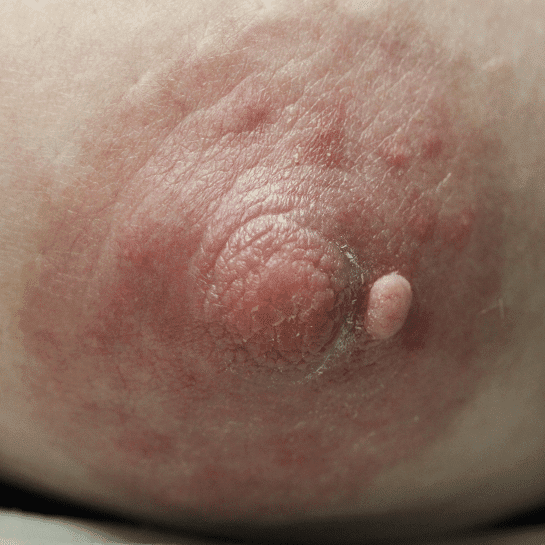
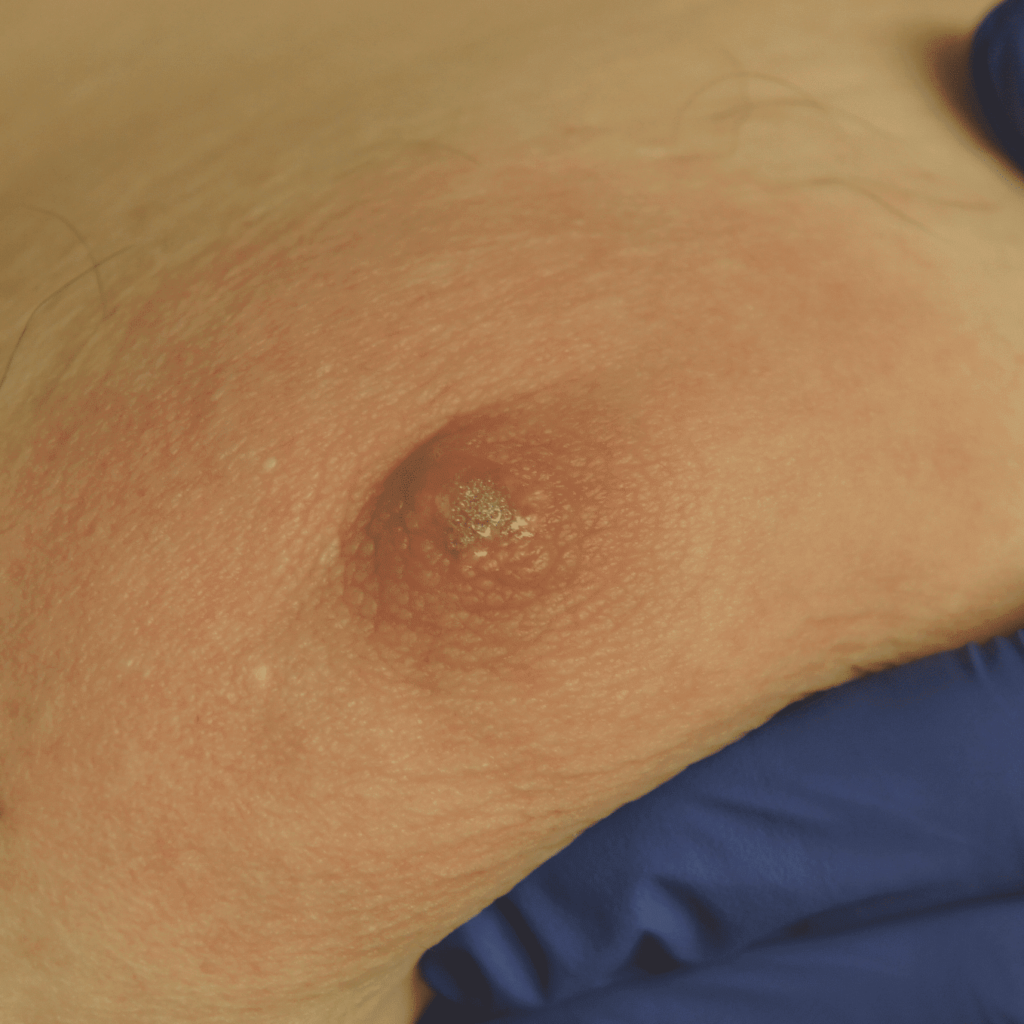
    Dermatitis (or eczema) of the nipples, areolae, and breasts, presents as a red, burning, painful flaking rash.  Often, patients are misdiagnosed with a “yeast infection” when in fact the etiology of their symptoms is dermatitis. One breast may be affected and not the other, without good explanation.  Dermatitis can result from countless potential allergens, but the most common scenarios in breastfeeding are these:

    • Topical anti-fungal and antibacterial agents such as those contained in APNO, petroleum, lanolin, coconut, and emollients contained in creams, lotions, or ointments. 
    • Pump parts, nursing bras, nursing pads, new detergents or soaps, and nipple shields
    • Substances that children are ingesting or touching, including antibiotics and complementary foods
    classic dermatitis
    Classic areola eczema/dermatitis presenting in a patient with a history of eczema. There is often a trigger (e.g. lanolin) in a sensitive patient. This needs a short-course steroid to decrease the inflammation, and a barrier (e.g. non-allergenic shea butter/balm) to seal the skin against further infiltration with allergen. Even one application of an antifungal (e.g. nystatin) or drying agent (e.g. vinegar soaks, gentian violet) can further irritate/breakdown the protective layer in the skin (acid mantle) and set off a cascade of worsening eczema/inflammation/pain/rash.
    dermatitis on the breast
    dermatitis
    eczema
    It's NOT YEAST! This is classic lanolin dermatitis in a patient with a long history of eczema.
    eczema
    eczema
    eczema

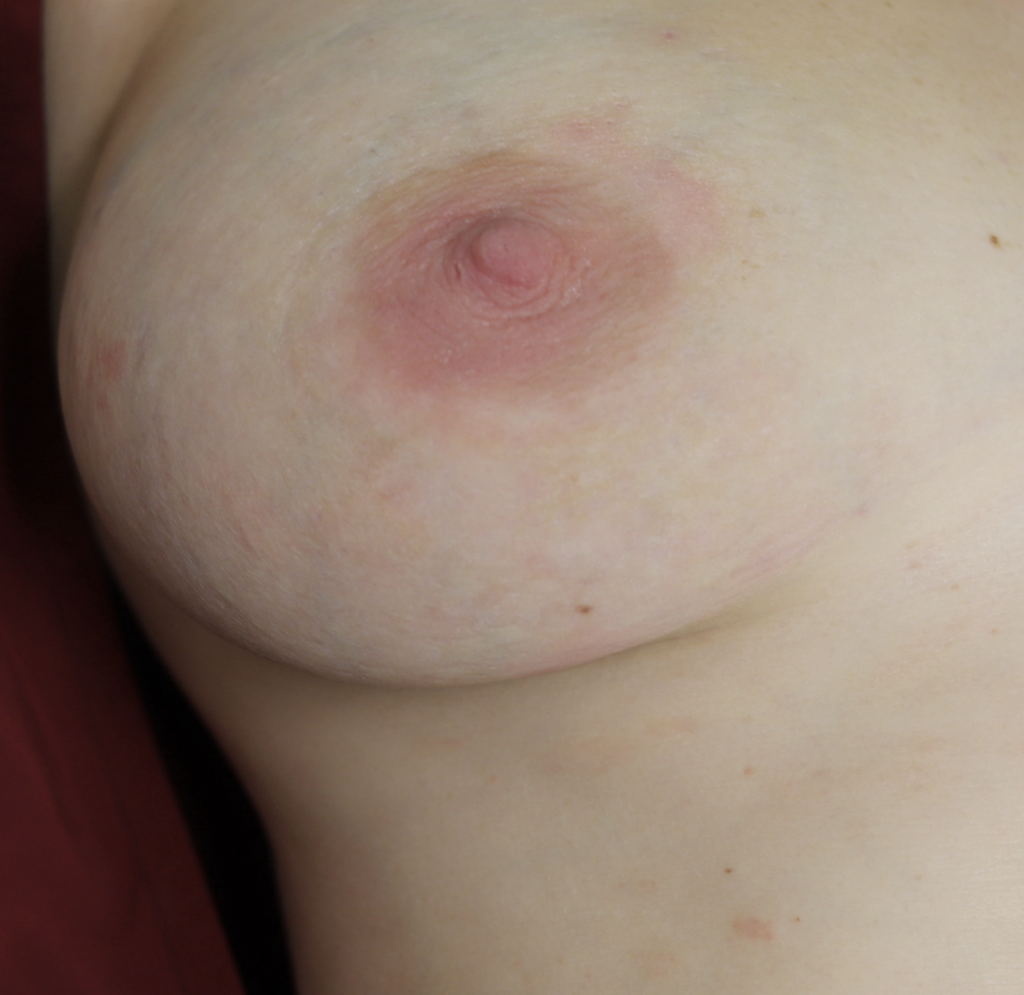
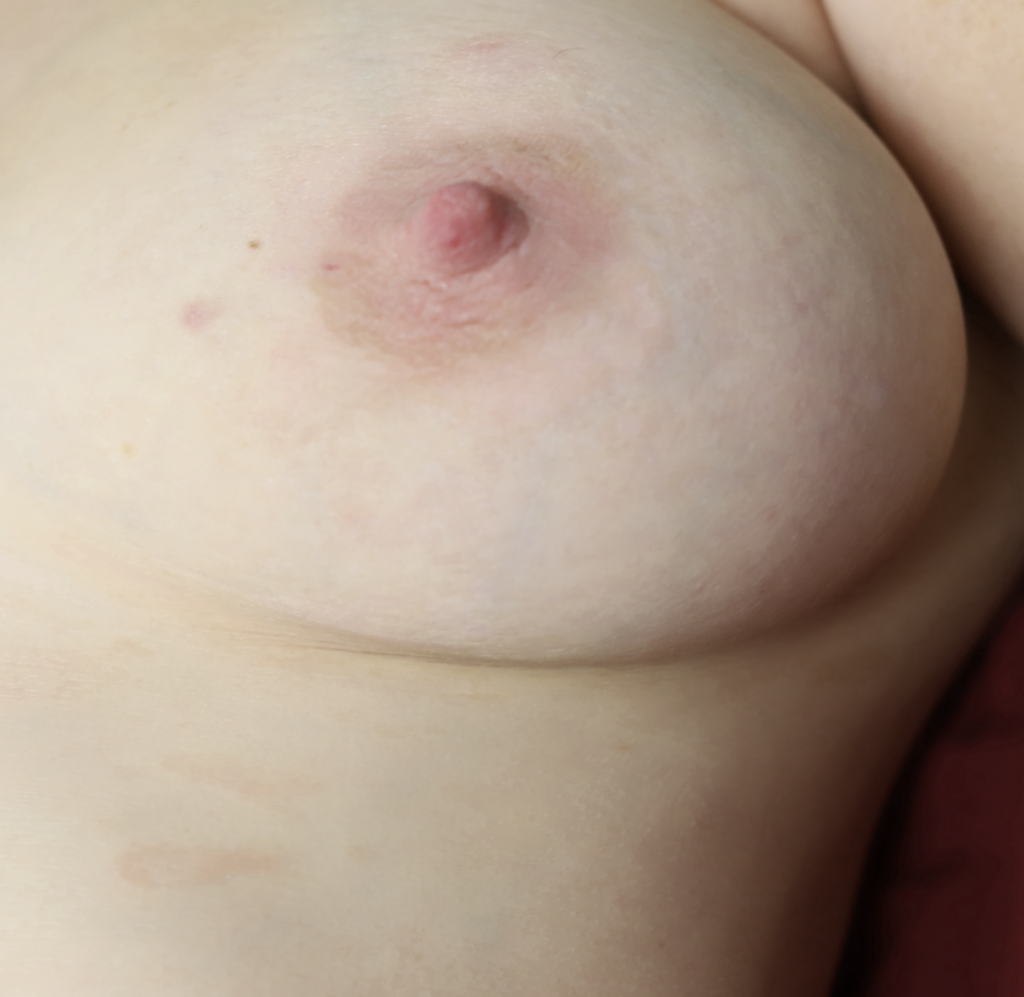
    One week later, complete resolution after just a few days of steroid cream:

    eczema resolved
    eczema resolved
    Screenshot 2024 07 24 at 2.15.02 PM
    lanolin allergy
    post inflammatory hypopigmentation
    post inflammatory hypopigmentation
    Top two photos: acute lanolin allergy. Bottom two photos: resolution with post-inflammatory hypopigmentation (can take up to a year to return to its normal pigment).
    dermatitis
    Dermatitis from older baby taking amoxicillin (mom allergic) for an ear infection.
    Eczema
    Post-inflammatory hypopigmentation
    Post-inflammatory hypopigmentation.
    Post-inflammatory hypopigmentation

    Treatment involves the following:

    • All potential allergens should be explored and eliminated
    • A short course of prescription steroid (e.g. 0.1% triamcinolone) will clear a persistent case in a few days. 
    • Oral antihistamine medication or steroids used in cases of severe allergy may not affect milk production in most women, patients should watch for changes in output, particularly those with lower baseline milk production. However, the vast majority of the time, these oral agents are not necessary.
    Dermatitis (top photos) resolved after steroid cream use (bottom photos).
    Dermatitis (top photos) resolved after steroid cream use (bottom photos).
    More subtle dermatitis presenting with itching and flaking at areola border at 10-11:00 position.
    More subtle dermatitis presenting with itching and flaking at areola border at 10-11:00 position.
    Patient treated with topical antifungals that worsened dermatitis and caused skin erosion at base of nipple.
    Patient treated with topical antifungals that worsened dermatitis and caused skin erosion at base of nipple.
    Resolved after one week steroid cream with healing erosion at base of nipple.
    Resolved after one week steroid cream with healing erosion at base of nipple.
    Patient with allergy to bananas her child was eating. Dermatitis involves the areola and rarely impacts the nipple (normal skin island between dermatitis and normal nipple in this photo). Paget’s disease starts on the nipple and moves outward.
    Patient with allergy to bananas her child was eating. Dermatitis involves the areola and rarely impacts the nipple (normal skin island between dermatitis and normal nipple in this photo). Paget’s disease starts on the nipple and moves outward.
    Patient with nipple flaking from an older child who was weaned from breastfeeding but continued to rub mom’s nipple for comfort.
    Patient with nipple flaking from an older child who was weaned from breastfeeding but continued to rub mom’s nipple for comfort.
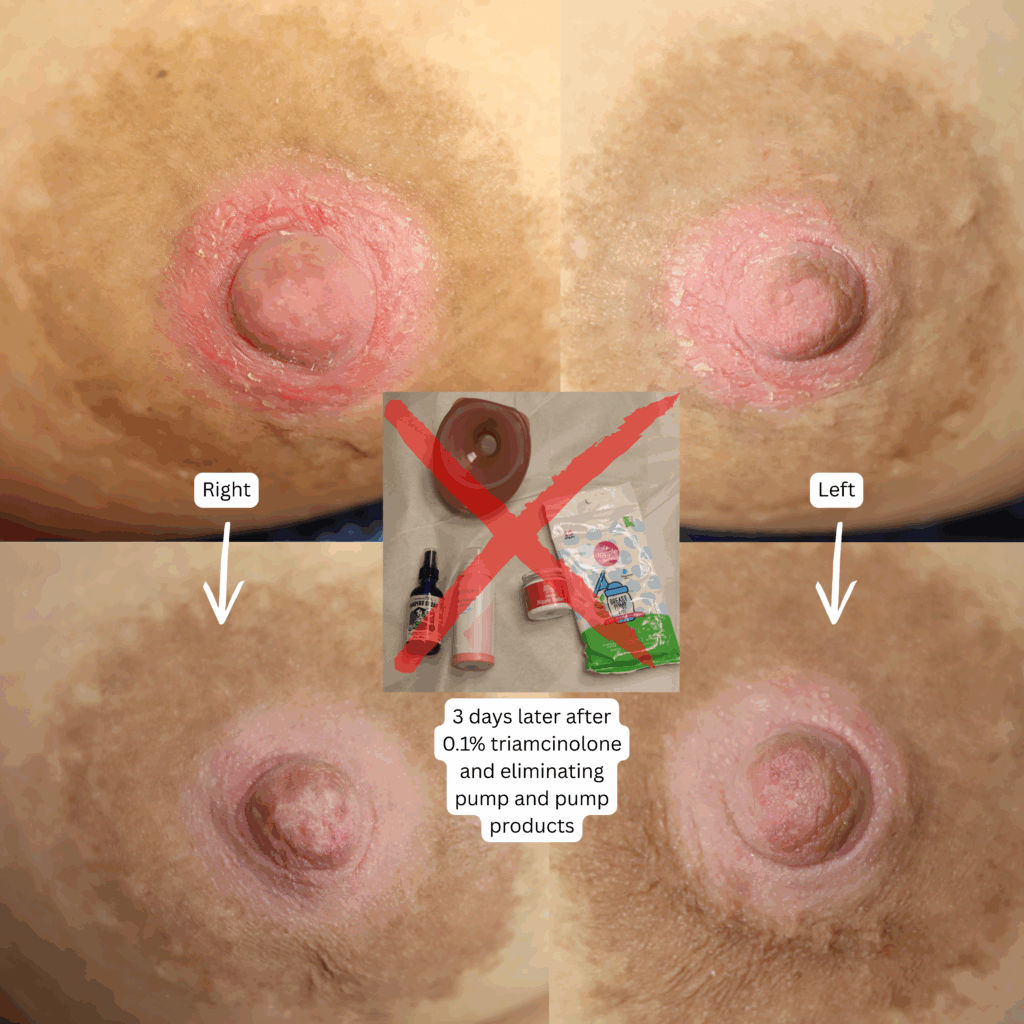
    Allergy to pump spray
    I've seen an epidemic of reactions to pump and nipple accessories recently. This patient presented with very painful dermatitis fitting the exact outline of her wearable pump. She brought everything she had been using on her pump, and we narrowed it down to the spray as what she was allergic to. It's a great example of just keeping things extremely simple with pumping -- flanges and a non-scented dish detergent rather than wipes that may not be as effective as washing with soap and water, and also may contain allergens themselves.
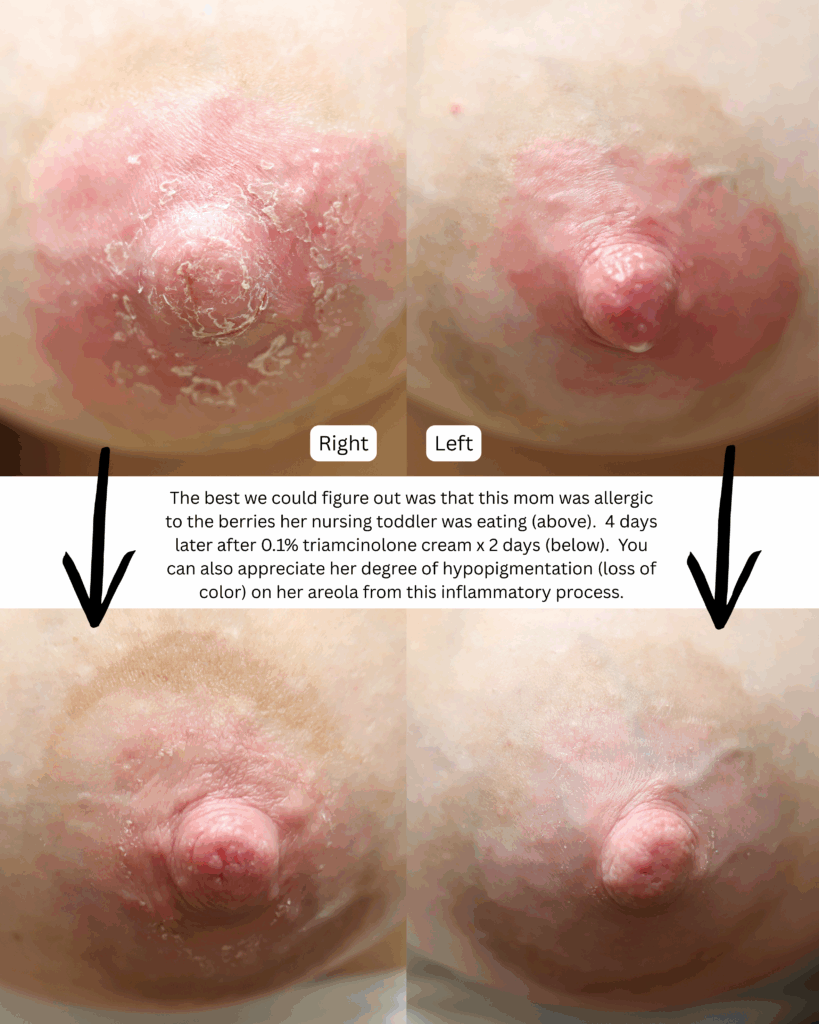
    berries allergy
    tylenol allergy
    Mom with a tylenol allergy whose toddler was taking tylenol for the pain of an ear infection.
    eczema
    Severe eczema flare postpartum in history of patient with previously controlled disease. This was impacting both breasts, abdomen, back, and extremities. She was told it could be yeast on her nipple.
    Nipple dermatitis
    Another hands-free pump dermatitis with skin breakdown on the areola at 11:00 with weeping.
    Nipple dermatitis
    Nipple dermatitis with fissuring at the base of the nipple in the location of hands-free pump flange. We think she was allergic to something in the pump flange itself or something she was washing the flange with. Above is right nipple and adjacent is left nipple. Below are after treatment.
    pump dermatitis
    Screenshot 2025 12 05 at 7.43.09 PM
    After steroid cream, lubricating balm to heal the fissure, and break from pumping, the skin is healed bilaterally.
    dermatitis resolved
    Patient with history of eczema particularly severe on hands who also developed similar process on breast from frequent hand expression.
    Patient with history of eczema particularly severe on hands who also developed similar process on breast from frequent hand expression.

    Extra Nipples

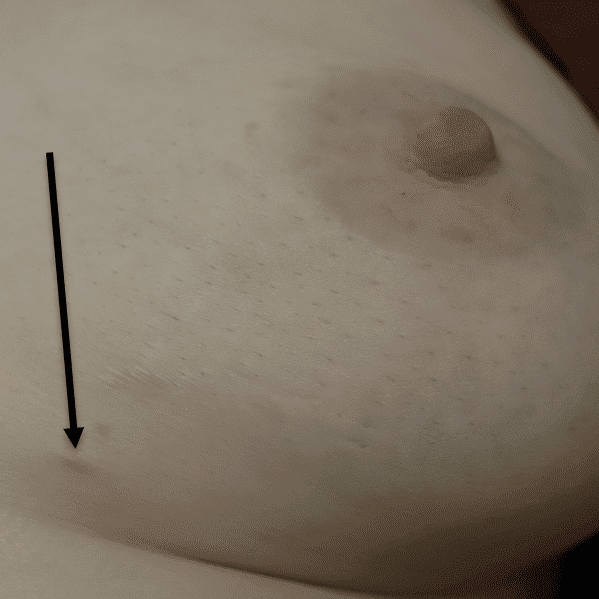
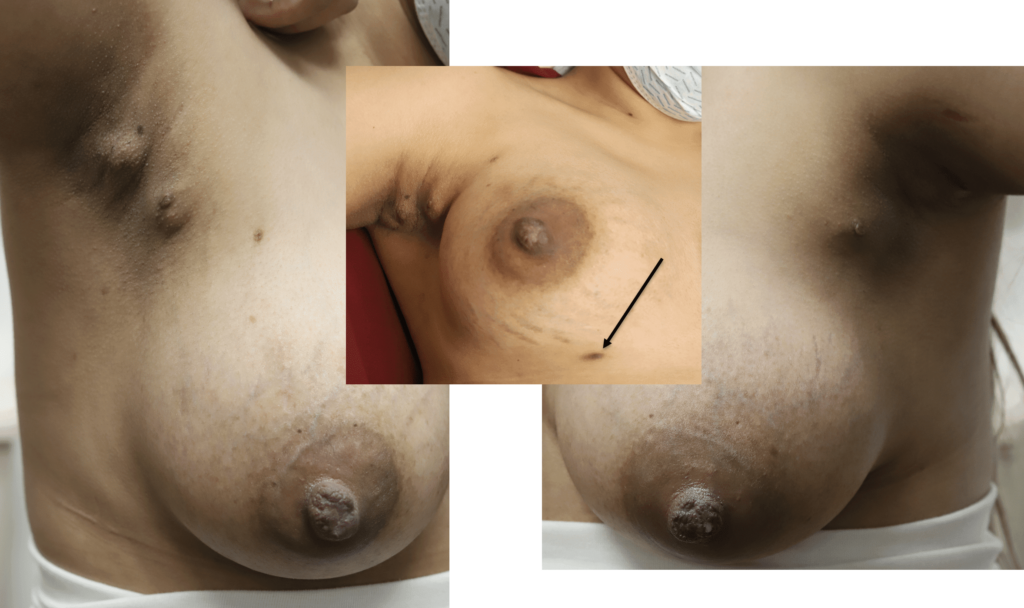
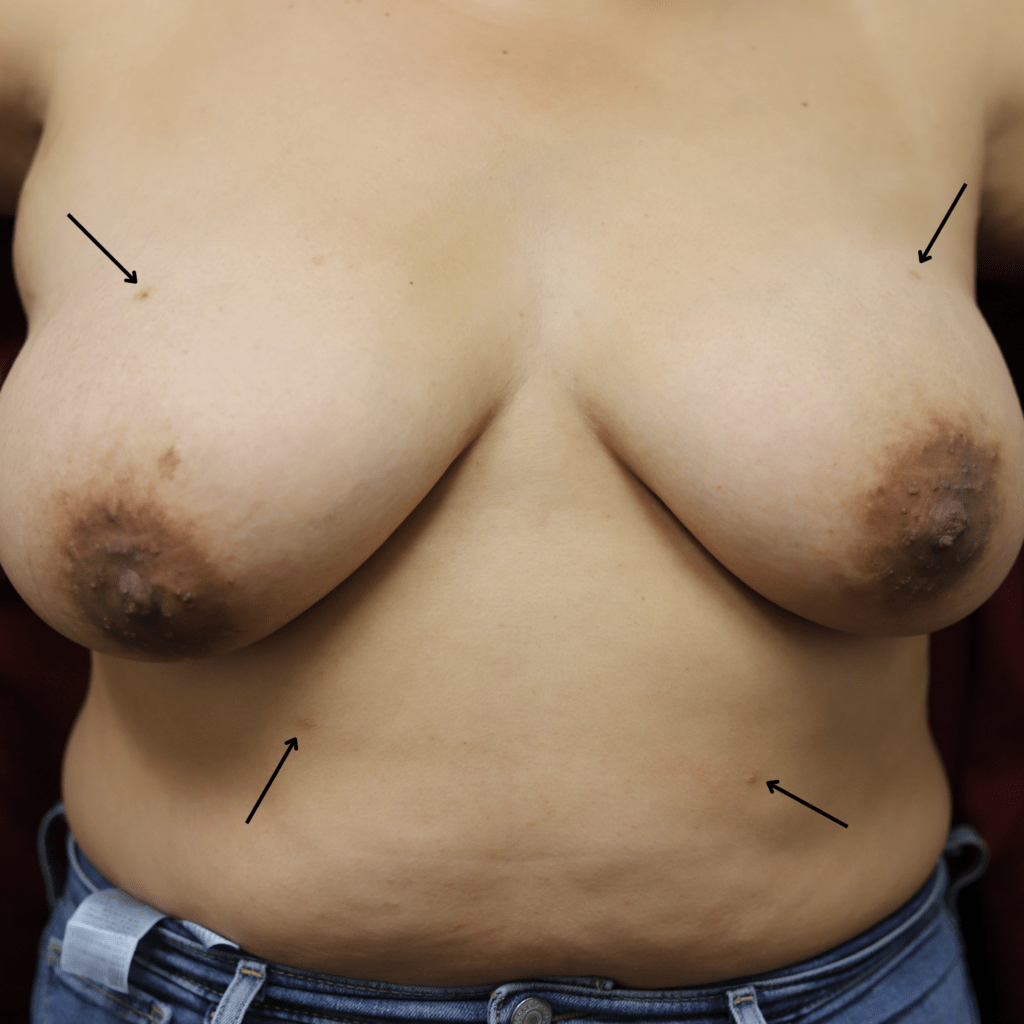
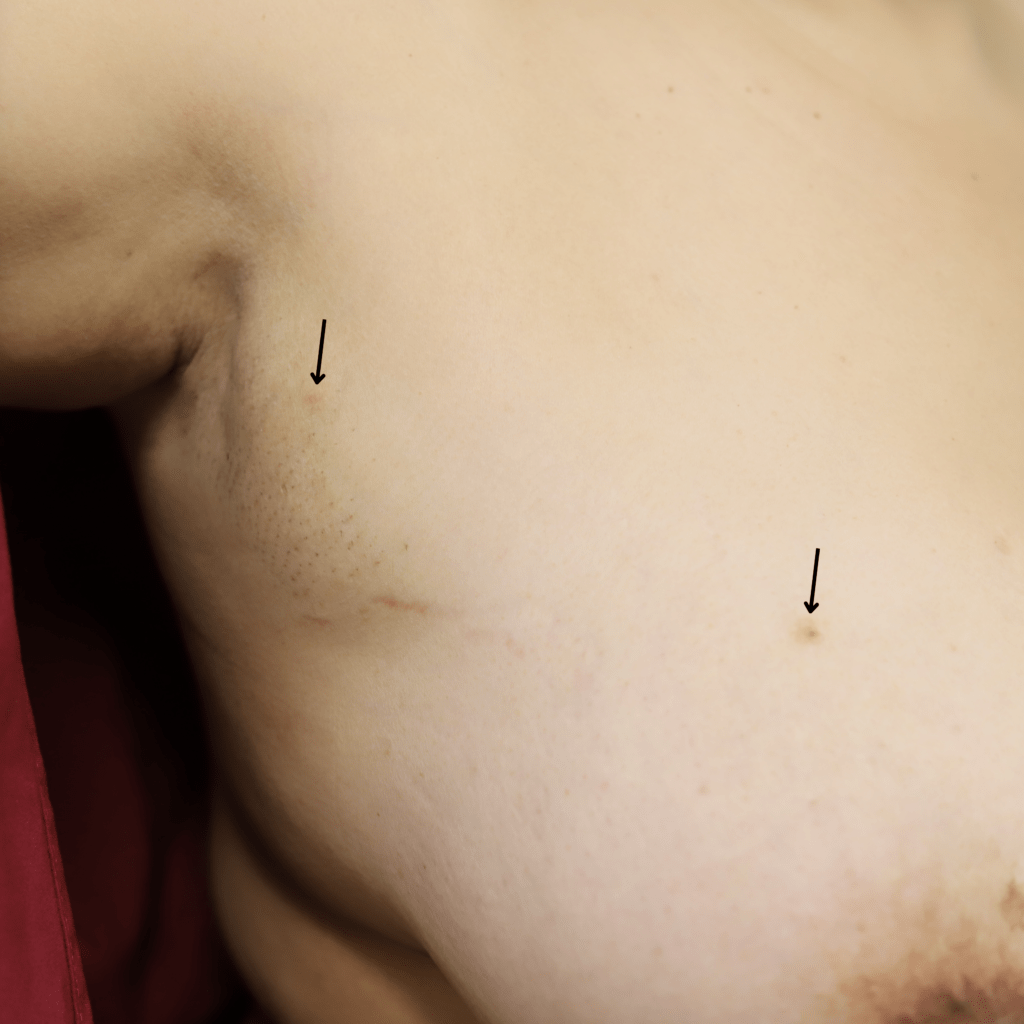
    Supernumerary, or “accessory nipples” are common and may become engorged or produce milk. They will regress within a week if they are not continually stimulated or expressed.

    small supernumerary nipple
    Small supernumerary nipple
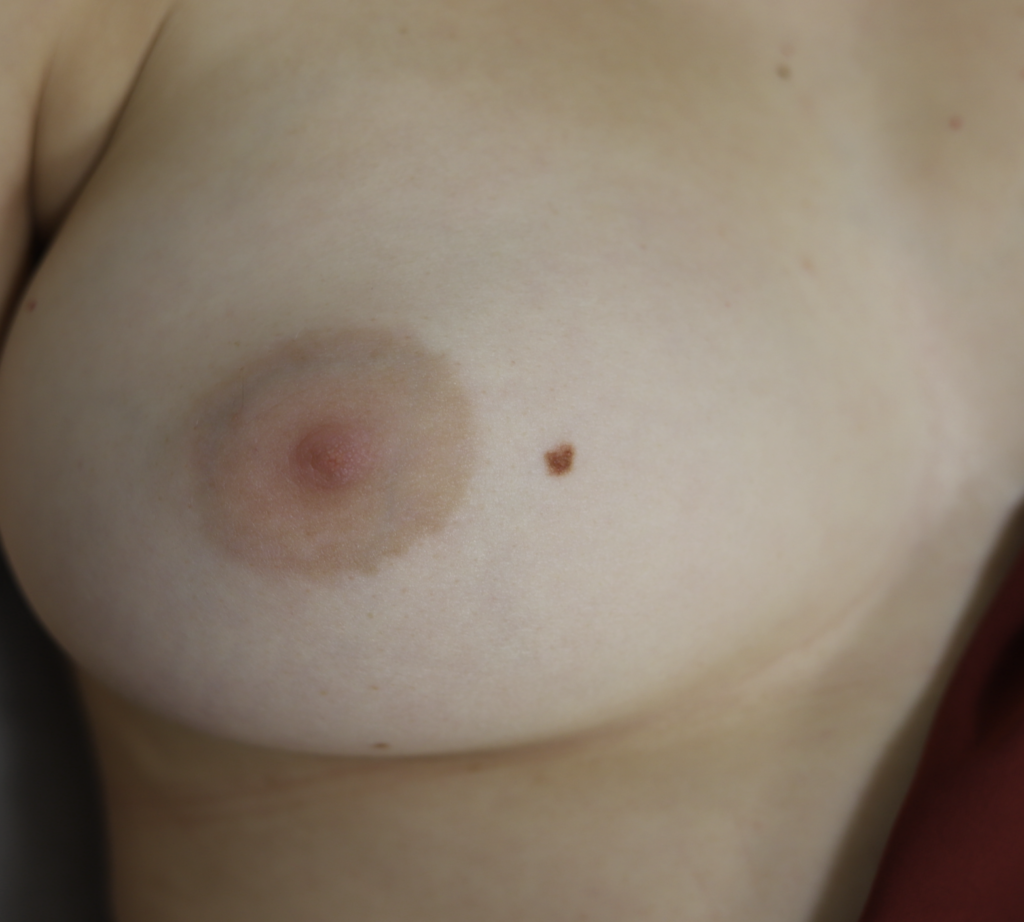
    Very faint, small supernumerary nipple and areola in a fair-skinned patient. She was referred for evaluation of potential milk fistula, when in fact this was a normal nipple producing small amounts of milk with stimulation.
    Very faint, small supernumerary nipple and areola in a fair-skinned patient. She was referred for evaluation of potential milk fistula, when in fact this was a normal nipple producing small amounts of milk with stimulation.
    accessory nipple and breast tissue
    accessory nipple and breast tissue
    supernumerary nipple
    Supernumerary nipple
    This patient had bilateral symmetric accessory nipples (three on each side!)
    This patient had bilateral symmetric accessory nipples (three on each side!)
    Accessory nipple with accessory breast tissue.
    Very well developed accessory nipple and areola
    Very well developed accessory nipple and areola.
    extra nipple
    Acanthosis nigricans
    Acanthosis with an accessory nipple in the outer aspect of the breast.
    male accessory nipple
    Men also have accessory nipples!
    accessory nipple
    Male accessory nipple
    When I commented on a mom's accessory nipple one day, the dad piped up that he had one, too He was proud to display his and told the story of how they bonded on their first date over their accessory nipples and now call themselves the "thurples." 😉
    Accessory nipple
    Mom's accessory nipple.
    accessory nipple
    Accessory nipple

    Fungal Infections

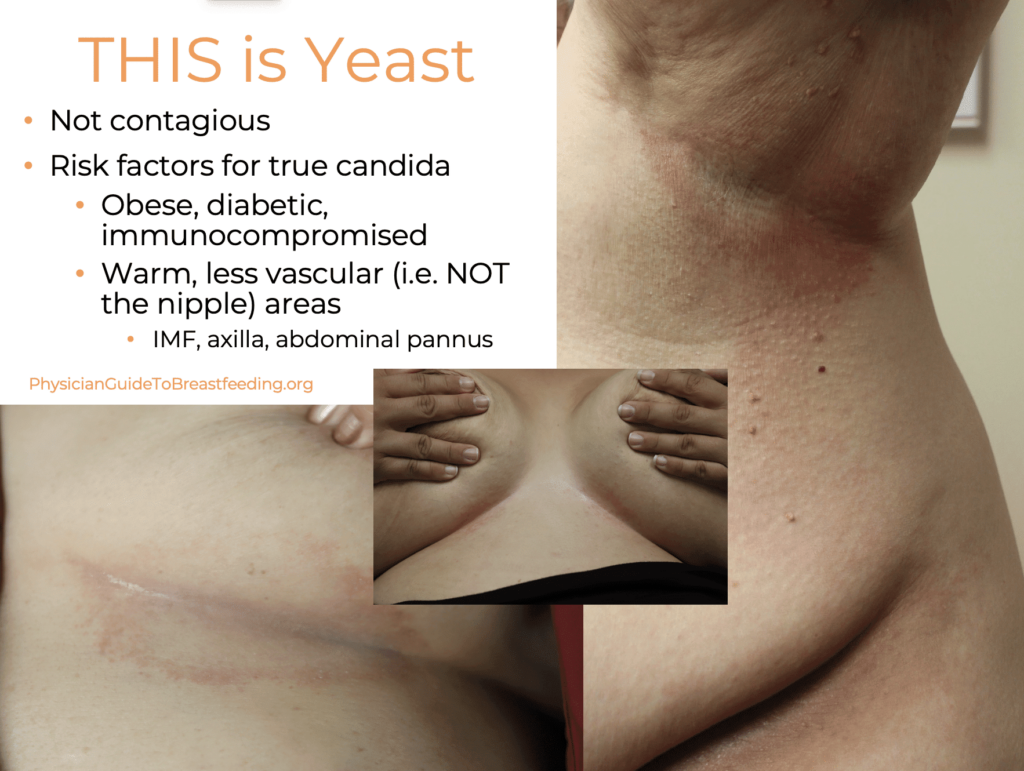
    The most common superficial fungal infection of the skin of the lactating breast is Candida intertrigo, which presents as an itchy, beefy red rash located in the inframammary fold (the skin underneath the breast that can get sweaty and chaffed during hot weather) or under the arm (axilla).

    Candida is not contagious just as vaginal yeast infections are not contagious.  Therefore, if an infant is diagnosed with thrush (which is also unlikely in the absence of formula feeding, prematurity, repeated antibiotics, and other risk factors for significant immunosuppression), the mother’s breast and nipple does not require treatment.  In fact, anti-fungals on the nipple of the breast are highly irritating and may produce a contact dermatitis. 

    Photo of Yeast on body

    Hyperkeratosis ("Warty Nipple")

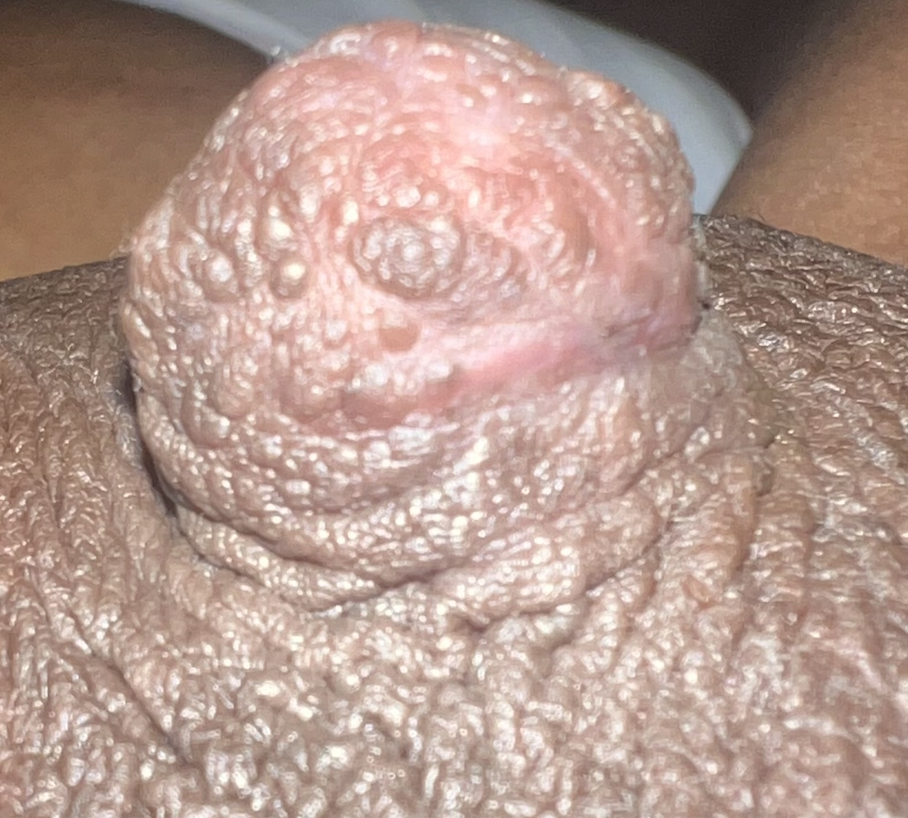
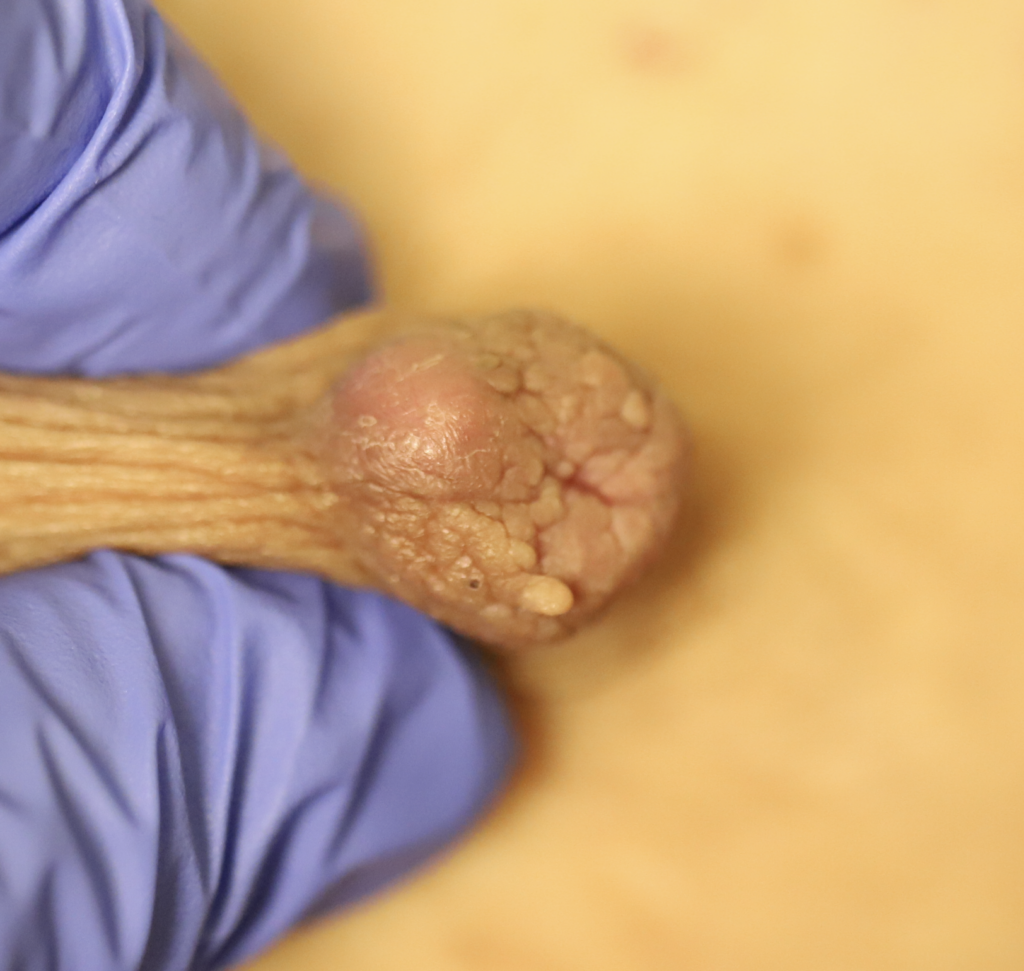
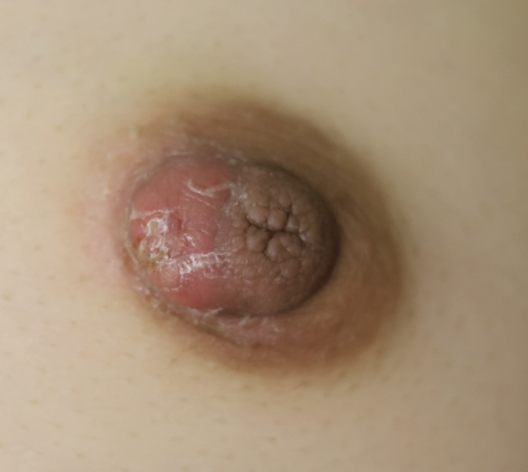
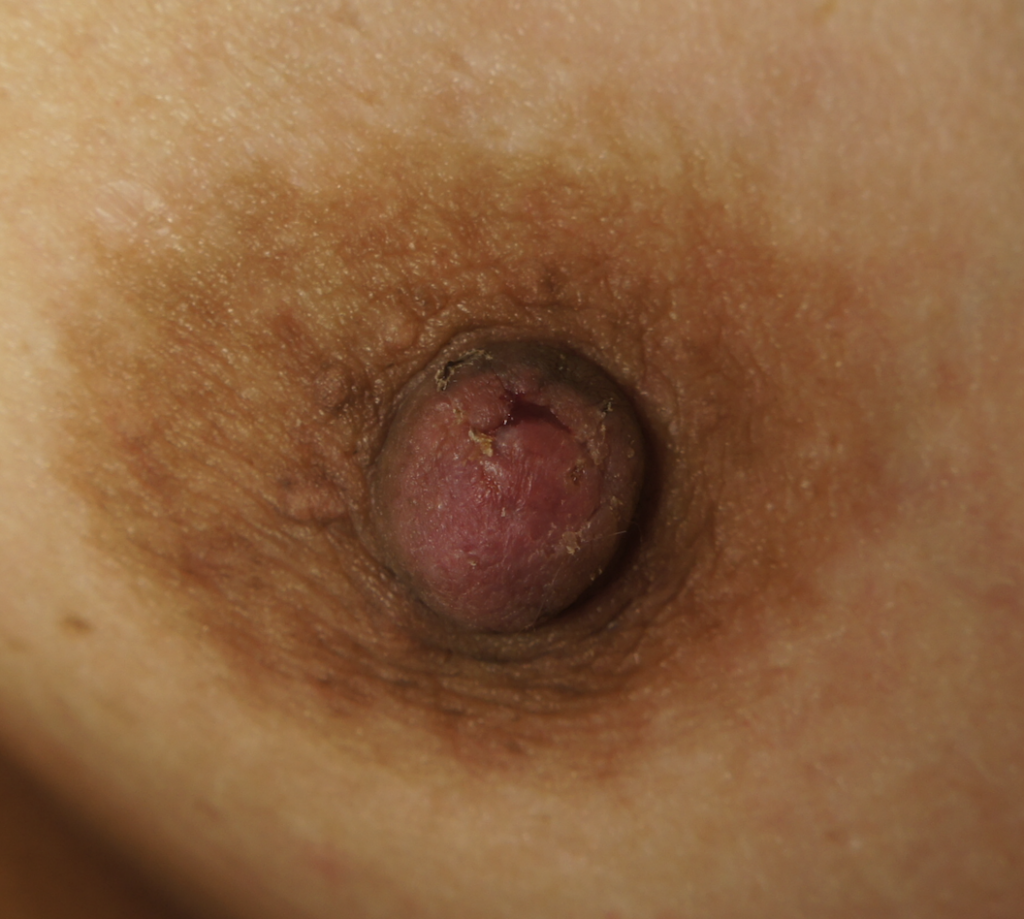
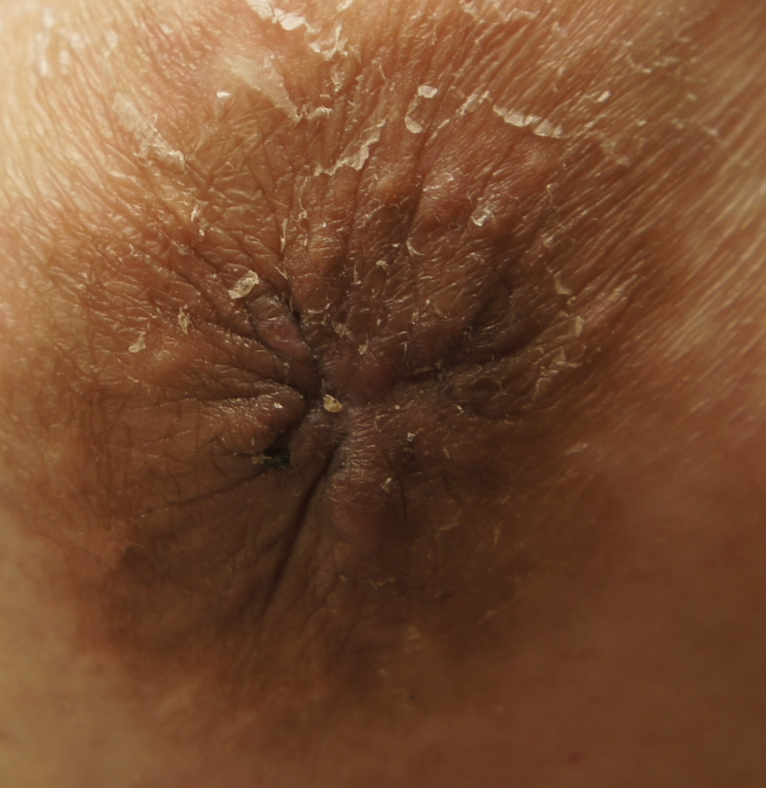
    Hyperkeratosis is a thickening of the stratum corneum, the outer layer of skin, and is usually associated with an abnormal quality of keratin.  Breastfeeding is possible with hyperkeratosis. 

    To reduce the thickening prior to breastfeeding, pregnant women should utilize a keratolytic moisturizer (containing urea or lactic acid) or calcitrene (a synthetic derivative of vitamin D). Crryotherapy, and topical steroids represent alternate treatment strategies.  Laser therapy is definitive, and should be considered in more severe cases as repeated latching or pumping can cause frequent skin shedding and hypersensitivity on underlying raw tissue.

    Ichthyosis affecting multiple body parts, including nipple and areola.
    Ichthyosis affecting multiple body parts, including nipple and areola.
    Isolated hyperkeratosis of nipple.
    Isolated hyperkeratosis of nipple.
    Hyperkeratosis
    hyperkeratosis of nipple
    Right nipple hyperkeratosis.
    hyperkeratosis of nipple
    Left nipple hyperkeratosis.
    Hyperkeratosis of nipple
    Hyperkeratosis of nipple. Photo credit: Lorimar Ortiz, MD.
    Hyperkeratosis of nipple with two additional skin tags at 1:00 and 4:00
    Hyperkeratosis of nipple with two additional skin tags at 1:00 and 4:00. Photo credit: Lorimar Ortiz, MD.

    Lactiferous Sinuses

    Palpable and dilated ductal tissue present just behind the surface of the areola skin in a thin patient.
    Palpable and dilated ductal tissue present just behind the surface of the areola skin in a thin patient.
    Dilated sinuses during letdown
    Dilated lactiferous sinuses during letdown.

    There is no subcutaneous fat behind the areola, so it is common to see dilation of ductal tissue and for patients to even worry they have a mass in this region. If a patient feels a persistent mass in this area, she should undergo physical exam and imaging evaluation.

    Leiomyoma

    Leiomyoma prior to excision.
    Leiomyoma prior to excision.
    Areola after excision of leiomyoma.
    Areola after excision of leiomyoma.

    Leiomyoma, a benign tumor comprised of smooth muscle cells, rarely occurs on the breast.  When leiomyoma does occur, it most often occurs on the areola, due to the presence of smooth muscle fibers.  Like other lesions on the nipple areolar complex, larger leiomyomas may interfere with latch, and treatment is excision.  They rarely recur. 

    Male nipple
    Normal right male nipple.
    Leiomyoma of areola
    Leiomyoma in male patient, most evident when comparing the texture and color of the left NAC (above) to the right NAC (right) as well as palpation of the mass within the NAC. Of note, this man also has an accessory nipple just below his left breast.

    Milk after Weaning

    Continued milky discharge (galactorrhea) after weaning is normal if the breast continues to receive any kind of stimulation from squeezing or sexual activity. Even without stimulation, milk production can take several months to fully stop, based on overall duration of breastfeeding and level of milk production. If you do notice new onset significant milk production from both breasts without stimulation after complete weaning for at least several months, this should be investigated with a medical professional. Your prolactin level and thyroid can be tested. If prolactin is elevated in combination with new headaches or vision changes, this could indicate the presence of an uncommon pituitary tumor. Some psychiatric medications also can cause milky discharge.

    Montgomery Glands

    Montgomery glands are sebaceous (oil producing) glands on the surface of the areola, and are naturally enlarged in pregnancy and lactation. Like other sebaceous glands, they can become blocked and develop pain and a pimple-like appearance. If this occurs, use gentle soap and water, warm compresses to promote opening of the skin for drainage, and an acne cream like salicylic acid or benzyl peroxide that you should wipe off before breastfeeding.

    Lubrication of pump flanges with coconut oil is a frequent reason why patients are more commonly developing Montgomery gland blockages. A pump should be comfortable without lubrication, and lubrication often allows women to turn the suction higher than what was intended. If lubrication must be used, it should be wiped off after pumping to decrease the risk of Montgomery Gland obstruction.

    Normal Montgomery Glands.
    Normal Montgomery Glands.
    Obstructed Montgomery Gland from coconut pump flange lubrication.
    Obstructed Montgomery Gland from coconut pump flange lubrication.
    Montgomery gland scarring after repeated squeezing (showed fibrosis on excision).
    Montgomery gland scarring after repeated squeezing (showed fibrosis on excision).
    Montgomery gland hematoma
    Bleeding into Montgomery gland ("hematoma" - blood was released when this was drained) from pumping.
    Obstructed montgomery gland
    Montgomery gland developing a small abscess (above) with resolution after three-day drain placement (below)
    Drained montgomery gland
    Drained Montgomery gland
    Ductal system connection to Montgomery gland
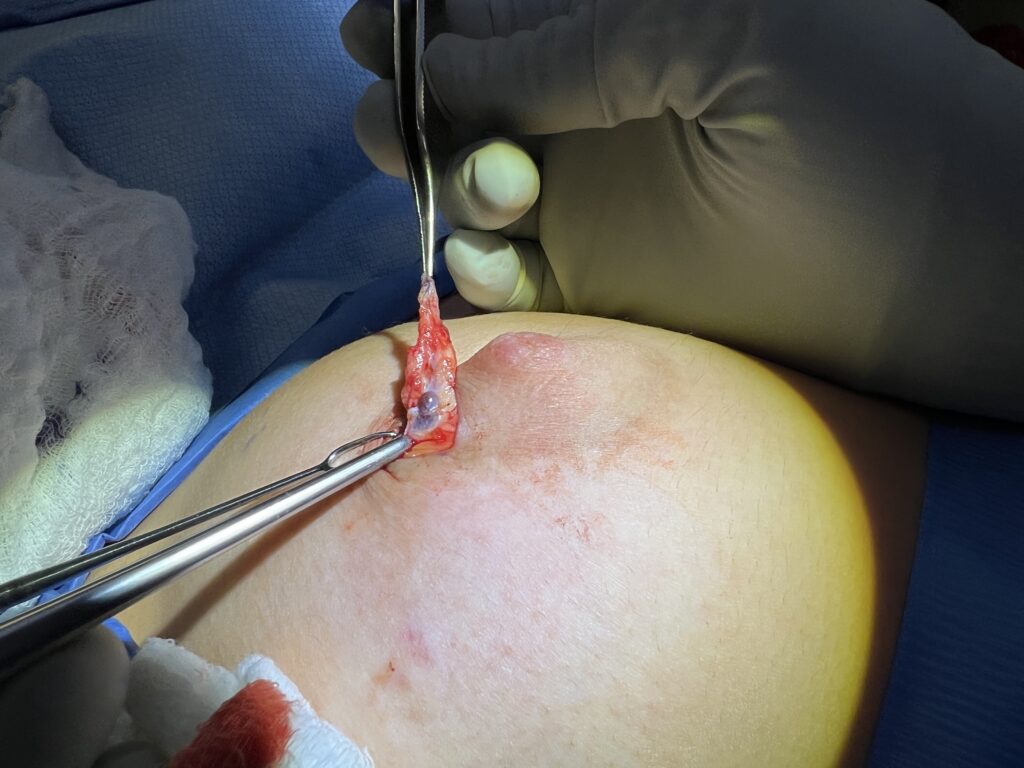
    You may notice milk flowing through one of your Montgomery glands (or more than one) on your areola. This is a normal variation of anatomy. Sometimes ductal tissue connects directly to a Montgomery gland through an alternative pathway (rather than through the nipple). This intraoperative photo shows a non-lactating patient who was having cystic discharge through one of her Montgomery glands. My right hand is holding the skin of the Montgomery gland and my left hand is pointing out a cyst (dilated ductal tissue) connecting to the gland.
    Milk coming from Montgomery gland
    Another example of ductal drainage through a Montgomery gland, this in a lactating mom.
    Accessory drainage via areola
    Accessory drainage via areola. This is also a great photo of depigmentation of a naturally more brown nipple and areola (look closely and the pink areas represent depigmentation from frequent friction from nursing). Unfortunately, this change to pink color is often misdiagnosed as "yeast." Generally, the pigment will return within a year after stopping nursing.
    Accessory drainage of breastmilk from Montgomery gland at 11:00 and 8:00
    Accessory drainage of breastmilk at 11:00 Montgomery gland and 8:00 Montgomery gland (colostrum).
    Montgomery gland and cyst on nipple
    Conglomerate of three Montgomery glands together.
    Montgomery gland obstructed by pump. Drains easily with a touch of salicylic acid cream.
    Montgomery gland obstructed by pump. Drains easily with a touch of salicylic acid cream.
    Montgomery gland obstructed by pump. Drains easily with a touch of salicylic acid cream.

    Nevi (Moles) and Seborrheic Keratoses

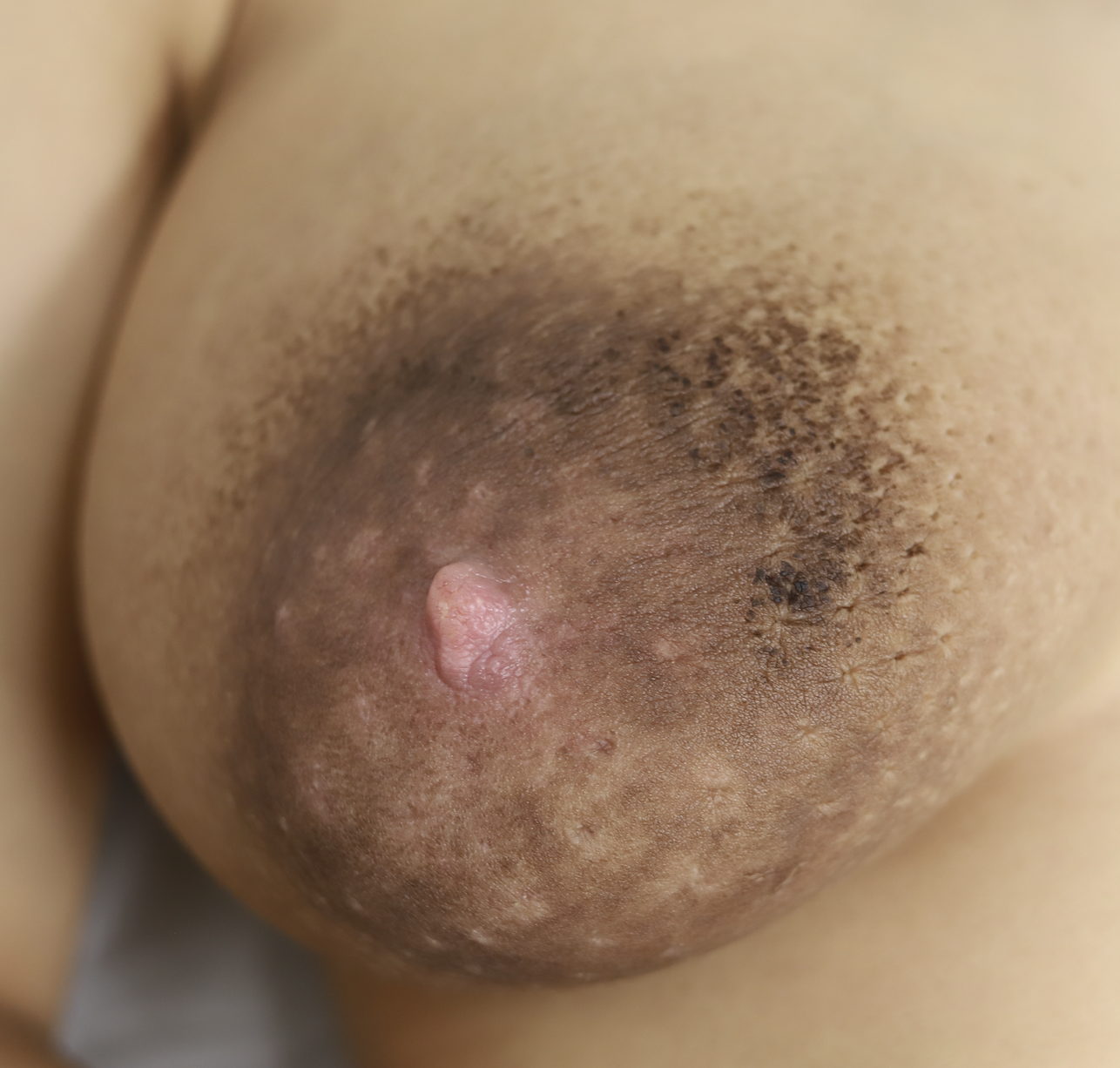
    Lentigo and seborrheic keratosis commonly occur around the nipple areolar complex and breast and do not present difficulty with breastfeeding.  Any concerning or changing lesions should be referred for dermatologic evaluation.

    Bilateral seborrheic keratosis on breast Seborrheic keratosis that developed on both breasts during pregnancy.

    Bilateral seborrheic keratosis on breast Right areola seborrheic keratosis

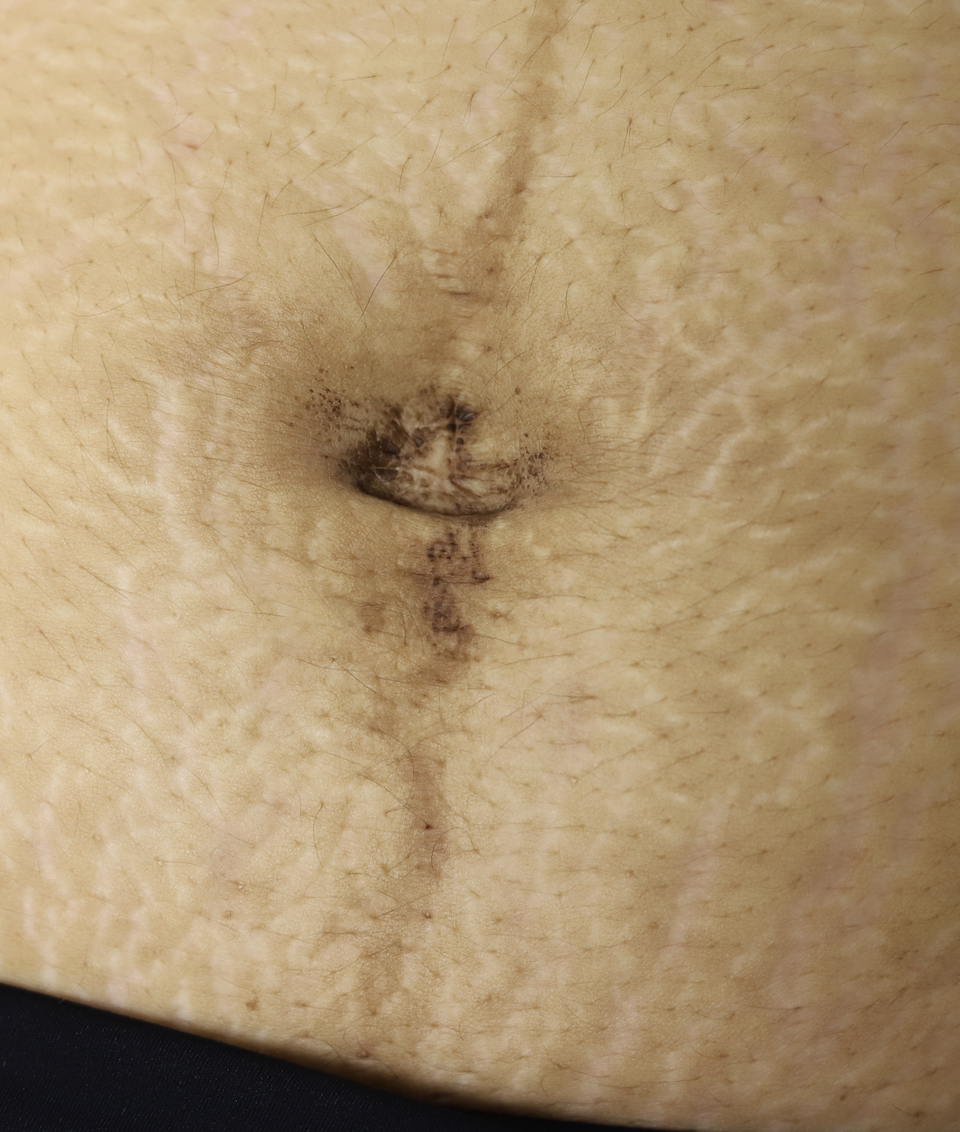
    Umbilicus seborrheic keratosis She also developed SK in her umbilicus.

    Seborrheic keratosis Pinpoint seborrheic keratosis on face of nipple and just medial to base.

    Seborrheic keratosis on areola during pregnancy Seborrheic keratosis on areola during pregnancy.

    Seborrheic keratosis Seborrheic keratosis at areola edge, 1:00 position and two smaller ones just below it on areola.

    Seborrheic keratosis Seborrheic keratosis at 10:00, 12:00, 1:00, and 2:00 at junction of depigmentation area of areola and intact areola.  Normal Montgomery Glands at 3:00 closer to the nipple in depigmentated area.

    Seborrheic Keratosis on neck Seborrheic keratosis on neck developing during pregnancy.

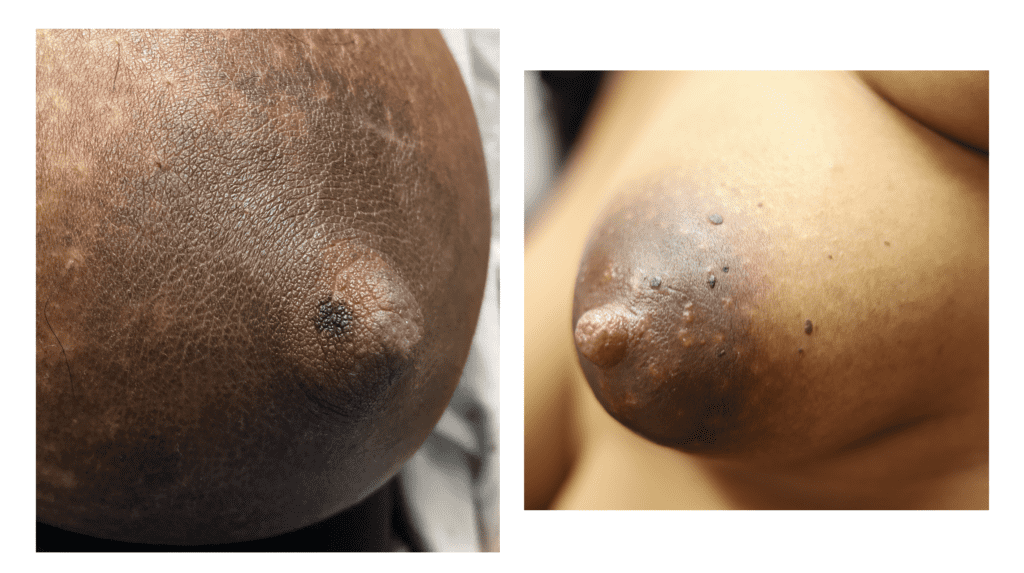
    Left photo shows solitary (single) nevus and right photo shows multiple seborrheic keratoses.
    Left photo shows solitary (single) nevus and right photo shows multiple seborrheic keratoses.
    Mole with severe atypia needing excision.
    Mole after shave biopsy
    Nipple healing after surgical excision

    Above:  atypical mole that became more raised, irregular, and changed pigmentation during pregnancy and postpartum.  A dermatologist performed a shave biopsy for diagnosis of whether it was atypical or melanoma.  The third photo is after excision during lactation.  Because of the size of the incision and potential for it to open up and breakdown, we had mom downregulate this breast and upregulate her other breast.  She exclusively breastfed from the other breast until this completely healed.  She then resumed feeding and increased production from there.

    Screen Shot 2023 06 19 at 6.20.45 PM
    Screen Shot 2023 06 19 at 6.21.46 PM
    Left breast melanoma
    Left breast melanoma
    Left breast melanoma

    Left breast melanoma (top photo showing patient healing after shave biopsy by dermatologist, then last three showing her post-operative course after formal surgical resection by surgical oncologist.  She was able to continue feeding exclusive breastmilk from the right breast during this time, and you can see how much her breasts changed sized to accommodate.

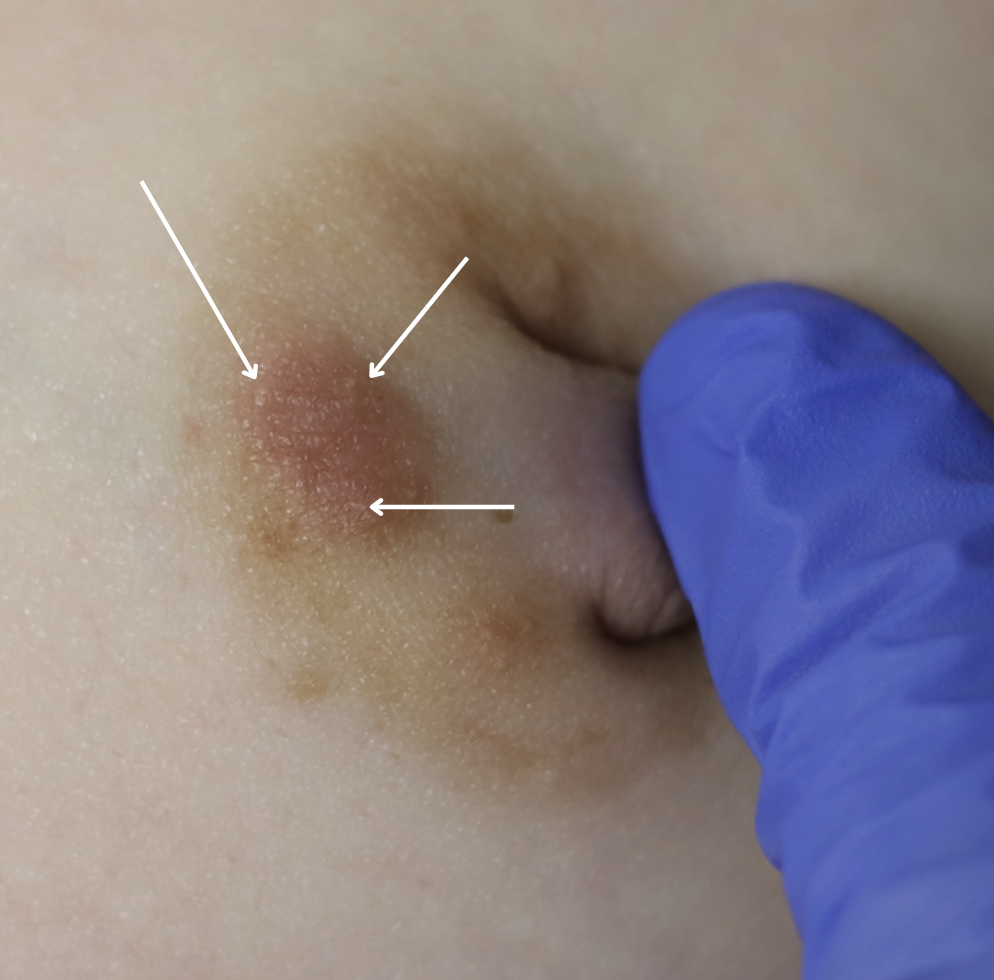
    Atypical mole
    Atypical mole changing and growing.

    Nipple Crust

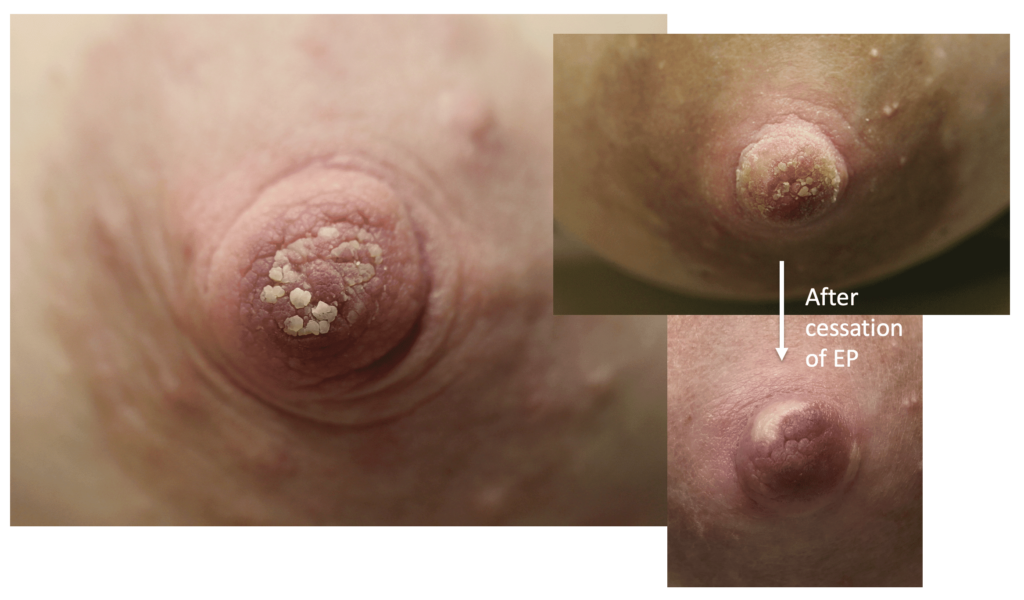
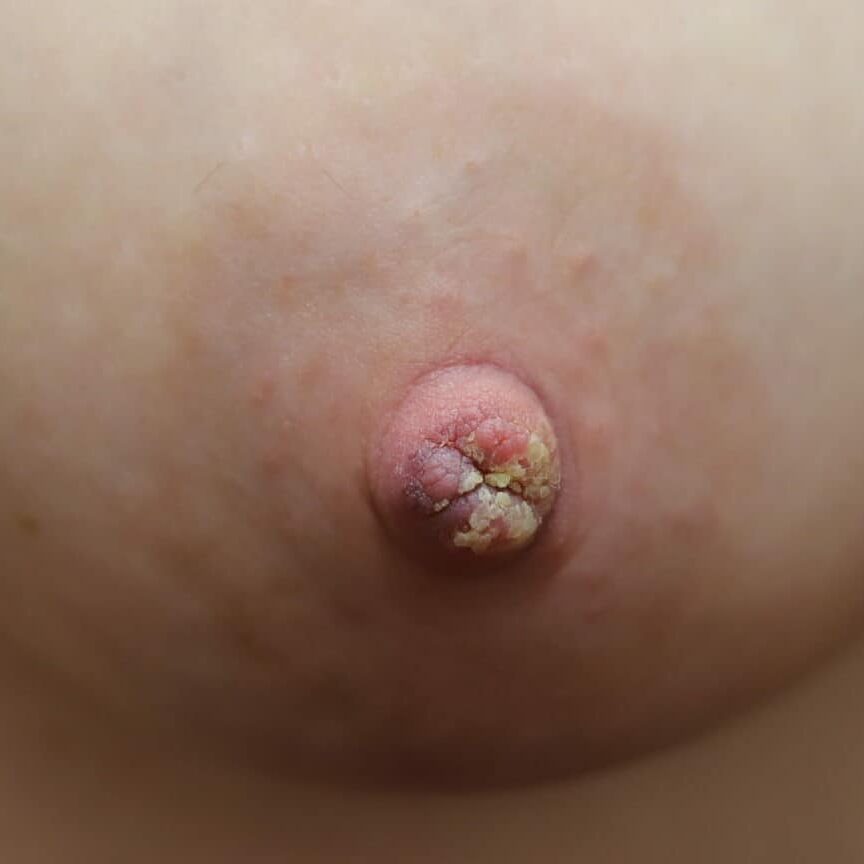
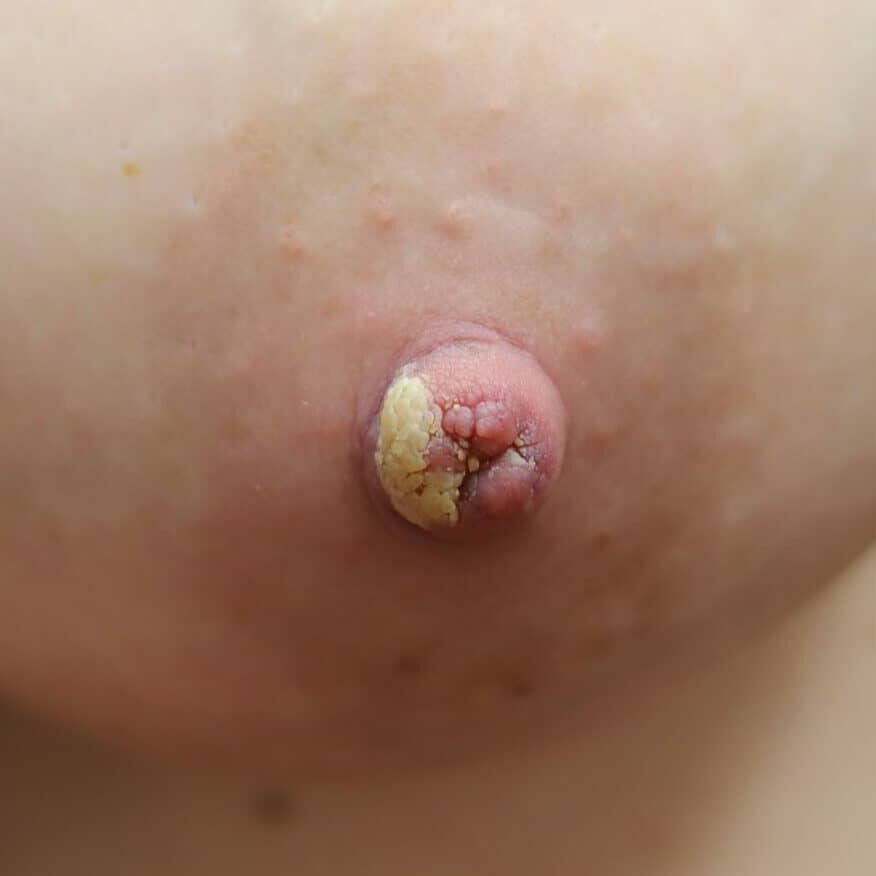
    Many women who exclusively pump without breastfeeding may develop a white crust on their nipples.  This may be dried milk, or may be related to biofilm production.  Researchers have documented the variation in milk microbiome that occurs with exclusive pumping, and it is possible this crust is related to that phenomenon.  While further research is necessary in this area, vigorous cleaning and/or attempts to remove this crust should be avoided as these interventions can produce nipple trauma and scarring.

    Images demonstrating nipple crust. Nipple crust resolves with cessation of exclusive pumping, but the patient in the images on the right had developed a chronic scar on her nipple surface from excessive cleaning.
    Images demonstrating nipple crust. Nipple crust resolves with cessation of exclusive pumping, but the patient in the images on the right had developed a chronic scar on her nipple surface from excessive cleaning.
    Exclusive pumping nipple crust, asymptomatic
    Exclusive pumping nipple crust, asymptomatic
    Exclusive pumping nipple crust, asymptomatic
    Exclusive pumping nipple crust, asymptomatic

    Pain

    Causes of pain during breastfeeding can range widely, and moms and babies should be evaluated together, with a differential diagnosis (potential causes) formulated based on their history, exam, and time postpartum. 

    Some moms have initial struggles “learning to breastfeed” in the early postpartum period with engorgement and simply needing to adjust position to enable a comfortable latch.  Other pain can result from situations that require medical management such as treatment of hyperlactation (“oversupply”), blebs, and dermatitis.  

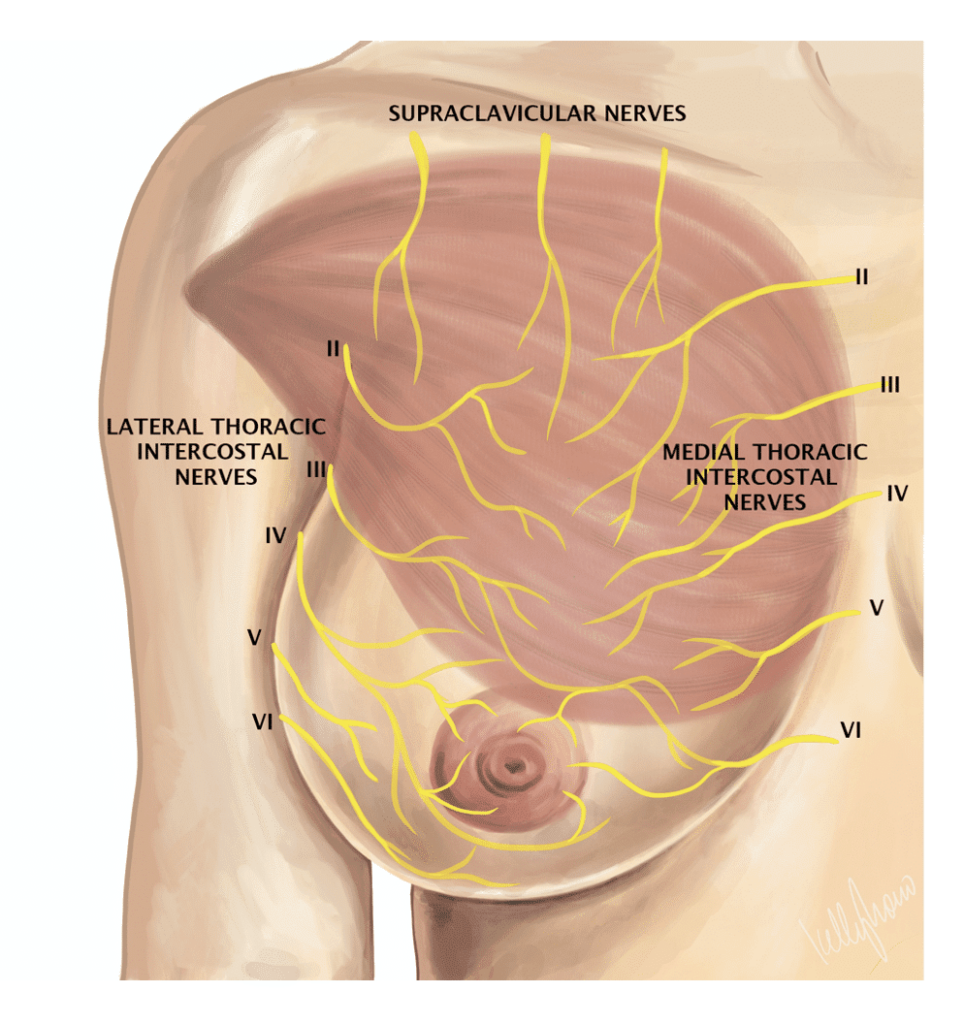
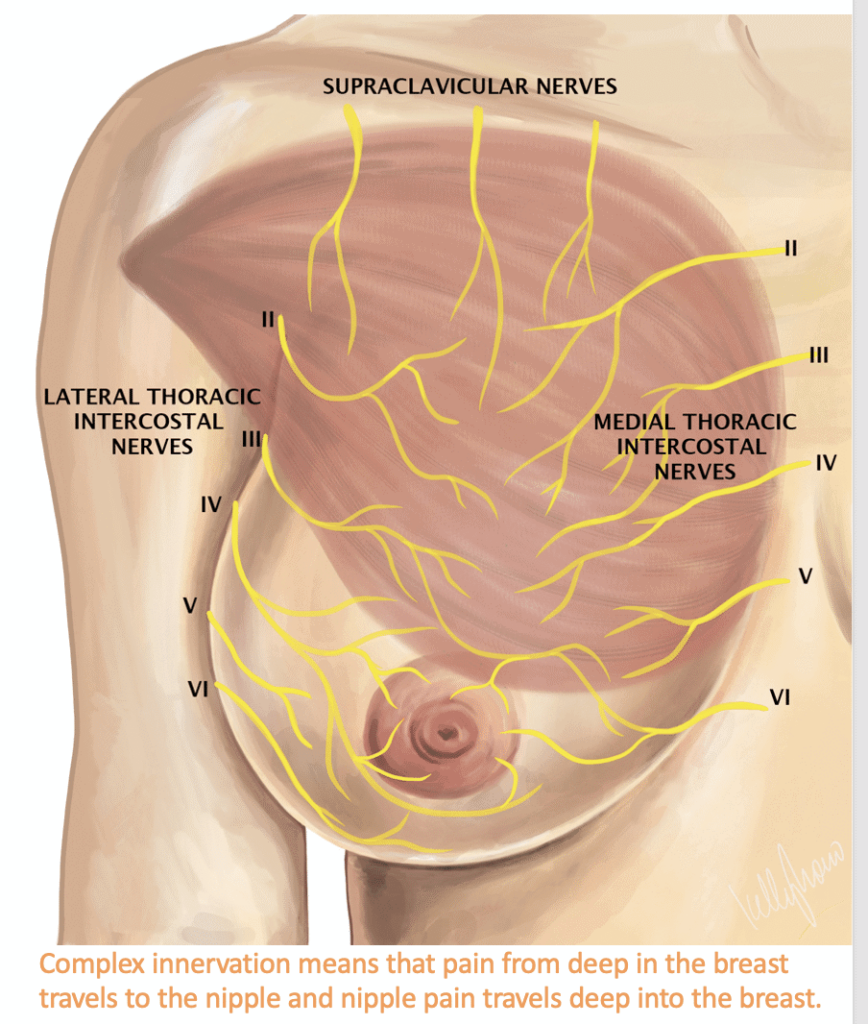
    Because of the complex innervation of the nipple, deeper breast pain may present as nipple pain or vice versa.  If a mom resumes menstruation, she may notice increased breast and/or nipple sensitivity prior to her cycle.  Pregnancy may also produce increased sensitivity.  In general, the most common causes of breast pain are outlined in the box below:

    Diagram of the nerves in the breast

    Wound Care

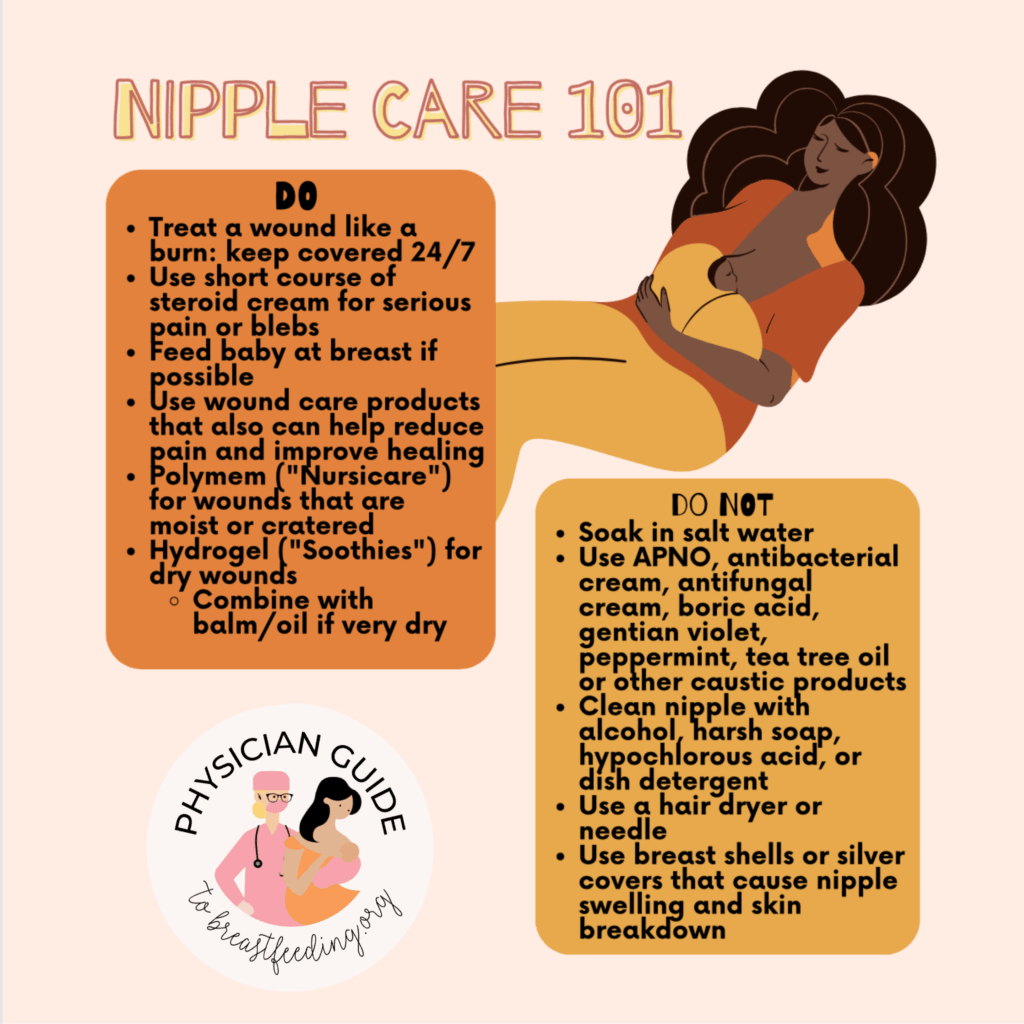
    Surgeons learn wound care from day one of residency.  Treatment and resolution can be quite complicated at times when wounds/injuries become chronic.  However, the goal is to treat early and appropriately to avoid this.  Basics of surgical wound care are listed here:

    Nipple Care 101 Do and Don't Chart

    Trauma most commonly results from early postpartum engorgement, feeding too long from a breast that is producing too little milk, infants clamping to stop heavy flow from oversupply, and improperly fitting flanges or pump on high suction.  Other causes include soaps, oils, ointments, lubricants that can cause dermatitis and subsequent skin breakdown.

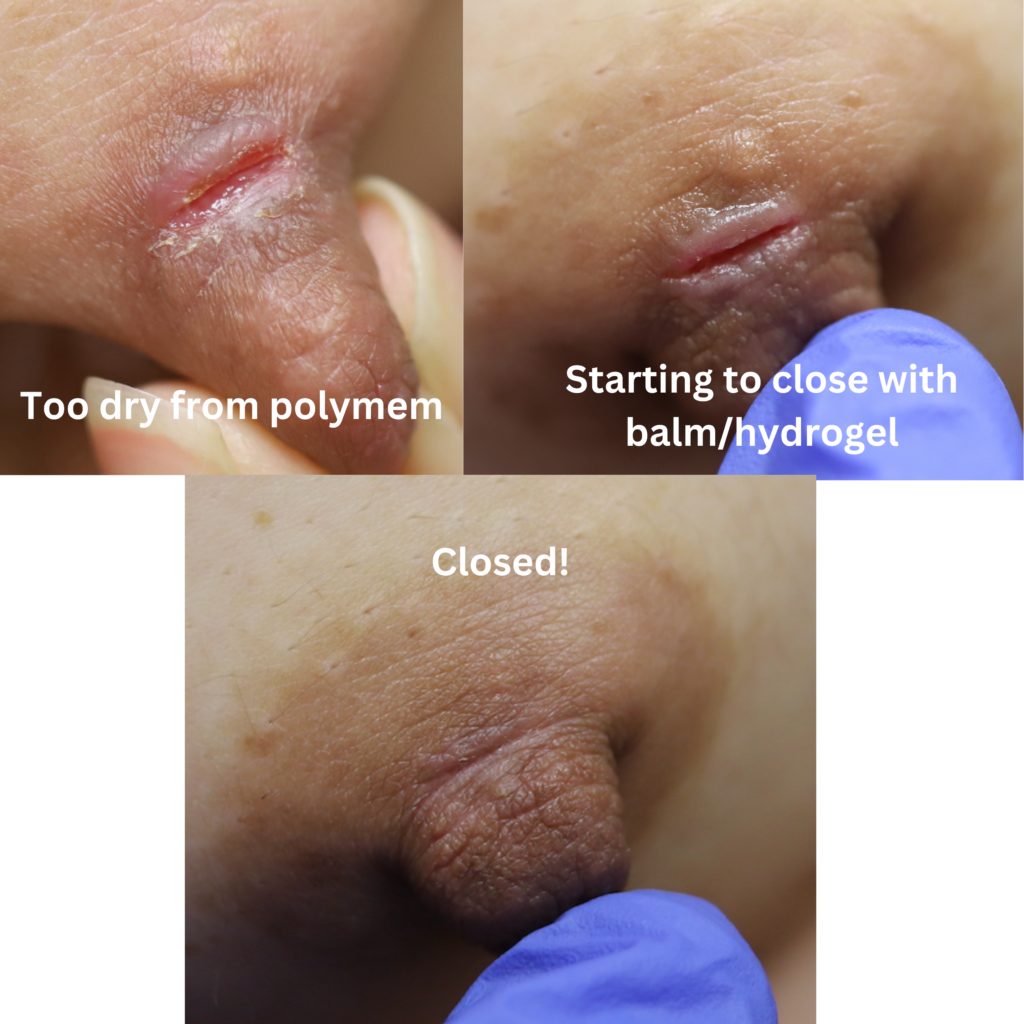
    Nipple wounds should be lubricated and covered to heal effectively, just like burns or other open wounds on the body.  An organic balm coupled with a hydrogel “soothie” pad to “close” the wound can be utilized.  Moms should keep nipples covered both day and night to enable uninterrupted wound healing. 

    Excessive cleansing, whether prenatally or postpartum, can remove natural oils and predispose skin to breakdown.  Care for the nipple like any other surface on your skin. 

    It should be noted that the product insert for hydrogels marketed to the lactation community recommends hydrogels be used without any additional ointment.  However, surgical literature recommends the use of hydrogels as a wound dressing specifically for the reason that it “can easily be combined with various substances that facilitate wound healing and/or have anti-inflammatory properties.”  If a patient has a deep wound or one in an area that the hydrogel won’t contact (e.g. a deep fissure), balm can work synergistically with the hydrogel to provide a moist environment.  

    If you are recommended to strictly follow the lactation product insert, then it would be  preferential to use hydrogel alone rather than nipple balm alone.  Hydrogel has important wound healing technology that facilitates more rapid resolution.


    Normal human wound healing time is 8-10 days after traumatic insult if it’s a simple, superficial (not deep) wound.  Some moms will question how nipple trauma can heal when an infant continues to stimulate the nipple frequently.  The lactating breast and nipple areolar complex are highly vascular and therefore heal well, even in the setting of continued breastfeeding.  In fact, continued breastfeeding promotes healing from the enzymatic action of the infant’s saliva as well as healthy bacterial exchange.

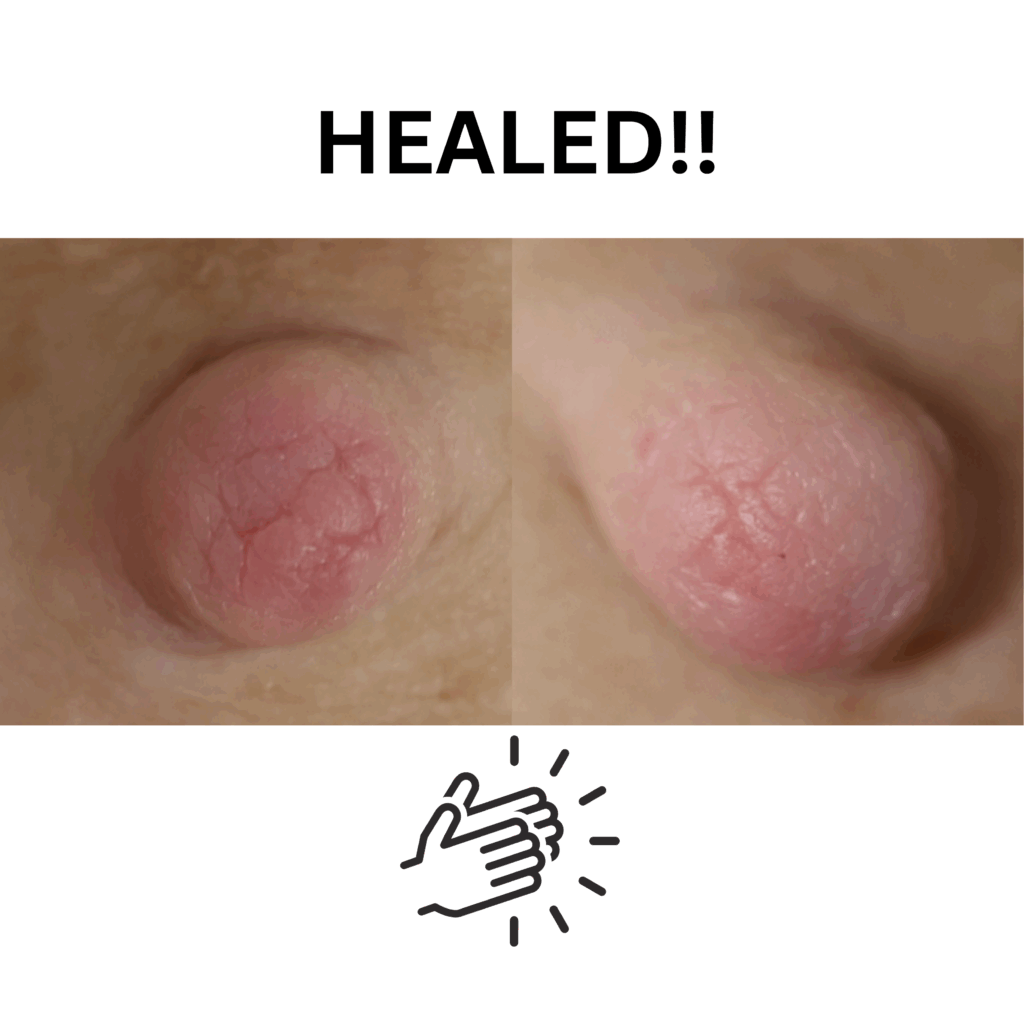
    Below shows an example of healthy wound healing with continued breastfeeding.  This did take longer to heal due to the depth of the tissue loss.

    Wound healing nipple
    Wound healing nipple
    Wound healing nipple
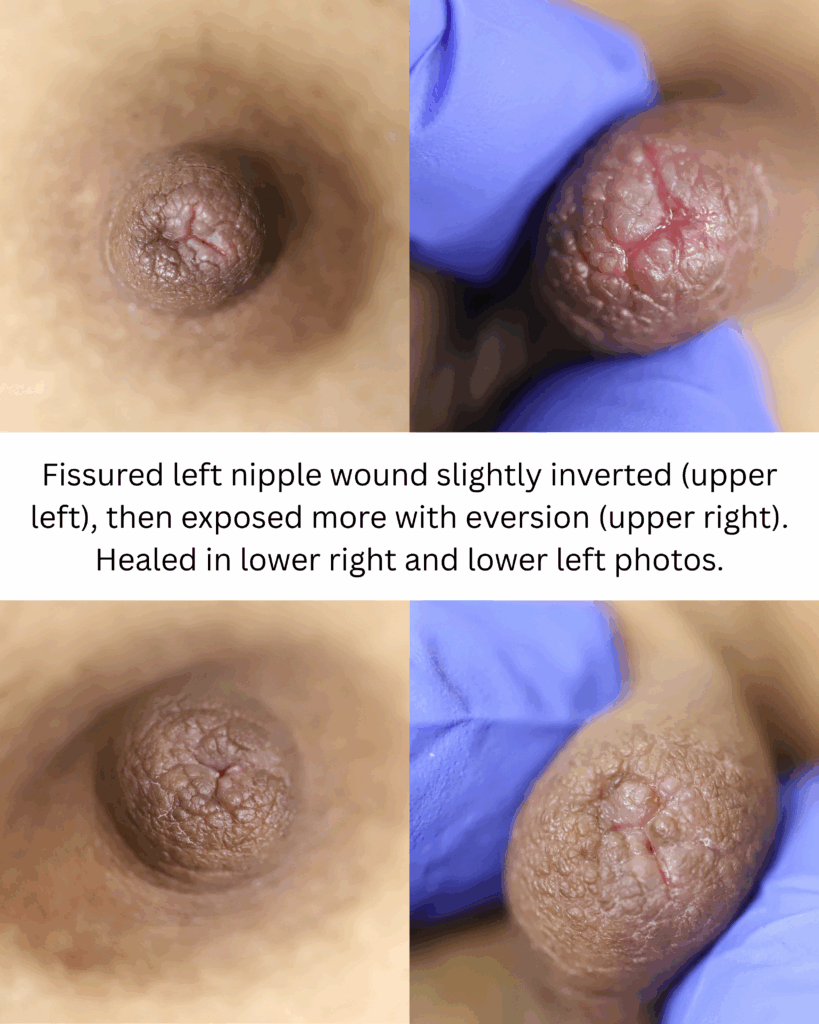
    Nipple fissure that is subtle but very painful
    Nipple fissure that is subtle but very painful. The issue was that it inverted slightly and mom was constantly leaking milk, keeping it open. We tucked in a tiny bit of polymem wic and it closed after two weeks.
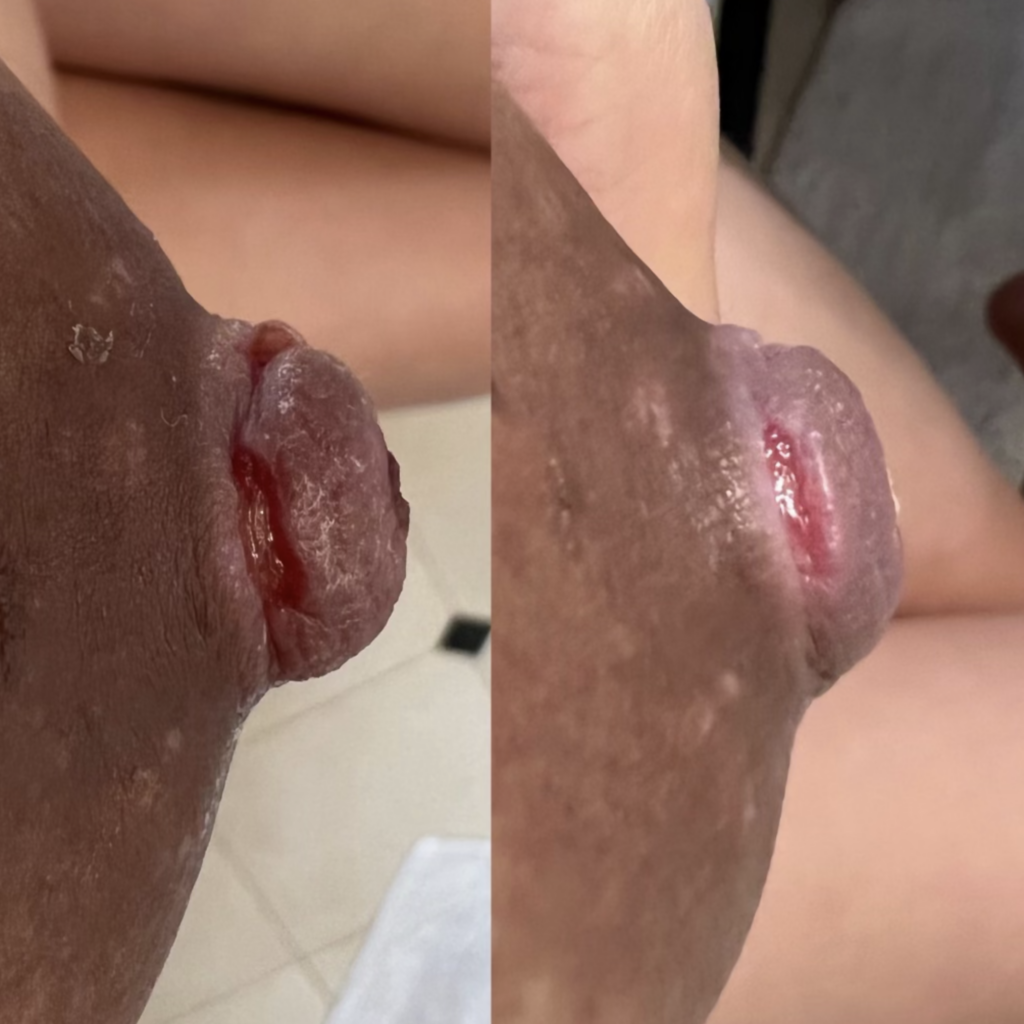
    Wound healing nicely with continued breastfeeding
    This is an example of why continued breastfeeding (with all the appropriate pain control for mom) is important for healing. The left photo demonstrates suction injuries from a pump. The mom began moist, closed wound care with balm and hydrogel and quickly began to close her deep fissures at the base of her nipple with breastfeeding only. Photo credit: Rachel Yang

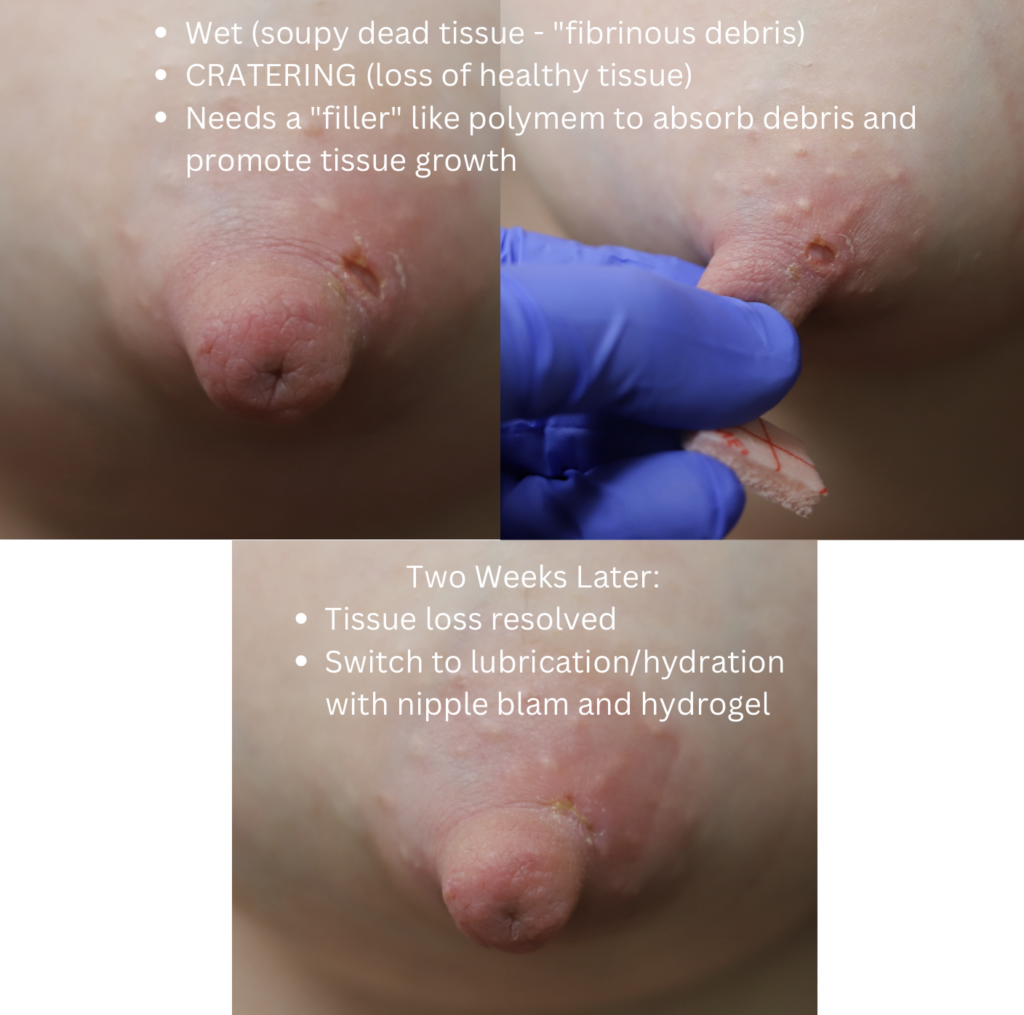
    Significant trauma may result in deeper fissuring with the development of fluid seepage.  Many women and healthcare providers incorrectly believe this fluid to be “infected.”  This seepage is NOT infection. It is something called “fibrinous debris.” Surgeons commonly deal with these types of wounds in different parts of the body. 

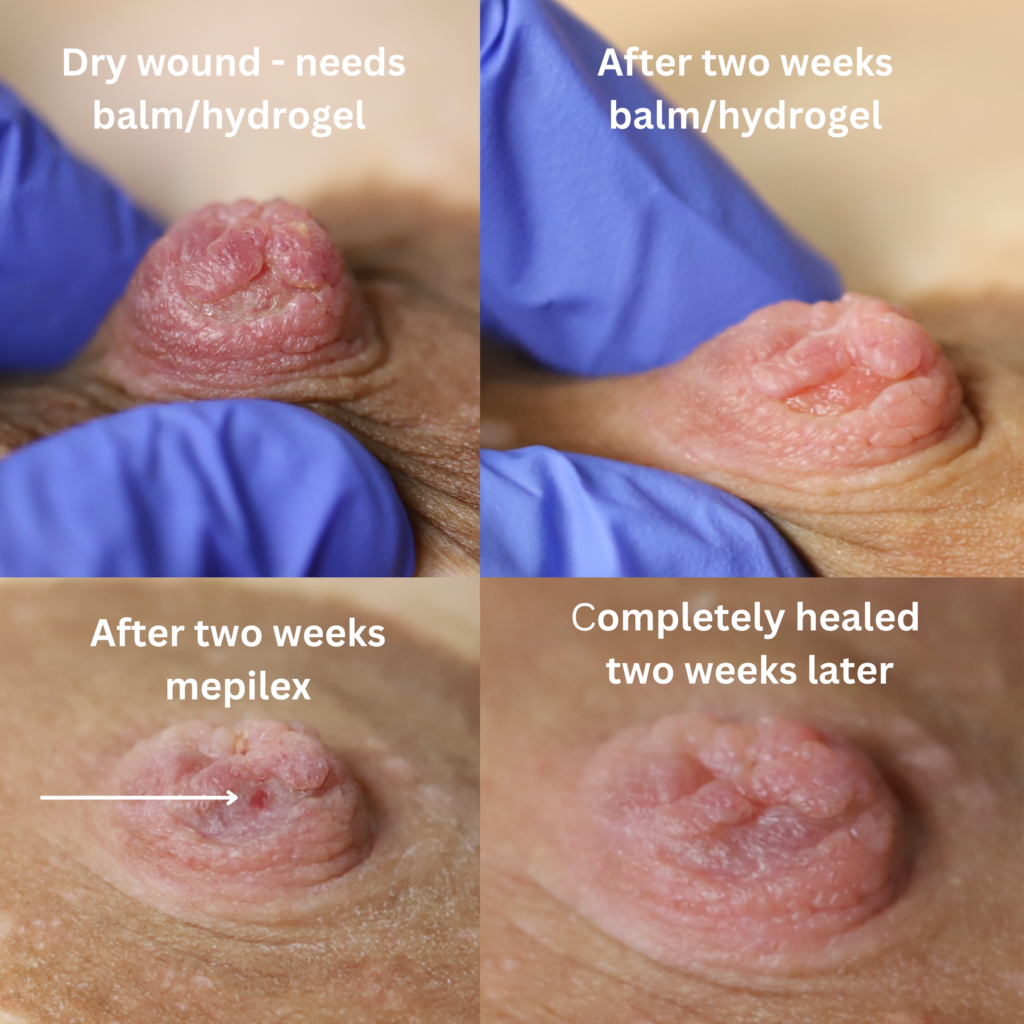
    Wounds with significant seepage may benefit from polyurethane matrix pads (e.g. Nursicare) to provide both closed wound healing and absorptive capacity.  Unlike hydrogel pads, polyurethane pads or mepilex should not be used with balm as the absorptive surface should contact the skin directly.

    Some wounds respond well to medical-grade honey (Medi-Honey), which is irradiated and therefore does not pose risk of botulism to infants who may ingest small amounts. 

    Open wounds should not be closed with suture or surgical glue.  Instead, these wounds should heal following principles of closure by secondary intention. Additionally, surgical glue may pose harm to the breastfeeding infant.

    Fissure left nipple
    Stellate (star-like) fissure central left nipple in mom with profound oversupply, leaking, and a baby overfeeding. This wound was not healing due to the constant exposure to breastmilk (water-based moisture that breaks down the protective layer of the skin).
    fissure left nipple
    Constant moisture seen here as well.
    polymem wic
    polymem wic
    Improvement at one week!
    polymem wic
    Complete healing two weeks later.
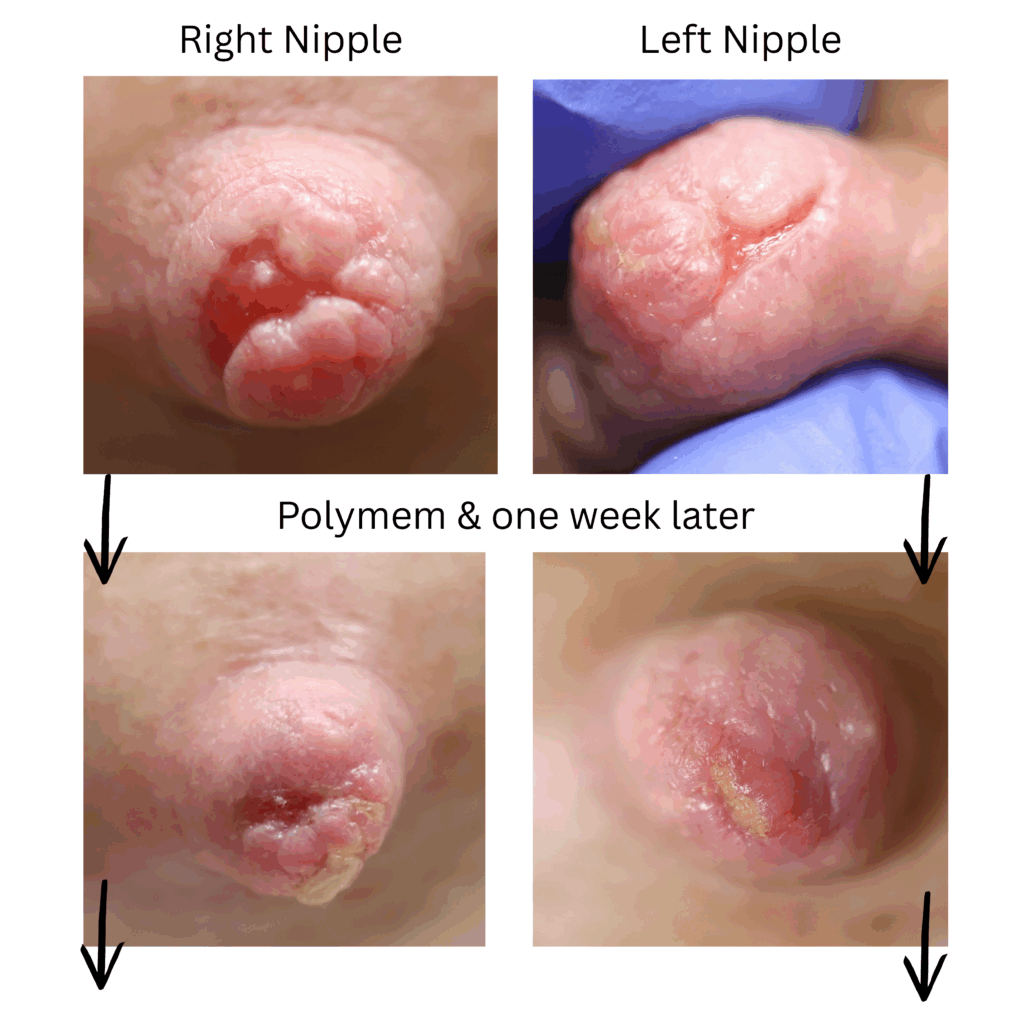
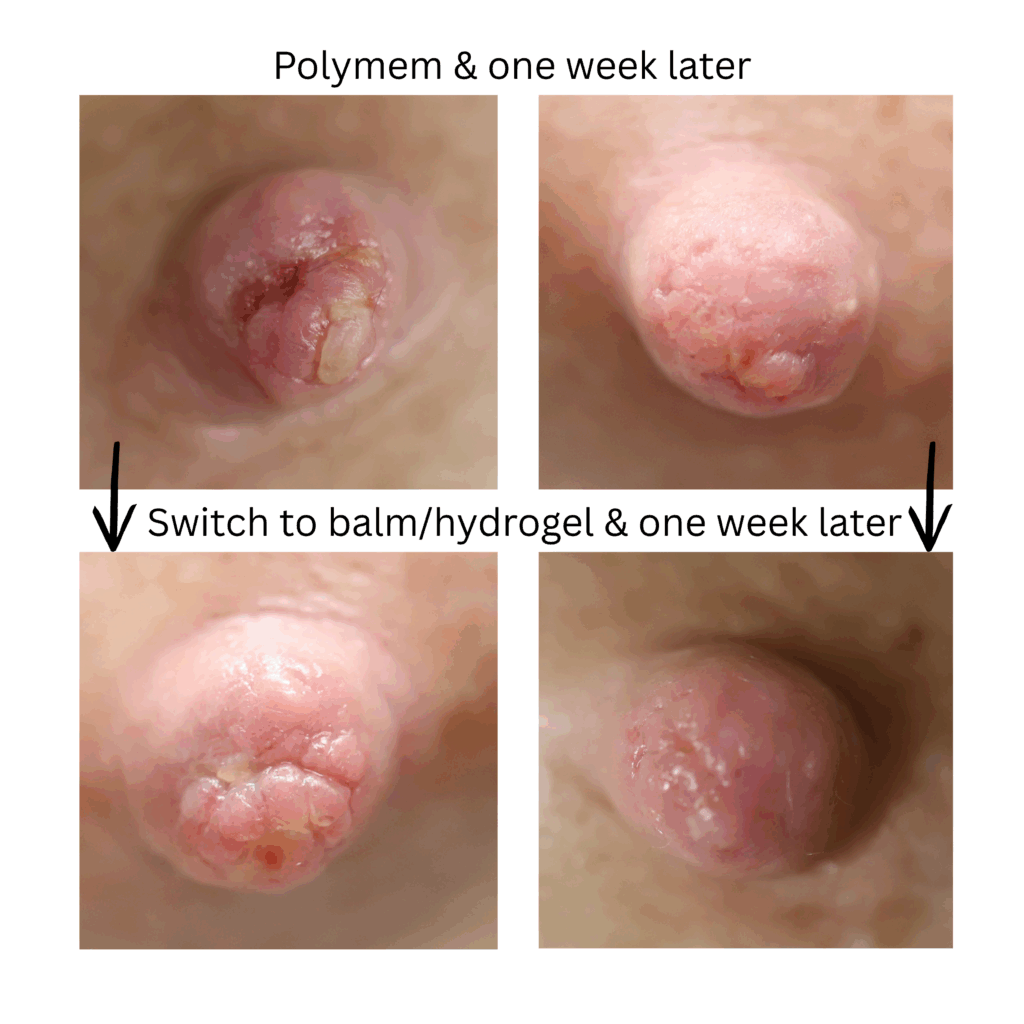
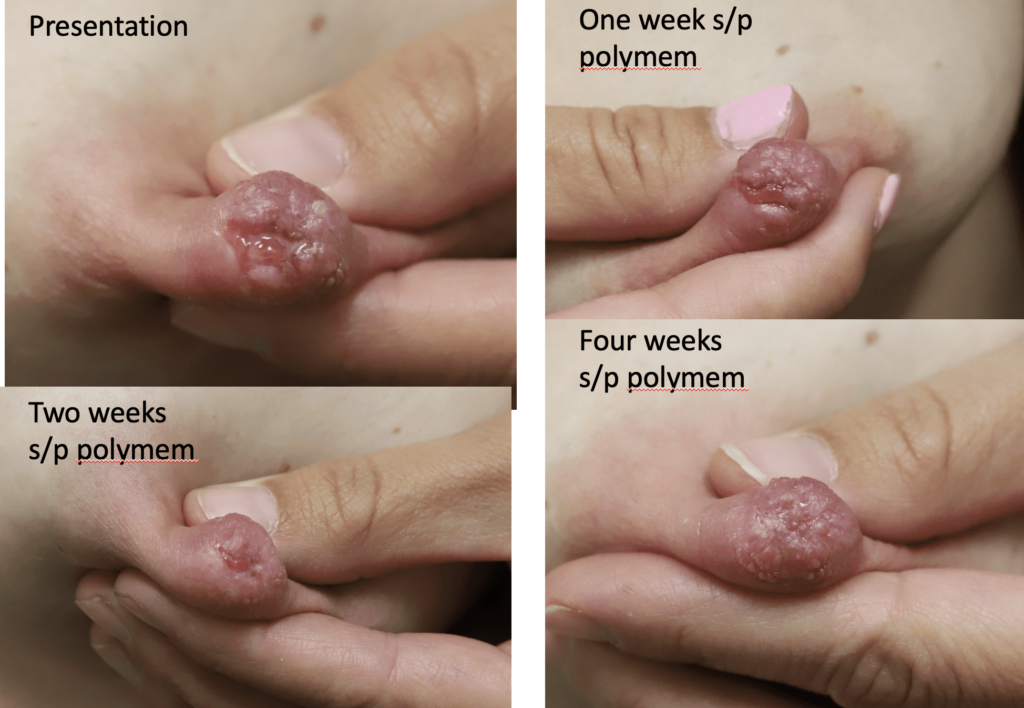
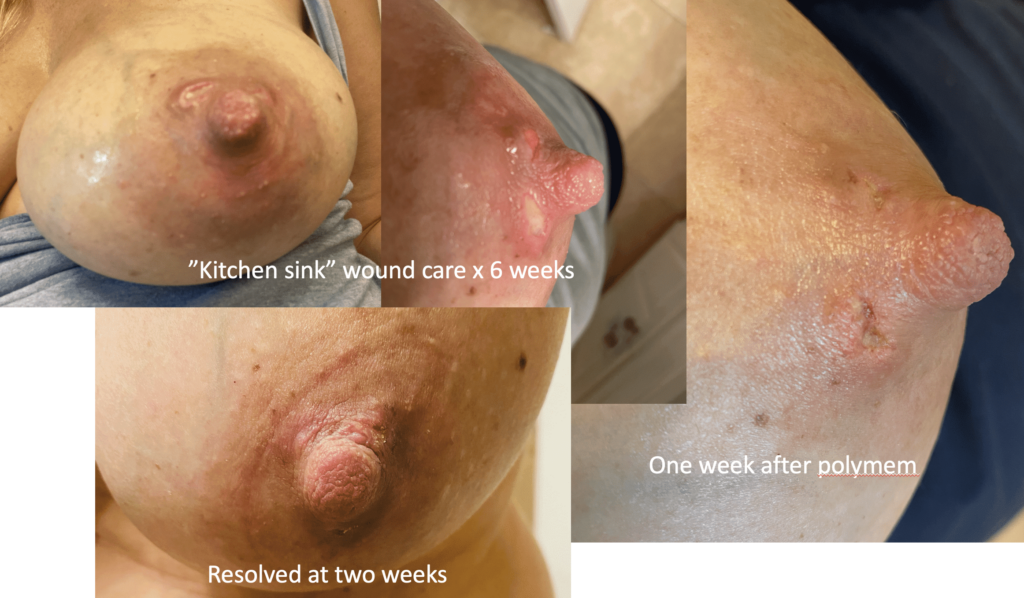
    Progression from open wound in nipple to 4 weeks after being treated with polymem
    Progression from open wound in nipple to 4 weeks after being treated with polymem
    Too dry from polymem
    Toddler bite wound healing over two months: these paper cut wounds can take a long time to heal once they have become cratered (it can be difficult to get healing material to touch the wound itself and then the wound is repeatedly re-traumatized by toddler teeth). However, do NOT pump (which will cause further trauma and is not necessary for toddler feeding). Patience and pain control are the keys.
    Nipple wound care
    polymen, kitchen sink wound care
    Nipple wound care
    Example of different wound care techniques for the same wound at different stages of healing.
    areola wound
    Fissured wound on areola from pump flange - pumping too long and too high of suction with digging in at base of nipple. Fissure is very superficial (not deep) so using balm/hydrogel to heal it.
    macerated nipples debris not staph
    This is a nipple with "fibrinous debris" (dead tissue) on it. Debris can appear more liquid-like or more like dead/dried tissue. This is NOT infection. It needs some moisture (balm/hydrogel) to help encourage this to slough.
    left nipple needs hydrogel not polymem
    Similarly, this nipple needs moisture/lubrication to heal.
    Granulation tissue left nipple
    In some unusual circumstances, a chronic wound forms something called "hypertrophic granulation tissue" (as seen in image above).  This is a result of the skin/immune system getting a little over-excited in its efforts to heal.  You actually need to "calm down" this tissue to enable adequate healing, or it will just continue to get bigger/more "heaped up" and overgrow its borders.  This nipple started treatment with silver nitrate (right). Silver nitrate is EXTREMELY painful and should only be used in very unusual circumstances like this with a medical professional.
    Silver nitrate granulation tissue
    Silver nitrate applied to granulation tissue.
    Nipple healed after silver nitrate
    We initially applied silver nitrate every 3-4 days to reduce the hypertrophic granulation tissue. It started to shrink (the red hypertrophic tissue reduced in size). We increased to every other day and it finally healed at one month. This image demonstrates the remarkable ability of the human body to heal wounds beautifully if cared for appropriately.

    The six images below show how hard it can be to heal a chronic wound in a patient with nipple inversions, because it is hard to get the polymem or hydrogel to approximate the tissue that needs help.  We also tried medihoney, regular balm, and a fancy new wound care product that we use in the OR that is extremely expensive but the rep gave me as a sample.  That unfortunately also didn’t work.  🙁

    This patient also had hyperlactation and was constantly flooded with breastmilk (high water content – hard for healing) in her inversion.  The top two photos show the appearance of the inverted nipple (top left) and partially everted (top right).  Middle left is the cratered wound early on, and middle right is the wound trying to heal itself but demonstrating hypertrophic granulation tissue (look how the beefy red is fatter/beefier and more elevated compared to the middle left).  

    We did use silver nitrate and started to close the wound (bottom left) and it finally healed itself (bottom right).

    nipple inverted
    nipple inverted not seeing wound
    cratered nipple wound
    nipple wound healing a bit
    nipple wound better
    nipple wound healed

    Now for some additional guidelines about things to avoid!

    • Do not use drying agents such as antiseptics and alcohol.
    • Gentian violet can produce significant tissue ulceration and should never be used on a nipple.
    • Some women may lubricate dry skin with nursing balms.  They should be aware of potentially allergenic ingredients such as lanolin, petroleum, and coconut. 
    • Balms containing multiple ingredients may result in dermatitis from allergens. 
    • Antifungals creams worsen pain and vasospasm, and can cause dermatitis and ulcerate skin. They are not indicated for use on nipples.

    Nystatin fissure Nipple fissuring that began after a mom used nystatin continuously on her nipple.

    • APNO (All Purpose Nipple Ointment) is an expensive compounded product that should be avoided. It contains an antifungal, antibacterial (which is similar to antifungals in that it is not indicated for use on a nipple and can cause dermatitis), and a steroid. The steroid is the component that provides relief from pain. If a steroid is indicated, it should be prescribed separately (e.g. 0.1% triamcinolone). Most dermatitis and pain do not respond to over-the-counter non-prescription strength steroids. 4th Trimester Physician Michelle Haggerty has a great blog post on the dangers of APNO as well.
    • Breast shells designed to “keep the nipple dry” or “protect the nipple from the bra” worsen swelling in the nipple, cause areola compression, and subsequently worsen pain
    Silver shell bathing the nipple in milk and sweat and breaking down the skin (the white on the nipple is "macerated" - broken down - skin). It's NOT yeast!
    Silver shell bathing the nipple in milk and sweat and breaking down the skin (the white on the nipple is "macerated" - broken down - skin). It's NOT yeast! Photo credit: Caoimhe Whelan.
    Patient who utilized a nipple shell for nipple pain. The shell worsened her pain by causing additional swelling in the nipple and constricting the areola.
    Patient who utilized a nipple shell for nipple pain. The shell worsened her pain by causing additional swelling in the nipple and constricting the areola.
    silverette nipple edema right breast
    Patient who used silver saucers and developed swelling of nipple and grooving in her areola.
    Silverette damage
    Patient with classic neuropathic pain (shooting, burning, electric shocks and any light touch of her nipple -- shower water, clothes, even the exam room gown - cause excruciating pain) using silverettes to try to prevent her nipple from touching anything. Unfortunately, the silverette was macerating (breaking down the top layer of skin by bathing it in breastmilk - high water content when the skin needs high oil content to keep its acid mantle protective barrier in place). Stopped silverettes, used hydrogel for comfort, and started SSRI (escitalopram) to desensitize nipples.
    Silverettes
    Nipple and some of nipple base dried, flaking, and fissuring from being constantly bathed in leaking breastmilk. When a silverette is first removed, the nipple skin can look moist and macerated as above. But as it dries out, it becomes crusty and fissured. Note comparison skin of healthy areola that hasn't been trapped by the silverette.
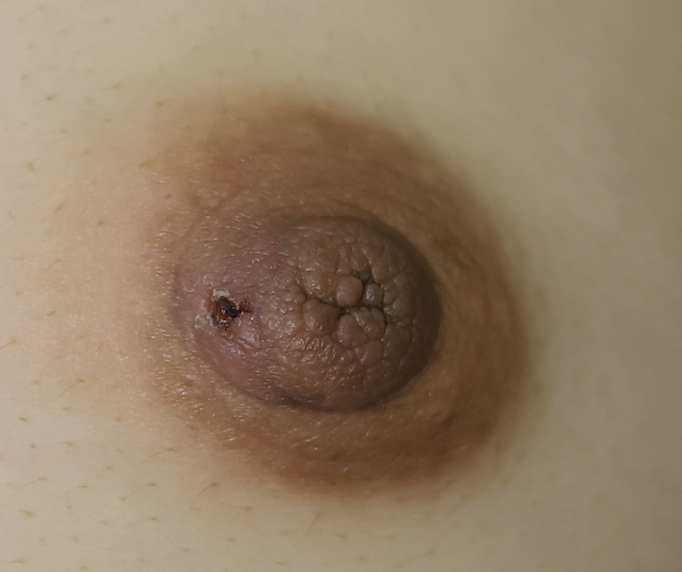
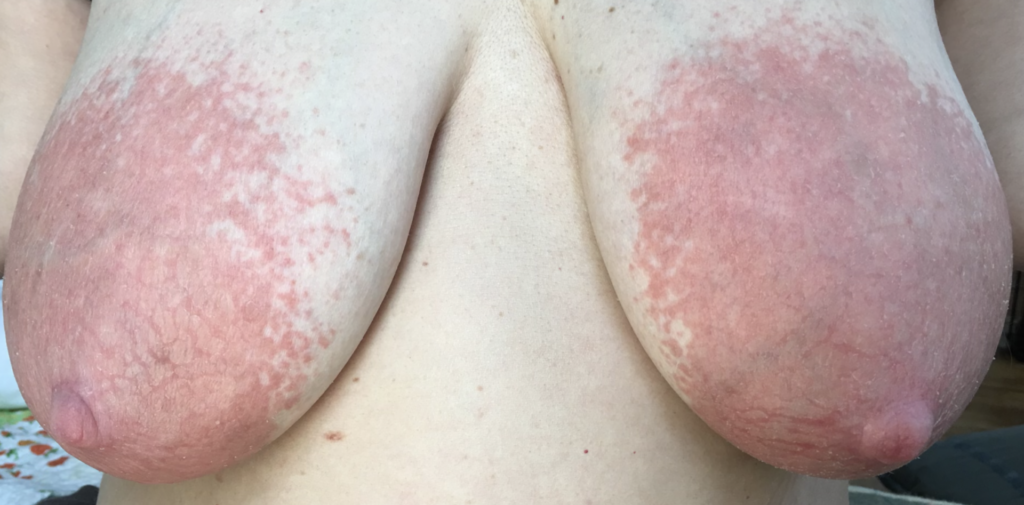
    Silverette
    silverette ring scaled e1666385311949
    This mom had both a pressure ring and underlying skin breakdown from constantly being bathed in breastmilk and sweat without any oil-based lubrication.
    Screenshot 2024 06 02 at 8.06.52 AM
    Frequent use of a haaka can produce chronic nipple swelling and moisture, as well as the tell-tale suction imprint surrounding the nipple areolar complex.
    bruising from haaka
    Bruising from haaka suction.
    • Using a hair dryer on nipples causes drying and increases risk of skin breakdown.
    • Epsom salt soaks are used to promote opening and drainage of skin, such as with abscesses in the buttock region.  Epsom salt soaks will similarly break down nipple skin and should not be utilized for the purposes of nipple care. 
    • Wet tea bags and warm compresses similarly increase the risk of skin breakdown.  
    • Pumping to “rest” the nipple in settings of pain and/or trauma/wound brings with it a new set of complications:  Pumping is rigid and mechanical with fixed suction (i.e. not “physiologic” like a baby’s mouth with constant variation in position and pressure), it does not allow a baby to use its saliva to help heal wounds, patients can develop new problems with suction blisters, blebs, and reduced blood flow to the nipple, and it may stimulate over or underproduction of milk.  A baby may not want to return to the breast.  It is much better to treat the nipple pain with topical (e.g. steroid cream) and/or oral pain medication than to introduce a pump.


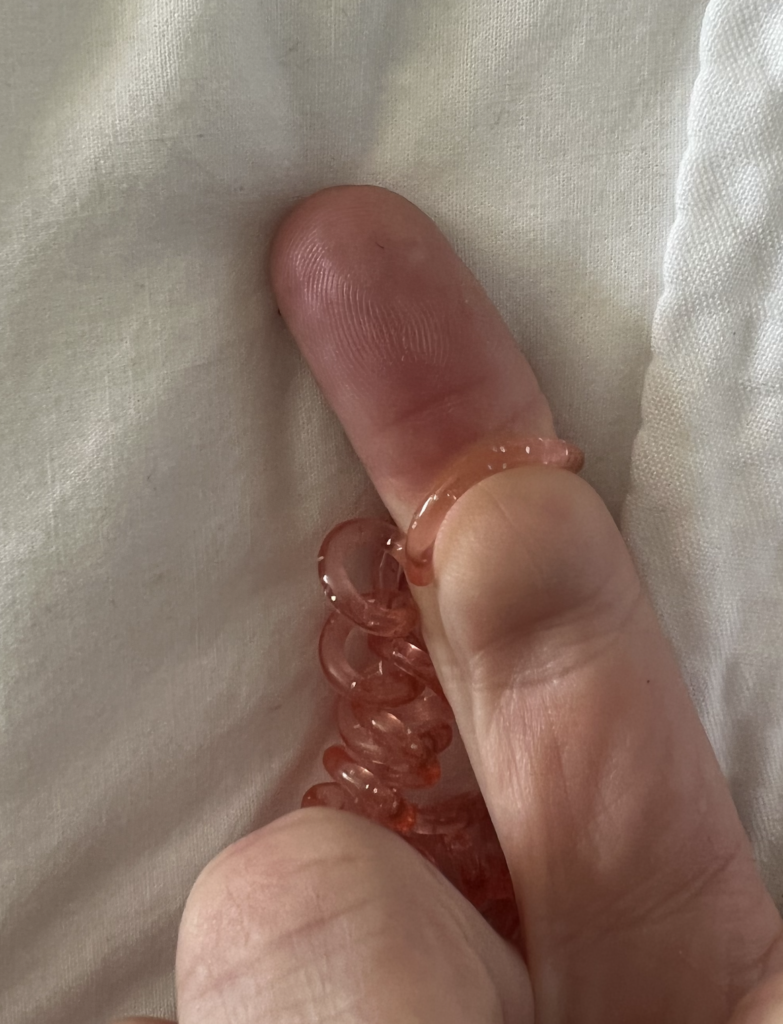
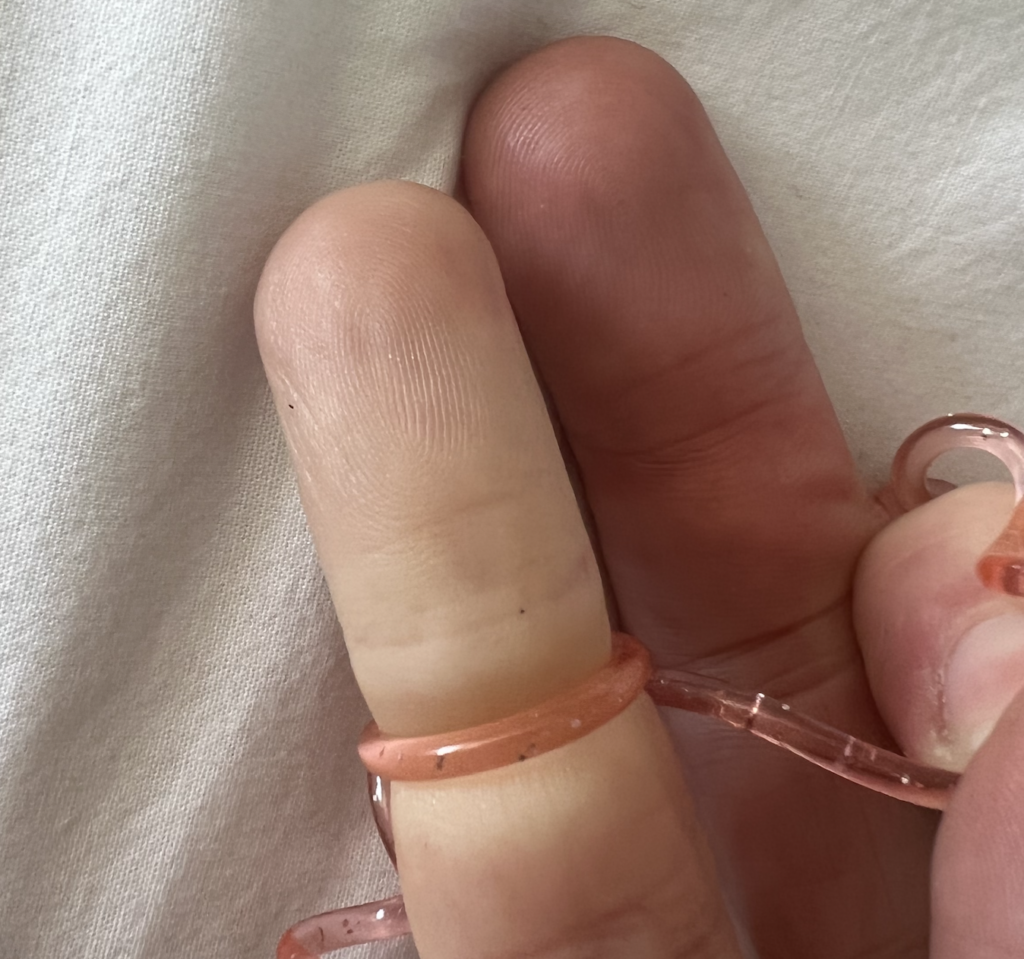
    A pump, unlike an infant, has the unique ability to strangulate (literally like putting a rubber band around your finger and tightening it — then adding suction pressure on top) your nipple.  I use this example when talking to patients about what happens when you use too small of a flange, too high of suction, or pump for too long a duration of time:  Your nipple, just like a fingertip, is going to turn varying shades of red, purple, and white when it doesn’t have enough blood flow.  If it hurts, STOP!  

    If absolutely necessary, hand expression may represent the most efficacious solution to resting painful nipples.

    Finger ischemia with pumping
    Loss of blood flow to finger like a pump does
    nipple with chronic ischemia from small flanges
    Nipple with chronic blood flow changes and discoloration from very small pump flange.
    Suction trauma from pump
    Pumping is not the answer to treating nipple pain and trauma/injury. It can add more problems to the mix, as demonstrated here in blistering from high suction and too small of a flange restricting blood flow to the nipple base. Photo credit: Rachel Yang
    Blood blisters from high suction and small flange
    Blood blisters from high suction and small flange. Photo credit: Rachel Yang
    Blistering with very large nipples using a very small flange.
    Blistering with very large nipples using a very small flange. Photo credit: Rachel Yang
    Blistering with very large nipples using a very small flange.
    Damage from pump with blistering from exclusive pumping.
    Damage from pump with blistering from exclusive pumping.
    Damage from pump with blistering from exclusive pumping.
    Patient with bilateral nipple trauma from coconut oil and high pump suction.
    Patient with bilateral nipple trauma from coconut oil and high pump suction.
    Suction trauma from pumping
    Pump suction trauma right nipple.
    Pump suction trauma left nipple
    Pump suction trauma left nipple.
    nipple blood blisters
    Blood blisters in EP pumping > 30 mins ... to keep nipples healthy, need to pump no more than 15 to 20 max! Better to pump more frequently than longer duration.
    nipple blood blister
    Patient with “plug” instructed to pump frequently, and subsequently developed abscess involving entire areola.
    Patient with “plug” instructed to pump frequently, and subsequently developed abscess involving entire areola.
    Blood blister from pumping
    Blood blister from small flange.
    Early pump trauma with ischemia (red band) but not yet progressed to skin breakdown.
    Early pump trauma with ischemia (red band) but not yet progressed to skin breakdown.
    Pump trauma forming granulation tissue on the surface of the nipple.
    Pump trauma forming granulation tissue on the surface of the nipple.
    Patient with pump trauma placed on antifungal medication topically and by mouth. Resolved when moist, closed wound healing initiated.
    Patient with pump trauma placed on antifungal medication topically and by mouth. Resolved when moist, closed wound healing initiated.
    Nipple fissure
    Nipple fissure at 11-12:00 position needs balm and hydrogel to prevent it from worsening.
    Right areola pump injury
    Patient with history of breast augmentation and lift via lollipop incision with pump trauma skin breakdown at the 6:00 position of the areola (at a previous incision line).

    Just say “NO” to nipple shields.  Patients with pain also may be recommended to use nipple shields. Nipple shields are associated with multiple complications, including mastitis, plugging, and significant reductions in milk production and transfer.  Many mothers have difficulty weaning infants off the nipple shield once it has been used regularly.

    Given these known complications, the breastfeeding dyad should undergo a thorough evaluation prior to introduction of a nipple shield. 


    Very large nipples necessitate exclusive pumping until baby is larger and able to latch to deeper breast tissue.
    Very large nipples necessitate exclusive pumping until baby is larger and able to latch to deeper breast tissue.

    Often, nipple shields are introduced when a small infant struggles to latch to a larger, pendulous breast and causes pain.  This may instead simply require adjustment of a position that is more amenable to feeding with large breasts, such as the laidback or side lying position. 

    Infants also may refuse to latch when the flow of milk is very high; adjusting position and treating hyperlactation can address this issue without introducing nipple shields.  In other situations, very large nipples as shown in this image to the right preclude any sort of latch due to size and this is a situation in which mom should express breastmilk via a pump.


    Persistent pain may be neuropathic (nerve level – no overt physical injury).


    The SSRI class of drugs can provide significant relief of pain as serotonin receptors are expressed in many parts of the body, including the breast and intestinal tract.

    Paget's Disease

    Paget’s disease presents most commonly in older postmenopausal women and comprises 0.5-5% of all breast cancer.  While it is important to refer any woman with a concerning finding to a breast surgeon for evaluation, this disease is extremely uncommon in younger lactating women.  “Pagetoid” changes must start with the nipple and spread outward toward the areola over the course of many years.  In contrast, dermatitis (allergy or eczema), occurs very frequently in breastfeeding women and starts on the areola or breast skin.  Dermatitis rarely involves the nipple.

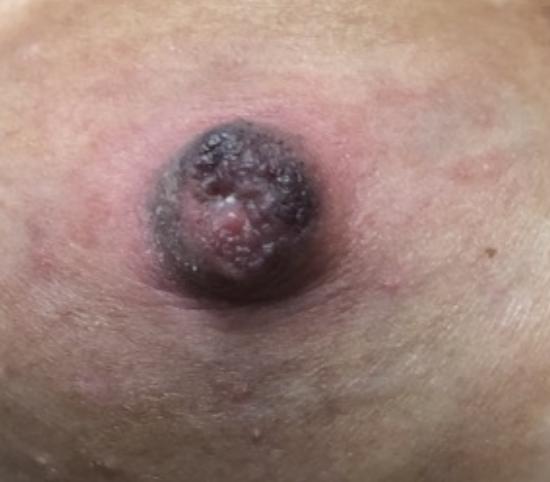
    Chronic Pagetoid changes with destruction of nipple.
    Chronic Pagetoid changes with destruction of nipple.
    Chronic Pagetoid changes with destruction of nipple.
    Chronic Pagetoid changes with near complete erosion of the nipple and areola. Patient had a previous history of breast reduction with Wise pattern closure incisions visible.
    Paget's disease right nipple
    Patient with history of right breast cancer treated with a nipple sparing mastectomy who presented with new nipple changes and biopsy showed Pagetoid cells and recurrence of her cancer. Normal nipple of left breast is shown in comparison in photo to right.
    Paget's disease right nipple
    Paget's
    Left nipple Paget's disease after about one year of progressive changes with redness and morphology.
    Male paget's disease
    Paget's disease in male patient.

    Psoriasis

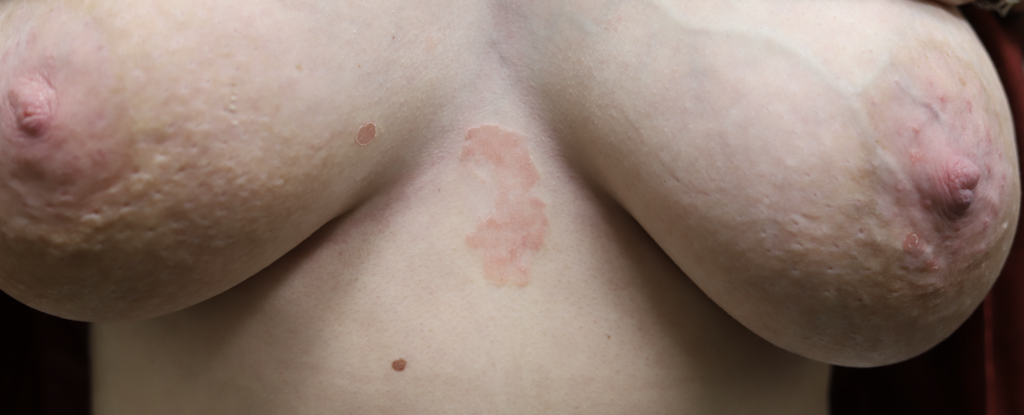
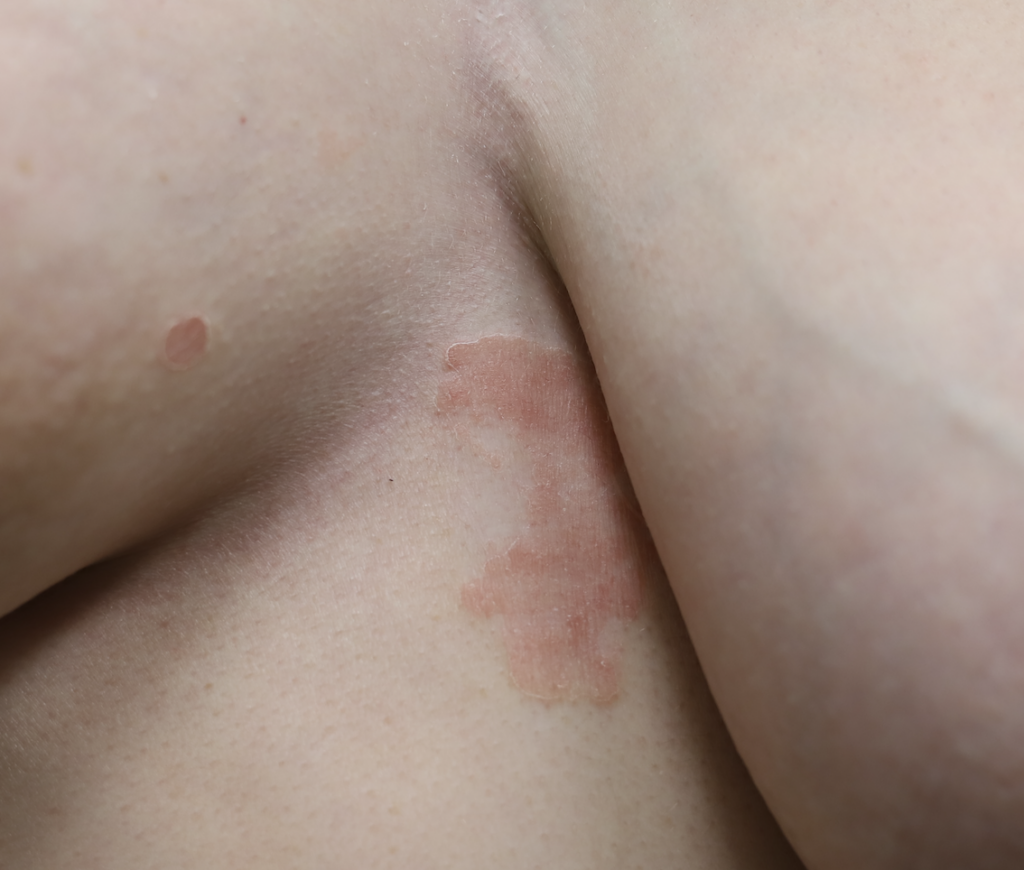
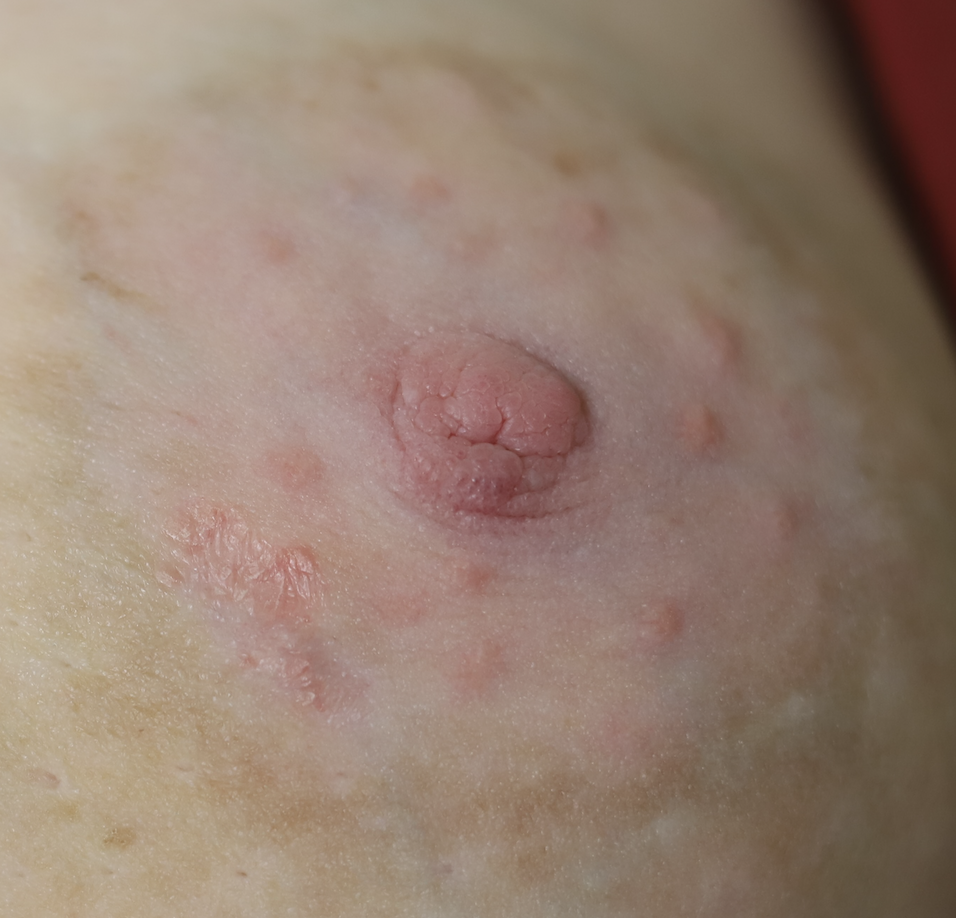
    Lactation may provoke a psoriatic flare in women with a history of this autoimmune condition, possibly due to skin irritation or microtrauma from breastfeeding.  It is extremely uncommon for psoriasis to occur only on the nipple areolar complex, and most commonly occurs on breast skin or the inframammary fold tissue underneath the breasts. Treatment options include topical steroids, ultraviolet phototherapy, immunomodulators, and biologic agents; however, methotrexate is not recommended in lactation.

    Right breast psoriasis koebernization
    Right breast psoriasis. Note that the nipple areolar complex is not affected.
    Psoriasis areola
    Psoriatic plaque that developed on right areola after pump trauma (psoriasis forming in an area of traumatized tissue is called "koebernization"). The patient also had scalp psoriasis and a small patch on her knee.
    Psoriasis and nipple bleb
    The patient came back to me for a right nipple bleb (above left at 7:00 nipple face) and you can see how her psoriasis had changed pattern on the right areola. She also had developed some plaque on the left areola as well (above right).
    Psoriasis left nipple
    Psoriasis
    Psoriasis flare on sternum, inframammary fold, and abdomen postpartum after a respite during pregnancy.
    Psoriasis
    Classic silver scales.
    Psoriasis
    Psoriasis
    psoriasis areola
    Psoriasis left areola.
    Psoriasis right areola and upper breast
    Psoriasis right areola and upper breast.
    Psoriasis breast
    Psoriasis with classic silver scaly plaque.
    psoriasis silver plaque
    Psoriasis also affecting abdomen and back
    Psoriasis also affecting abdomen and back.
    Psoriasis also affecting abdomen and back
    Psoriasis
    Psoriasis midline at inferior aspect of sternum/xiphoid, left areola at 7:00, and right breast at 3:00. This patient also had bilateral chronic dependent lymphedema with pitting and skin color changes to slightly brownish.
    Psoriasis
    Psoriasis midline and right breast 3:00 just lateral to sternum.
    psoriasis
    Psoriasis left areola at 7-8:00, classic scaly plaque.

    Skin Tags

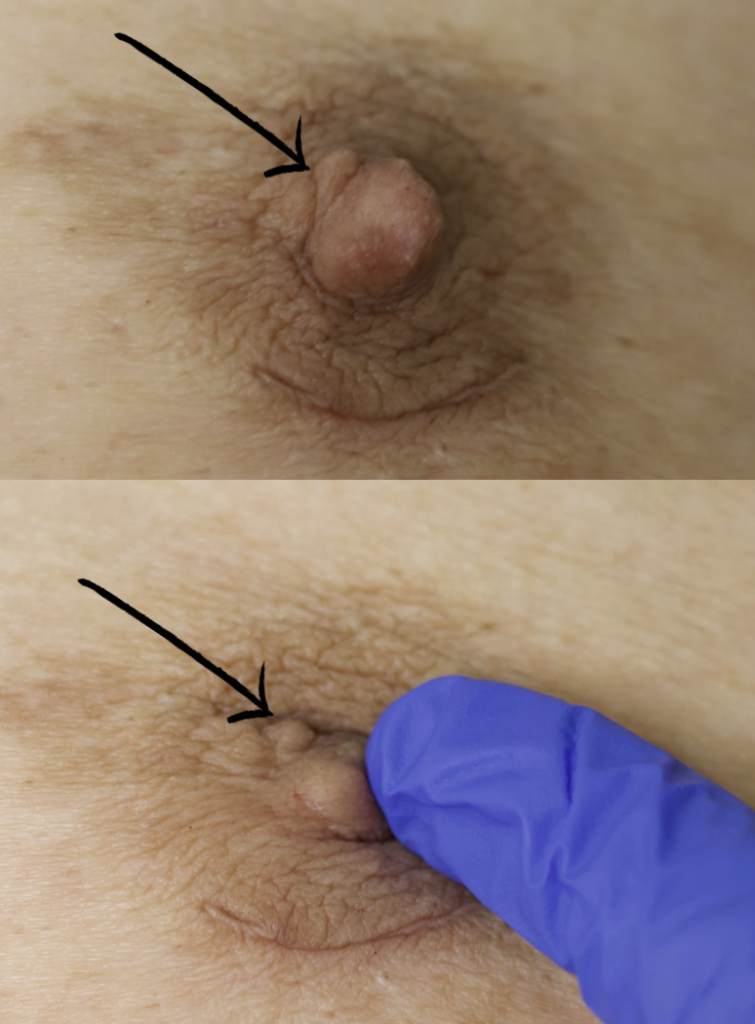
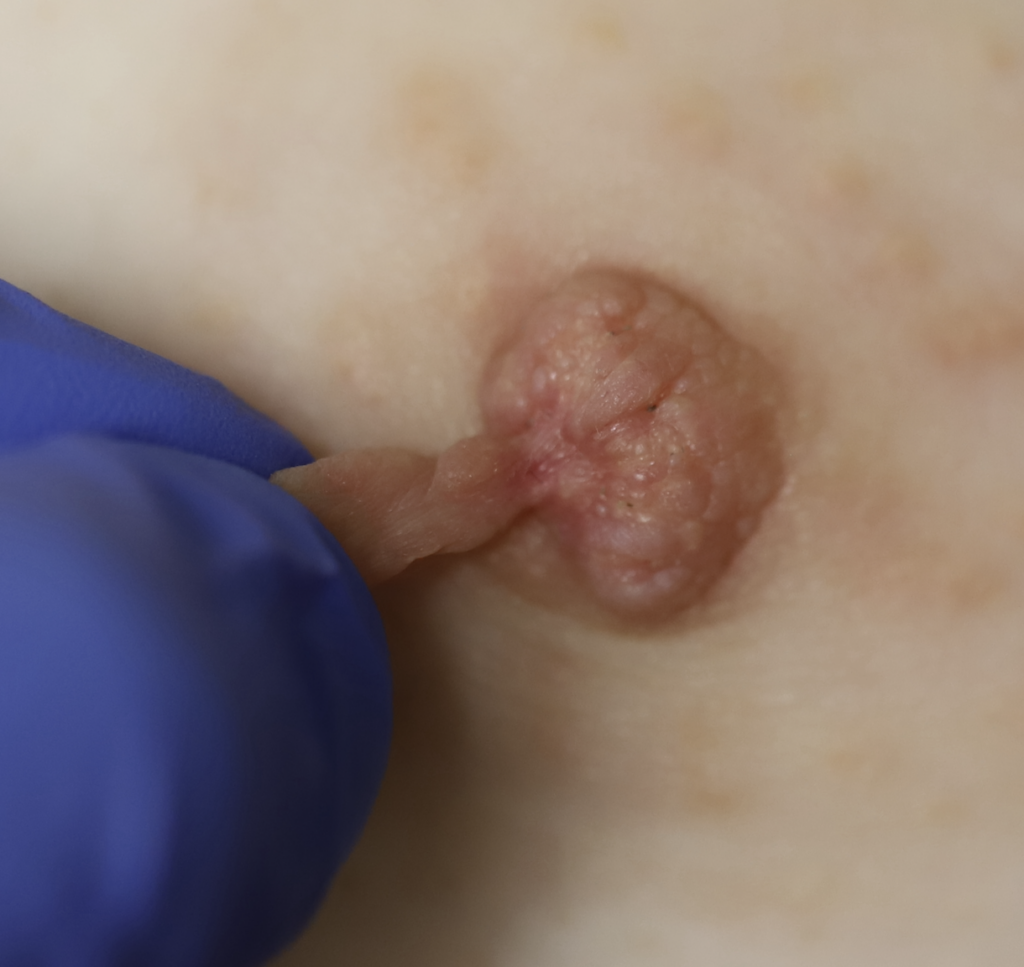
    Skin tags (squamous papillomas) occurring on the nipple areolar complex may enlarge with pregnancy and present an issue with postpartum latch.  If concerning, they can be excised under local anesthesia during pregnancy.  A non-absorbable suture should be used to reduce tissue reaction and scarring, and a surgical glue may be utilized for smaller lesions that do not necessitate formal closure with suture.

    Patient with pedunculated (lesion had “stalk”) nipple growth that showed squamous papilloma on pathology.
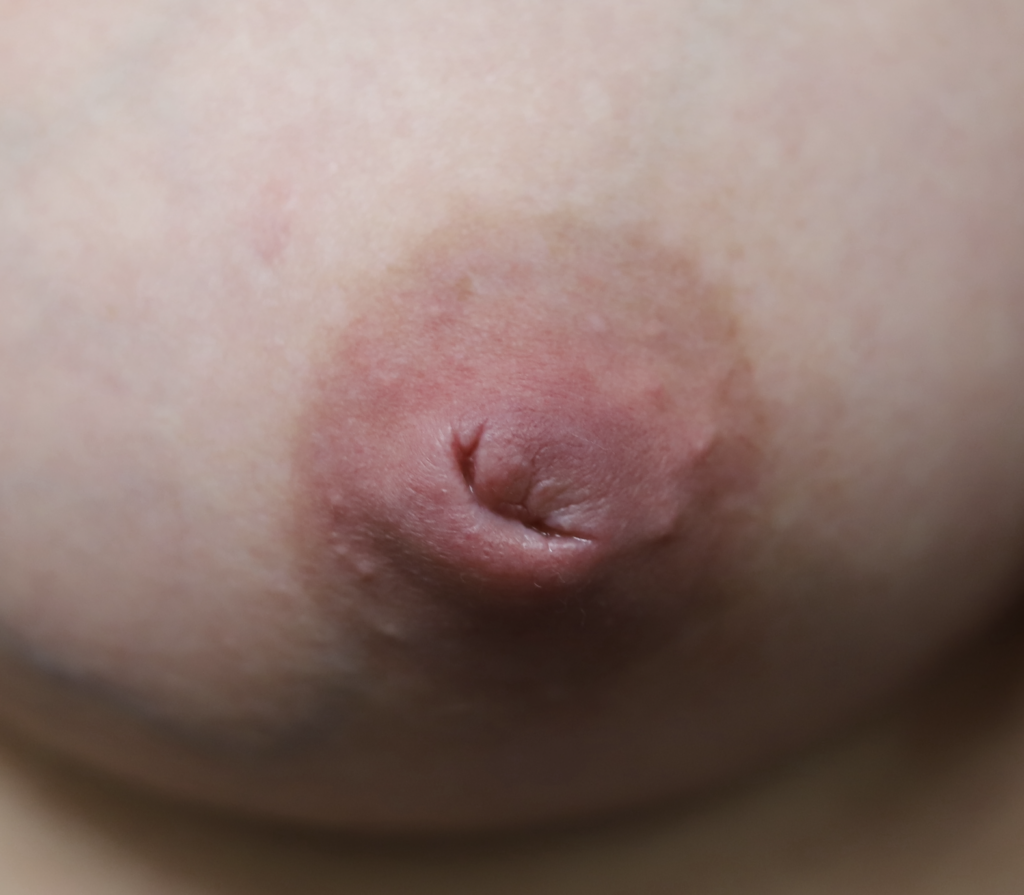
    Patient with pedunculated (lesion had “stalk”) nipple growth that showed squamous papilloma on pathology.
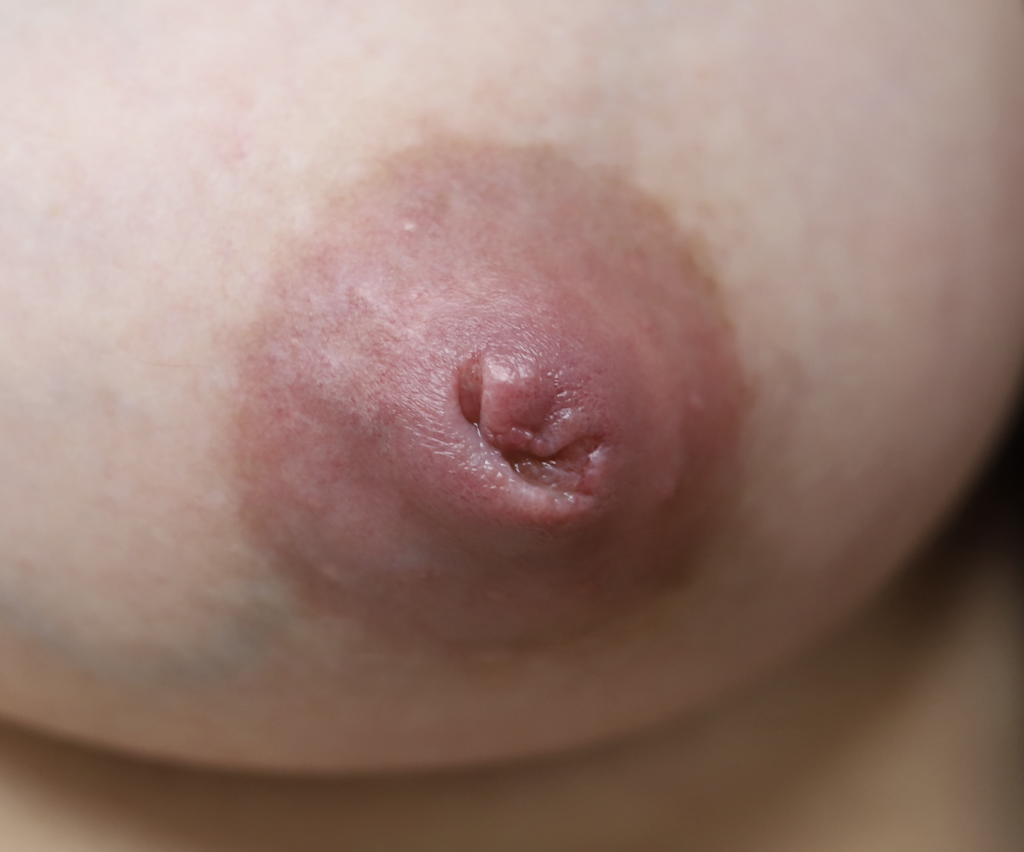
    Smaller papilloma of areola.
    Smaller papilloma of areola.
    Small skin tag removed with dermabond (skin glue) closure.
    Small skin tag removed with dermabond (skin glue) closure.
    Skin tag left nipple
    "Pedunculated" (has a little stalk) skin tag (above photos) that resolved nicely with a simple scissor excision (below).
    Skin tag left nipple
    Screen Shot 2023 05 01 at 9.28.46 PM
    Multiple skin tags adjacent to each other ready for excision in the OR.
    Multiple skin tags adjacent to each other ready for excision in the OR.
    skin tag
    Skin tag on nipple
    Skin tag at 9:00
    Skin tag on nipple
    Narrow base, making it easy to remove with a quick snip in clinic.
    Skin tag on nipple
    After removal with a little bit of dermabond glue.
    Skin tag on nipple
    skin tag after removal
    After removal.

    Vasospasm

    Chronic vasospasm with pumping that led to tissue breakdown on the nipple. This was resolved with heat and cessation of pumping.
    Chronic vasospasm with pumping that led to tissue breakdown on the nipple. This was resolved with heat and cessation of pumping.
    Chronic vasospasm with pumping that led to tissue breakdown on the nipple. This was resolved with heat and cessation of pumping.
    Chronic vasospasm with pumping that led to tissue breakdown on the nipple. This was resolved with heat and cessation of pumping.
    vasospasm
    vasospasm
    vasospasm
    vasospasm

    Vasospasm is a painful condition related to changes in blood flow that presents with hardening of the nipple and color changes on a spectrum from white to blue to red.  Due to the complex innervation of the breast, pain can focus in the nipple or radiate deep into the breast, and may last for over thirty minutes.  Pain often is worst after the baby unlatches or the mother finishes pumping.  It also may present when the mother moves from a warm environment to cooler environment, such as leaving the shower or pool, going from indoors to outdoors in the winter, or transitioning from warm weather to air conditioning. It also may have no known trigger.
    Complex inervention with diagram of muscle of the breasts

    Vasospasm may be more common in those with a history of Raynaud’s phenomenon of the fingers.  Secondary vasospasm may occur following trauma to the nipples.  Persistent vasospasm can result in a cycle that potentiates trauma, due to vasoconstriction and inability to heal in the setting of chronic alterations in blood flow.  Mammary blood vessels are exquisitely sensitive to epinephrine and norepinephrine. Serotonin and PGF20C as vasoconstrictive agents also play a role. 

    Treatment of vasospasm involves the following:

    • Resolve any underlying persistent trauma.  Women with larger breasts and/or history of breast augmentation benefit from laid back or side lying nursing positions to reduce trauma from superficial latch. 
    • Keep nipples at all times (wear a bra at night) with pads made of wool, ThinsulateTM, Flectalon®, or fleece.
    • For additional warmth, use heating pads or reusable heated products such as microwaveable rice packs or hand warmers on top of the pads; these products should not be applied directly to the skin due to risk of burns. 
    • While the calcium channel blocker agents such as nifedipine traditionally have been recommended for intractable vasospasm, the SSRI class of drugs such as sertraline demonstrate remarkable resolution of pain in most patients without the side effects of headache, fatigue, and low blood pressure that the calcium channel blocker class of drug risks. The effectiveness of the SSRI class of drugs is likely due to the activity of serotonin in the breast.

    Viral Infections

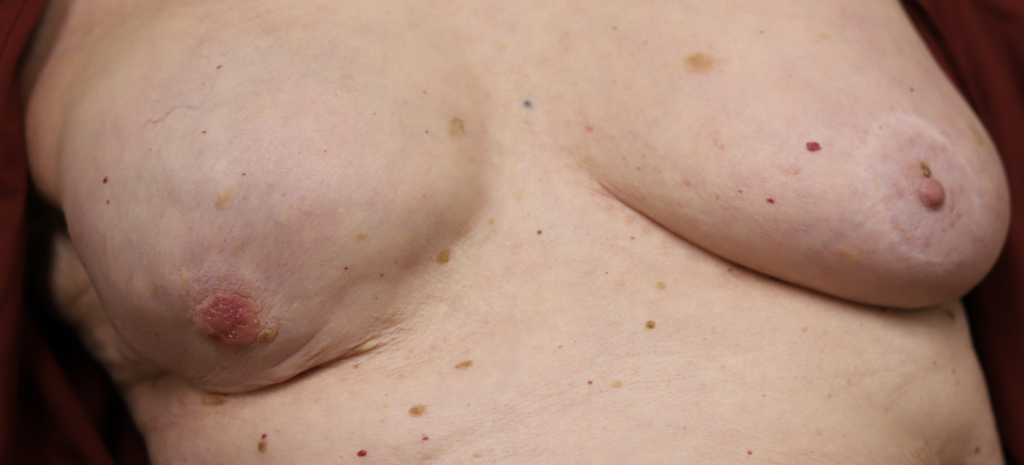
    The lactating breast and nipple areolar complex are highly vascular and therefore heal well and are unlikely to develop bacterial infection. However, viral infections with herpes and warts from HPV are more common.

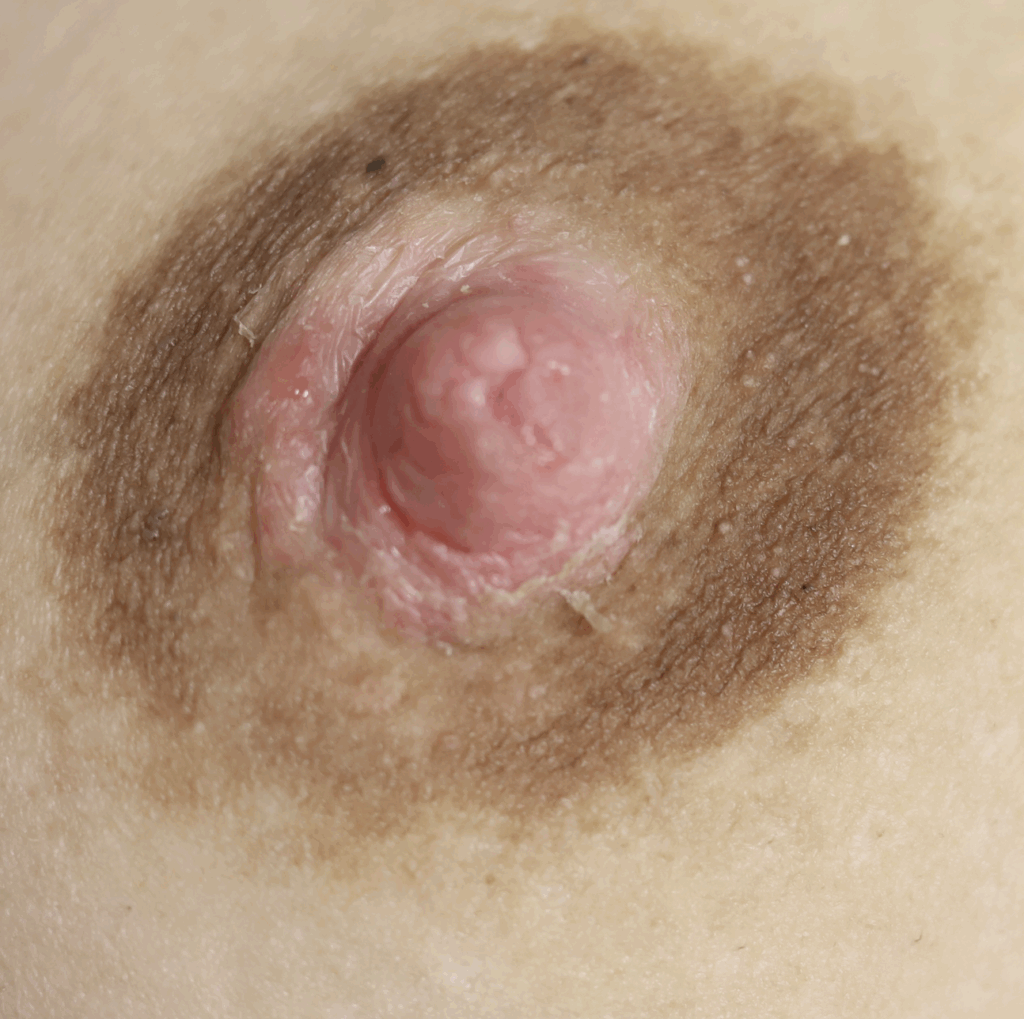
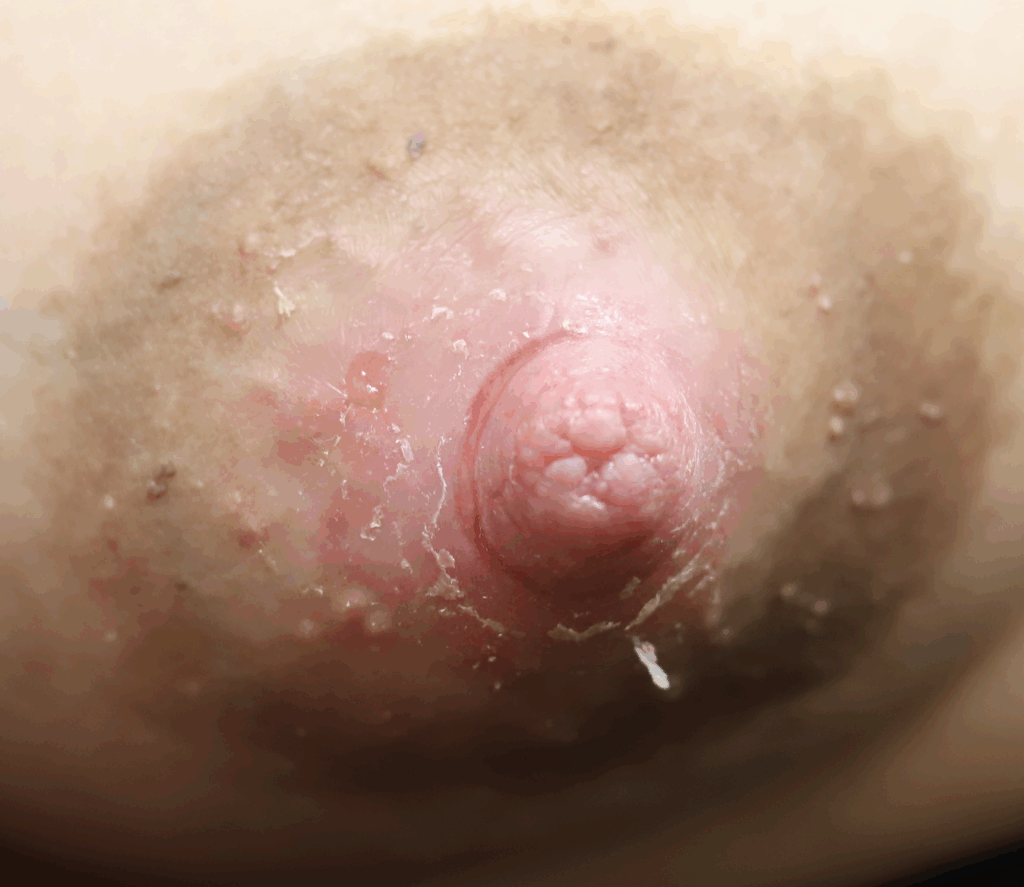
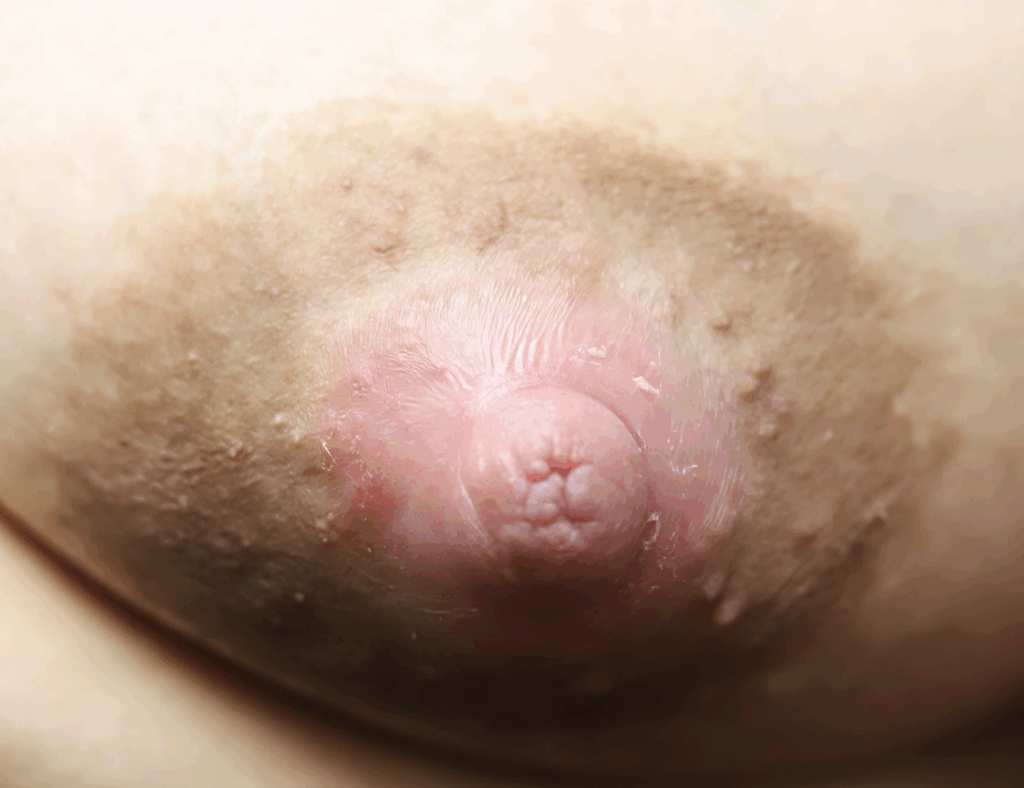
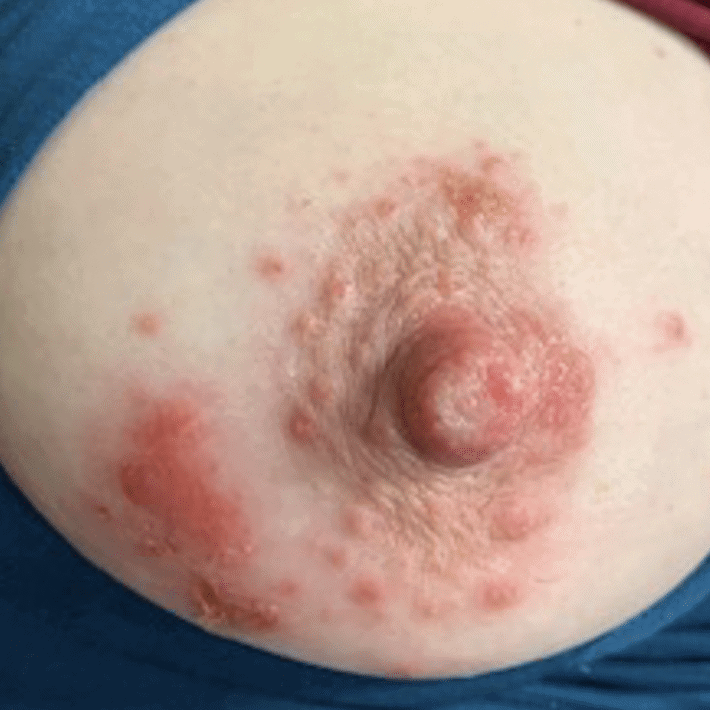
    Herpes simplex virus (HSV) infection (“cold sores”) of the nipple areolar complex presents as a cluster of tender vesicles.  The virus can pass between mom and baby, and can be dangerous to neonates with immature immune systems under three months of age.  If a neonate under the age of three months presents with suspected neonatal herpes, the infant should undergo blood and spinal fluid testing for HSV to confirm diagnosis, and begin immediate treatment with acyclovir.  Diagnosis in the mom can be confirmed using a skin swab culture or blood testing.  

    Moms with a herpes outbreak undergo treatment with a five to seven day course of acyclovir, which is safe in lactation. If a mom experiences a herpes outbreak on one breast, she can continue to express and discard the milk to maintain milk production. However, she should keep this breast covered until lesions scab over, and the infant should nurse only from the unaffected breast.  There is no recommendation for routine suppression in breastfeeding mothers with a history of HSV-1 to prevent transmission to infants.
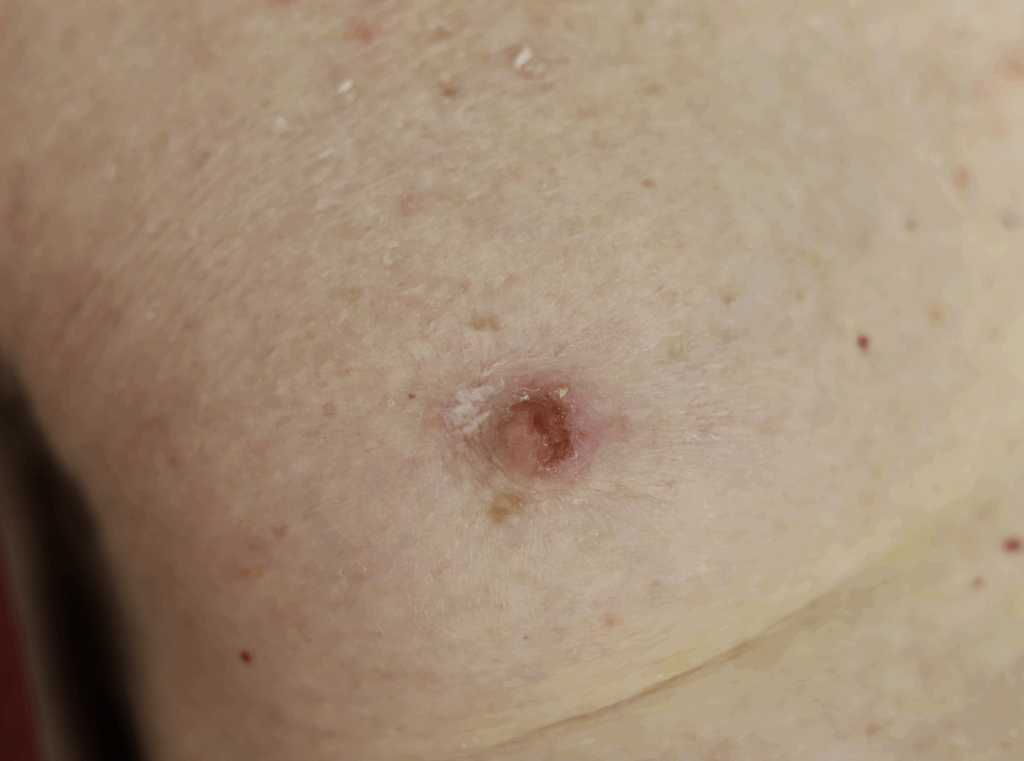
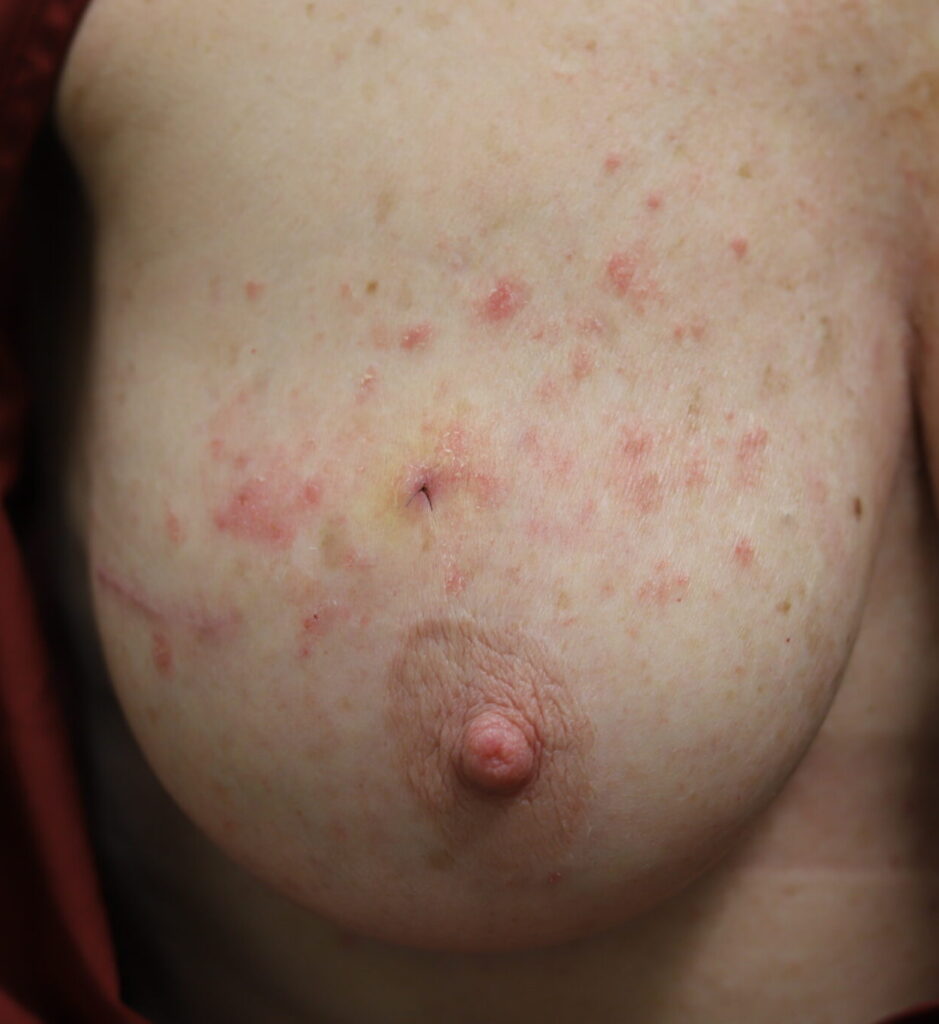
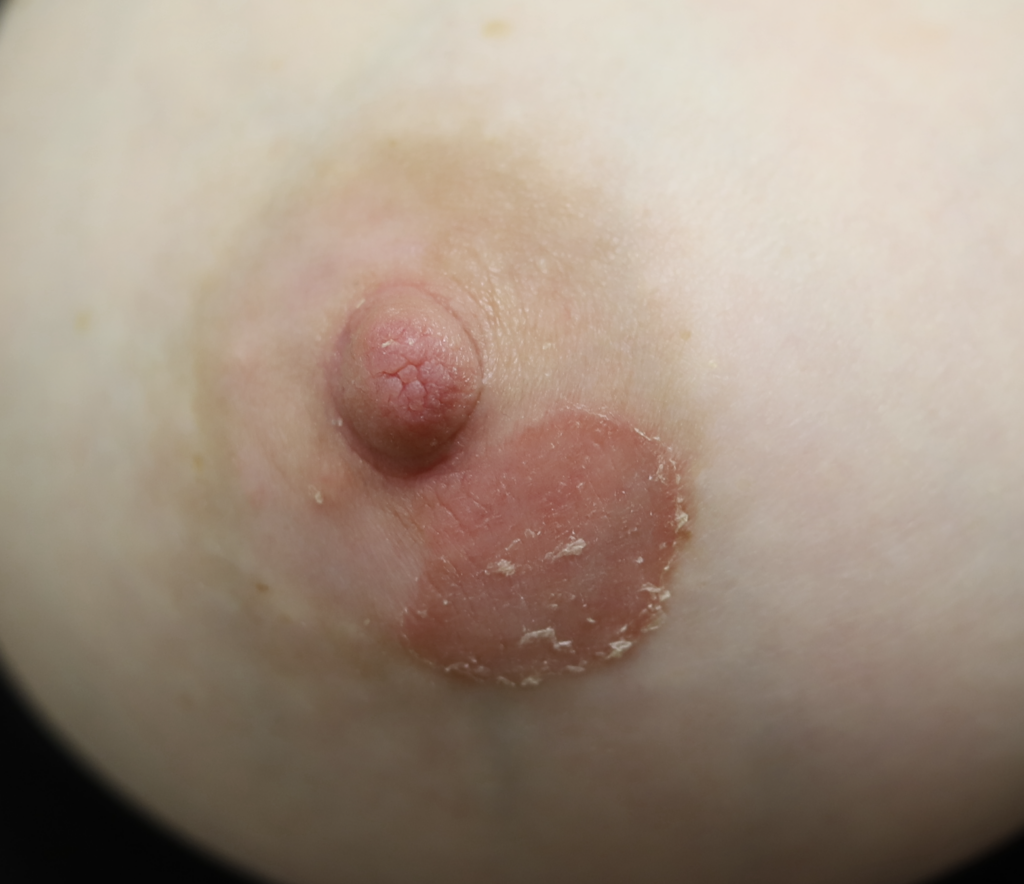
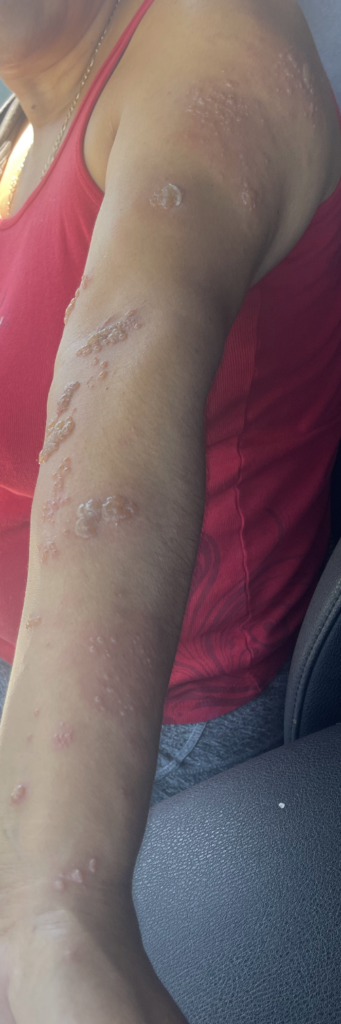
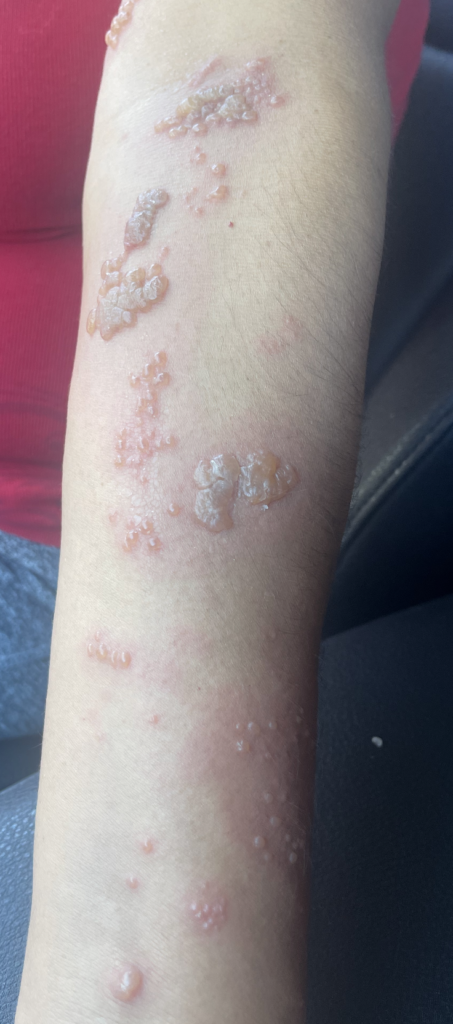
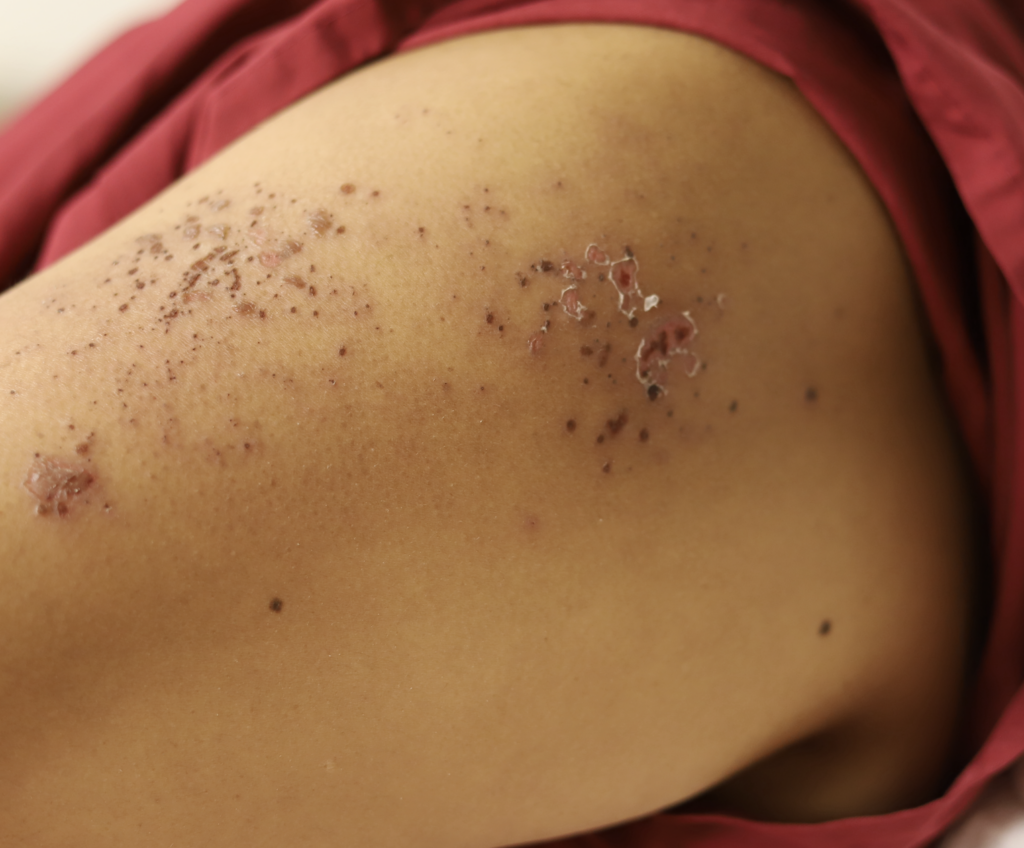
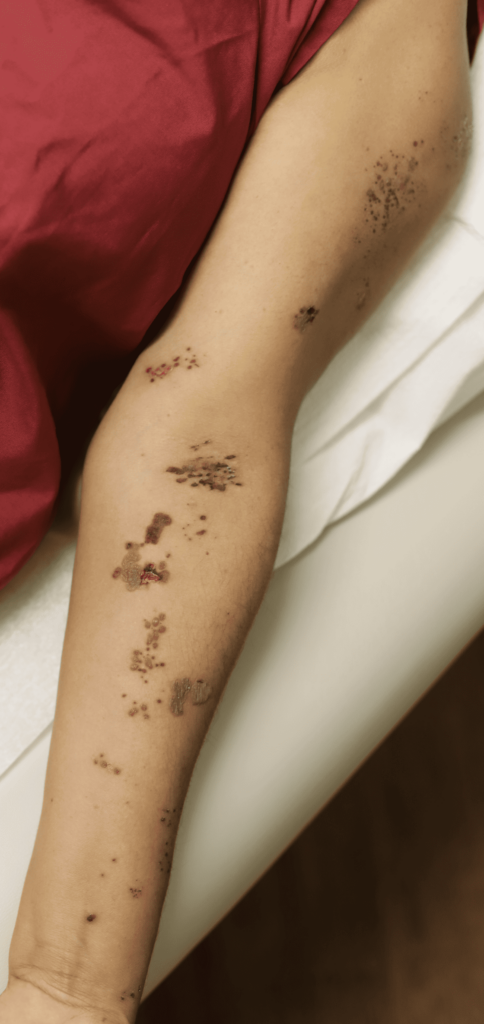
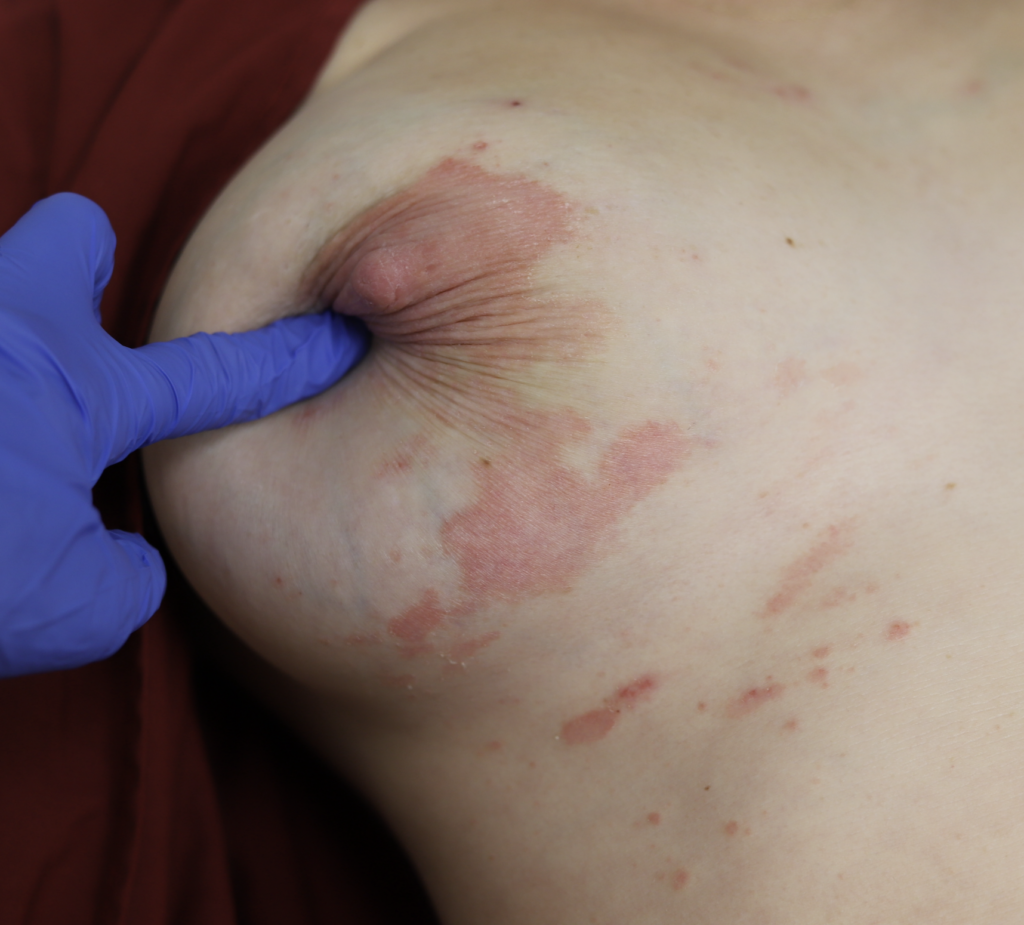
    The varicella zoster virus remains dormant in nerve tissue of individuals with a history of chickenpox.  Reactivation of the virus results in herpes zoster, a contagious rash in a specific “dermatomal” distribution.  Until lesions are crusted over, women with vesicles on the nipple areolar complex should avoid breastfeeding from the affected breast. During that time, milk should be expressed to maintain production, but is not safe to feed to the infant.  

    Viral warts (verruca vulgaris) are benign (non-cancerous) tumors that arise from infection of the skin or mucosal cells (e.g. mouth, vagina) from infection with the HPV virus. They may clear spontaneously, or may need excision if large and on the areola. Other therapies include salicylic acid, cryotherapy, and laser treatment.

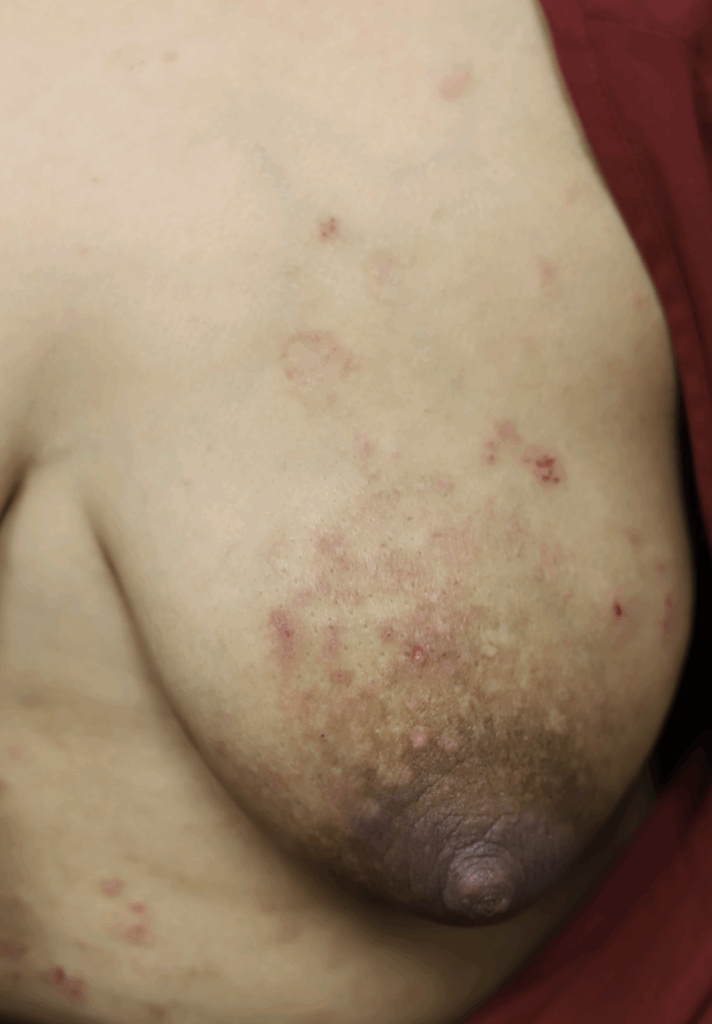
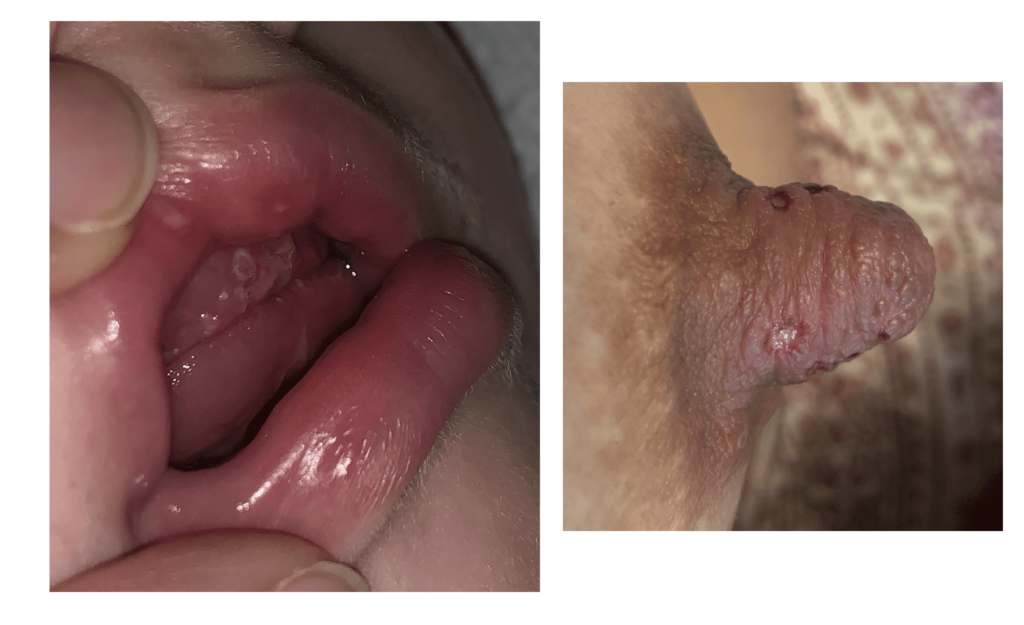
    Infant with herpes vesicles on lips and gums and mom with lesions on nipple.
    Infant with herpes vesicles on lips and gums and mom with lesions on nipple.
    Herpes outbreak
    Herpes outbreak
    Viral wart occurring on areola.
    Viral wart occurring on areola.
    Screenshot 2023 09 12 at 6.18.00 PM
    Early shingles left arm and shoulder
    Early shingles left forearm
    shingles
    Shingles clearing after oral anti-viral treatment with valacylcovir.
    shingles clearing

    Complete Topic List

    Go With The Flo, The Definitive, No-Nonsense, Physician's Guide to Breastfeeding Book Mockup

    Go With the Flow

    August 18, 2026