Anatomic Variants In Breast Development

Jump to...
    Add a header to begin generating the table of contents

    Anatomic variants in breast development are discussed including tubular breast, Poland Syndrome, ectodermal dysplasia, accessory breast tissue, supernumerary nipples, and inverted nipples.

    Tubular Breast

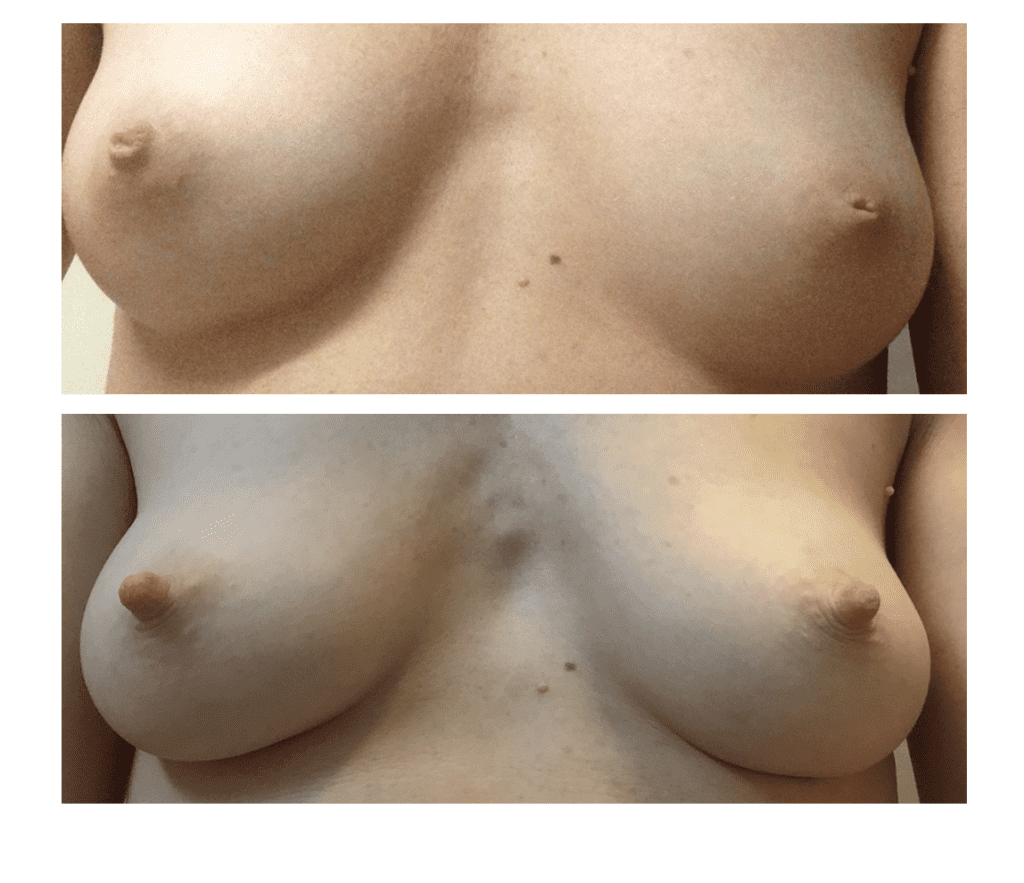
    No single definition or terminology exists for the broad category that healthcare providers often describe as “insufficient glandular tissue” (IGT), hypoplastic breasts, or tuberous/tubular breast deformity.  Many utilize the term “IGT” to describe a breast appearance that includes the following: widely spaced breasts; lack of lower breast fullness; a fibrous, enlarged nipple areolar complex relative to the breast; lack of or minimal breast growth during pregnancy; and, lack of or minimal engorgement postpartum.  In the surgical and anatomic world, this is termed “tubular breast.”

    A true tubular or tuberous breast deformity with an anatomically abnormal external appearance has unknown cause, though it has been theorized to result from an embryologic process where the chest wall does not develop normally. 

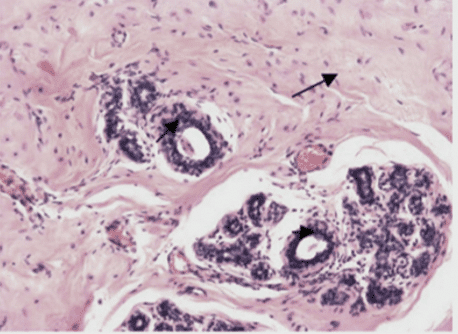
    Under the microscopic, these breasts show increased fibrous tissue compared to normal glandular tissue. The breast base is smaller than average (i.e. only covers a small portion of the chest wall rather than the entire space over the pectoralis muscle).

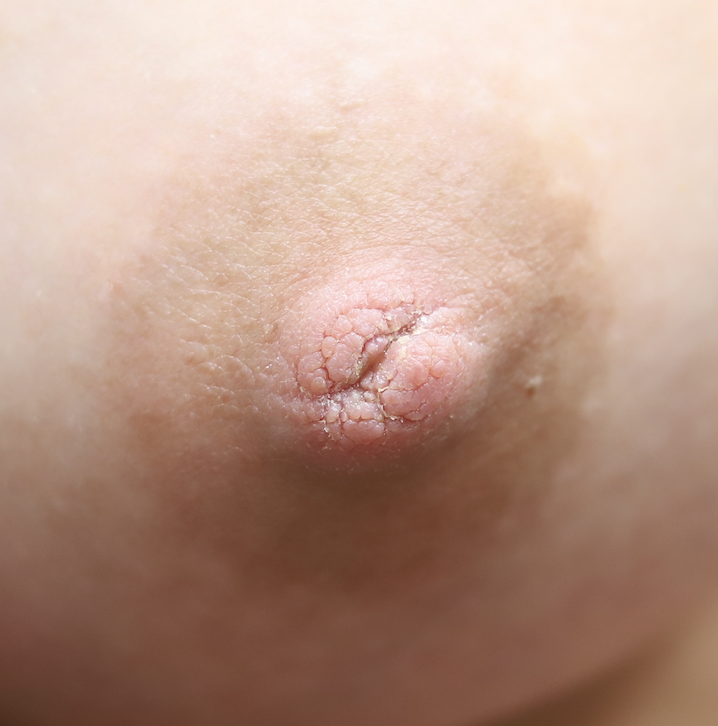
    The breast resembles a cylindrical shape with an enlongated vertical appearance with a large areola relative to the breast size. The most widely accepted classification system defines type I breasts as lacking lower inner fullness, type II with lack of fullness in both inner and outer lower breast, and type III in all parts of the breast. As illustrated by this classification system, a spectrum exists.  Very commonly, individuals may have more subtle wide spacing and lack of fullness with asymmetric size between their breasts.   

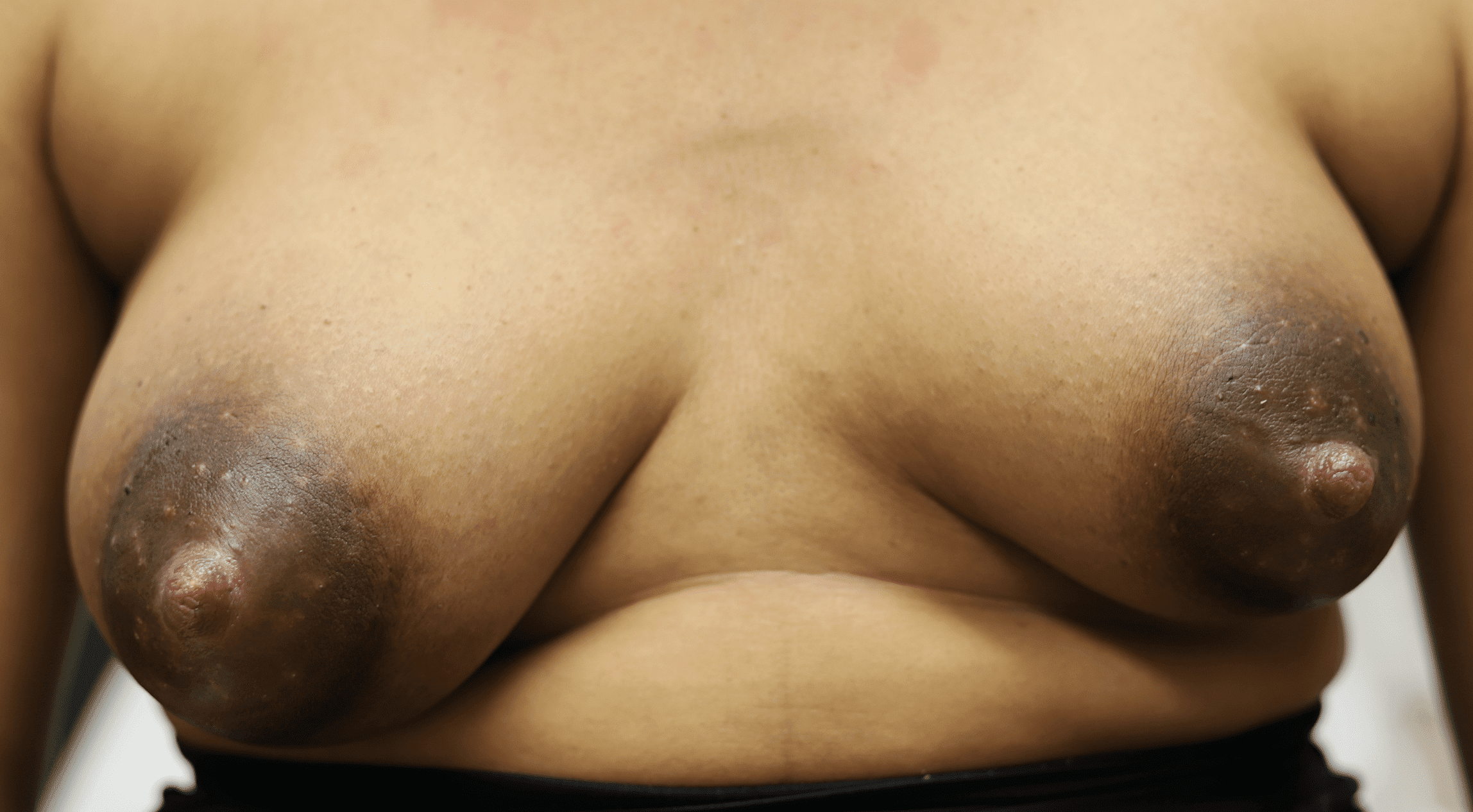
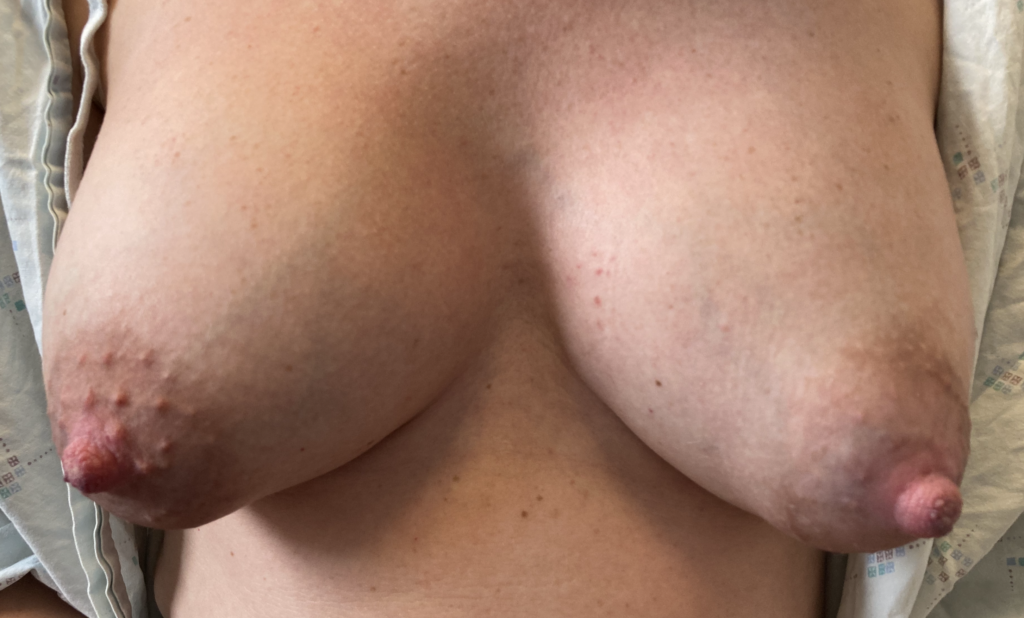
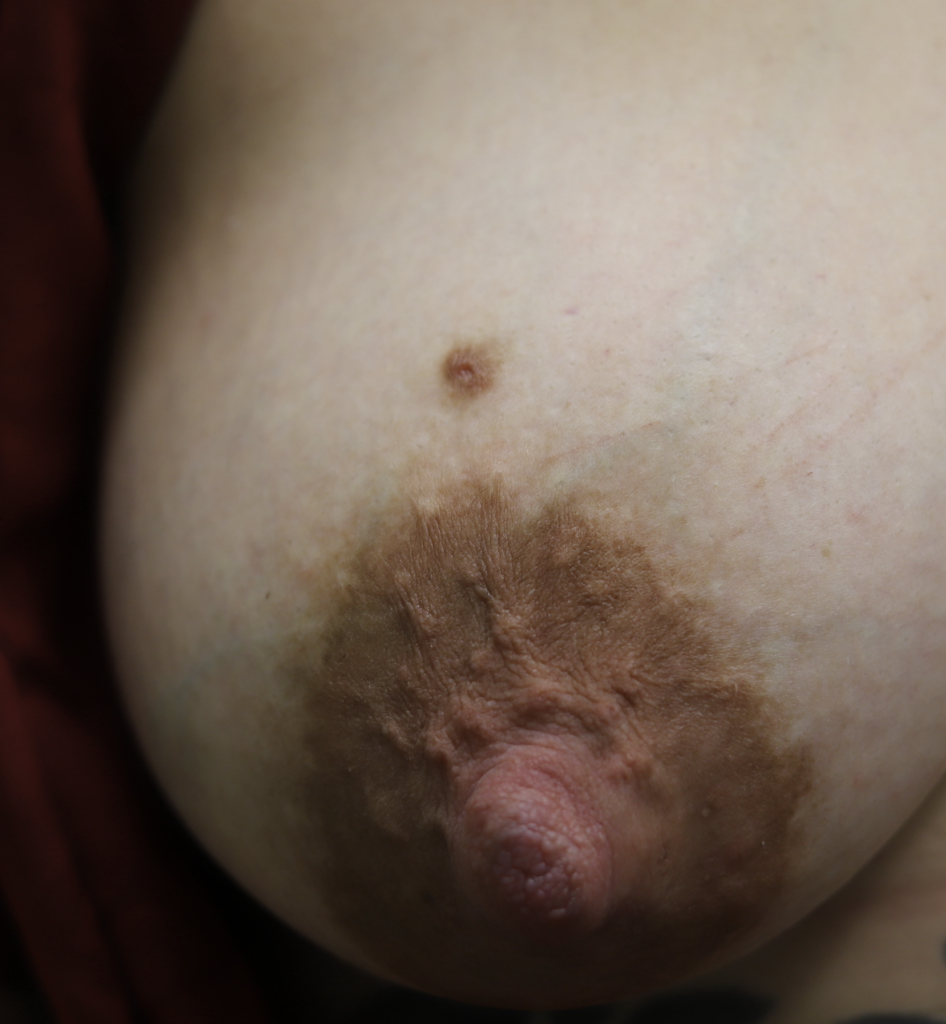
    Tubular breast This is the classic appearance of a small/narrow breast base, wide spacing, large areola relative to breast size, and lack of fullness.

    These women exhibit variable challenges with breastfeeding.  Most have reduced milk production that may improve with each subsequent pregnancy and lactation, and may respond to galactagogues.  Because all cases are individualized, women should be counseled during pregnancy and followed closely in the postpartum period.  As with other congenital variations in breast development, many of these moms may have undergone surgery prior to pregnancy and obtaining this history is very important for supporting these women during lactation.

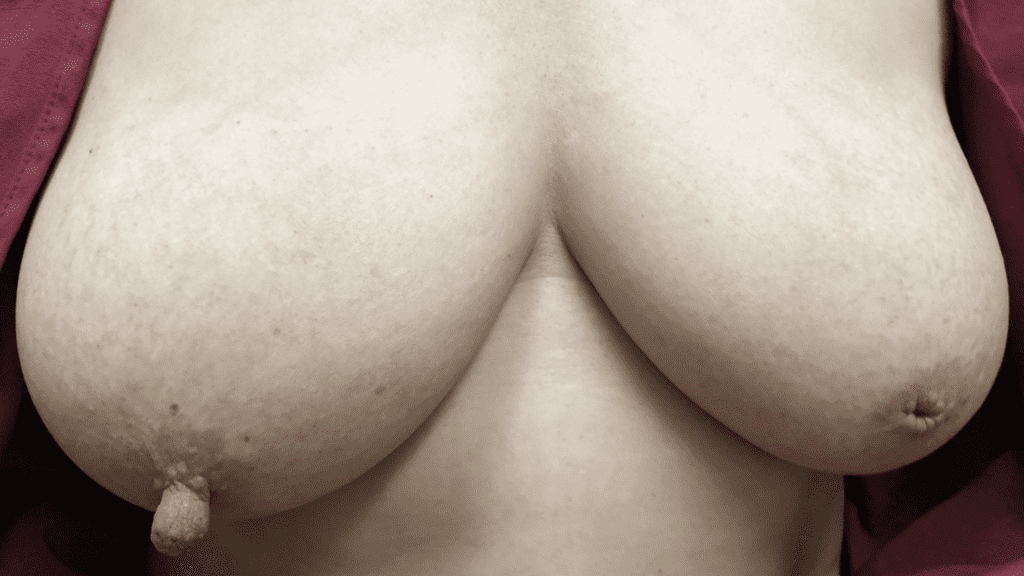
    tubular breast Fibrous, inelastic areola with herniation of breast tissue into it.

    tubular breast
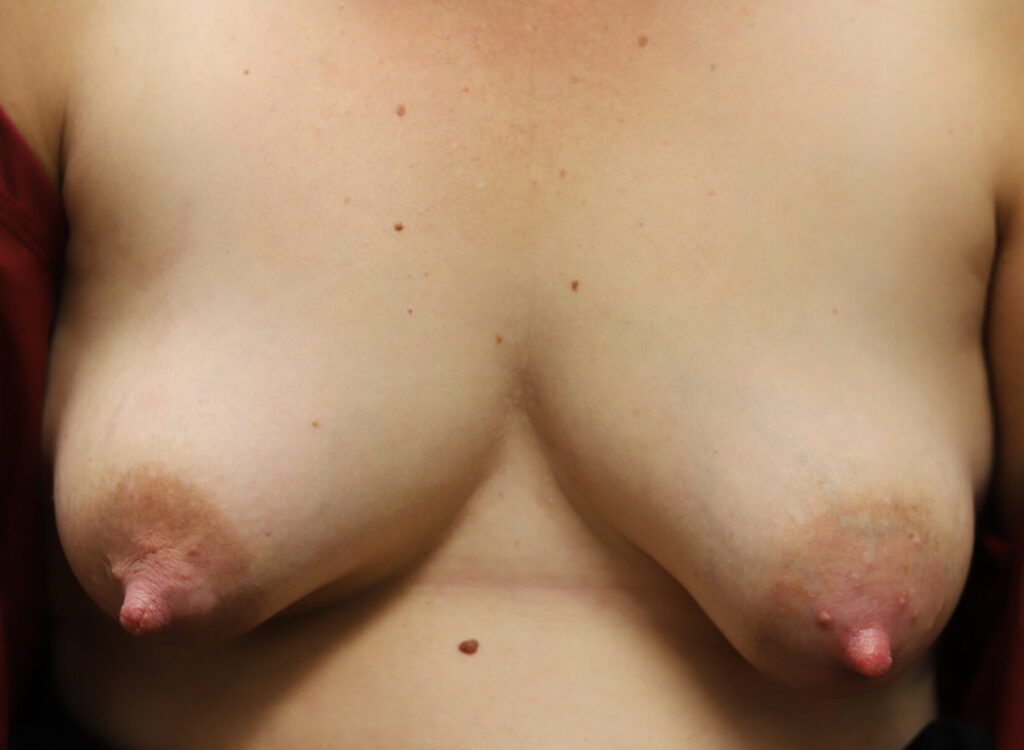
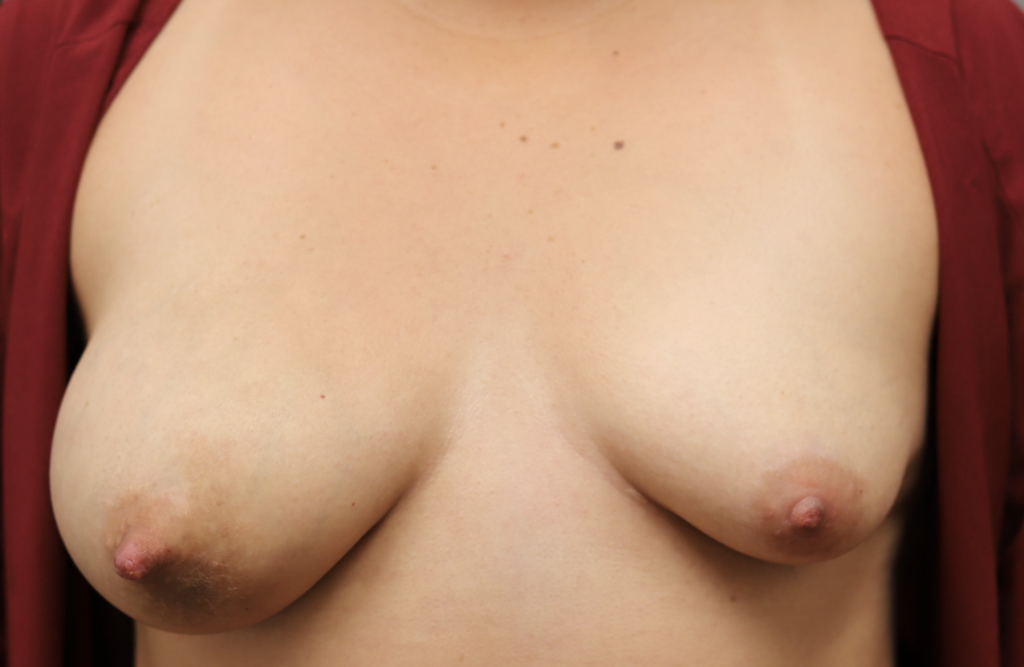
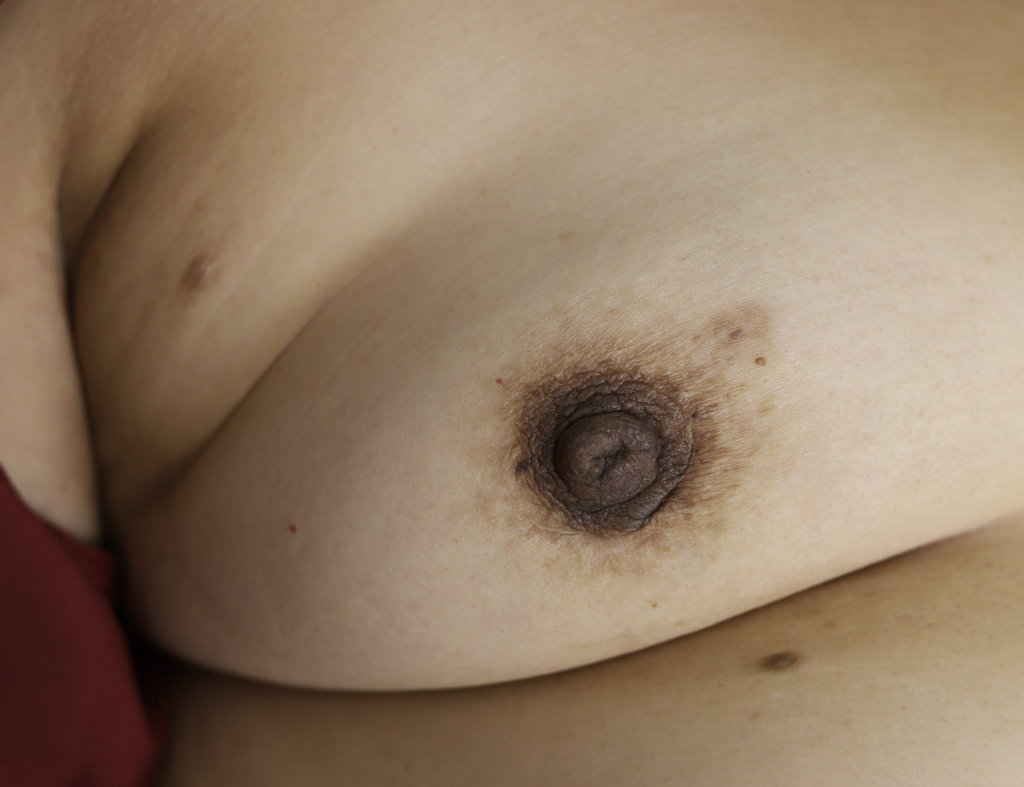
    Mild tubular breast as evidenced by asymmetry,
    Mild tubular breast appearance with asymmetry (left breast smaller than right).
    tubular breast
    Lateral view of tubular breast showing conical shape and narrow breast base.
    Lateral view of tubular breast showing conical shape and narrow breast base.
    Lateral view of tubular breast showing conical shape and narrow breast base.
    tubular breast
    tubular breast
    tubular breast
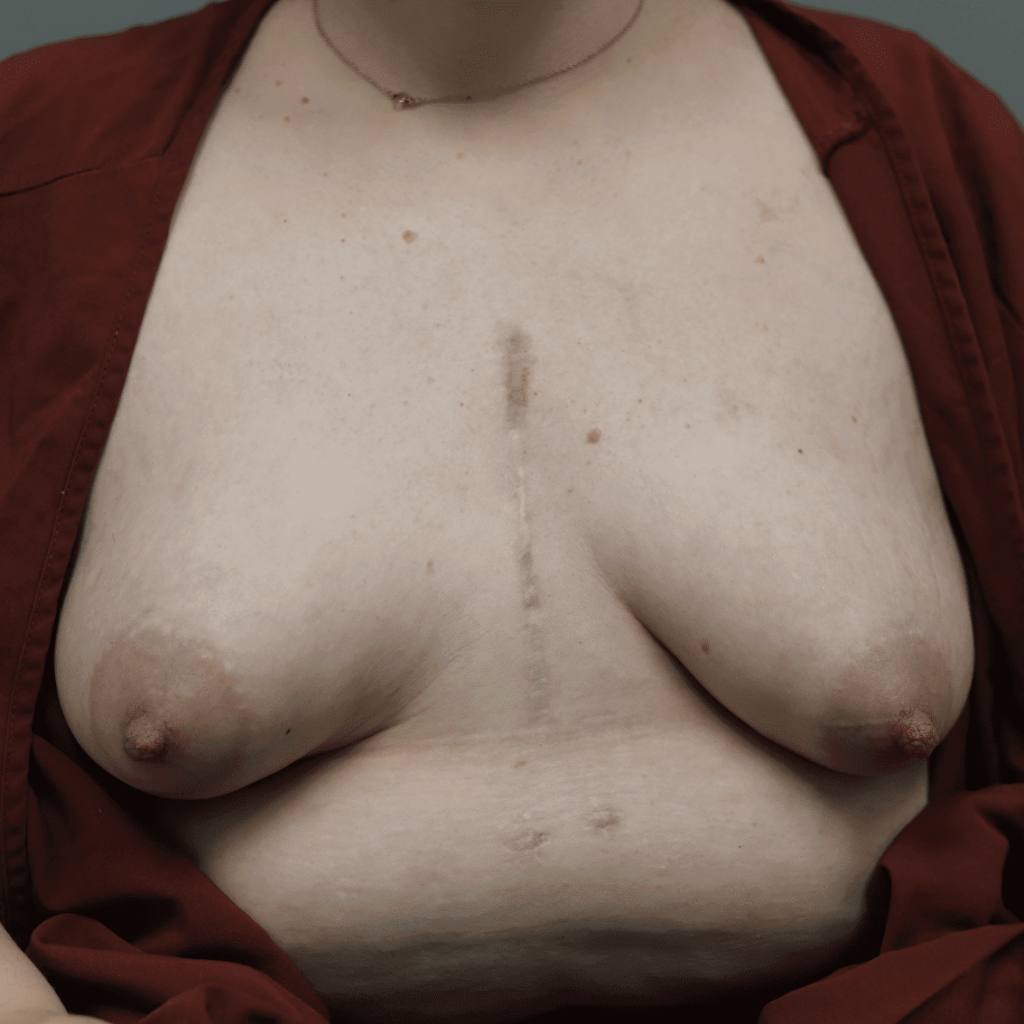
    Patient with history of heart surgery as well as moderate tubular appearance of breasts.
    Patient with history of heart surgery as well as moderate tubular appearance of breasts.
    tubular breast March 2022
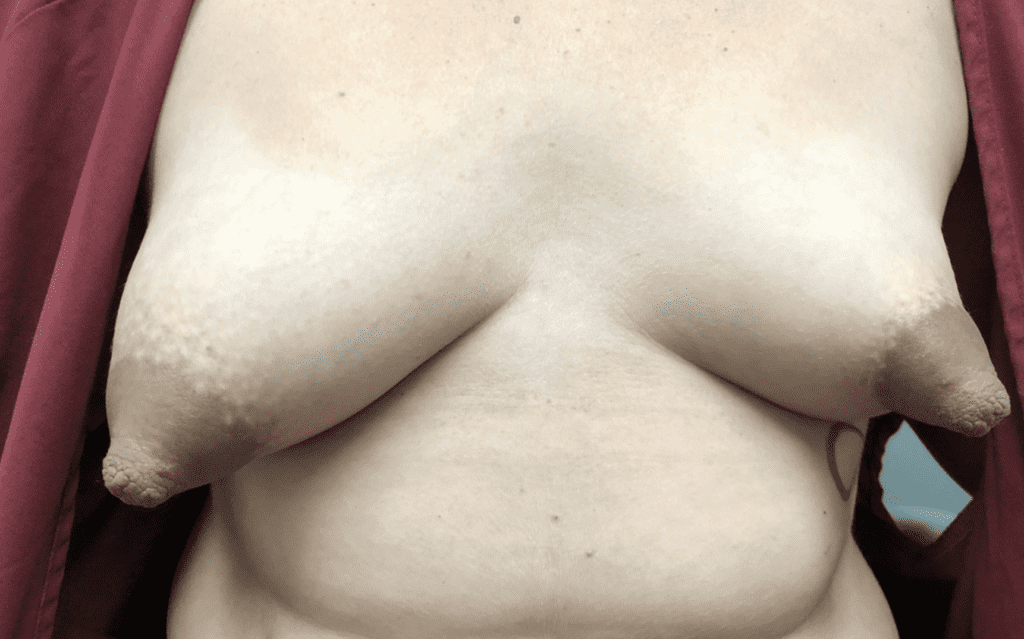
    Tubular breast with less fullness in lower inner aspect of both breasts and asymmetric size.
    Significant tubular breast. Baby latched well to breast but lost significant weight after discharge from hospital. Physicians and lactation consultants should watch milk production and weight gain very carefully in these patients as significant tubular breast is not expected to produce substantial milk.
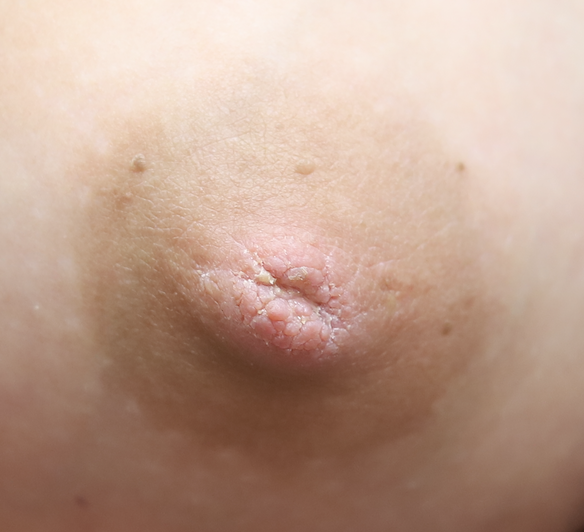
    Significant tubular breast. Baby latched well to breast but lost significant weight after discharge from hospital. Physicians and lactation consultants should watch milk production and weight gain very carefully in these patients as significant tubular breast is not expected to produce substantial milk.
    tubular breast after augmentation

    Tubular breast after breast augmentation.  Notice how it changes the shape and appearance of the tubular breast, but it doesn’t change the underlying lack of gland, unfortunately.

    Appearance of tubular breast under microscopic with replacement of normal glands by fibrous tissue (arrow).
    Appearance of tubular breast under microscopic with replacement of normal glands by fibrous tissue (arrow).

    Poland Syndrome

    Poland Syndrome occurs when one side of the chest wall has abnormal development of the ribs, muscle, and breast.  It can present differently in different individuals, varying from significant breast size discrepancy and limited to complete absence of the breast, muscle, and ribs.  “Hypoplasia” is a term that means an organ has failed to developed to full size and function.

    Women with asymmetric breasts and/or chest walls should be referred for prenatal counseling and close postpartum support, as they may experience challenges with milk production.  Some of these women also may have undergone previous reconstructive surgery and cosmetically appear as though they underwent a standard breast augmentation and/or reduction.  Therefore, it is important to discuss any surgical history with your healthcare provider.

    Mild presentation of Poland’s Syndrome with right breast producing full milk supply and left breast producing very little.
    Poland syndrome left breast

    Both patients with hypo plastics left breasts and right breast producing normal milk.  No implant reconstruction previously of left breast.

    hypoplastic left breast

    Right breast (also with accessory nipple at 12:00 position above normal nipple areolar complex) producing milk, left breast had never developed anything but a nipple per patient and she had undergone implant reconstruction in her late teens.

    breast hypoplasia
    Right breast hypoplasia
    Poland's Syndrome: Absence of true nipple (superior nipple with limited associated breast tissue and inferior nipple at IMF), no pectoralis muscle, and missing 3rd and 4th ribs.
    Poland's Syndrome: Absence of true nipple (superior nipple with limited associated breast tissue and inferior nipple at IMF), no pectoralis muscle, and missing 3rd and 4th ribs.
    placeholder
    Left superior nipple
    Superior nipple.
    inferior nipple
    Inferior nipple.
    Poland's syndrome
    polands
    Successful latch!

    A Word About the Terminology "IGT"

    IGT Image
    IGT Image

    Some will utilize the term “Insufficient Glandular Tissue” or “IGT” to describe breasts that are normal in anatomic appearance, but otherwise do not experience growth during pregnancy nor postpartum engorgement. These women also produce breastmilk in a lower than needed volume for infant growth. 

    I argue that we should define any situation in which a mom is producing less milk than expected as “hypolactation.” This then can be more precisely characterized as a true congenital/anatomic variation is present (e.g. tubular breast or Poland’s Syndrome) versus gland that is normal in appearance but unresponsive at a cellular level. A gland that appears anatomically normal is more similar to a pancreas or thyroid that is not altered grossly, but does not function to produce thyroid hormone or insulin.

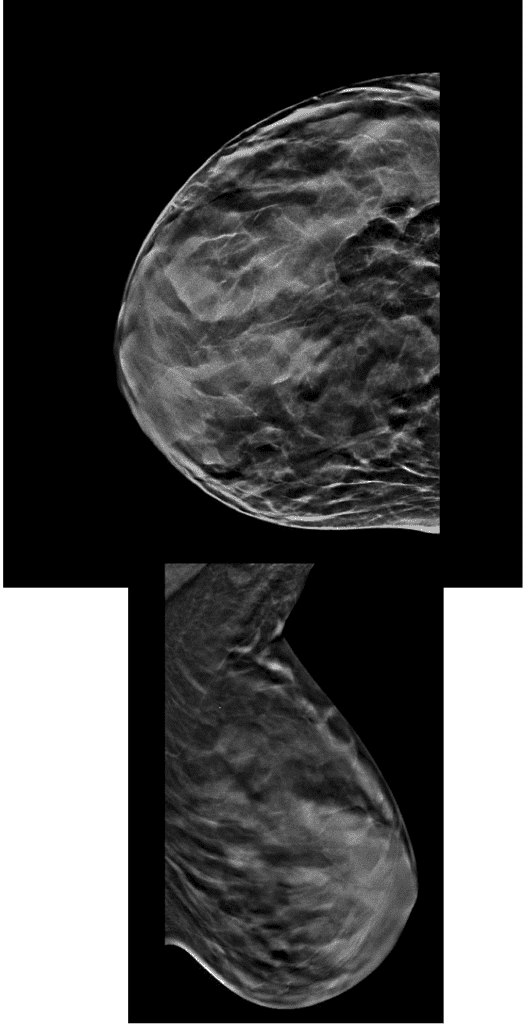
    These mammogram images demonstrate the dense gland present in a patient with hypolactation and normal anatomic appearance of her breast. She had a history of growth hormone deficiency in childhood that likely impacted the cellular differentiation of her lactocytes during puberty.

    Ectodermal Dysplasia

    Ectodermal dysplasias are a group of genetic disorders that involve abnormal development of sweat glands, hair, nails, and teeth in the embryo This can impact breast development.  Some individuals will have complete absence of a breast and/or nipple, or simply have abnormally shaped and developed breasts. Most have no Montgomery glands (glands on surface of areola that lubricate nipple) and frequently have very tethered and inverted nipples.  Multiple reconstructive surgery options exist for patients with ectodermal dysplasia affecting the breast.  However, like surgery in the setting of tubular breast and Poland’s Syndrome, these procedures are cosmetic in nature and do not improve the underlying developmental disorder affecting the glandular tissue.

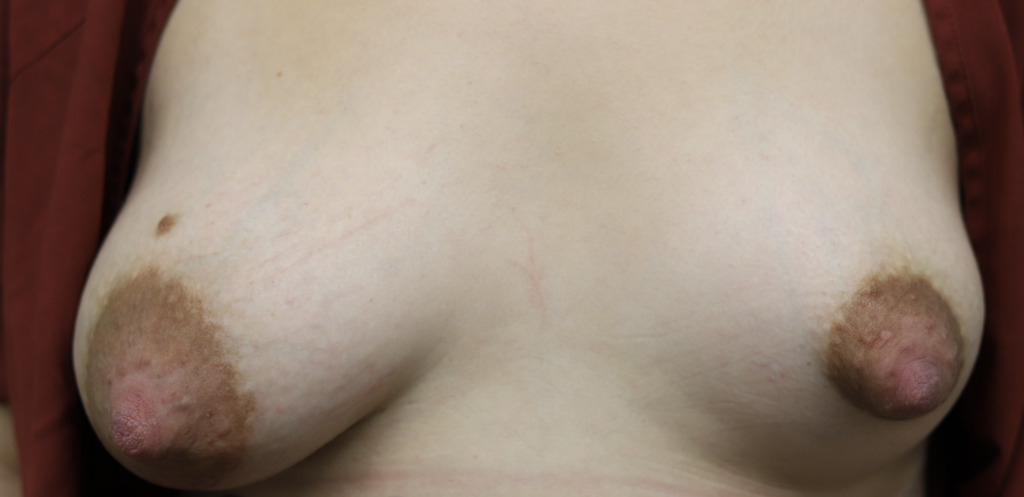
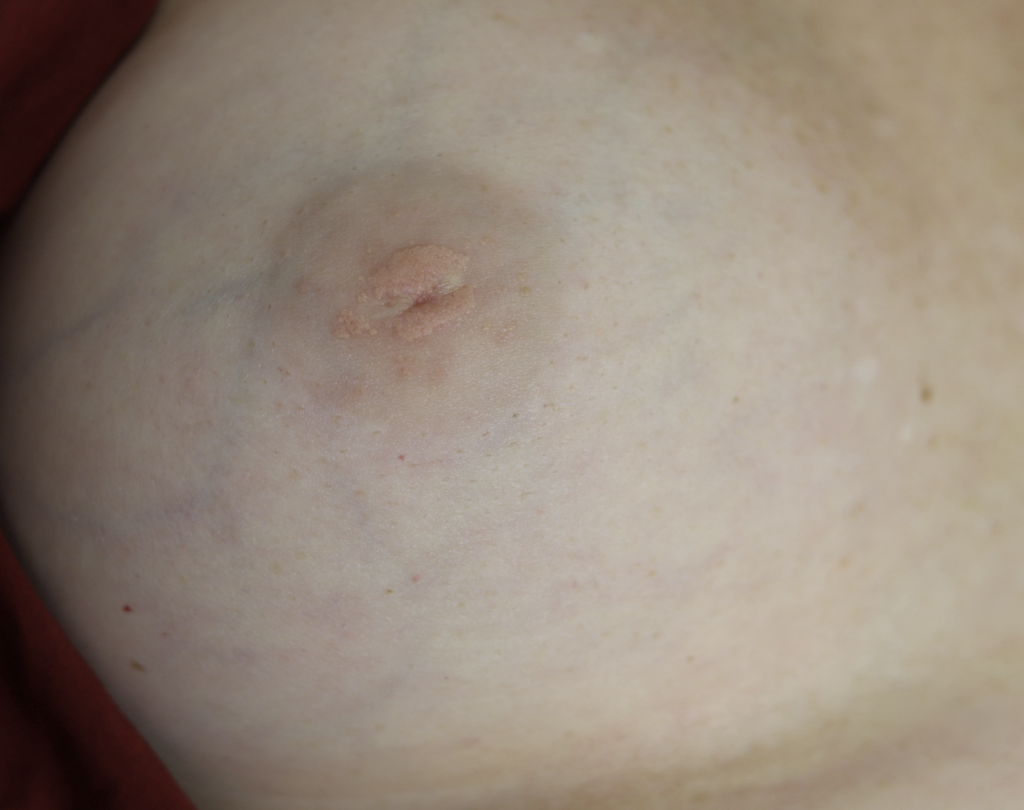
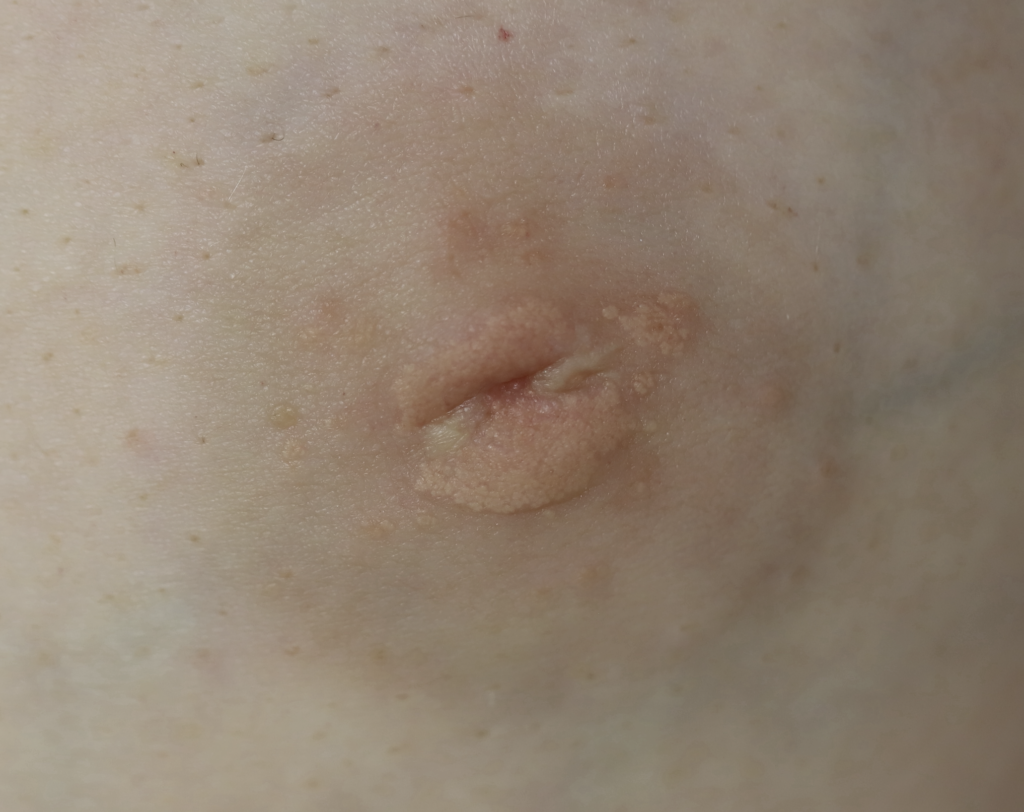
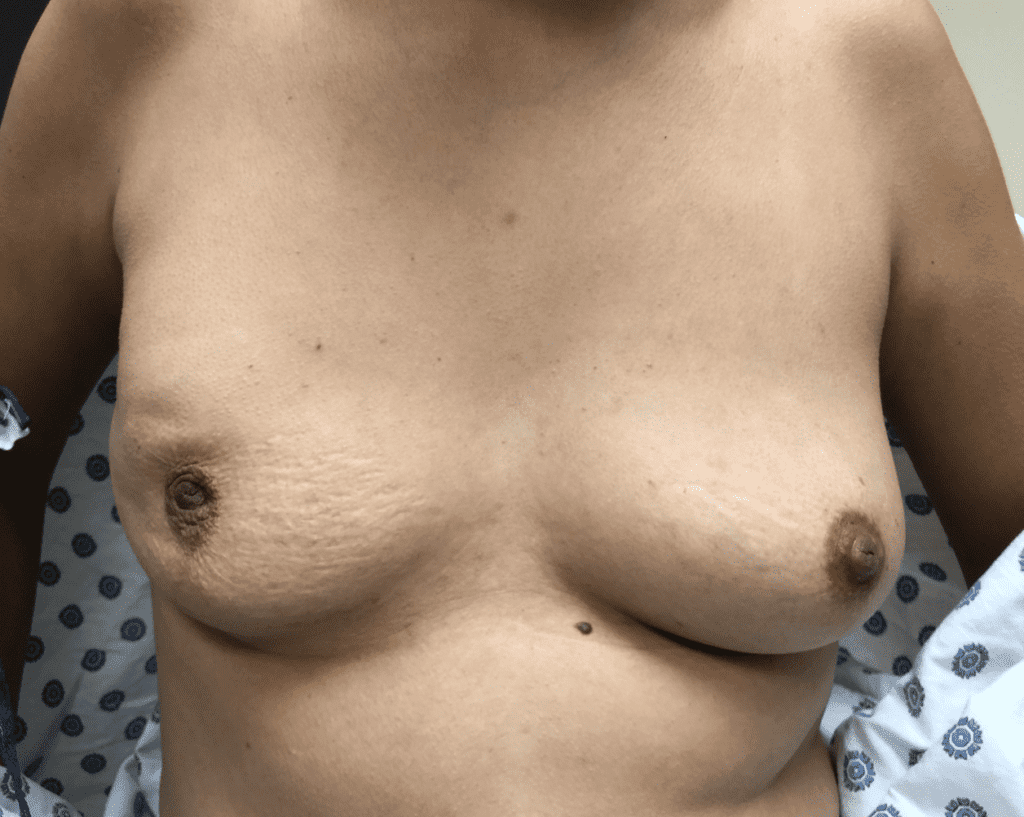
    The below images demonstrate a patient who did not develop breasts, but underwent reconstructive augmentation with an implant in her 20s.  She described having a “shrunken raisin” for a nipple.  The plastic surgeon tried to “evert” the nipples (white scars in the photos) but the tethering was not possible to evert.  You can see the smooth surface of her areola and lack of Montgomery glands.  She also had nail abnormalities and a child and father with tooth abnormalities.  Her father didn’t sweat and she did not either.  She produced no milk with the birth of her child.

    Lack of nipple development with smooth nipple and areola
    Lack of nipple development with smooth nipple and areola
    Discontinuous nipple
    Not ectodermal dysplasia -- this person was producing normal amounts of milk from these nipple orifices in an unusual configuration rather than a discrete nipple cylinder.
    strange nipple
    Left nipple also with discontinuous structure but normal function with milk excretion.

    Accessory or Axillary Breast Tissue

    Supernumerary Nipples

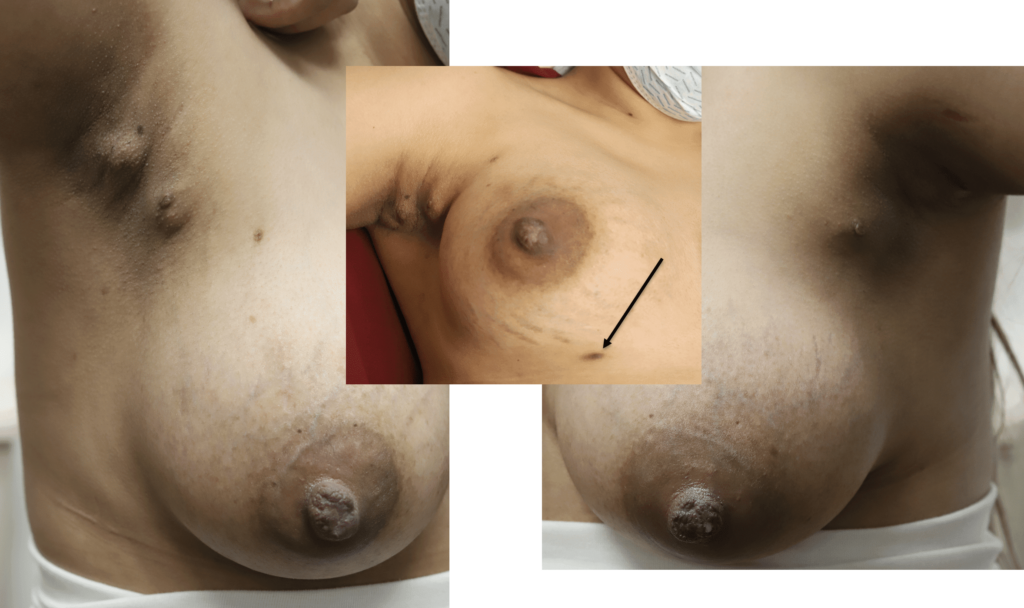
    Like accessory breast tissue, supernumerary nipples can present in any location along the “nipple line” and occur in up to 6% of the population. As described in the Nipple and Breast Masses section, they may present with a subtle mole-like appearance or may appear with a full nipple and areola with associated breast tissue.  They often enlarge during pregnancy and lactation.  Removal of a supernumerary nipple is a minor surgical procedure and can be performed prior to childbearing if a patient desires.  

    supernumerary nipple
    accessory nipple
    extra nipples
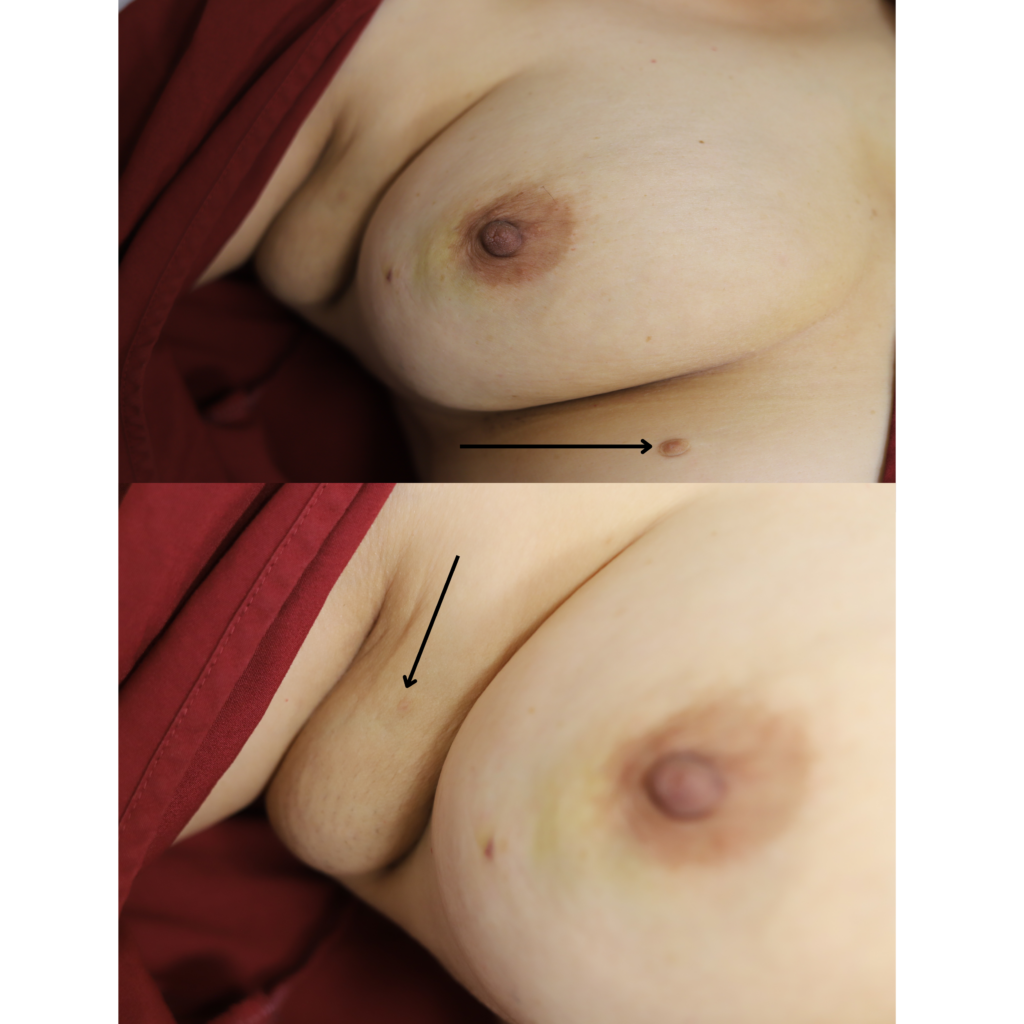
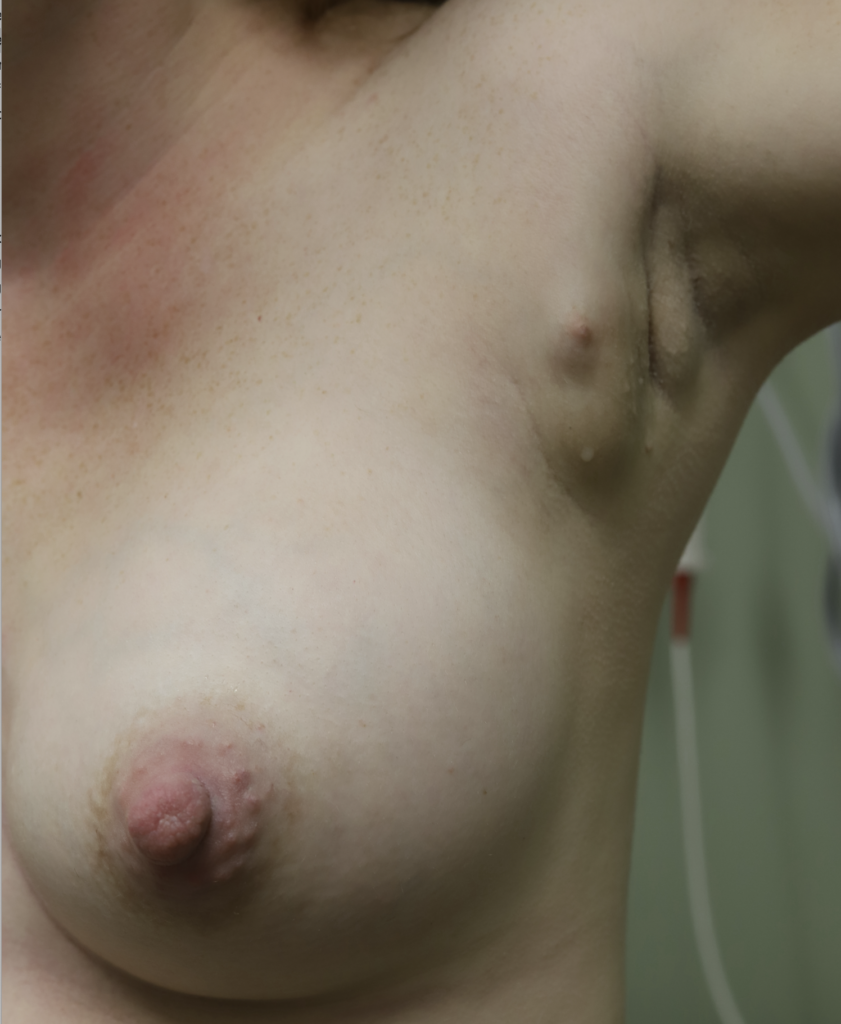
    Accessory nipples and accessory breast tissue in the axilla.
    acccessory nipples

    Inverted Nipples

    Nipple inversion occurs in approximately 3-10% of the population, and likely results from congenital connective tissue tethering.  It also may develop after surgery, with cancer, or as a result of breast infections. Many nipples may spontaneously evert with breastfeeding and/or pumping, and there is no data to support the use of commercial  “everting” or “nipple preparation” devices. Breastfeeding can be successful with inverted nipples that never fully evert. Surgery procedures to evert the nipple may damage ducts, create scar tissue, and affect breastfeeding.  It is not recommended women undergo this procedure prior to childbearing.  See the Plastic Surgery section for more information.

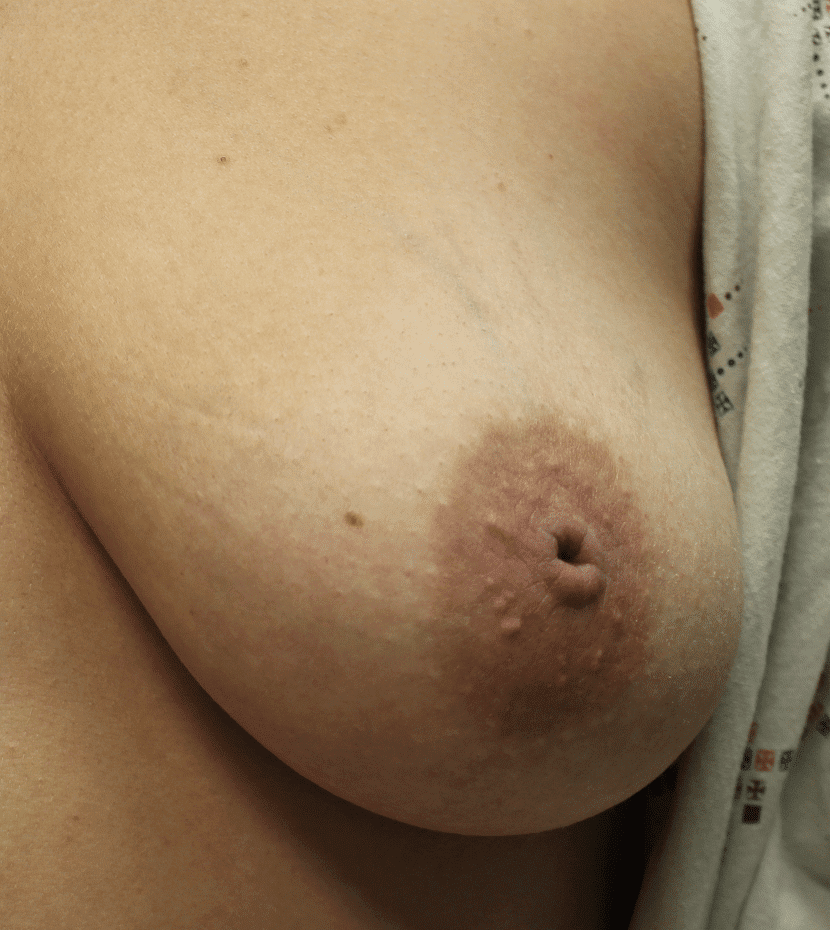
    Patient with more mild inversion during pregnancy and one year postpartum. As you see, her nipples everted completely with breastfeeding and pumping while at work.
    Patient during pregnancy with mild inversions of nipples, left greater than right (top photo), that everted with breastfeeding and pumping postpartum (bottom photo).
    This patient breastfed two children both over two years from her right breast only.
    Patient who breastfed two children more than two years each from right breast only with a congenitally inverted left nipple that never everted fully.
    Pathologic (cancer) right breast nipple areolar complex fixing and inversion with associated retraction of breast in lobular cancer patient.
    Pathologic (cancer) right breast nipple areolar complex fixing and inversion with associated retraction of breast in lobular cancer patient.
    This patient’s congenital left nipple inversion also led her to feed on her right breast only.
    This patient’s congenital left nipple inversion also led her to feed on her right breast only.
    inverted nipple
    Slit inversion of left nipple that easily everts with stimulation.
    inverted nipple
    Left nipple everted with stimulation.
    inverted nipple
    Right nipple slit inversion everts with stimulation
    inverted nipple
    Right inverted nipple stimulated.

    Nipple Size and Shape

    Nipples can be widely variable in size both width and projection from the breast, as well as overall elasticity (how pliable the tissue is). 

    In the setting of nipple inversion or very small or “flat” appearing nipples, stimulating the nipple to become erect (nipples are comprised of erectile tissue similar to the penis or clitoris) can help with infant latch.  The laidback or side lying positions, particularly in the setting of very large breasts, also is beneficial because it reduces pressure on the nipple and allows it to evert more easily.  Manual expression and reverse pressure softening, which soften the areola to make it more pliable before putting the infant to the breast, also may help. 

    In situations of both large and small nipples, use of an electric or manual pump for a brief period of time prior to latching the infant can remove a small volume of milk, evert the nipple, and make the area more comfortable for the infant latch.  As described in the Nipple Complications section, avoid commercial breast “shells” because they often create a constricting band around the areola and worsen nipple swelling.  

    Mothers with very large nipples and smaller infants may need to pump to maintain their milk production if the baby is not able to latch and transfer milk and/or stimulate maternal production.  A nipple shield should be strictly avoided in this circumstance because infants will suck the shield instinctively like a pacifier but will not transfer milk nor stimulate the mother’s milk production.

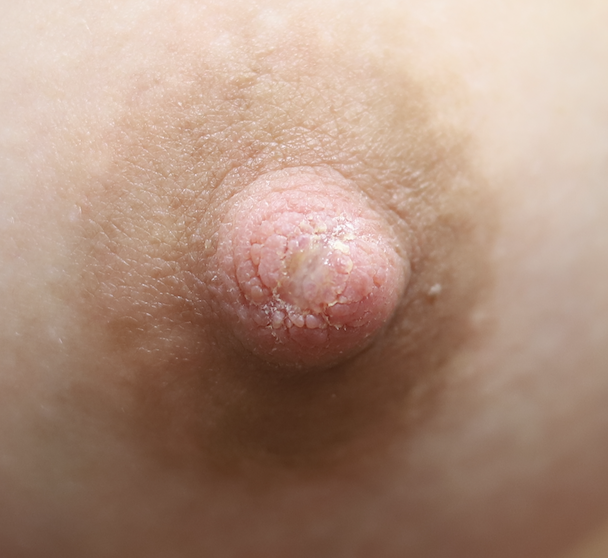
    Large nipple
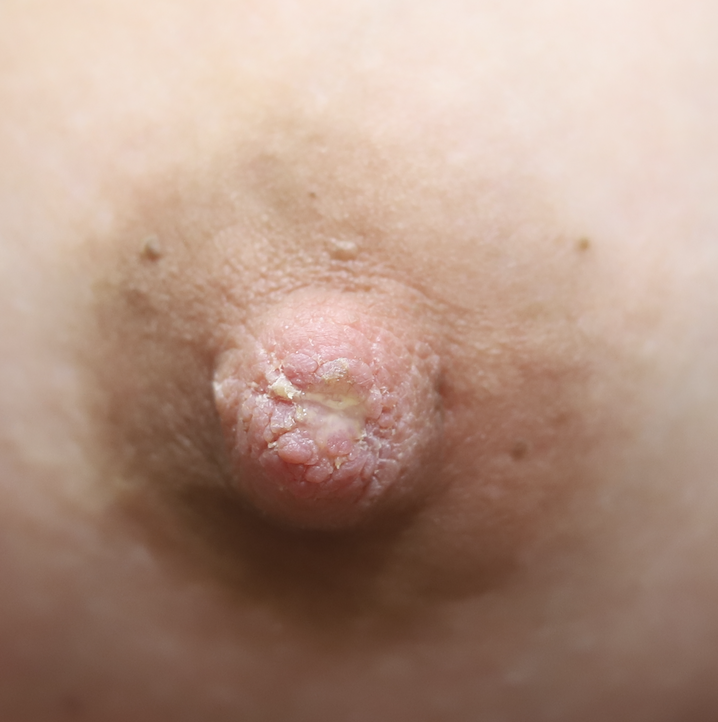
    Example of large, inelastic (fibrous) nipple too big for a 5 lb baby to latch to effectively until it grew. Mom needs to pump to maintain milk production.
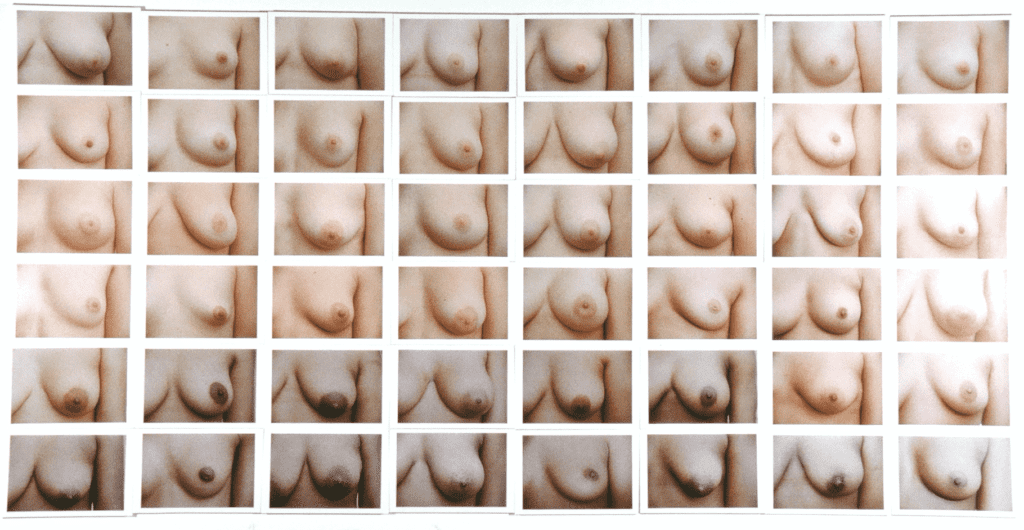
    Breast montage by artist Joyce Fu that also demonstrates wide variation in breast size, shape, and nipple areolar complex morphologies.
    Breast montage by artist Joyce Fu that also demonstrates wide variation in breast size, shape, and nipple areolar complex morphologies.

    Complete Topic List

    Go With The Flo, The Definitive, No-Nonsense, Physician's Guide to Breastfeeding Book Mockup

    Go With the Flow

    August 18, 2026