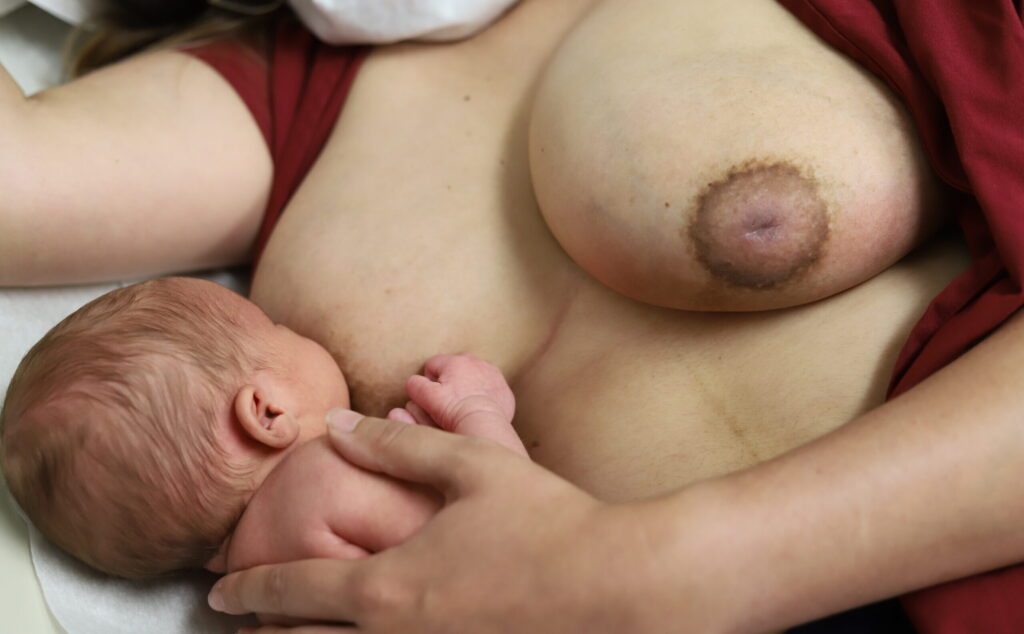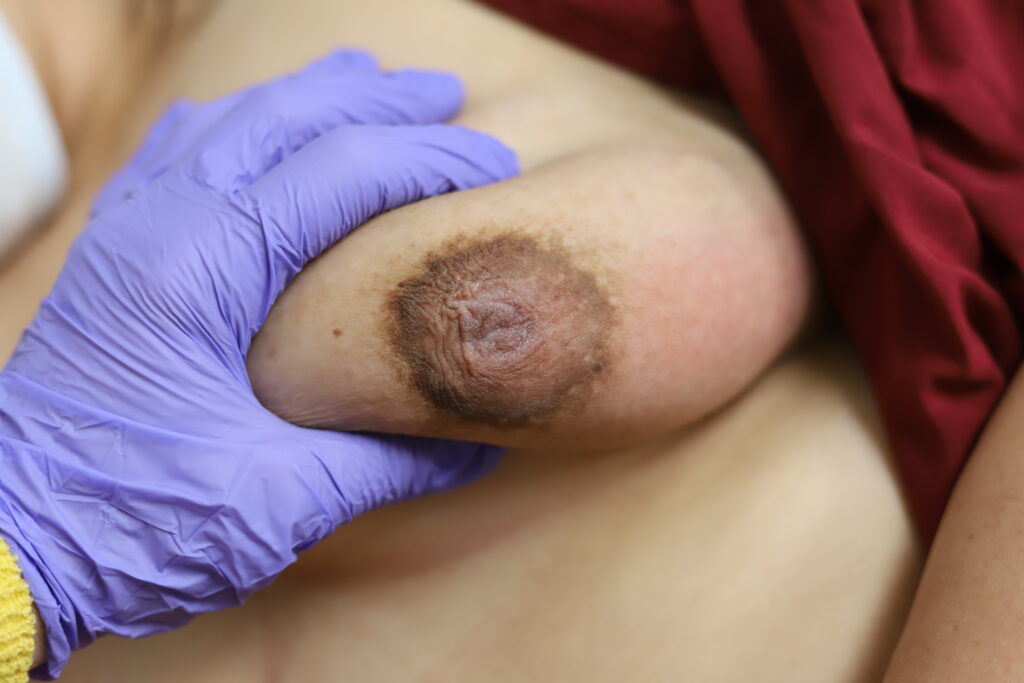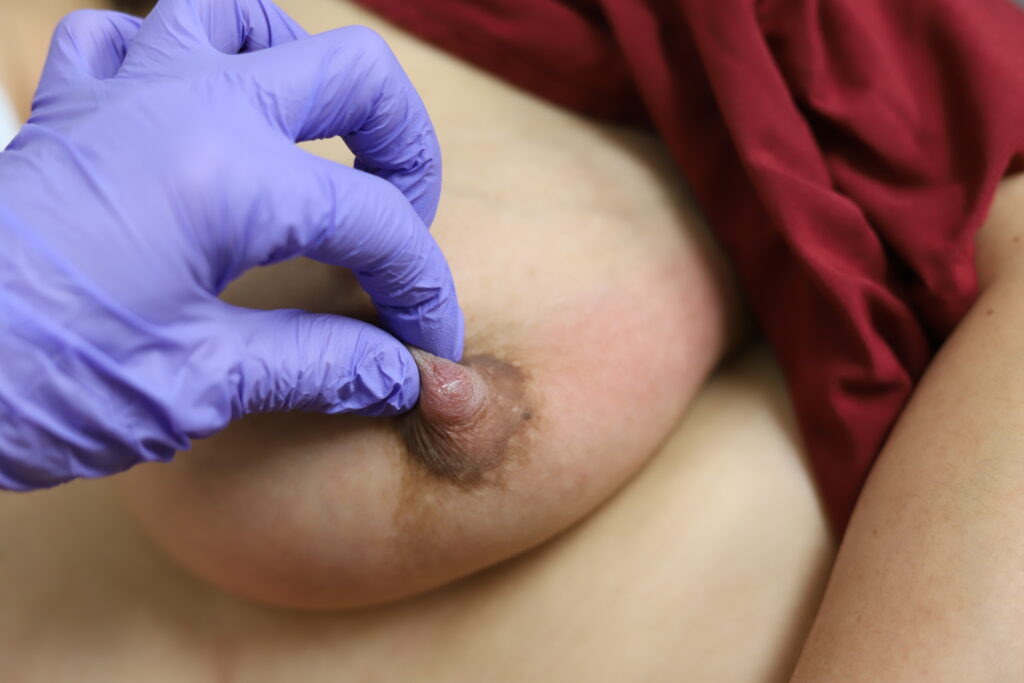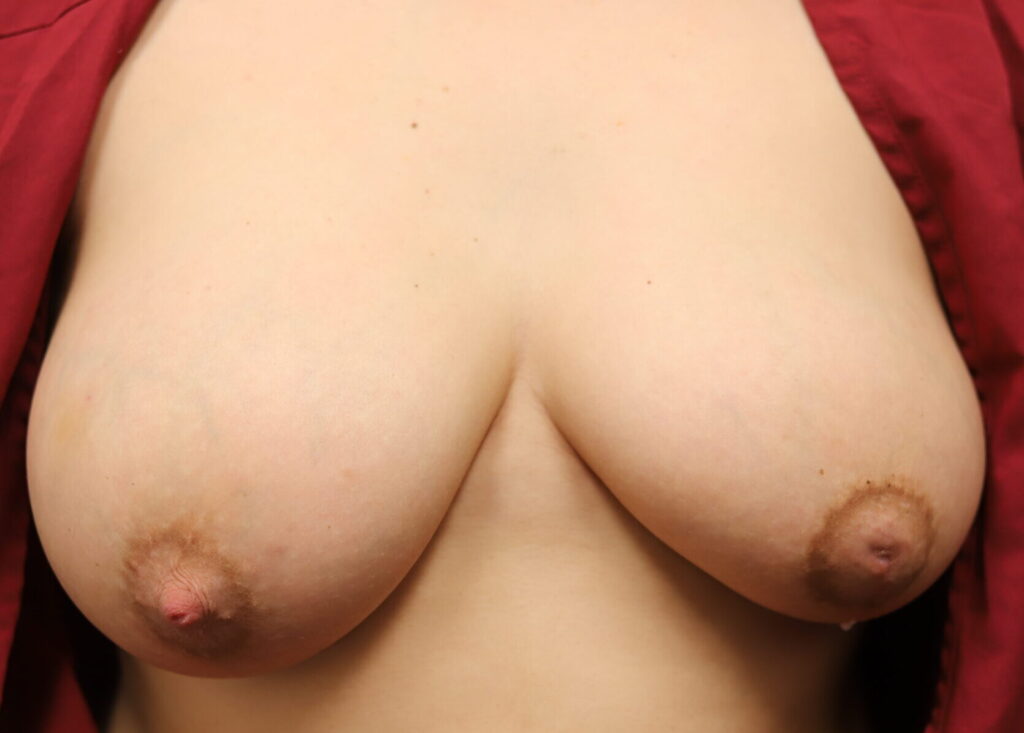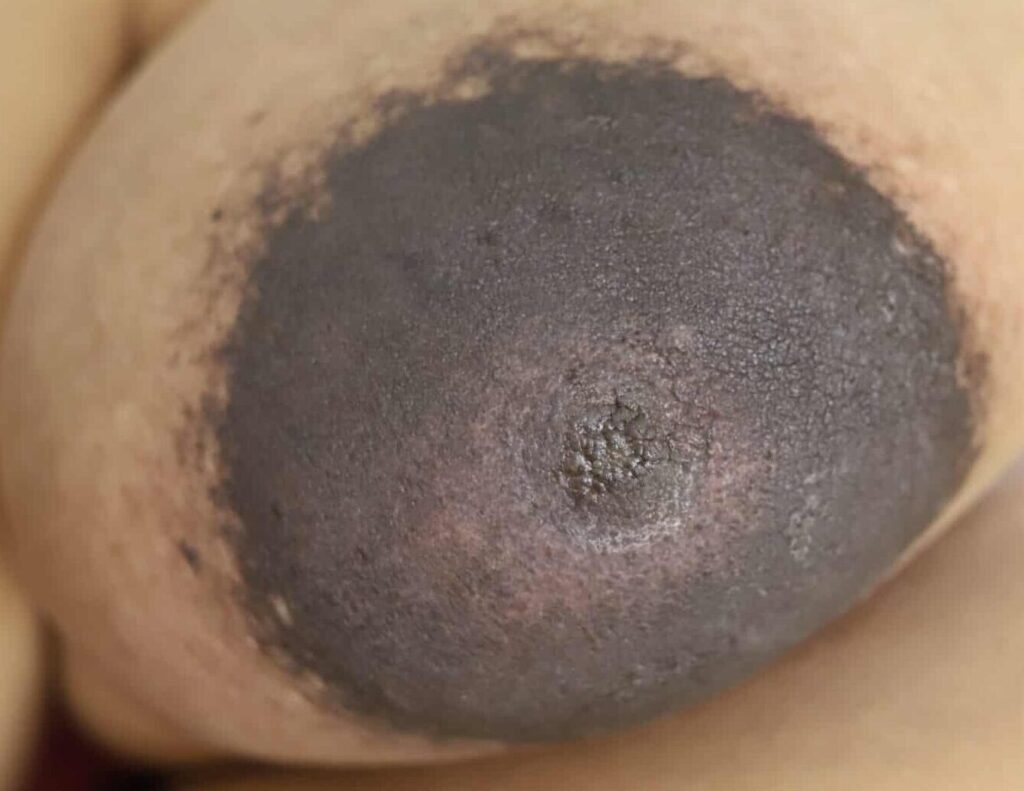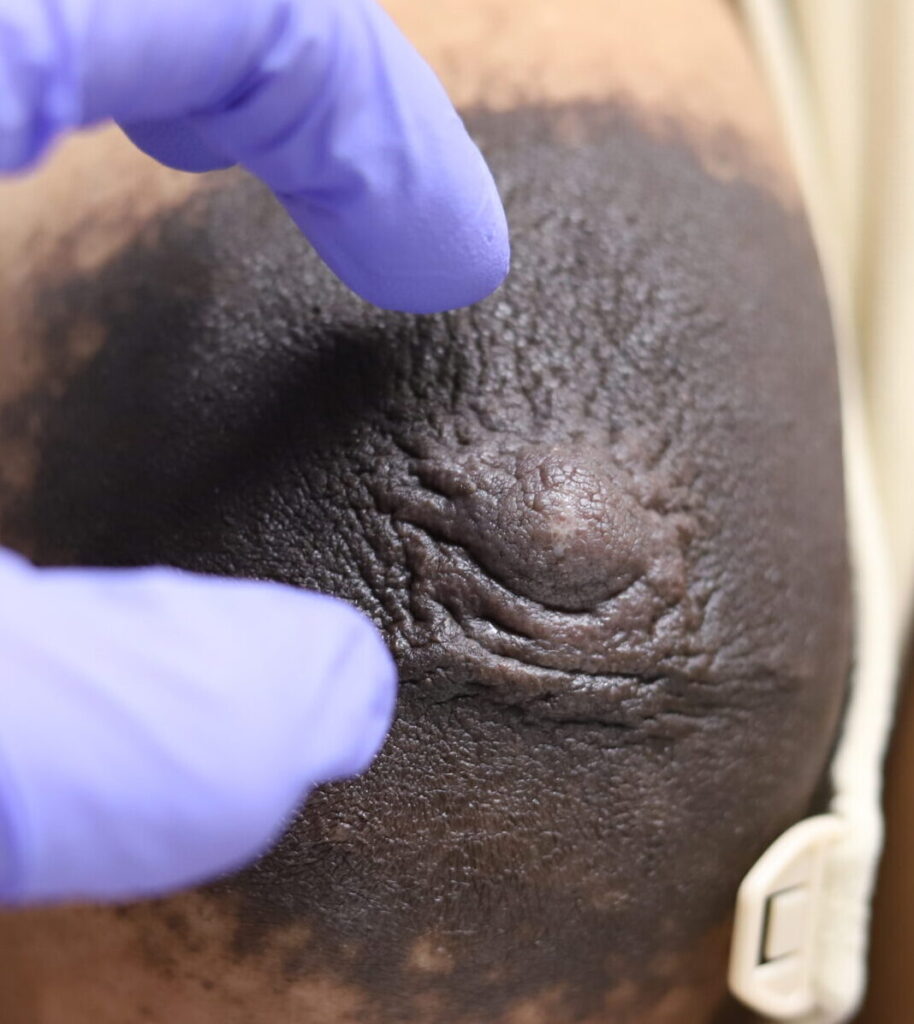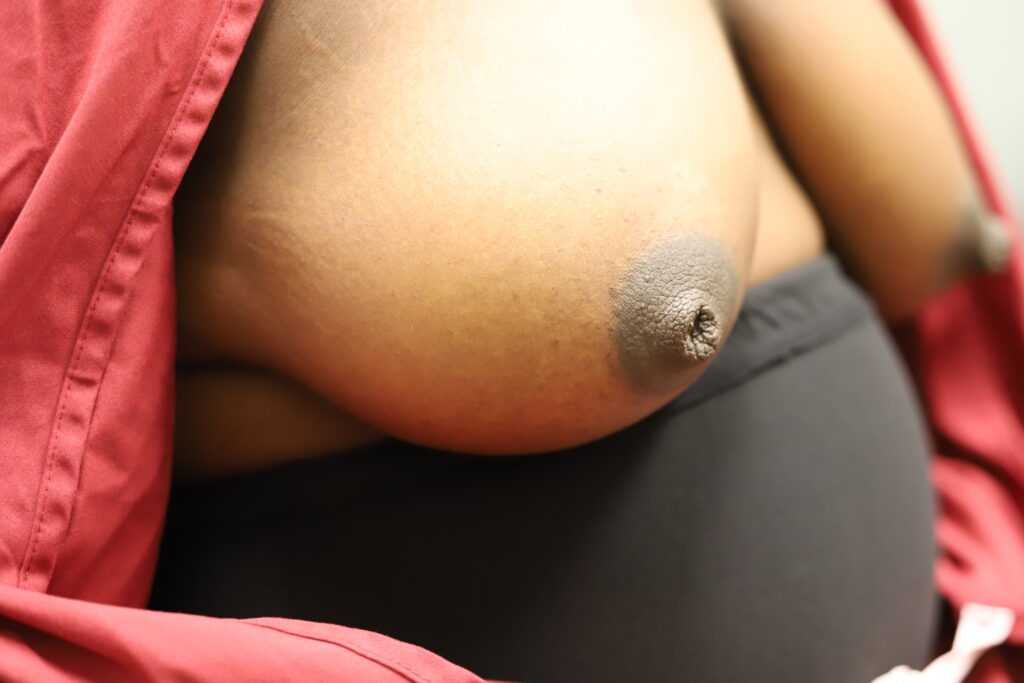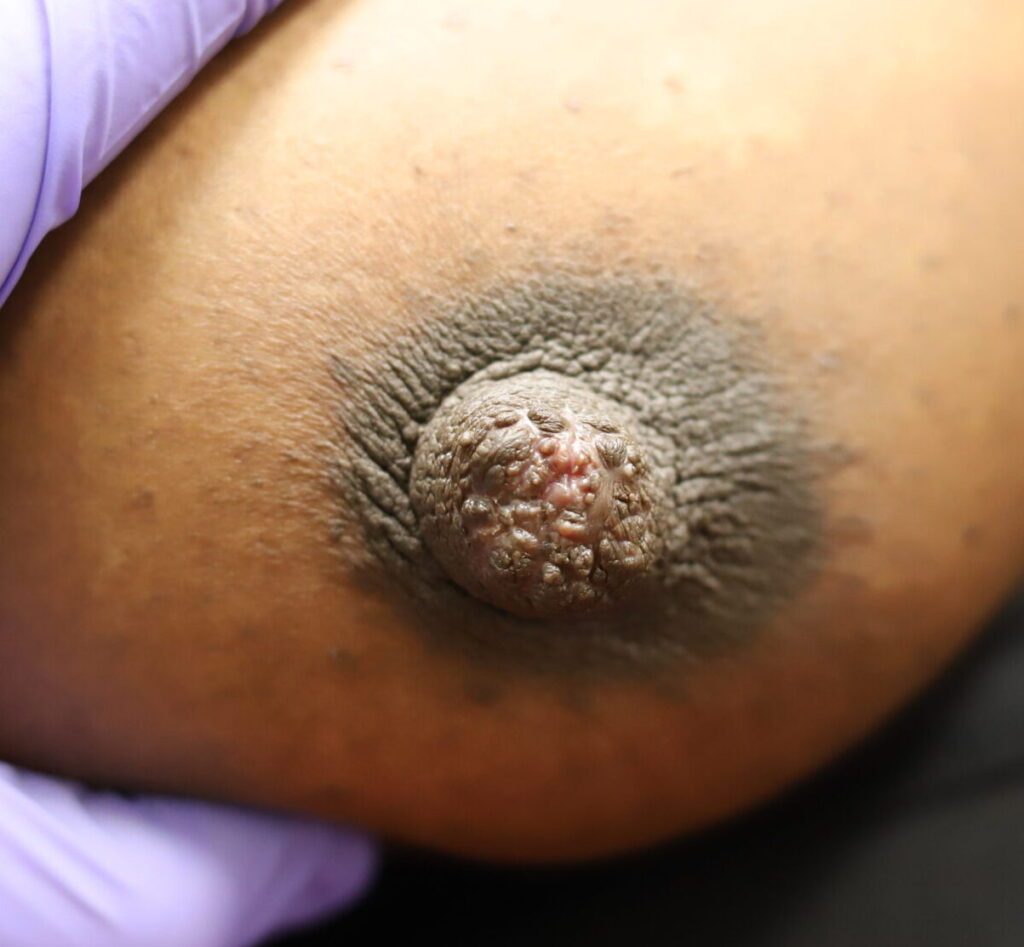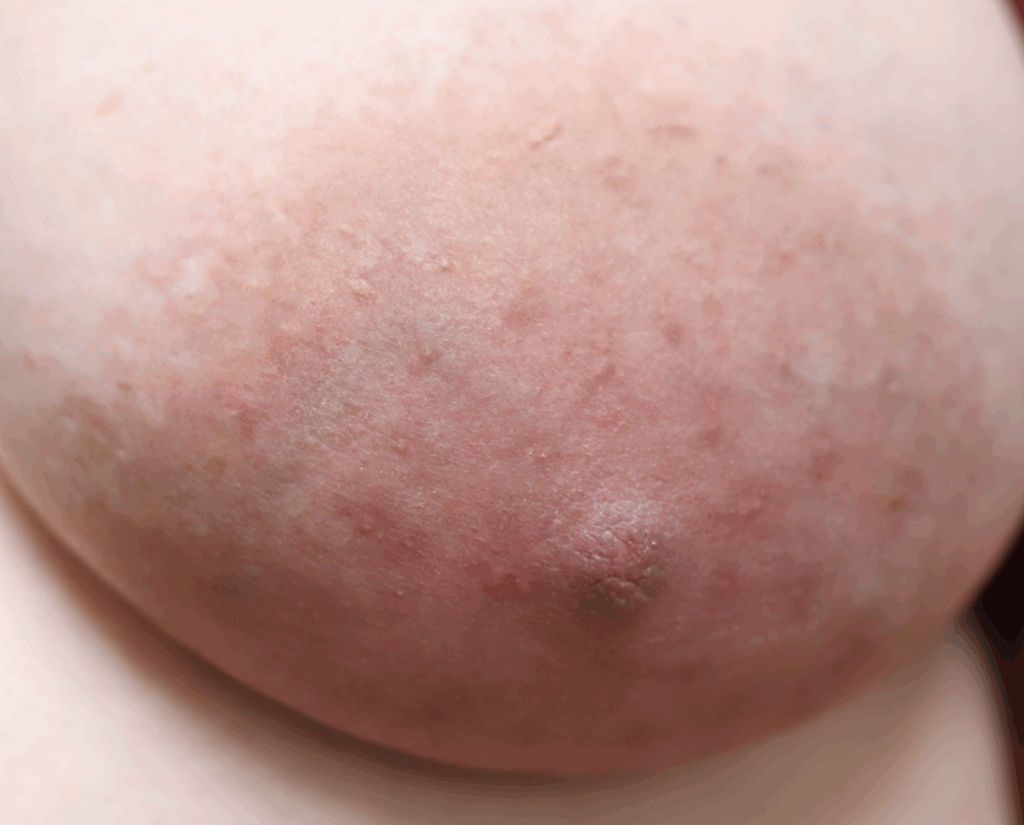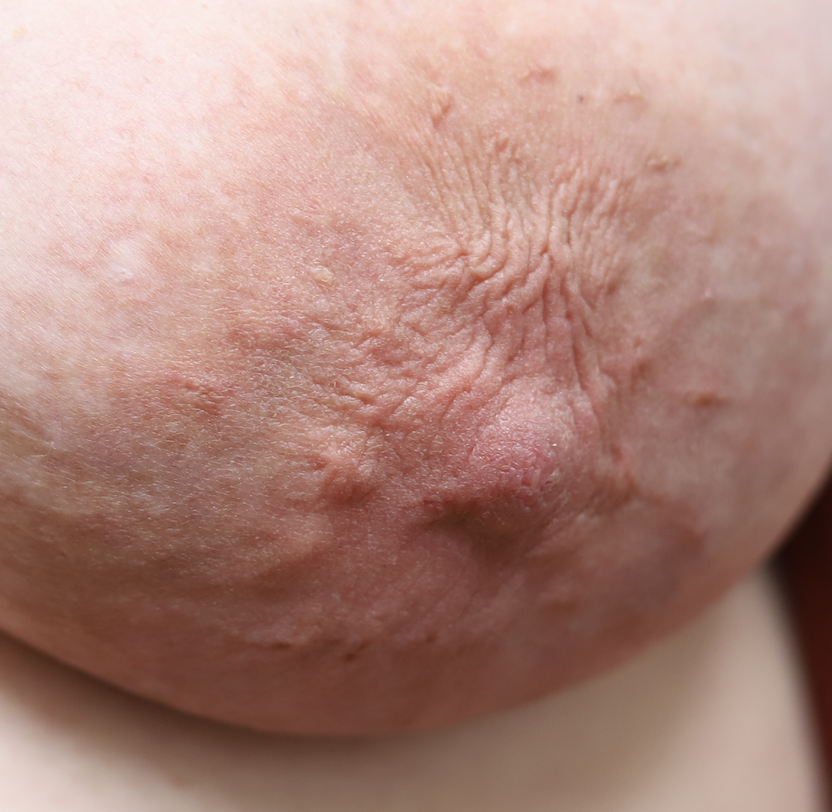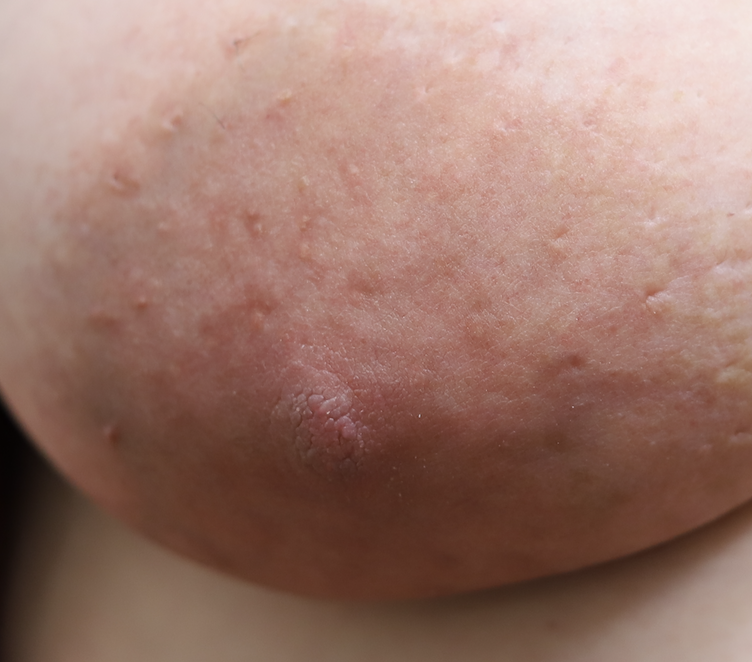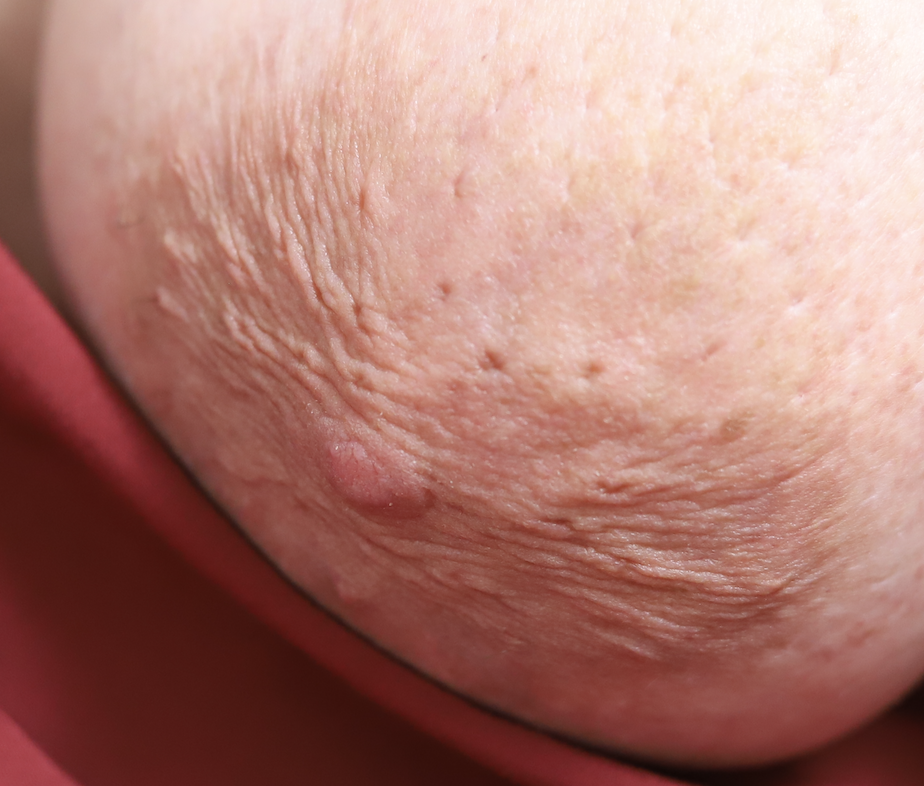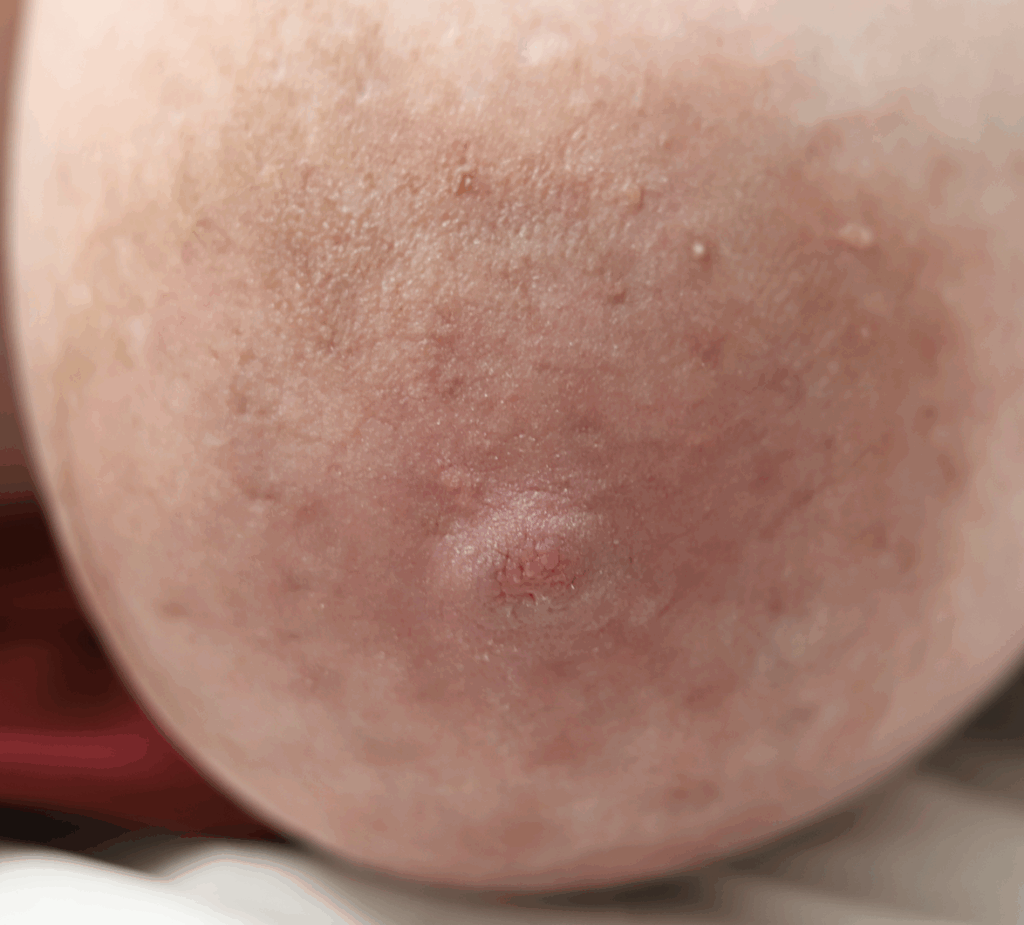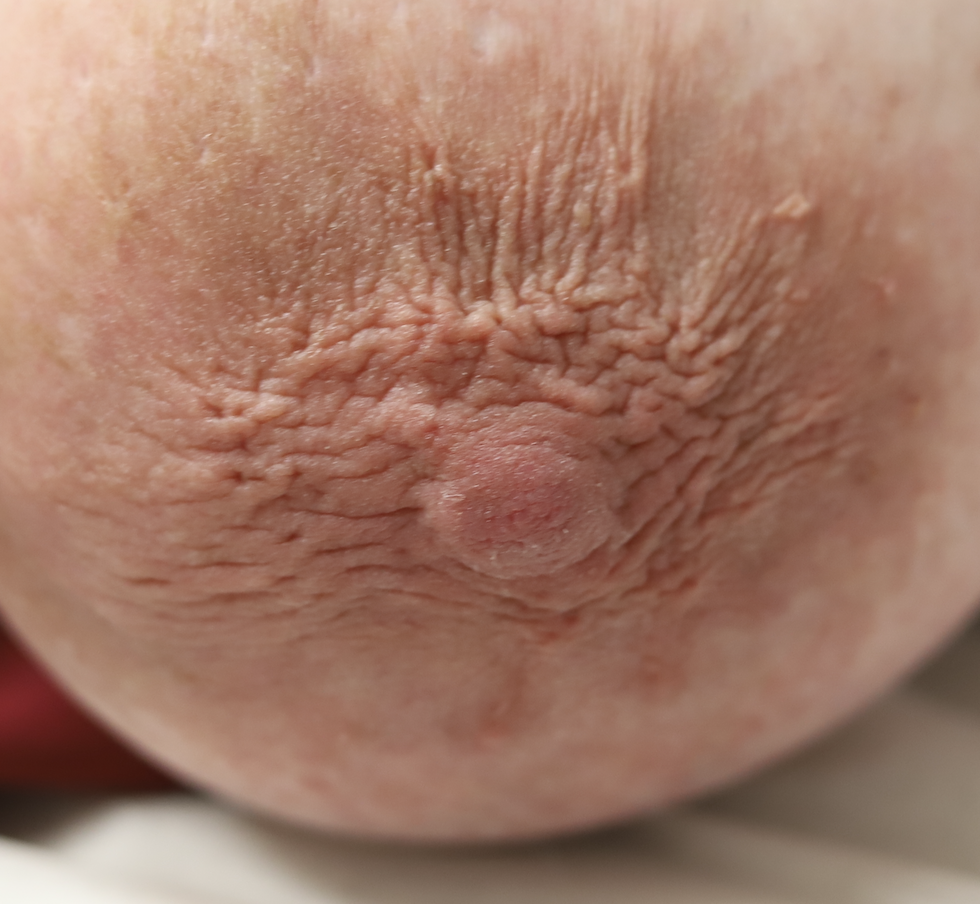
As a breast surgeon, I struggle with the lactation term “flat” nipples. Histologically (under the microscope), nipples, as erectile smooth muscle, are similar to the clitoris and penis. They may appear flat — particularly in the setting of large breasts with gravity working against them, and lots of intravenous fluid during labor making the breast swollen. But unless a nipple sits in a completely fixed (immovable) position from cancer (which has other associated findings), scarring, or very significant congenital fibrous tissue tethering it, it’s not possible for a nipple to be “flat.” It’s always possible to stimulate the nipple to become erect and provide better palate stimulation for a sleepy infant to latch.
Often, one of the first things a postpartum mom is told in the hospital is that her “nipples are flat” and she “needs a nipple shield.” Not only are new moms exhausted from labor, but they are biologically and hormonally vulnerable to any implied or direct critique of their body’s capacity to take care of their infant. In the outpatient world, we hear the stories of moms feeling unsure and anxious that they can’t breastfeed their infant without a prop like a shield. It can feel like a woman’s first failure as a mom.
If moms are engorged and edematous (swollen from intravenous fluid) and a baby is sleepy after a long labor, I talk to them about lymphatic drainage (remove excess fluid) and how to stimulate their nipples to be erect in the side lying breastfeeding position. If a baby is still struggling, I tell mom to express milk to stimulate her nipple and give the baby expressed milk. The baby can continue to work at familiarizing himself with the texture and taste of the nipple over the next coming days.
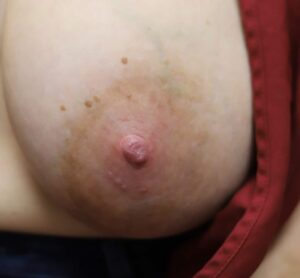
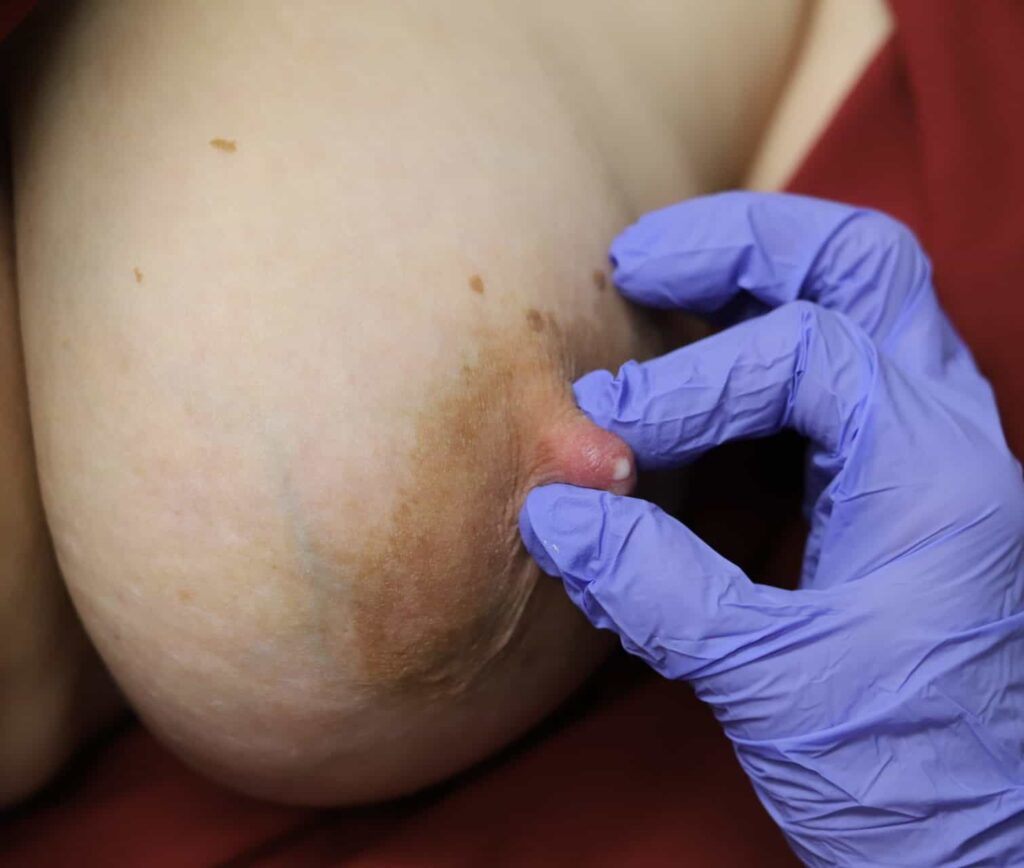 Left nipple in upright position appearing “flat” (above). Left nipple in side lying position unstimulated and still not completely erect (below). Left nipple stimulated and erect with associated constriction of areola muscle fibers enabling a firm surface for baby to latch.